
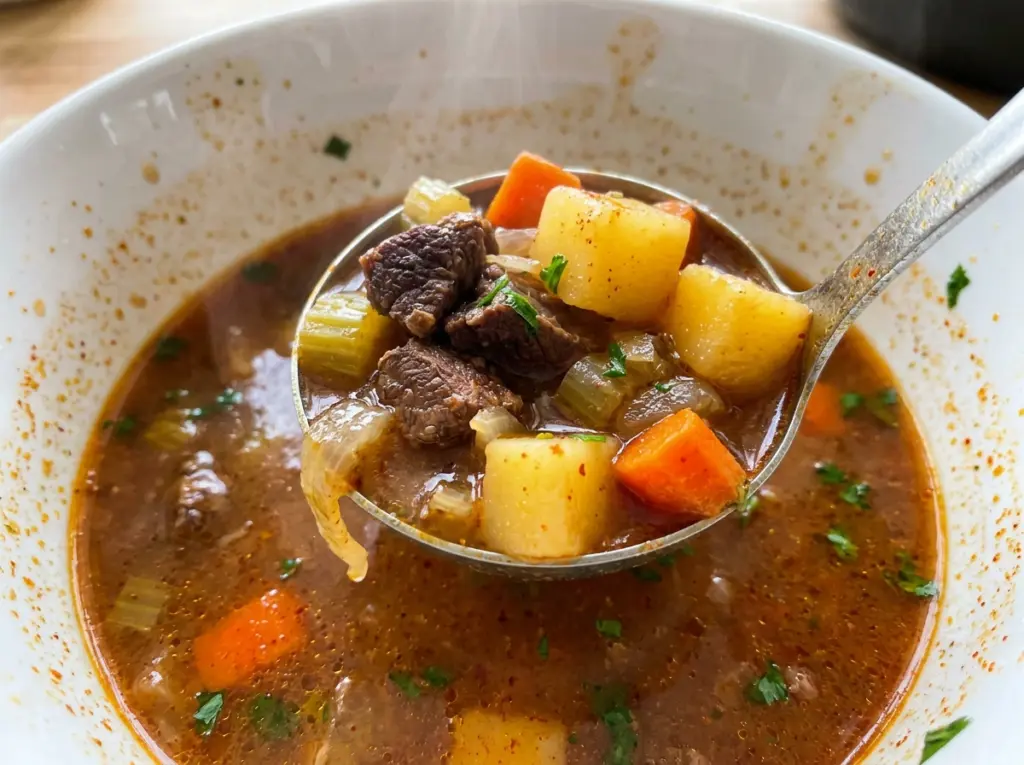
Smoky Beef Potato Soup Smoked Paprika
The beef should sizzle as soon as it hits the Dutch oven, then leave little browned bits on the bottom while it cooks. I used to drain off every drop…

By Ava
•
•
Reading time: 9 min
Tip: save now, make later.
The beef should sizzle as soon as it hits the Dutch oven, then leave little browned bits on the bottom while it cooks. I used to drain off every drop of fat, but keeping a little in the pot gives the vegetables something to soften in and keeps the broth from tasting lean. That small choice makes this smoky beef potato soup feel hearty without turning greasy.
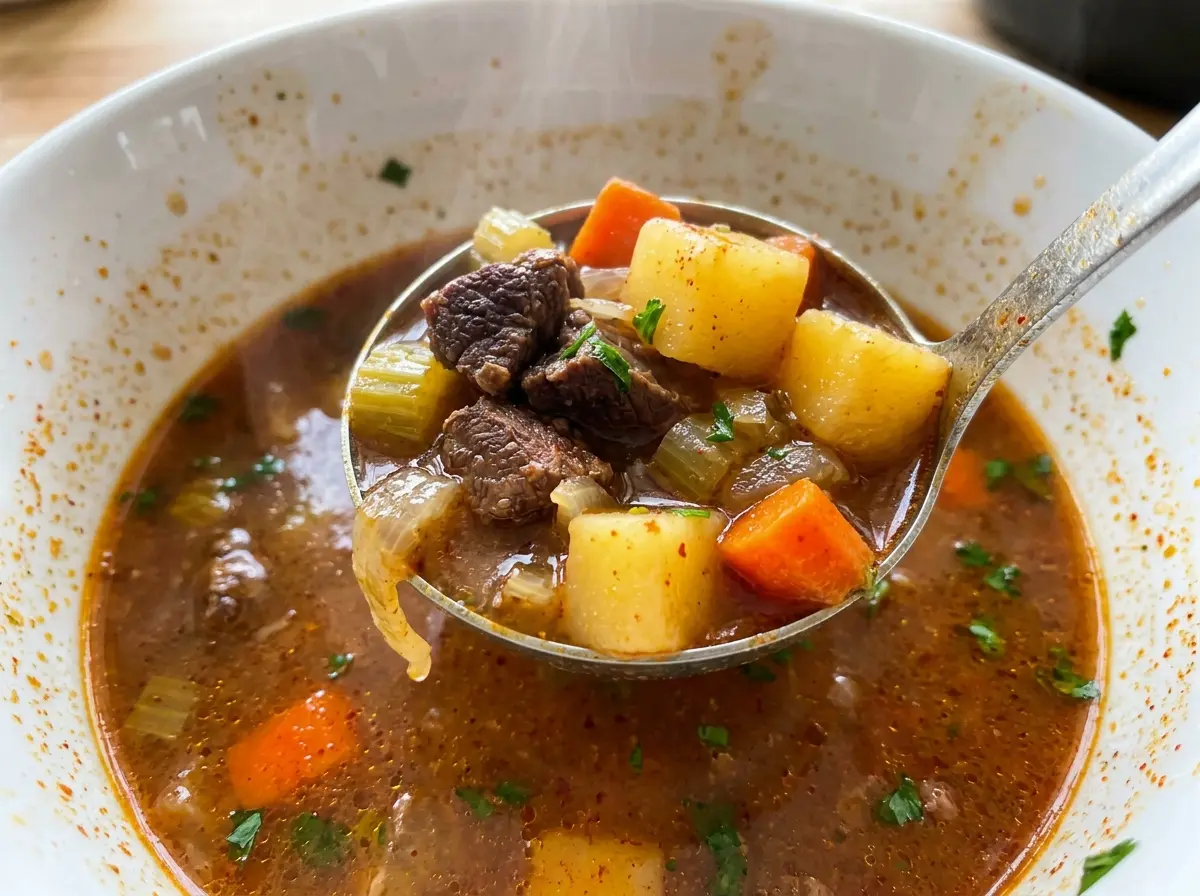
Smoked paprika gives the broth its warm, campfire-like note, while russet potatoes make each spoonful filling. I add the milk only after the potatoes are tender, then warm the soup gently instead of letting it boil. The finished bowl has soft potato chunks, savory beef, and a mellow, smoky broth that clings lightly to the spoon.
Kitchen Note
Give the soup its full five-minute rest off the heat before serving. It’s still hot, but the bubbling settles and the broth is easier to ladle neatly.
Save this smoky beef potato soup for a cozy supper with tender russets and a paprika-rich broth.
Why the Milk Goes In After the Potatoes, Not Before
The potatoes need their time in the beef broth, where they can simmer until their centers are tender and the broth picks up some of their starch. Milk doesn’t need that long cook. Adding it at the end keeps it from spending the whole simmer on the heat, which can leave a milk-based soup scorched or rough around the edges.
That timing also makes the finish easier to control. Once the potatoes are tender, stir in the milk and warm the pot gently; you’re looking for steam and a hot broth, not a rolling boil. The milk rounds out the smoky paprika and tomato without hiding the beef or turning the soup heavy. If you’ve made beef-and-potato soup that tastes thin one day and overly rich the next, this late, gentle finish is a good way to keep the balance steady.
What the Russets, Smoked Paprika, and Beef Bring to the Pot

- Ground beef — The 85% lean blend browns well and leaves enough fat to flavor the vegetables. A standard grocery-store package works; there’s no need to pay extra for a premium grind. Ground lamb can stand in at the same weight for a more pronounced, richer taste; drain it the same way and keep about a tablespoon of fat in the pot.
- Russet potatoes — Their starch gives the soup a little body while the pieces soften. Pick firm potatoes without green patches, since freshness matters more than size here. Yukon Gold potatoes work in the same amount, peeled and cut to the same size, but they’re waxier and hold their shape more distinctly.
- Smoked paprika — This is where the soup gets its defining smoky note, so use paprika that still smells fragrant when you open the jar. Sweet paprika can replace it, but the soup will lose that woodsy edge. Don’t use hot paprika unless you want the bowl to taste noticeably spicier.
- Tomato paste — It adds concentrated savory depth without making the broth taste like tomato soup. A basic can or tube is fine; there’s no need for a specialty brand. There isn’t a close pantry substitute, so leave it out if you’re out rather than swapping in ketchup, which would make the broth sweeter.
- Beef broth — A good, everyday beef broth supplies the savory base, so a premium brand isn’t necessary. Lower-sodium beef broth is an easy swap if you want more control over the seasoning; the soup will taste less salty, while the beef flavor stays familiar.
- Whole milk — Whole milk softens the sharper edges of the broth and gives the finish a rounded feel. Lactose-free whole milk works as a direct replacement. If you need a dairy-free option, see the variation below; a thinner milk alternative won’t feel quite as creamy.
From a Browned Beef Base to Tender Potato Chunks
Brown the Beef and Keep a Little Fat
Set a 6-quart Dutch oven over medium-high heat and cook the ground beef for 6–8 minutes, breaking it into small pieces as it browns. Look for browned edges and no pink in the crumbles; the beef should reach 160°F. Drain off the excess fat, leaving about a tablespoon in the pot. Pouring out all the fat leaves the vegetables with less to cook in, while leaving too much can make the finished broth greasy.
Soften the Vegetables Without Browning Them Hard
Add the diced onion, carrots, and celery, then cook over medium heat for 5 minutes, stirring occasionally. They should begin to soften but don’t need to turn deeply brown. Scrape the bottom as you stir so the browned beef bits loosen into the vegetables. If the pot looks dry, keep stirring; the retained fat should lightly coat the vegetables.
Wake Up the Paprika and Tomato Paste
Stir in the garlic, smoked paprika, and tomato paste, and cook for 1 minute. Keep the mixture moving so the garlic doesn’t catch on the bottom of the pot. The paprika will darken slightly and smell smoky, while the tomato paste should coat the vegetables rather than sit in one thick clump. Add the broth promptly after this brief cook.
Simmer Until the Potatoes Yield to a Fork
Pour in the beef broth, then add the peeled potato pieces, bay leaf, kosher salt, and black pepper. Bring the pot to a boil, then reduce the heat to a gentle simmer and cook uncovered for 15–20 minutes. Cut the potatoes into even 3/4-inch pieces so they become tender at roughly the same time. They’re ready when a fork slips into the center without resistance, but the chunks still hold together.
Warm the Milk Gently and Let the Pot Rest
Remove and discard the bay leaf, stir in the whole milk, and heat gently for 2–3 minutes without boiling. Watch for steam rising from the surface; a rolling boil isn’t needed. Take the pot off the heat and let the soup stand for 5 minutes before serving. The potatoes should stay intact, with the milk stirred evenly through the broth.
Three Small Changes That Give This Soup a Different Spin
Make It Dairy-Free With Unsweetened Oat Milk
Replace the whole milk with the same measure of plain, unsweetened oat milk and keep the gentle warming step. It makes the soup dairy-free, though the finish will be a little lighter and less creamy than the whole-milk version.
Turn Up the Heat With Hot Smoked Paprika
Use hot smoked paprika in place of the regular smoked paprika for a warmer, more peppery broth. The smoke stays in the background, but the soup will have a clear kick; choose this only if you want heat rather than a mild bowl.
Push the Broth Toward Tomato
Stir in extra tomato paste along with the original paste and cook it briefly with the garlic and paprika. The soup will taste more rounded and tomato-rich, with a little less emphasis on the smoky beef broth.
Storage and Reheating
- Refrigerator: Store covered for 3–4 days. The potatoes soften a little as they sit.
- Freezer: Freeze in airtight, freezer-safe portions for 2–3 months. The potatoes may be softer after thawing, and the milk can separate slightly; stir well as it warms.
- Reheating: Warm on the stovetop over low to medium-low heat, stirring occasionally, until the soup reaches 165°F. Don’t crank the burner or boil it, which can scorch the milk and break the smooth texture.
Questions That Come Up While the Potatoes Simmer
Smoky Beef Potato Soup Smoked Paprika
Ingredients
Equipment
Method
- In a 6-quart Dutch oven over medium-high heat, cook the ground beef, breaking it into small pieces, for 6–8 minutes until browned and it reaches 160°F.
- Drain excess fat, leaving about 1 tablespoon in the pot.
- Add the onion, carrots, and celery and cook over medium heat for 5 minutes, stirring occasionally, until beginning to soften.
- Stir in the garlic, smoked paprika, and tomato paste and cook for 1 minute.
- Pour in the beef broth.
- Add the potatoes, bay leaf, salt, and pepper.
- Bring to a boil, then reduce the heat to maintain a gentle simmer.
- Cook uncovered for 15–20 minutes until the potatoes are fork-tender.
- Remove and discard the bay leaf.
- Stir in the milk.
- Heat gently for 2–3 minutes without boiling.
- Remove the pot from the heat.
- Let the soup stand for 5 minutes before serving.