
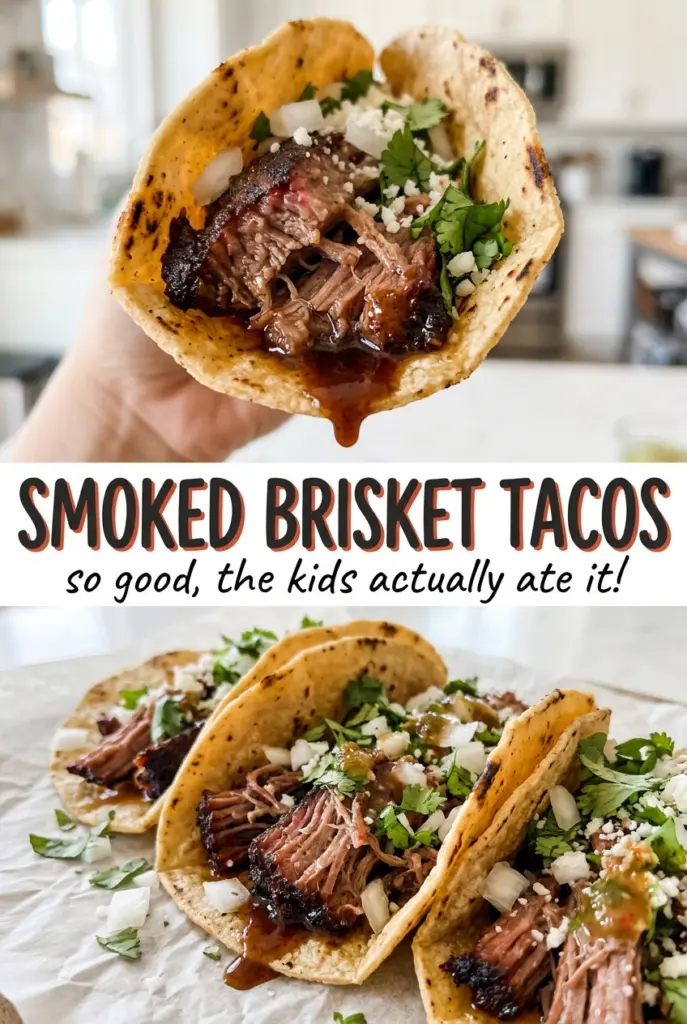
Smoked Brisket Tacos
The first time I rushed a brisket flat off the smoker, the outside looked ready, but the meat was still firm when I tried to cut it. For these smoked…

By Ava
•
•
Reading time: 9 min
Tip: save now, make later.
The first time I rushed a brisket flat off the smoker, the outside looked ready, but the meat was still firm when I tried to cut it. For these smoked brisket tacos, I learned to pay attention to how the brisket feels, not just how long it has been cooking. The smoke gives the meat its dark bark, and the taco toppings bring a bright, crisp contrast to each bite.
I keep the seasoning straightforward: kosher salt, coarse black pepper, and garlic powder. That lets the smoke and beef stay at the center of the taco instead of competing with a long list of spices. The brisket cooks in two stages, with a tight wrap between them, then gets a full rest before it’s cut across the grain.
Once the tortillas are warm and the onion, cilantro, salsa, and lime are on the table, everyone can build a taco the way they like it. The finished brisket should be tender enough to chop or slice into easy-to-fill pieces.
Kitchen Note
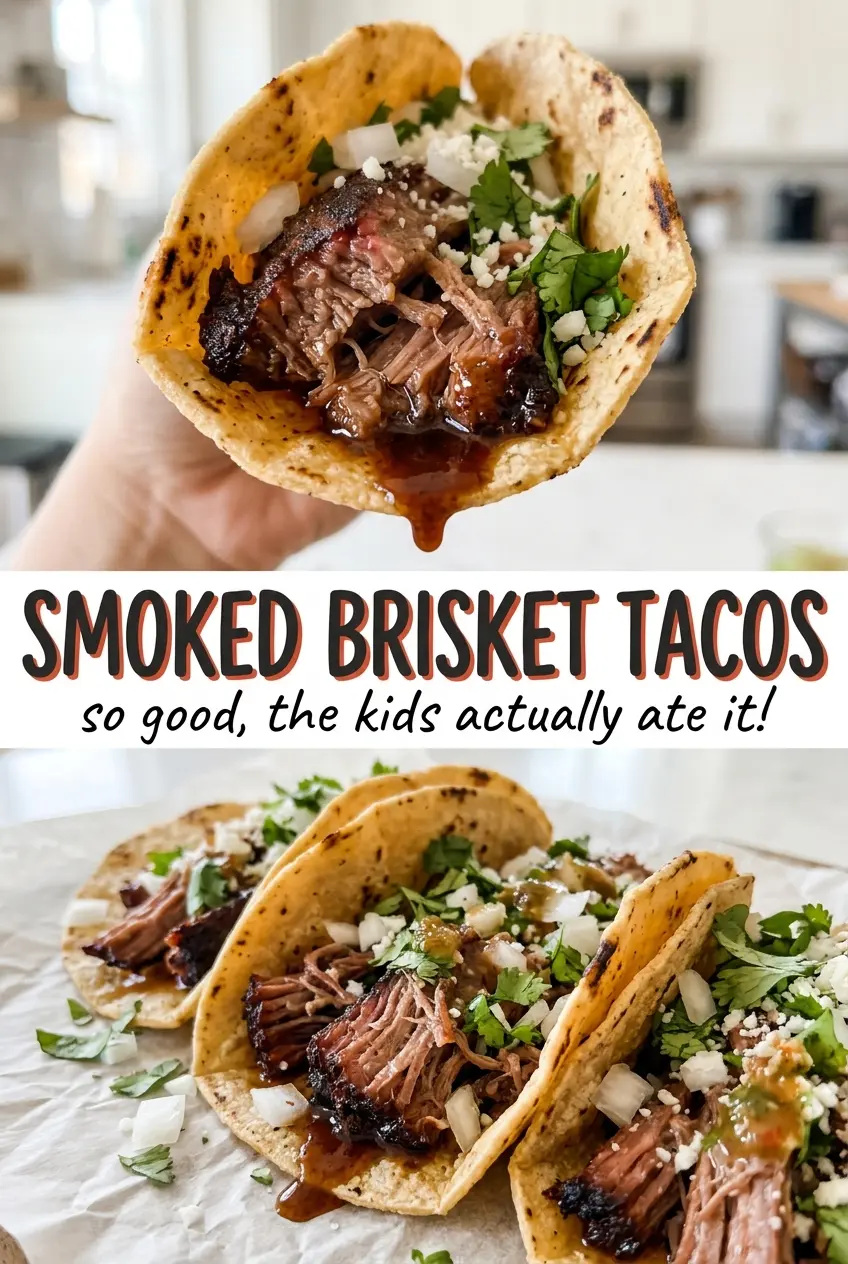
As each tortilla comes out of the skillet, stack it under a clean towel. The towel keeps the tortillas warm and pliable while you finish the batch, so they’re less likely to crack when you fold them around the brisket.
Save these smoked brisket tacos for a cookout or taco night—the dark, smoky brisket is ready for a fresh finish of onion, cilantro, salsa, and lime.
Why the Brisket Gets Wrapped After the Bark Sets
Wrapping isn’t just a way to keep the brisket contained. It marks the shift from building a dark, firm bark to cooking the center until it turns tender. If you wrap too early, before the outside is dark and set, the bark won’t have had the same chance to develop. If you wait for a certain hour on the clock instead of checking the brisket, the timing can miss what’s actually happening in your smoker.
Look for both cues before wrapping: the bark should be dark and set, and the thickest part should be in the first temperature range. After wrapping, don’t use the thermometer alone to decide when the brisket is ready to come off. A probe should slide into the thickest part with little resistance. That feel is what tells you the meat is tender enough to cut or chop for tacos.
Those cues matter because a brisket flat can take more or less time than the estimate, even when the smoker is holding steady. Let the surface and the probe guide the transitions. The clock gives you a useful window, not a finish line.
Why This Brisket Gets a Three-Part Rub and a Fresh Finish
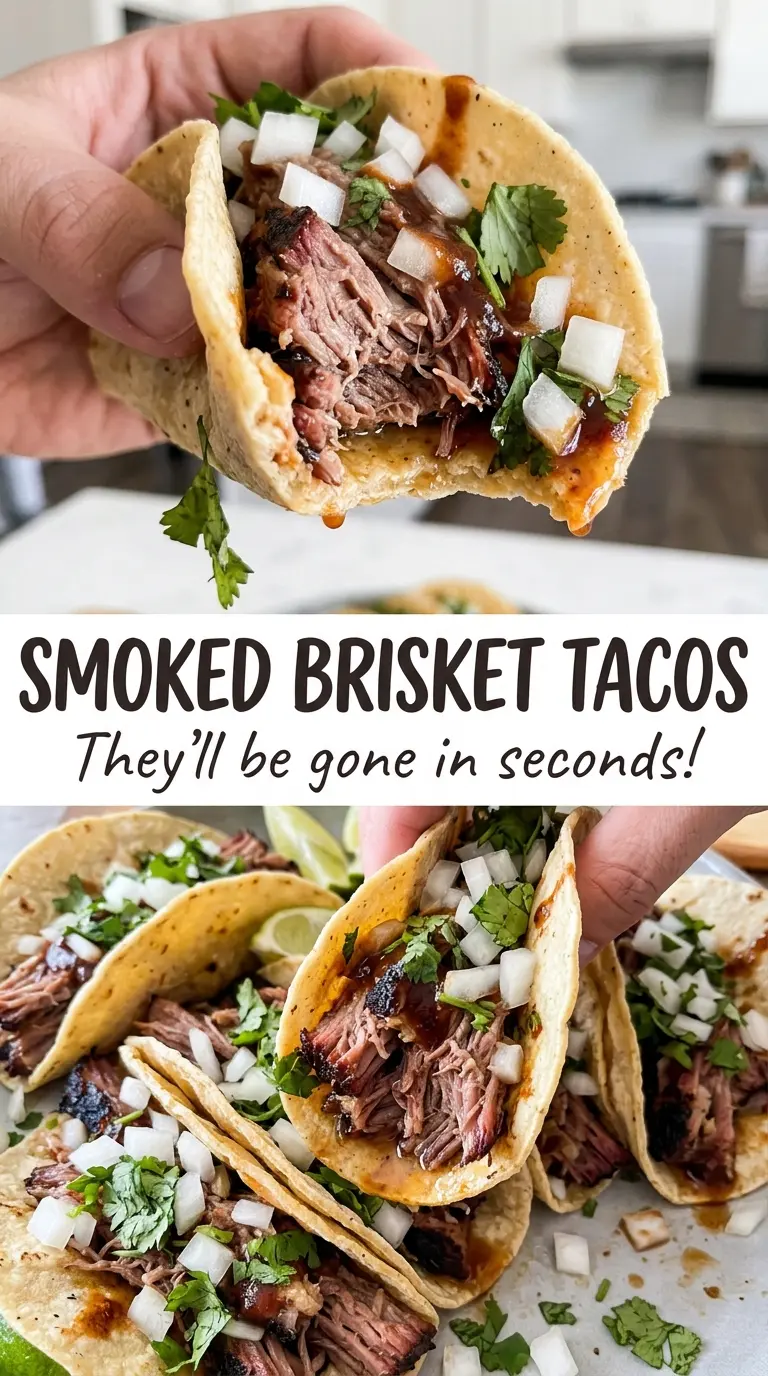
- Brisket flat — The trimmed flat is the cut this cook is built around. Choose a piece that looks evenly trimmed rather than one with a thick, uneven layer of fat; a different cut won’t necessarily follow the same timing. There isn’t a like-for-like substitute in this ingredient list.
- Kosher salt and coarse black pepper — Salt seasons the meat while the coarse pepper makes a noticeable part of the bark. Freshly cracked pepper has a livelier aroma, but packaged coarse pepper works well here. Don’t swap in fine salt by the same spoon measure; its smaller crystals pack differently.
- Garlic powder — It spreads evenly through the dry rub and adds a savory note without changing the bark’s texture. Use garlic powder rather than a wet garlic preparation, which would change the surface of the seasoning.
- Corn tortillas — Corn tortillas keep the taco’s flavor grounded and are the specified base for serving. A fresh, flexible tortilla is easier to fill than one that feels dry or brittle before warming.
- Onion, cilantro, lime, and salsa — Finely chopped white onion and fresh cilantro bring crispness and freshness; lime wedges let each person add acidity at the table. The salsa is the most flexible part of the topping list: choose a familiar one whose heat and texture you enjoy.
From a Set Bark to Tender Brisket: The Four Stages That Matter
Seasoning and Starting the Smoke
Preheat the smoker to 225°F with hardwood smoke. Stir together the kosher salt, coarse black pepper, and garlic powder, then season every side of the trimmed brisket flat evenly. Set it in the smoker and let the outside develop without disturbing it. The first stage takes about 3–4 hours; look for dark, set bark and a thickest-part temperature of 165–175°F before moving on.
Wrapping for the Tenderness Stage
Wrap the brisket tightly in butcher paper or foil, then return it to the smoker. A snug wrap helps hold the meat together through the longer second stage, so close any loose folds rather than leaving an open pocket. Cook for about 2–4 hours more, using the thickest part as your reference point. The brisket is ready when a probe slides in with little resistance and the internal temperature is about 200–205°F.
Resting Before You Cut
Take the brisket off the smoker and leave it wrapped for a full hour. Don’t unwrap it as soon as it reaches tenderness; the rest gives the meat time to settle before you handle it. After resting, open the wrap carefully and cut or chop the brisket into bite-size pieces across the grain. Cutting across the grain shortens the muscle fibers, making each piece easier to bite through.
Warming the Tortillas and Building the Tacos
Set a dry 12-inch skillet over medium heat and warm each corn tortilla for about 20–30 seconds per side. The tortillas should be warm and pliable, not browned or crisp; if they start turning brittle, take them off the heat. Stack each finished tortilla under a clean towel while you warm the rest. Fill with brisket, add the chopped onion, cilantro, and salsa, and serve with lime wedges.
Three Ways to Change the Bite Without Losing the Brisket
Chop It Fine or Keep the Pieces Larger
Chop the rested brisket into smaller bite-size pieces for an easy-to-fill taco, or cut it into larger pieces across the grain for a more substantial texture. Either way, keep the cut across the grain; the difference is in the feel of the filling, not the seasoning.
Use a Chunky or Smooth Salsa
A chunky salsa adds distinct pieces to the topping, while a smooth salsa spreads more evenly over the brisket. Both work with the same onion, cilantro, and lime; choose the texture and heat you prefer without changing how the meat cooks.
Make a Lower-Carb Brisket Bowl
Leave out the corn tortillas and serve the brisket with the onion, cilantro, salsa, and lime instead. You’ll lose the soft corn flavor and familiar taco shape, but the smoked meat and toppings still make a complete, satisfying bowl.
Storage and Reheating
- Refrigerator: Store leftover brisket in a covered container for 3–4 days. Keep tortillas and fresh toppings separate so they don’t soften.
- Freezer: Freeze the brisket by itself in an airtight container or freezer bag for up to 2–3 months for best quality. Thaw it in the refrigerator before reheating.
- Reheating: Reheat brisket covered in foil in a 300°F oven until it reaches 165°F throughout. Heat only the amount you plan to serve; reheating the same leftovers repeatedly dries the meat out.
Questions That Come Up Once the Brisket Leaves the Smoker
Smoked Brisket Tacos
Ingredients
Equipment
Method
- Preheat a smoker to 225°F with hardwood smoke.
- Mix the salt, black pepper, and garlic powder.
- Season the brisket evenly on all sides.
- Place the brisket in the smoker and cook until the bark is dark and set and the thickest part reaches 165–175°F, about 3–4 hours.
- Wrap the brisket tightly in butcher paper or foil and return it to the smoker.
- Cook until a probe slides into the thickest part with little resistance and the internal temperature is about 200–205°F, about 2–4 hours more.
- Rest the brisket, still wrapped, for 1 hour.
- Unwrap and cut or chop the brisket into bite-size pieces across the grain.
- Warm the tortillas in a dry 12-inch skillet over medium heat for about 20–30 seconds per side.
- Stack the tortillas under a clean towel as they are ready.
- Fill the tortillas with brisket.
- Top with onion, cilantro, and salsa.
- Serve with lime wedges.