
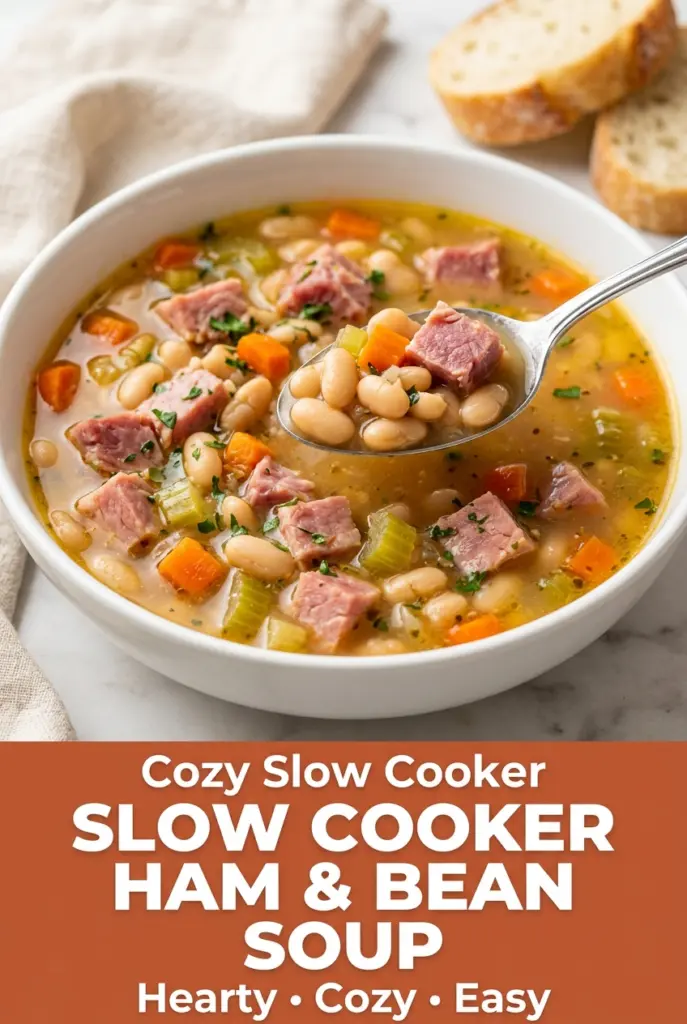
Slow Cooker Ham and Bean Soup
Slow cooker ham and bean soup comes out thick, smoky, and deeply comforting when the beans are cooked long enough to turn creamy without falling apart completely. The broth picks…

By Ava
•
•
Reading time: 9 min
Tip: save now, make later.
Slow cooker ham and bean soup comes out thick, smoky, and deeply comforting when the beans are cooked long enough to turn creamy without falling apart completely. The broth picks up flavor from the ham bone, the vegetables soften into the background, and the whole pot ends up tasting like it simmered all afternoon because it did. This is the kind of soup that eats like a full meal, not a starter.
The part that makes this version worth keeping is the order of the ingredients and the slow heat. Sautéing the onion, carrots, and celery first gives the soup a stronger base than dumping everything in raw, and using both a ham bone and diced ham gives you flavor from the bone plus enough meat in every bowl. Great Northern beans hold their shape well, but after hours in the slow cooker they still break down just enough to thicken the broth naturally.
Below, I’ve included the detail that matters most for getting the texture right, plus a few practical swaps and storage notes for using leftovers without ending up with a pot of mush.
The beans were creamy but still held their shape, and the ham bone gave the broth this deep, savory taste that got even better the next day. I followed the timing exactly and it thickened up perfectly.
Save this slow cooker ham and bean soup for the days when you want a smoky, filling dinner with almost no active work.
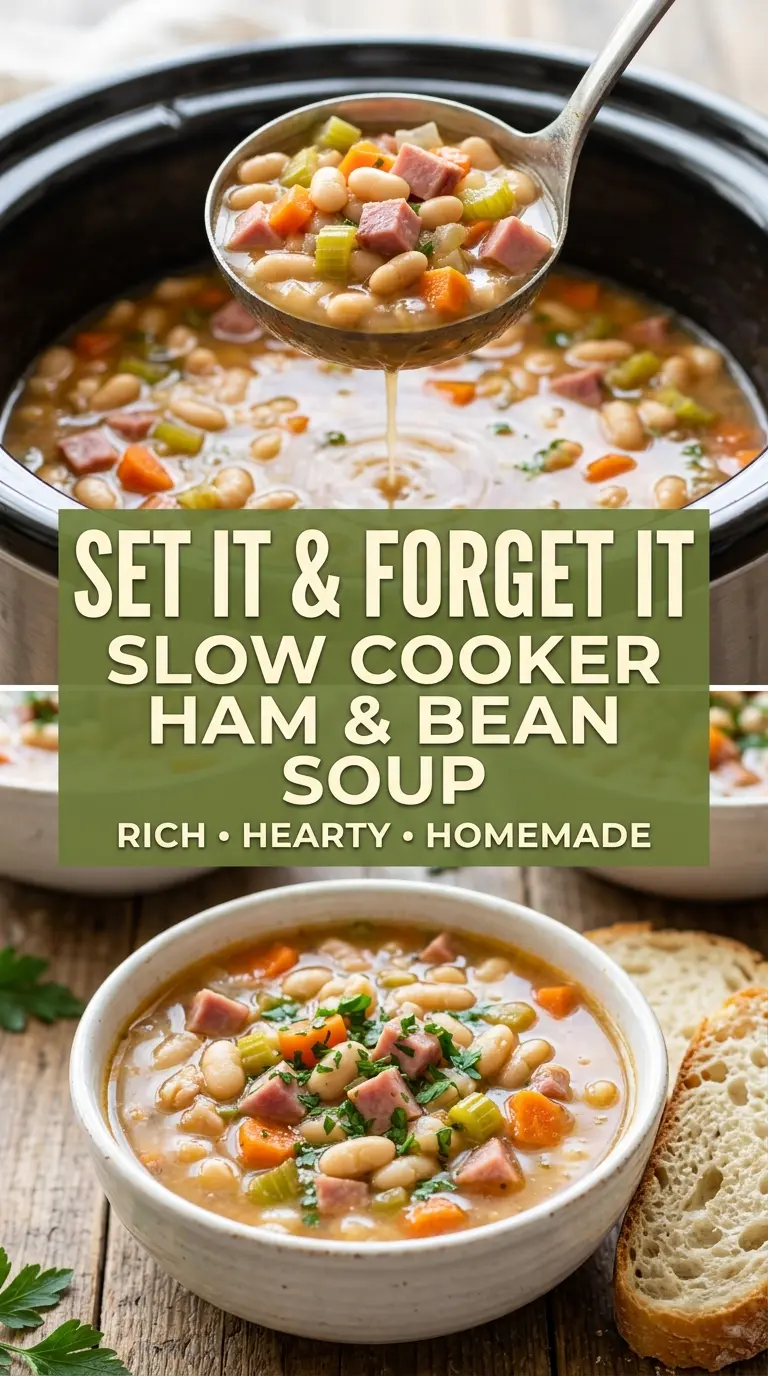
The Small Step That Keeps the Beans Creamy, Not Chalky
Dried beans are the heart of this soup, and they need enough liquid plus enough time to soften evenly. If the broth looks thin at the beginning, that’s fine; the beans absorb a lot as they cook, then release starch back into the pot near the end. The mistake is stopping too early and calling them done when the outsides are tender but the centers still taste dry and papery.
Starting with a sautéed vegetable base helps the soup taste rounded instead of flat, and it also keeps the onion and celery from staying harsh after hours in the slow cooker. The ham bone adds body and saltiness, but it doesn’t replace the need for good broth. Low-sodium broth gives you room to season at the end instead of locking in a salty soup before the beans have finished cooking.
- Great Northern beans — These hold up better than softer beans and turn pleasantly creamy without disappearing. Navy beans also work, but they’ll break down a little more.
- Ham bone — This is where the soup gets its deep savory flavor. If you don’t have one, use a meaty ham hock or add a little extra diced ham, but the broth won’t have quite the same richness.
- Low-sodium chicken broth — Use a broth you actually like tasting on its own. Salted broth plus ham can push the soup over the edge before you get a chance to adjust it.
- Smoked paprika — This doesn’t make the soup taste smoky in a loud way; it nudges the ham flavor forward and gives the broth a warmer color.
- Fresh parsley — Stirring it in at the end keeps the soup from tasting heavy. Dried parsley won’t give the same lift.
How to Build the Soup So the Beans Finish Tender and the Ham Stays Flavorful
Softening the Vegetables First
Cook the onion, carrots, and celery until they just start to lose their raw edge. You’re not looking for browning here, just a little softening so the vegetables melt into the broth instead of floating around tasting undercooked. Garlic only needs about 30 seconds; if it goes longer, it turns sharp and bitter in the slow cooker.
Loading the Slow Cooker the Right Way
Once the vegetables are in the slow cooker, add the beans, ham bone, diced ham, broth, water, and seasonings. The liquid should cover the beans well so they cook evenly from the start. If your beans are older and seem unusually dry, they may need the full high end of the cooking range, because older beans take longer to soften.
Knowing When the Pot Is Done
Cook until the beans are tender all the way through and the ham is pulling off the bone without effort. The broth should look slightly thickened and a little cloudy from the beans; that means the starch has done its job. If the beans are still firm in the center, give them more time instead of trying to fix it with extra heat at the end.
Finishing for the Best Bowl
Pull out the ham bone and bay leaves, shred any meat left on the bone, and stir it back in. Taste only after the ham goes back in, because that’s when the soup reaches its final salt level. The parsley goes in last so the soup tastes fresh instead of muted.
How to Adapt This for a Bigger Pot, a Lighter Bowl, or Different Beans
Make it dairy-free and naturally gluten-free
This soup is already both dairy-free and gluten-free as written, which is one reason it works so well for a crowd. Just serve it with gluten-free bread or skip the bread entirely and let the beans do the heavy lifting.
Use leftover holiday ham
If you have a smoked ham bone from a holiday roast, this is the best place to use it. The soup gets deeper flavor from the bone, and the diced ham keeps every bowl meaty even after the long cook time.
Swap the beans if Great Northern isn’t what you have
Navy beans will make the soup a little thicker and softer, while cannellini beans give it a creamier look and a slightly richer mouthfeel. Black beans or chickpeas won’t give the same classic result, so this is one of those cases where the bean choice matters.
Storage and Reheating
- Refrigerator: Store in an airtight container for up to 4 days. The soup thickens as it chills because the beans keep releasing starch.
- Freezer: It freezes well for up to 3 months. Cool it completely first, then freeze in portions for the easiest thawing.
- Reheating: Warm it gently on the stove over medium-low heat, adding a splash of broth or water if needed. The common mistake is boiling it hard, which can split the beans and make the texture go past creamy into mushy.
Answers to the Questions Worth Asking
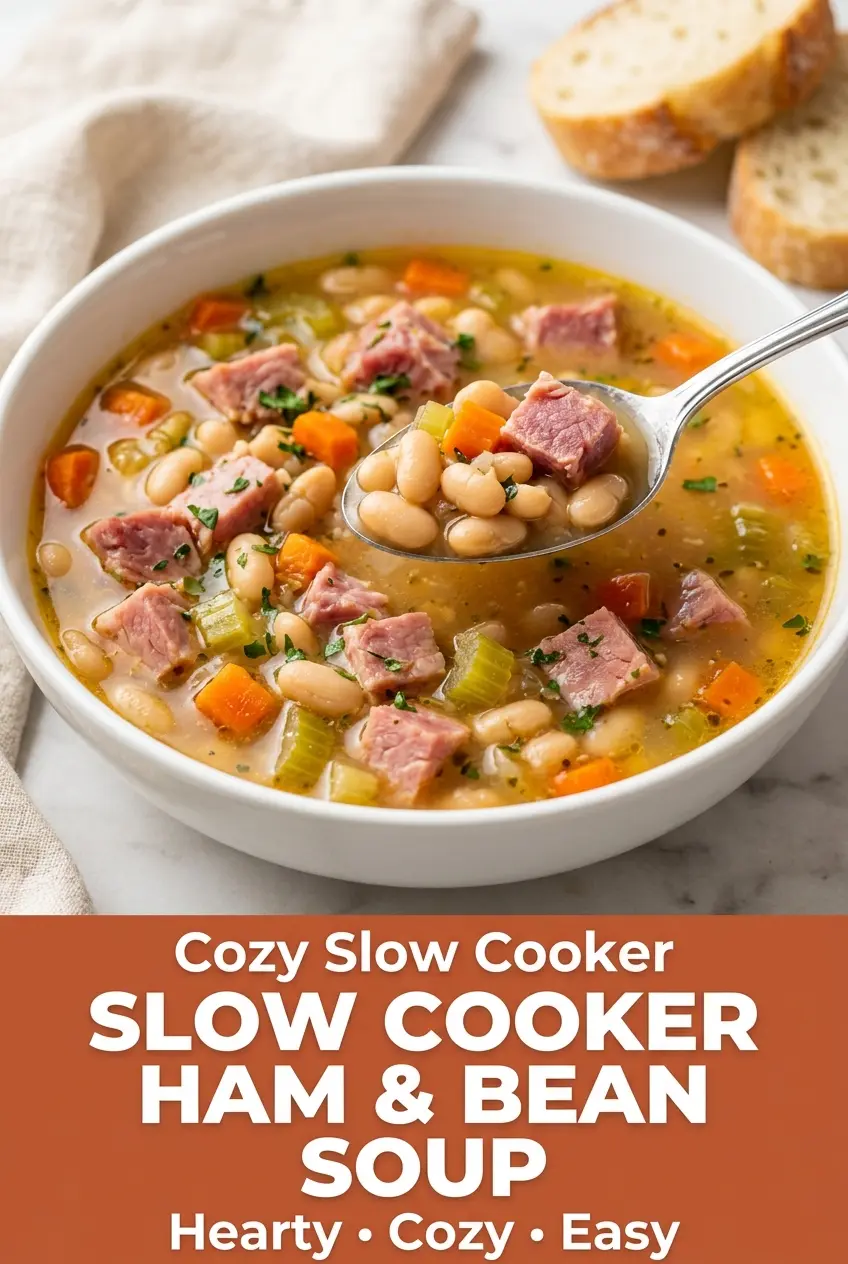
Slow Cooker Ham and Bean Soup
Ingredients
Equipment
Method
- Heat the olive oil in a skillet over medium heat. Cook the yellow onion, carrots, and celery for 5–6 minutes until slightly softened, then stir in the garlic and cook for 30 seconds until fragrant.
- Transfer the vegetables to a 6- to 8-quart slow cooker. Add the Great Northern beans, ham bone, diced ham, chicken broth, water, bay leaves, dried thyme, smoked paprika, and black pepper, then cover.
- Cook on Low for 8–9 hours or High for 5–6 hours until the beans are tender and the ham easily falls from the bone.
- Remove the ham bone and bay leaves. Shred any remaining meat from the bone, discard the bone, and return the shredded ham to the soup.
- Taste and season with salt if needed. Stir in the fresh parsley and cook for 5 more minutes.
- Ladle the soup into bowls and serve warm with crusty bread or buttery biscuits.