
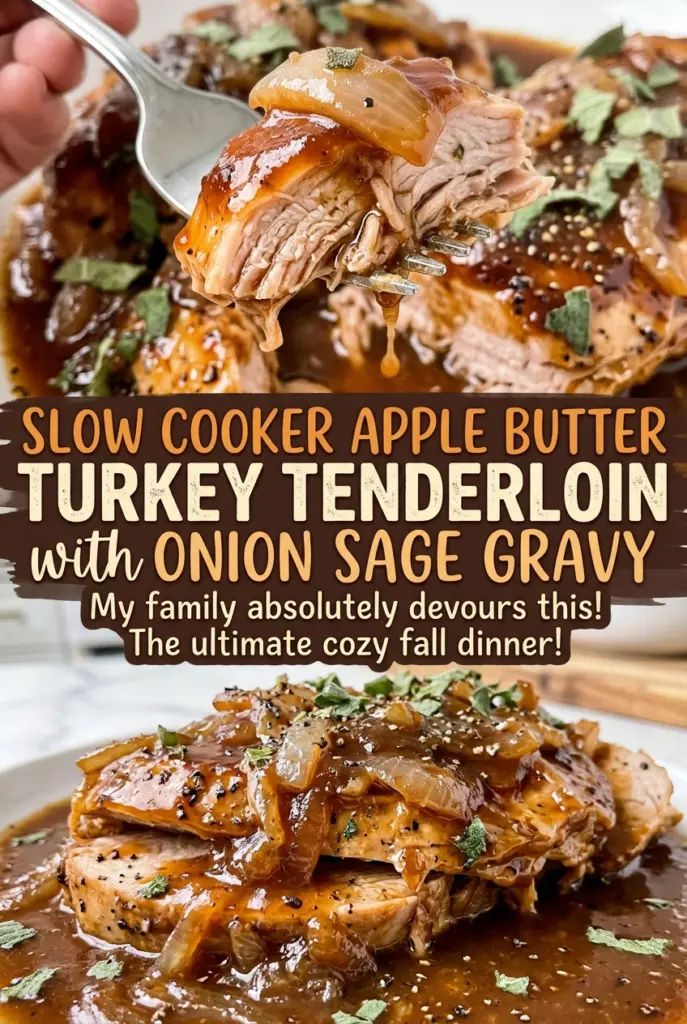
Slow Cooker Apple Butter Turkey Tenderloin with Onion Sage Gravy
When the slow cooker lid comes off, the apple butter coating is still clinging to the turkey, while the onions below have softened into the broth. That’s the start of…

By Ava
•
•
Reading time: 8 min
Tip: save now, make later.
When the slow cooker lid comes off, the apple butter coating is still clinging to the turkey, while the onions below have softened into the broth. That’s the start of this slow cooker apple butter turkey tenderloin with onion sage gravy: tender slices with a sweet-tangy coating and a savory gravy made from the cooking liquid.
I coat the tenderloins with apple butter and Dijon before setting them over the onion bed. The apple butter brings mellow sweetness, and Dijon keeps the coating from tasting one-note. After the turkey cooks, the onions and broth go into a saucepan, where a quick cornstarch slurry turns them into gravy. The result is a cozy, balanced plate with no separate sauce base to build.
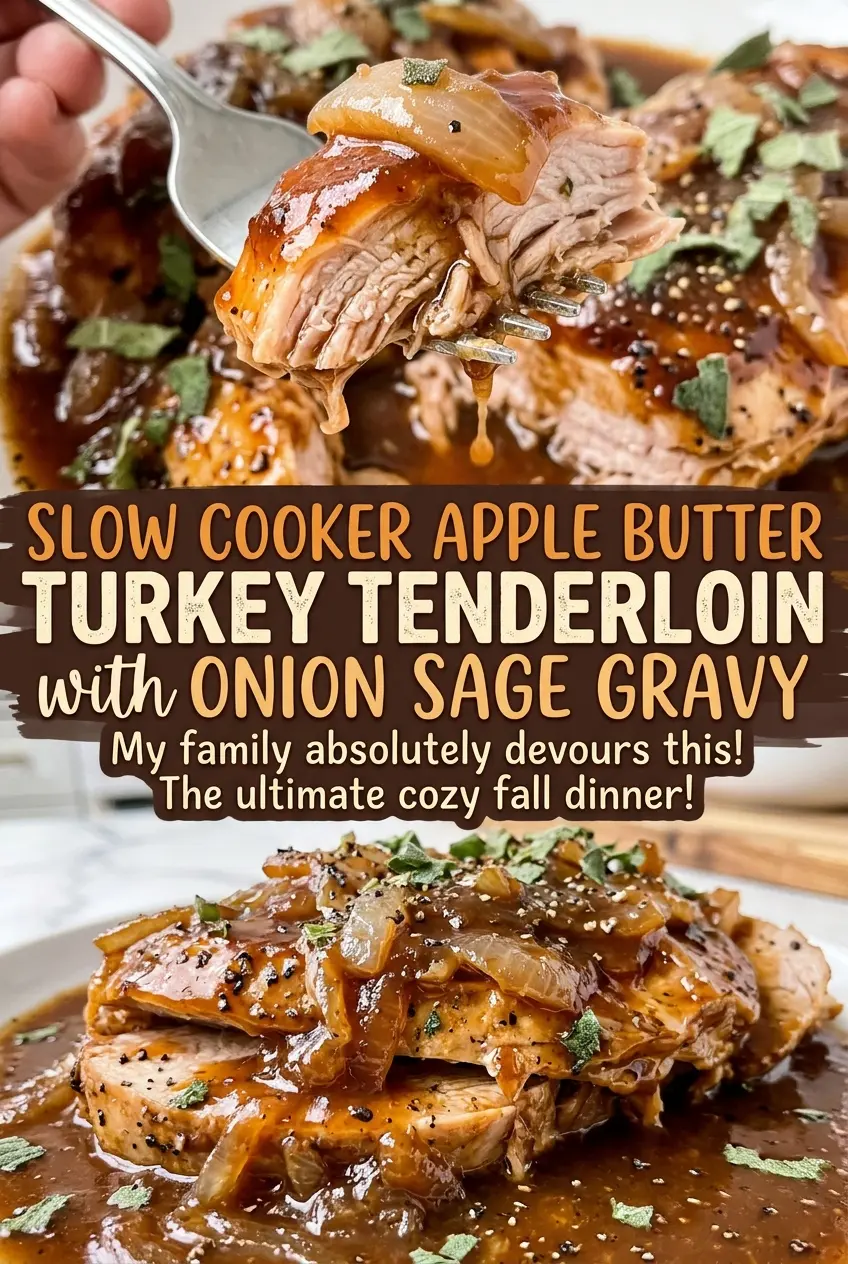
Kitchen Note
Let the turkey rest under a loose foil tent before slicing. Cutting right away lets more of the juices run onto the board instead of staying in the slices.
Save this slow cooker apple butter turkey tenderloin for its sweet-tangy coating and onion sage gravy, all made from the same slow-cooker base.
Why the Turkey Sits Above the Onion-Broth Bed
The sliced onion and broth do more than flavor the gravy. They create a moist base beneath the tenderloins, while keeping the turkey on top rather than submerged in liquid. That placement also helps the apple butter and Dijon coating stay on the meat instead of dispersing through the broth before it has time to cling.
Keep the onion layer spread across the bottom of the slow cooker, then set the coated tenderloins over it. Don’t stir the coating into the broth or tuck the turkey underneath the onions. The broth will pick up the onion and sage as everything cooks, and that seasoned liquid becomes the foundation for the gravy. A 4- to 6-quart slow cooker gives the tenderloins room to sit over the onions without crowding the cooking base.
This layered approach gives you two distinct textures at the end: turkey with its apple-Dijon coating, and soft onions in a savory liquid that thickens into gravy. If you mix everything together at the beginning, the coating loses that contrast and the gravy starts out sweeter than intended.
What Apple Butter and Dijon Each Bring to the Turkey
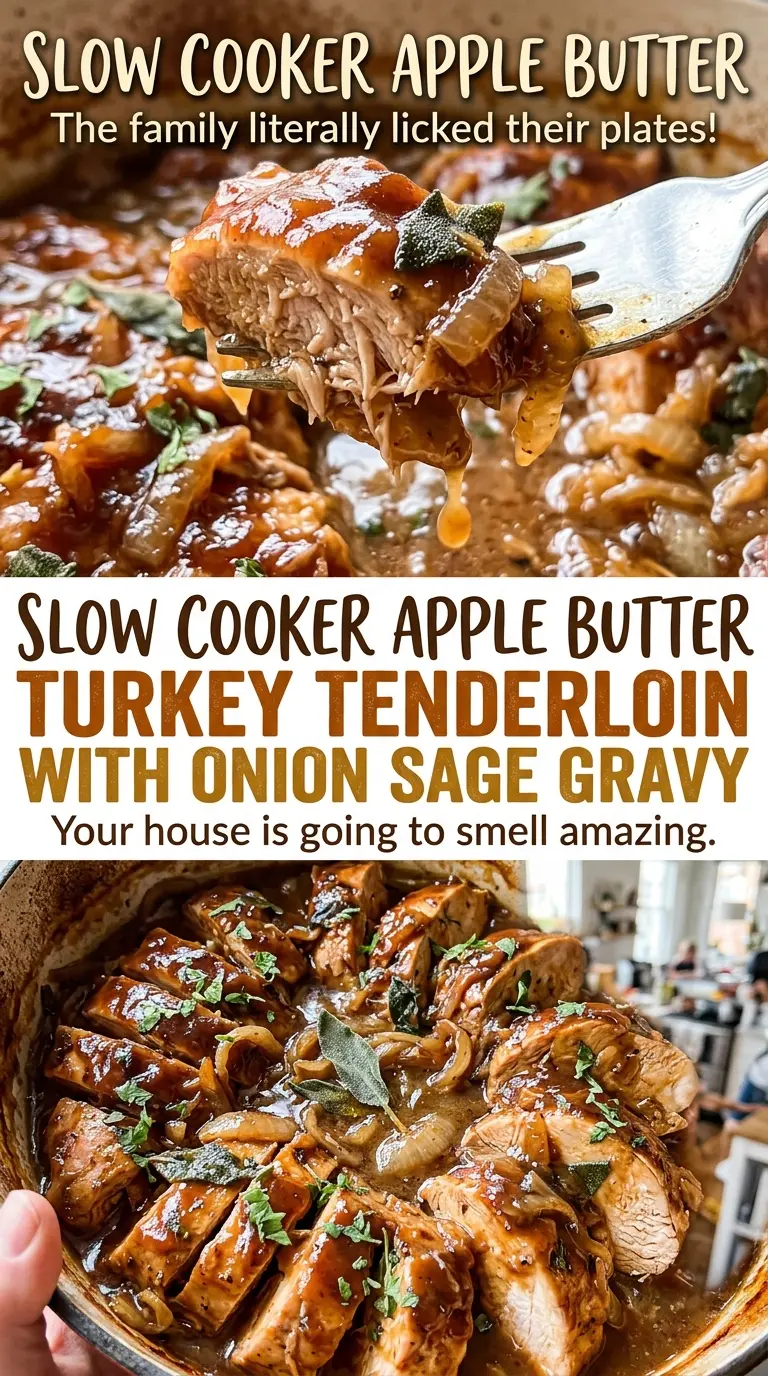
- Turkey tenderloins — These cook relatively quickly compared with a whole turkey breast, so check the thickest part rather than judging doneness by the outside color. Patting them dry first helps the apple butter and Dijon coat the surface instead of sliding over moisture.
- Apple butter — Its concentrated apple flavor and thick texture make it useful as a coating, not just a spread. Applesauce isn’t a direct swap: it has a looser consistency and won’t cling in the same way. Use apple butter for the texture and sweetness this dish is built around.
- Dijon mustard — Dijon gives the coating a sharp, savory edge that balances the apple butter. A coarse or whole-grain mustard would change the texture and make the coating less smooth, so Dijon is the best fit here.
- Yellow onion, chicken broth, and rubbed sage — The onion softens into the gravy, while broth carries its flavor through the slow cooker. Low-sodium broth leaves room for the kosher salt on the turkey without making the finished gravy overly salty. Dried rubbed sage has a soft, earthy character that works well in the liquid; ground sage is finer and can taste more concentrated.
- Cornstarch — Whisking it with cold water first makes a smooth slurry that thickens the hot cooking liquid. Don’t add dry cornstarch straight to the saucepan; it tends to form stubborn lumps before it disperses.
Layering the Turkey and Turning the Cooking Liquid Into Gravy
Make the onion-sage base
Scatter the thinly sliced yellow onion in the slow cooker, then add the chicken broth and dried rubbed sage. The onions should form an even bed beneath the turkey rather than a mound on one side. This gives the tenderloins a steady place to rest and keeps the cooking liquid ready to become gravy later.
Coat the tenderloins
Pat the turkey dry and season it with kosher salt and black pepper. Stir the apple butter and Dijon together until the mixture looks even, then coat the tenderloins and place them on the onions. If the meat is damp, the coating can slip instead of adhering, so take a moment to blot it well.
Cook until the center is done
Cover and cook on LOW for 3 to 4 hours or HIGH for 1 1/2 to 2 1/2 hours, until the thickest part of the turkey reaches 165°F. Start checking toward the early end of the cooking window, since tenderloins can vary in thickness and slow cookers don’t all heat at the same rate. Transfer the turkey to a cutting board and tent it loosely with foil while it rests.
Thicken the onion-sage gravy
Pour the cooking liquid and onions into a 2-quart saucepan and bring the mixture to a simmer over medium heat. While it heats, whisk the cornstarch and cold water until smooth; a cloudy, lump-free slurry is ready to use. Whisk it into the simmering liquid and cook for 1 to 2 minutes, until the gravy thickens. Slice the turkey and serve it with the onion sage gravy.
Two Ways to Change the Texture Without Changing the Flavor Base
A smoother gravy with no onion pieces
For a more polished, smooth gravy, strain the cooking liquid before thickening and leave the softened onion slices out of the finished sauce. The broth still carries their sage-and-onion flavor, but the texture is silkier and easier to spoon over each slice.
A chunkier onion gravy
Cut the onion into thicker slices instead of thin ones if you want more distinct pieces in the gravy. They’ll keep a little more shape through cooking, giving the sauce a heartier texture while keeping the same apple-butter-coated turkey and sage-broth base.
Storage and Reheating
- Refrigerator: Refrigerate the turkey and gravy within 2 hours and use within 3 to 4 days. The onions soften further in storage, and the gravy may thicken as it chills.
- Freezer: Freeze sliced turkey with gravy in an airtight freezer-safe container for up to 3 months. The turkey freezes well, though the onion pieces will be softer after thawing.
- Reheating: Warm covered portions gently in the microwave or in a saucepan over low heat until hot throughout. Avoid high heat or a long uncovered reheat, which can dry the turkey and make the gravy reduce too far.
Questions That Come Up When Cooking Turkey Tenderloins
Slow Cooker Apple Butter Turkey Tenderloin with Onion Sage Gravy
Ingredients
Equipment
Method
- Add the onion, chicken broth, and sage to a 4- to 6-quart slow cooker.
- Pat the turkey dry.
- Season the turkey with the salt and pepper.
- Stir the apple butter and Dijon mustard together.
- Coat the turkey with the apple butter mixture and place it on top of the onions.
- Cover and cook on LOW for 3 to 4 hours or HIGH for 1 1/2 to 2 1/2 hours, until the thickest part of the turkey reaches 165°F.
- Transfer the turkey to a cutting board, tent it loosely with foil, and let it rest for 10 minutes.
- Pour the cooking liquid and onions into a 2-quart saucepan and bring to a simmer over medium heat.
- Whisk the cornstarch and cold water together until smooth.
- Whisk the slurry into the simmering liquid and cook for 1 to 2 minutes, until thickened.
- Slice the turkey and serve with the onion sage gravy.