
Self-Saucing Pumpkin Pecan Cobbler
As the boiling water hits the brown sugar, it looks like you’ve made a mistake. The batter gets covered, the pecans disappear under the water, and there’s no obvious sign…

By Ava
•
•
Reading time: 8 min
Tip: save now, make later.
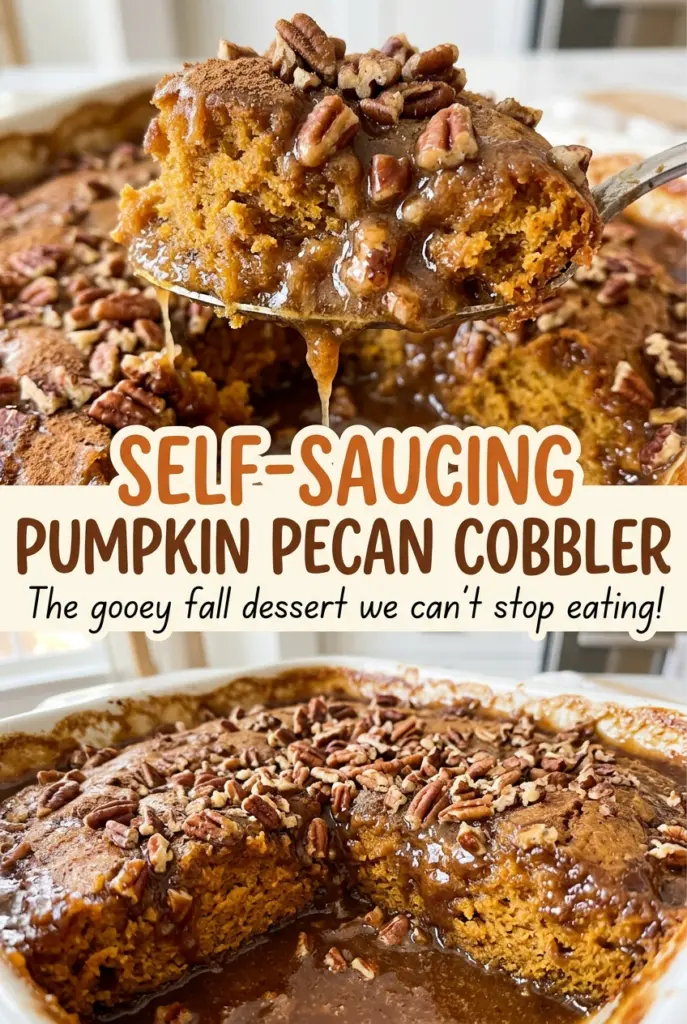
As the boiling water hits the brown sugar, it looks like you’ve made a mistake. The batter gets covered, the pecans disappear under the water, and there’s no obvious sign of a cake or a sauce. Then the oven does its work: the top puffs into a tender pumpkin cake while a warm brown-sugar sauce bubbles around the edges. That little bit of kitchen drama is exactly what makes this Self-Saucing Pumpkin Pecan Cobbler worth making.
I make the batter in one bowl and keep the topping in layers rather than stirring everything together. Plain pumpkin puree gives the cake its soft texture without bringing extra sugar or spice, and the brown sugar melts into the boiling water as the cobbler bakes. You don’t need a separate saucepan or a frosting step. Give the baked cobbler a short rest before serving, and the sauce thickens enough to spoon over each portion.
Kitchen Note
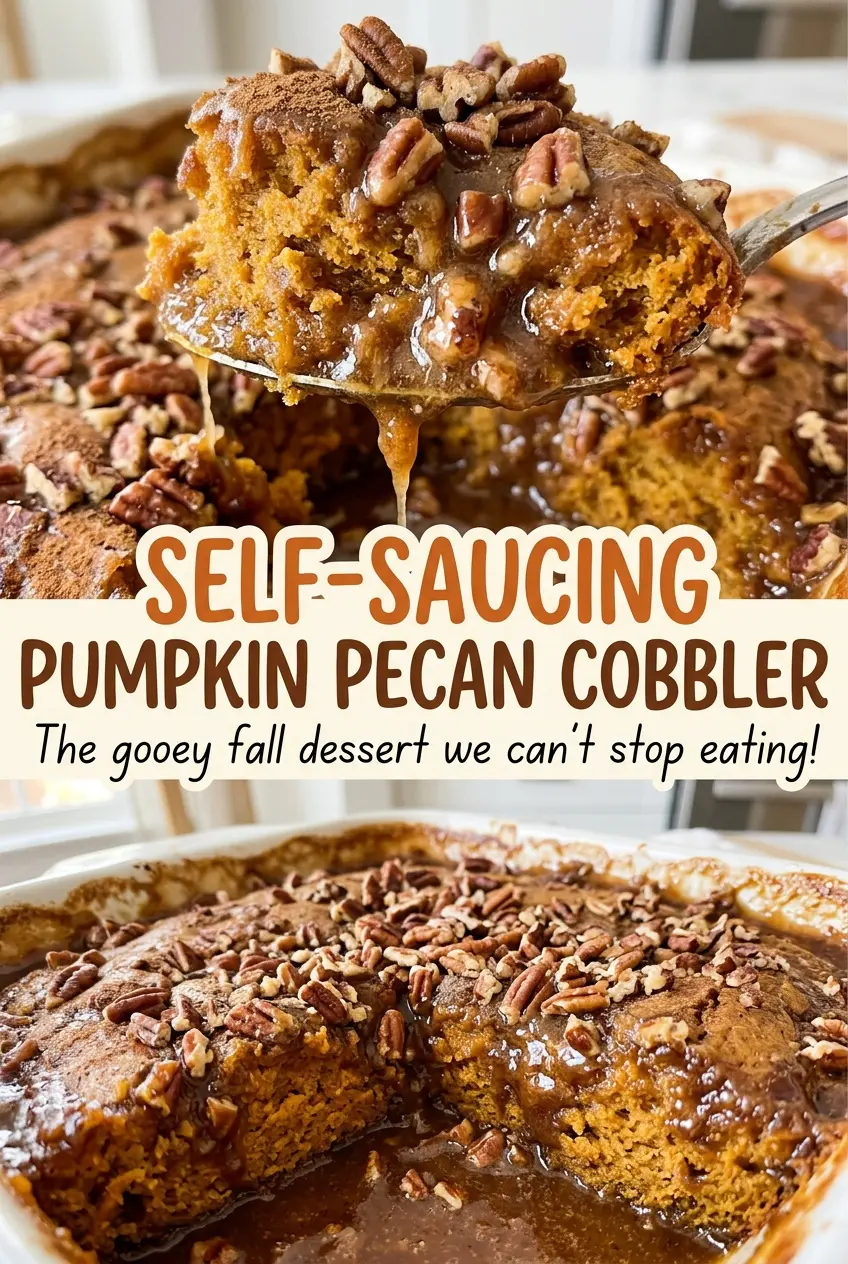
The 15-minute rest is part of the bake, not an optional pause. The sauce is loose when the cobbler first comes out, then thickens while the cake settles.
Save this Self-Saucing Pumpkin Pecan Cobbler for its soft pumpkin cake, pecan crunch, and warm brown-sugar sauce.
Why the Boiling Water Belongs on Top, Not in the Batter
The cobbler starts with a simple pumpkin cake batter, but the topping is built in a different order. Brown sugar goes over the spread batter, pecans go over the sugar, and boiling water goes over everything. It looks counterintuitive because the water covers the cake mixture, but that layering is what lets the dessert bake into two textures at once.
As the cobbler bakes, the cake rises and sets while the sugar and water make a sauce beneath and around it. Stirring would blend those layers together and change the way the cobbler bakes. Pour the water evenly over the topping and leave it alone; the surface may look wet going into the oven, but that’s expected. The finished top should be puffed and set, with sauce bubbling around the edges rather than a dry cake all the way through.
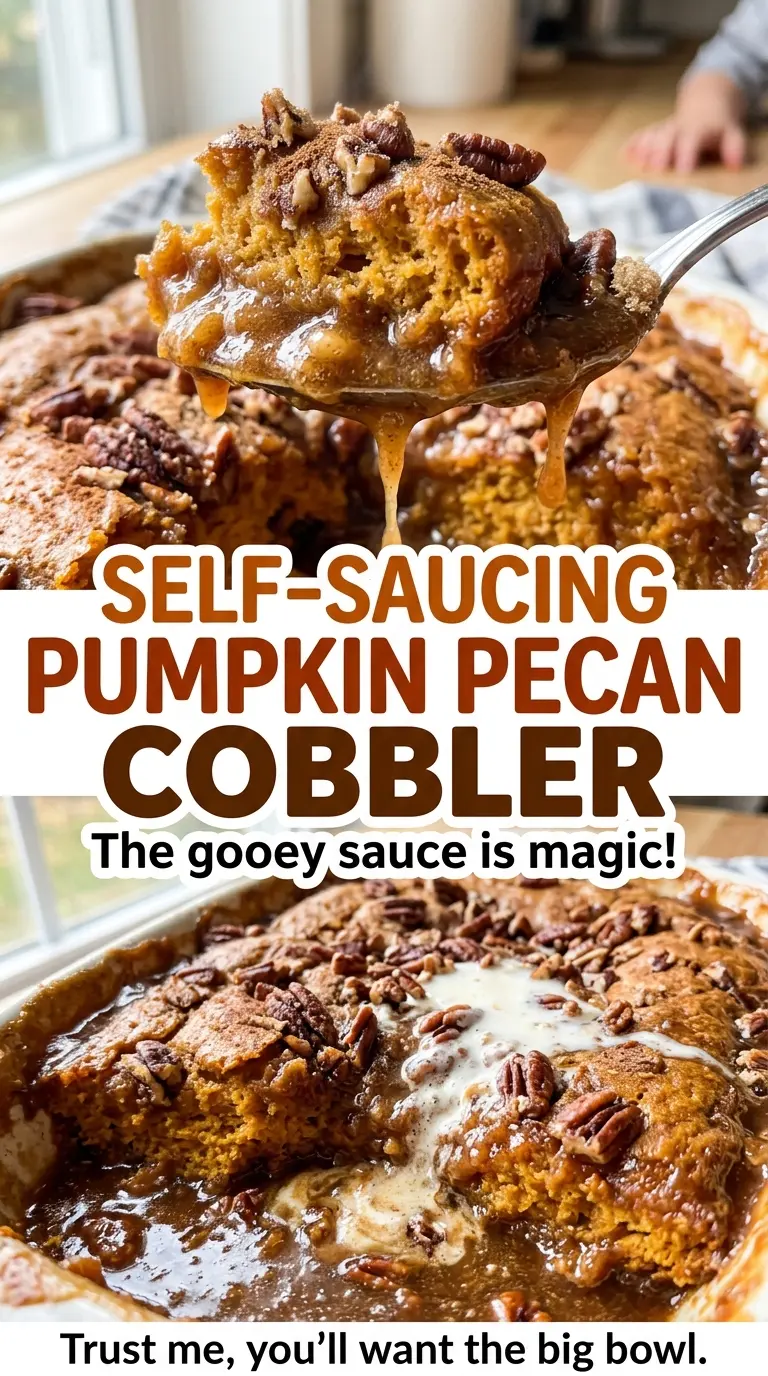
This isn’t a crisp with a crumb topping or a cake with frosting. The spoonful is best when it catches some of the soft pumpkin cake and some of the warm sauce in the same bite.
Why Plain Pumpkin and Brown Sugar Matter in This Cobbler
- Pumpkin puree — Use plain pumpkin puree, not pumpkin pie filling. Pie filling already contains sweetener and spices, so it would throw off the balance of the batter. A standard can of plain puree is fine; there’s no need for a specialty brand.
- All-purpose flour and baking powder — The flour gives the pumpkin layer its structure, and the baking powder helps it puff as it bakes. Fresh baking powder matters more than a particular flour brand; don’t swap in a different flour if you want the same tender cake texture.
- Milk and unsalted butter — Milk loosens the pumpkin into a spoonable batter, while melted butter adds richness. Unsalted butter lets the measured salt stay in control. Stir the wet ingredients together before adding them to the flour mixture so the butter doesn’t sit in one pocket.
- Cinnamon, ginger, and nutmeg — These ground spices bring the warm, familiar flavor without making the batter taste like pumpkin pie filling. Use spices that still smell fragrant when you open the jars; old, faded spices won’t come through as clearly.
- Light brown sugar — This is the base of the sauce, not just a sweet sprinkle. Its molasses notes give the liquid a deeper, rounder taste than plain sugar would.
- Chopped pecans — Chopped nuts spread their crunch across the top more evenly than whole pecans. They add a toasted contrast to the soft cake and sauce, so quality matters less than keeping them fresh and crisp.
Building the Pumpkin Cake and Self-Saucing Top
Mix the dry ingredients first
Heat the oven to 350°F and grease an 8-inch square baking dish. In a large bowl, whisk the flour with the granulated sugar, baking powder, cinnamon, ginger, nutmeg, and salt until the spices look evenly distributed. Break up any clumps of baking powder or spice as you whisk. An even dry mixture helps the cake rise consistently from corner to corner.
Bring the batter together gently
In a separate medium bowl, whisk the pumpkin puree with the milk, melted butter, and vanilla. Stir that mixture into the flour bowl just until combined, scraping the bottom where dry flour can hide. Stop when you no longer see pockets of flour; a few small lumps are fine. Spread the batter evenly in the prepared dish so it bakes to a similar thickness throughout.
Layer the sugar, pecans, and water
Sprinkle the packed light brown sugar evenly over the batter, then scatter the chopped pecans across the top. Pour the boiling water carefully and evenly over the topping. Don’t stir, even if the water makes the surface look strange or patchy. Spreading the water across the dish helps the sauce form throughout instead of leaving a dry section at one edge.
Bake until the cake sets and the sauce bubbles
Bake for 40 to 45 minutes, until the cake looks set and puffed and the sauce bubbles around the edges. The surface should look like a baked cake, not like loose batter; the sauce at the perimeter is meant to stay fluid. If the cobbler hasn’t reached those cues at the shorter bake time, let it continue until they appear. Once it’s out of the oven, let it stand for 15 minutes before serving so the sauce can thicken.
Two Changes for the Topping, Depending on Who’s at the Table
A nut-free cobbler without the pecans
Leave the pecans off for a nut-free adaptation. The pumpkin cake and brown-sugar sauce still bake as usual, but you’ll lose the crisp, toasted contrast on top. For an allergy, use clean equipment and ingredients that haven’t had contact with nuts.
A lighter-tasting sauce with granulated sugar
Replace the brown sugar in the topping with the same quantity of granulated sugar if you want a cleaner, less molasses-forward sweetness. The boiling water still makes a sauce, though it won’t have the same deep caramel note as the brown-sugar version.
Storage and Reheating
- Refrigerator: Store covered for 3 to 4 days. The cake softens as it sits in the sauce, but it’s still good spooned together.
- Freezer: Freeze cooled portions in airtight containers for up to 2 months. The sauce may separate or soften after thawing, so the texture won’t be quite as fresh.
- Reheating: Warm an individual portion in the microwave until heated through. Reheat only what you plan to eat; repeatedly warming the whole dish can make the cake soggy.
Questions About the Pan, Pumpkin, and Timing
Self-Saucing Pumpkin Pecan Cobbler
Ingredients
Equipment
Method
- Heat the oven to 350°F.
- Grease an 8-inch square baking dish.
- In a large bowl, whisk together the flour, granulated sugar, baking powder, cinnamon, ginger, nutmeg, and salt.
- In a medium bowl, whisk together the pumpkin puree, milk, melted butter, and vanilla.
- Stir the pumpkin mixture into the flour mixture just until combined.
- Spread the batter evenly in the prepared dish.
- Sprinkle the brown sugar evenly over the batter.
- Scatter the pecans over the top.
- Carefully pour the boiling water evenly over the topping without stirring.
- Bake for 40 to 45 minutes, until the cake is set and puffed and the sauce bubbles around the edges.
- Let the cobbler stand for 15 minutes before serving so the sauce can thicken.