
Sausage and Apple Stuffing
When the sausage starts browning in the skillet, the fat turns glossy and the kitchen smells of sage before the bread even reaches the oven. I used to rush the…

By Ava
•
•
Reading time: 9 min
Tip: save now, make later.
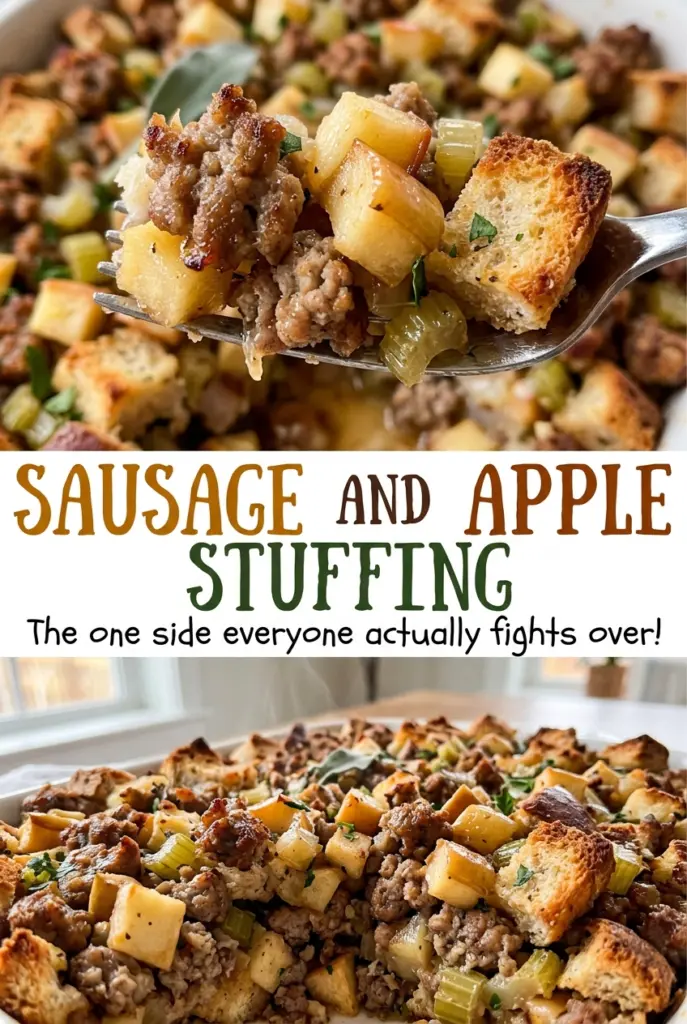
When the sausage starts browning in the skillet, the fat turns glossy and the kitchen smells of sage before the bread even reaches the oven. I used to rush the tossing and end up with a few soggy cubes beside dry ones; this Sausage and Apple Stuffing gets an even soak before it bakes, so the savory sausage and softened apple show up throughout.
The vegetables cook in the same skillet after the sausage, which lets them pick up the browned bits left behind. Onion and celery turn tender, while the apple softens without disappearing into the bread. Dried bread cubes give you a sturdy base that can absorb broth without collapsing.
Then the pan gets covered first and uncovered for the finish. The covered bake lets the center heat through, and the final stretch gives the top its golden crust. You get tender stuffing beneath crisp edges, with little bites of sausage, apple, and parsley in every scoop.
Kitchen Note
Use the biggest bowl you have for tossing the bread, sausage, and vegetables. The cubes need room to move, or the broth can moisten some while leaving dry pockets elsewhere.
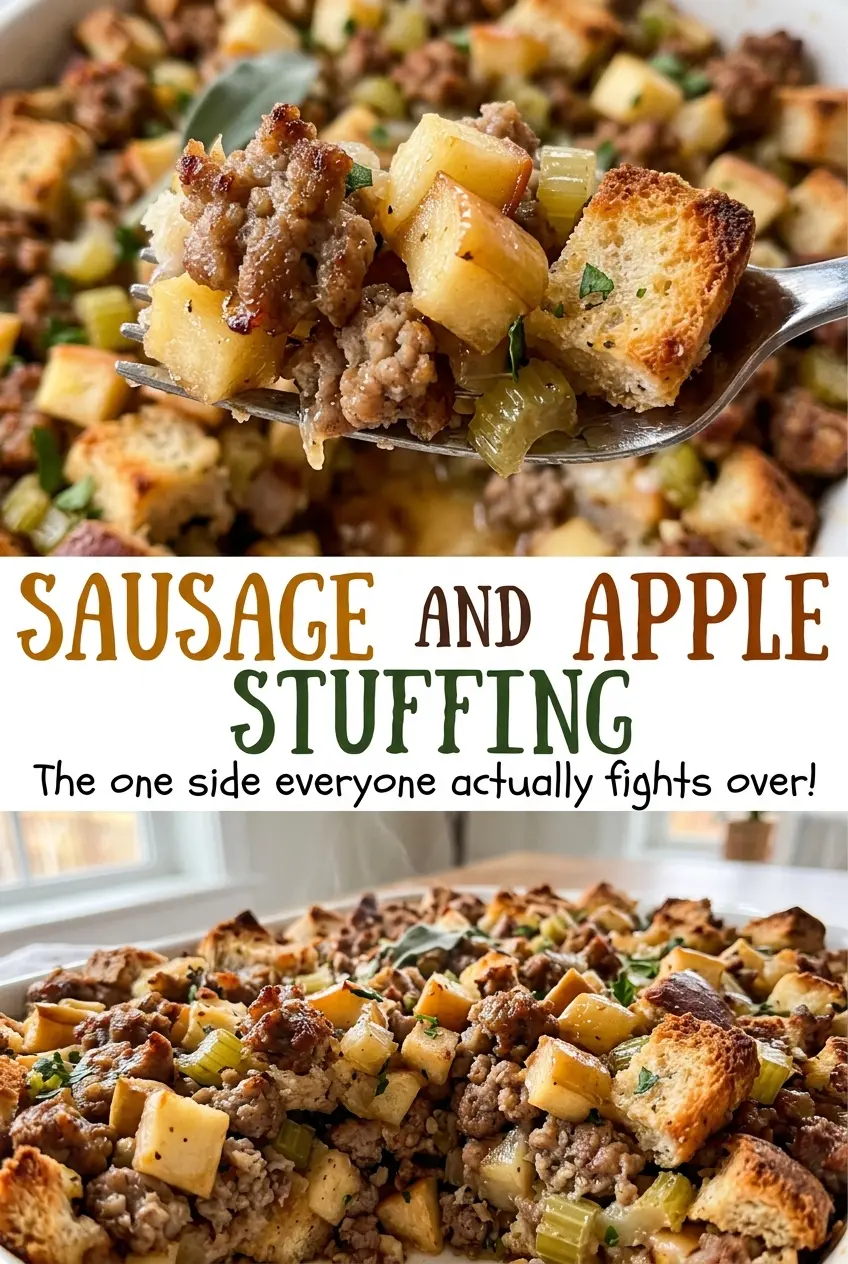
Save this Sausage and Apple Stuffing for its golden top, tender center, and savory bites of pork and apple.
Why This Stuffing Is Covered Before It Gets Its Golden Top
A pan of stuffing has two different jobs to do: the middle needs enough time to heat through, while the exposed bread needs to turn crisp rather than dry out. Covering the dish for the first part of baking holds in moisture as the broth and eggs set around the bread cubes. If you leave the dish uncovered the whole time, the top can brown before the center has finished cooking.
Taking the foil off for the last stretch changes the texture at the surface. Moisture escapes, the bread on top dries and turns golden, and the center stays tender underneath. It’s a small timing choice, but it’s what gives this stuffing contrast instead of one even, soft texture. Keep the foil fitted tightly for the covered portion, then let the top bake uncovered until it’s golden and the center is hot.
The Bread Cubes, Sausage, and Egg-Broth Mix Set the Texture
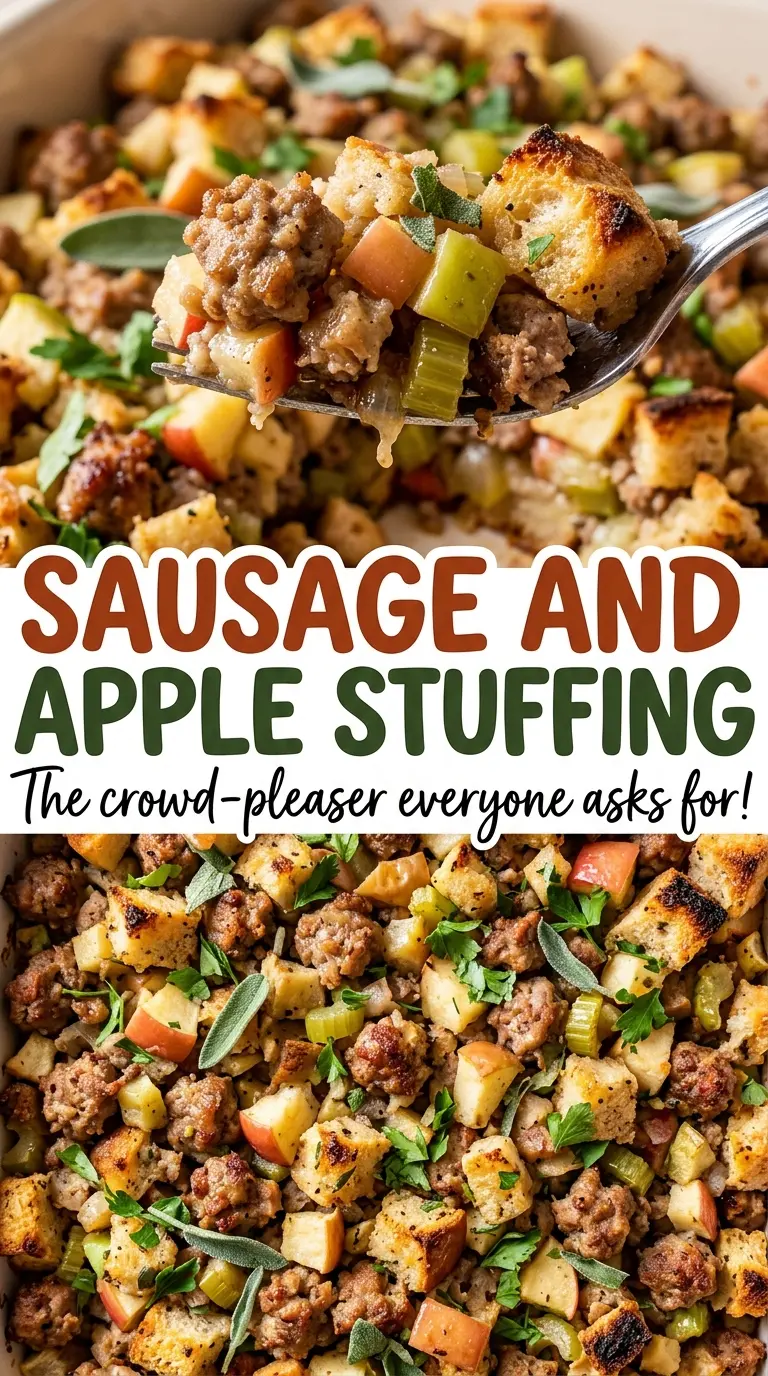
- Unseasoned dried bread cubes — They hold their shape as they absorb broth, and the unseasoned kind lets the sausage, sage, and thyme do the seasoning. A plain grocery-store package is fine; heavily seasoned cubes can make the finished dish salty or push the herbs in a different direction. For a gluten-free version, use unseasoned dried gluten-free cubes.
- Bulk pork sausage — It brings savory flavor and richness to the stuffing, and its crumbled texture spreads through the bread more evenly than large pieces. Choose bulk sausage rather than patties so it’s easy to break into small bits in the skillet. A standard package works well; specialty sausage isn’t needed.
- Apple — Peeling, coring, and chopping it helps the pieces soften alongside the onion and celery. A firm apple holds its shape better than a mealy one, but there’s no need to seek out an expensive variety. A firm pear can stand in for the apple if you want a gentler, less tart fruit flavor.
- Low-sodium chicken broth and eggs — The broth moistens the dried cubes, while the eggs help the mixture hold together once baked. Low-sodium broth leaves room for the sausage and measured kosher salt to season the dish without making it overly salty. Whisk the eggs into the broth before pouring so they distribute evenly.
- Sage, thyme, and fresh parsley — Dried sage and thyme season the skillet vegetables, and fresh parsley adds a clean, herbal note when tossed through the mixture. Fresh parsley is worth using here for its brighter taste, while ordinary dried herbs from the spice cabinet work well for the sage and thyme.
Building Sausage and Apple Stuffing Without Dry Pockets
Brown the sausage into small crumbles
Heat the oven to 350°F and grease a 9×13-inch baking dish. Put the dried bread cubes in a large bowl, then cook the sausage in a 12-inch skillet over medium heat for 8 to 10 minutes, breaking it into small pieces as it browns. Cook until the sausage reaches 160°F, then transfer it to the bread bowl. Small crumbles are easier to distribute than a few large chunks.
Soften the vegetables in the sausage skillet
Melt the butter in the same skillet, then add the chopped onion, celery, and peeled, cored, chopped apple. Cook for 6 to 8 minutes, until the vegetables have softened and the apple is beginning to turn tender. Stir in the dried sage, thyme, and black pepper, then transfer everything to the bowl. If the vegetables still feel firm, give them the full cooking time before moving on.
Whisk the broth and eggs before tossing
In a medium bowl, whisk together the chicken broth, eggs, and kosher salt. Pour this mixture over the bread, sausage, and vegetables, add the chopped parsley, and toss until everything is evenly moistened. Look across the bowl for dry bread surfaces instead of relying on a quick stir at the top. Transfer the mixture to the prepared baking dish and spread it out evenly.
Bake covered, then uncover for the finish
Cover the dish tightly with foil and bake for 30 minutes. Remove the foil and bake for another 20 to 25 minutes, until the top is golden and the center reaches 165°F. If the top is browning but the center hasn’t reached that temperature, keep baking until the center is ready. Let the stuffing rest for 10 minutes before serving so it settles and scoops more neatly.
Three Swaps for a Different Take on Sausage and Apple Stuffing
Use gluten-free dried bread cubes
Replace the regular cubes with a 12-ounce package of unseasoned dried gluten-free bread cubes. The stuffing keeps its savory sausage-and-herb character, though gluten-free cubes can absorb broth a little differently, so toss thoroughly and check that the bread is evenly moistened before it goes into the dish.
Trade the apple for a firm pear
Use one medium firm pear in place of the apple, peeling, coring, and chopping it the same way. It softens in the skillet but gives the stuffing a milder fruit note and less tartness. Choose a pear that still feels firm so the pieces don’t disappear while the vegetables cook.
Leave out the apple for a more savory pan
Skip the apple and cook the onion and celery in the butter until softened before adding the herbs. The result is less sweet and a little more straightforwardly savory, with the same sausage, sage, and thyme leading each bite.
Storage and Reheating
- Refrigerator: Store leftovers covered for 3 to 4 days. The crisp top softens as it chills, but the center stays moist.
- Freezer: Freeze cooled portions in airtight containers for up to 1 month for the best texture. Thaw overnight in the refrigerator before reheating.
- Reheating: Cover the stuffing with foil and warm it in a 325°F oven until steaming throughout; uncover it near the end if you want to crisp the top again. Reheating uncovered the whole time can dry the edges before the center is hot.
Questions That Come Up When Making This Stuffing
Sausage and Apple Stuffing
Ingredients
Equipment
Method
- Heat the oven to 350°F.
- Grease a 9x13-inch baking dish.
- Place the bread cubes in a large bowl.
- Cook the sausage in a 12-inch skillet over medium heat for 8 to 10 minutes, breaking it into small pieces, until browned and cooked through to 160°F.
- Transfer the sausage to the bowl with the bread cubes.
- Melt the butter in the skillet.
- Add the onion, celery, and apple, and cook for 6 to 8 minutes until softened.
- Stir in the sage, thyme, and black pepper.
- Transfer the mixture to the bowl.
- Whisk the chicken broth, eggs, and kosher salt in a medium bowl.
- Pour the broth mixture over the bread mixture.
- Add the parsley and toss until evenly moistened.
- Transfer the mixture to the prepared baking dish.
- Cover tightly with foil.
- Bake for 30 minutes.
- Remove the foil.
- Bake for 20 to 25 minutes, until the top is golden and the center reaches 165°F.
- Let the stuffing rest for 10 minutes before serving.