
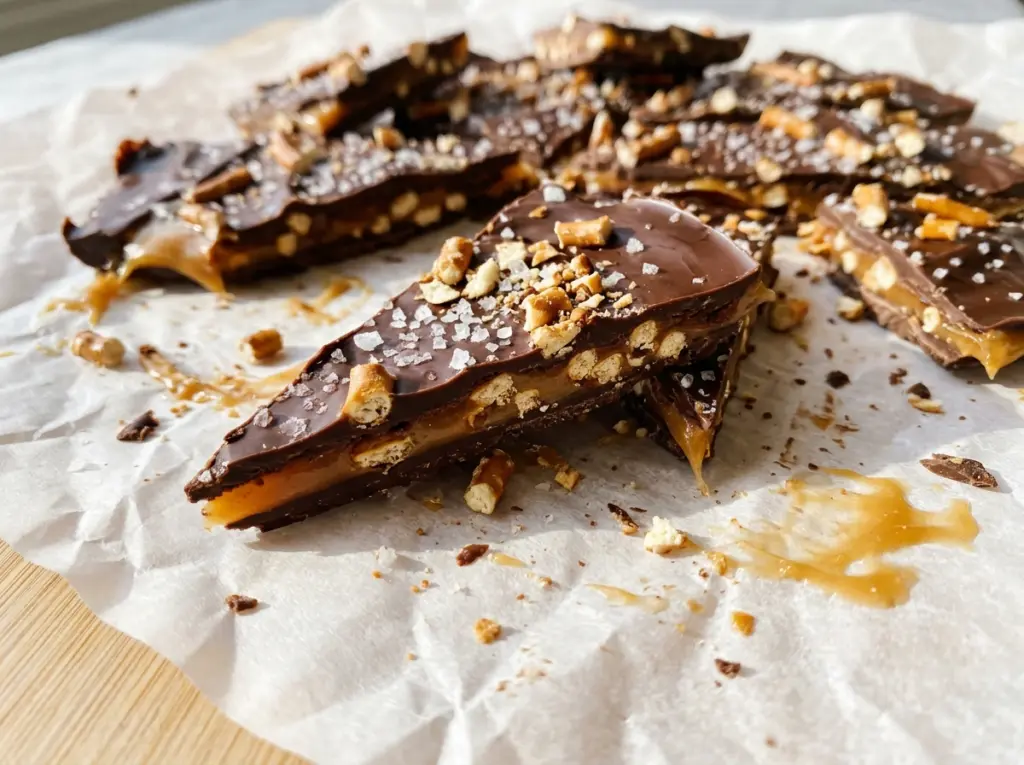
Salted Caramel Pretzel Bark
The butter and brown sugar turn glossy as they boil, and the whole kitchen starts smelling like toffee before the pretzels even go into the oven. I learned not to…

By Ava
•
•
Reading time: 9 min
Tip: save now, make later.
The butter and brown sugar turn glossy as they boil, and the whole kitchen starts smelling like toffee before the pretzels even go into the oven. I learned not to rush the next part: the caramel needs to bubble across the pan, not just look melted at the edges. That gives this salted caramel pretzel bark its crisp, snappy base instead of patches that feel soft or sticky.
The balance comes from keeping the pretzels in one layer and letting the caramel do the work of joining them. A few broken pretzels fill the gaps, so there aren’t big bare spots on the baking sheet. Then the chocolate melts right on top of the hot caramel. Once it’s spread and finished with flaky salt, every broken piece has a little crunch, caramel, and chocolate.
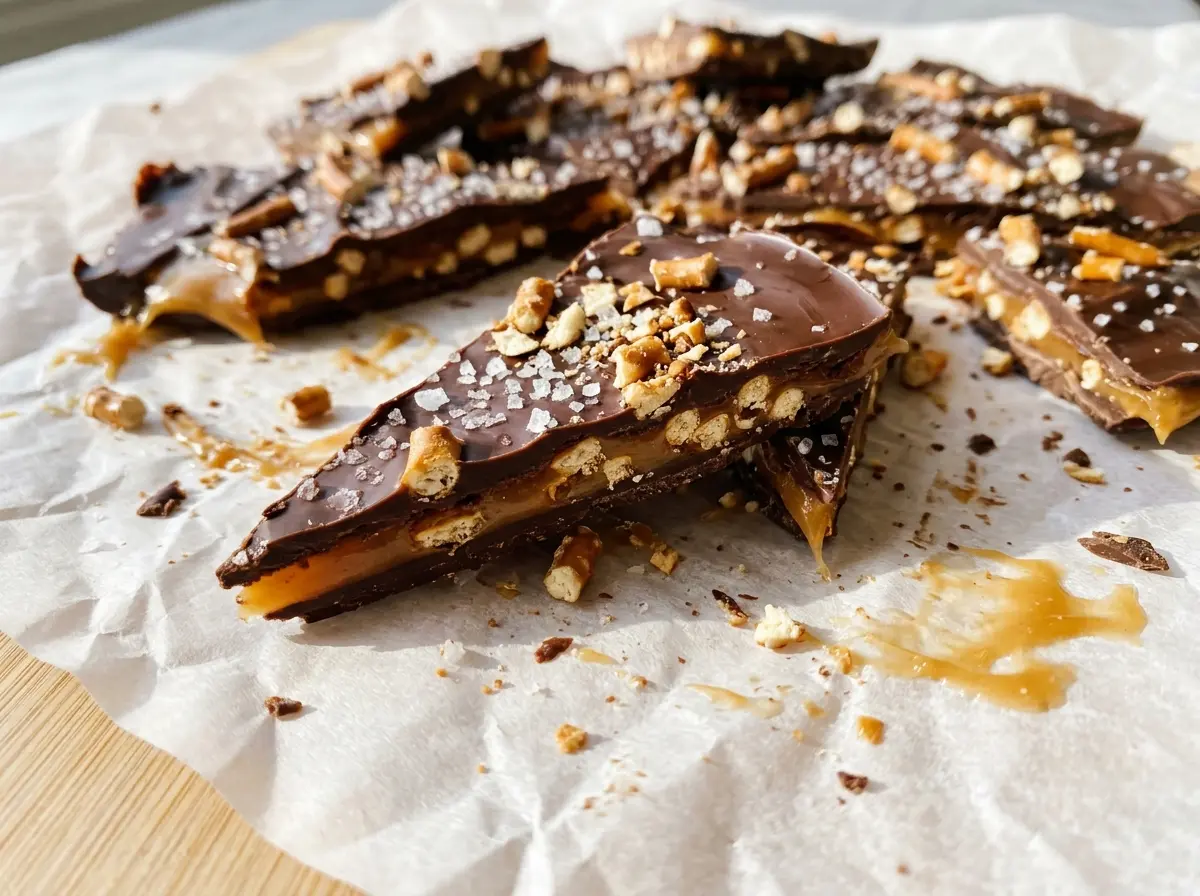
Kitchen Note
Give the chocolate chips the full 3 minutes to sit on the hot caramel before you spread them. They may still look like chips on top, but the bottoms will be soft enough to turn smooth with a spatula.
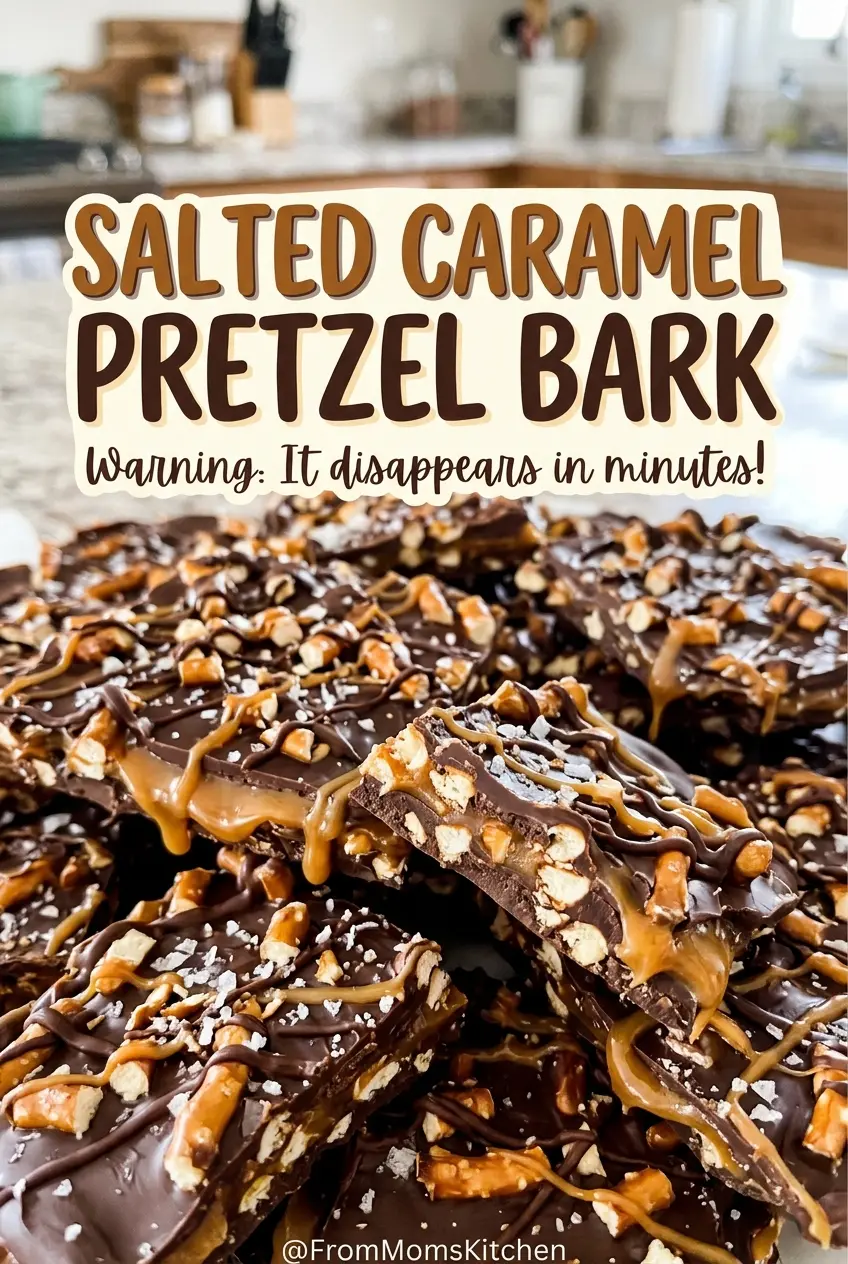
Save this salted caramel pretzel bark for a crunchy, chocolate-covered treat with a salty finish and a crisp toffee base.
Why the Caramel Needs to Bubble Across the Whole Pan
The stovetop boil and the oven bake do different jobs. Stirring the butter, brown sugar, and kosher salt as they come to a boil brings the caramel together, and keeping it boiling for 3 minutes gives it a head start before it hits the pretzels. Don’t stop at a few bubbles around the saucepan’s edge; the mixture should be actively boiling, with you stirring the whole time.
Once poured over the pretzels, the caramel needs another few minutes in the oven. The useful cue is visual: bubbles should show across the pan, not only in one corner. That tells you the caramel has heated through the pretzel layer. If you pull the pan while only the edges are bubbling, the middle hasn’t reached the same point yet. The range is 5 to 7 minutes, so keep your eye on the surface as it bakes rather than relying on the timer alone.
The pretzels should be arranged in a single layer before the caramel goes on. Breaking a few to fill open spaces helps the caramel and chocolate cover the surface more evenly, while leaving enough room for each pretzel to stay distinct. The goal isn’t a smooth sheet of caramel; it’s a connected layer that holds crunchy pretzels together.
Why Mini Pretzels, Brown Sugar, and Semisweet Chocolate Matter
- Mini pretzels — Their small shape makes a fairly even layer on the rimmed baking sheet, and they’re easy to break to fill gaps. A fresh, crisp bag matters more than a premium brand; stale pretzels won’t give the same clean crunch beneath the caramel. For a gluten-free adaptation, use gluten-free mini pretzels in the same amount. Their texture can vary by brand, but the single-layer arrangement still works.
- Unsalted butter — Butter gives the brown sugar its rich, smooth base. Unsalted butter lets the measured kosher salt do the seasoning, so the sweet caramel doesn’t turn unpredictably salty. A standard grocery-store butter is fine here; there’s no need for a specialty brand.
- Packed light brown sugar — Its molasses-rich sweetness gives this caramel a deeper, more toffee-like taste than plain white sugar. Pack it into the measuring cup so the amount is consistent. Don’t swap in granulated sugar; it won’t bring the same brown-sugar flavor to the caramel.
- Kosher salt — This salt goes into the caramel itself, where it offsets the brown sugar and butter. Keep it distinct from the flaky sea salt on top: the kosher salt seasons the base, while the flakes stay noticeable as a finishing touch.
- Semisweet chocolate chips — Semisweet chocolate keeps the topping sweet without crowding out the caramel. A familiar grocery-store bag works well. Bittersweet chocolate chips can replace them in the same amount for a darker, less-sweet finish; the bark will taste more cocoa-forward.
- Flaky sea salt — The larger flakes add a little crunch and a clear salty finish against the chocolate. Use flaky salt for the topping rather than replacing it with fine salt, which can scatter less evenly and taste sharper in concentrated spots.
How to Get the Pretzel Base and Chocolate to Set Cleanly
Arrange the pretzels edge to edge
Heat the oven to 350°F and line a 13×18-inch rimmed baking sheet with parchment paper. Arrange the mini pretzels in a single layer, breaking some to fill the gaps. A rimmed pan keeps the caramel contained as it bubbles, and the parchment makes it easier to lift the cooled bark away. Look over the whole surface before moving on; big bare areas leave room for the caramel to spread without pretzel underneath.
Boil the caramel, then bake until bubbling
Combine the butter, packed light brown sugar, and kosher salt in a medium saucepan over medium heat. Stir as the butter melts and the mixture comes to a boil, then keep stirring as it boils for 3 minutes. Pour the hot caramel evenly over the pretzels, then bake for 5 to 7 minutes. The caramel should be bubbling across the pan; if the bubbles are only at the edges, give it more time within that range.
Let the chocolate melt before spreading
Take the pan out of the oven and scatter the chocolate chips over the hot caramel. Let them stand for 3 minutes, then spread the softened chocolate evenly over the surface and sprinkle with flaky sea salt. Avoid rushing the spreading: the chips need that time against the hot caramel so they soften rather than drag across the pretzels in firm lumps. Cool the bark completely, refrigerate it for about 1 hour until firm, and break it into pieces to serve.
Two Useful Ways to Adapt the Bark
Make it with gluten-free mini pretzels
Replace the regular mini pretzels with gluten-free mini pretzels, keeping the same amount and arranging them in a single layer. The bark keeps its salty-crunchy contrast, though the pretzel texture may differ slightly between brands. The caramel and chocolate method stays the same.
Choose bittersweet chocolate for a darker finish
Use bittersweet chocolate chips in place of the semisweet chips, keeping the same amount. The sharper cocoa taste gives the bark a less-sweet finish and makes the salted caramel stand out more. Spread it over the hot caramel just as you would the semisweet topping.
Storage and Reheating
- Room temperature: Keep the pieces in an airtight container in a cool, dry spot for up to 1 week. Warm conditions can soften the chocolate and caramel.
- Refrigerator: Store airtight for up to 2 weeks. Chilling keeps the bark firm, but condensation may form if it’s left uncovered.
- Freezer: Freeze the pieces in an airtight container for up to 2 months. Thaw them while still covered to limit condensation on the chocolate.
- Reheating: Reheating isn’t needed; it softens the chocolate and caramel instead of bringing back the crisp texture.
Questions That Come Up While Making Pretzel Bark
Salted Caramel Pretzel Bark
Ingredients
Equipment
Method
- Heat the oven to 350°F.
- Line a 13x18-inch rimmed baking sheet with parchment paper.
- Arrange the pretzels in a single layer, breaking some to fill gaps.
- Combine the butter, brown sugar, and kosher salt in a medium saucepan over medium heat, stirring until the butter melts and the mixture comes to a boil.
- Boil for 3 minutes, stirring constantly.
- Pour the caramel evenly over the pretzels and bake for 5 to 7 minutes, until the caramel is bubbling across the pan.
- Remove the pan from the oven and scatter the chocolate chips over the hot caramel.
- Let stand for 3 minutes, then spread the melted chocolate evenly and sprinkle with flaky sea salt.
- Cool completely, then refrigerate for about 1 hour until firm.
- Break into pieces to serve.