
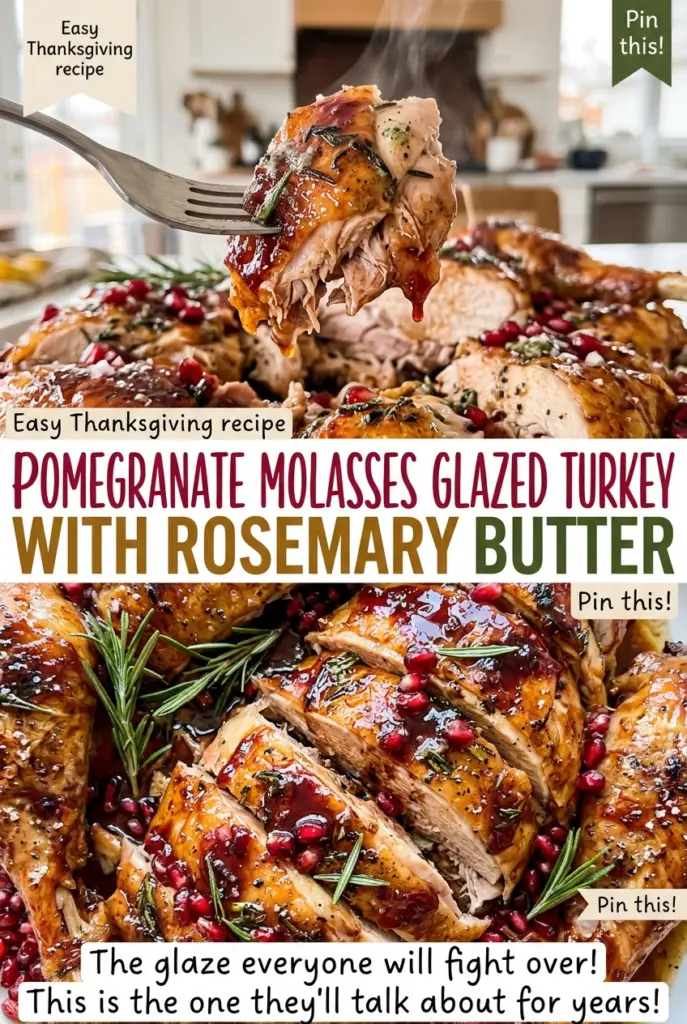
Pomegranate Molasses Glazed Turkey with Rosemary Butter
The rosemary and garlic butter starts smelling incredible before the turkey has even gone into the oven. I work it beneath the skin as well as over the outside, so…

By Ava
•
•
Reading time: 9 min
Tip: save now, make later.
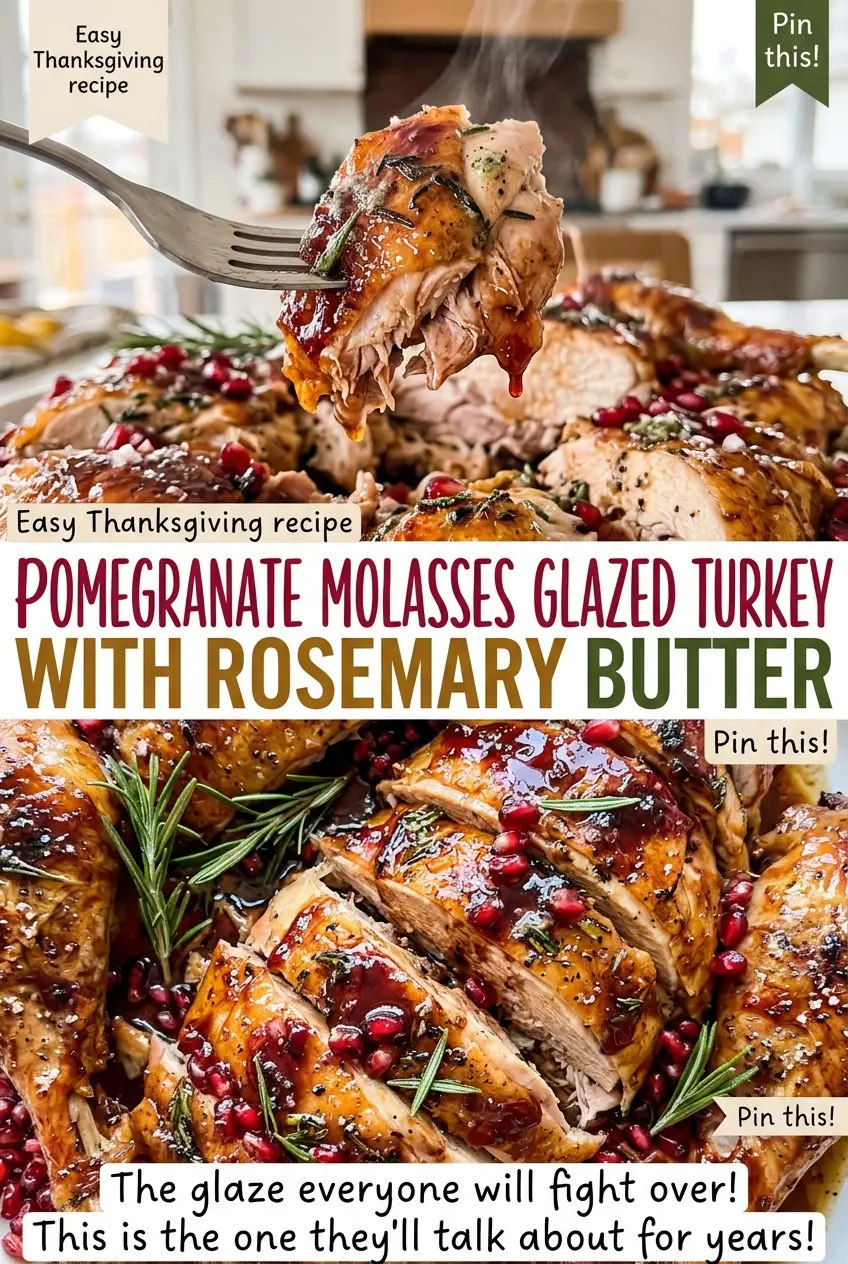
The rosemary and garlic butter starts smelling incredible before the turkey has even gone into the oven. I work it beneath the skin as well as over the outside, so the breast and thighs get that herby richness while the skin roasts. Pomegranate molasses brings a darker, tangier note than a typical honey glaze, which keeps each slice from tasting overly sweet.
This is a generous roast for a 12- to 14-pound bird, with a simple rhythm: the turkey roasts first, then gets brushed with glaze in two passes near the end. That timing lets the glaze turn glossy without sitting in the oven for hours. The result is tender turkey with a sweet-tart finish and rosemary butter tucked right where it can do the most good.
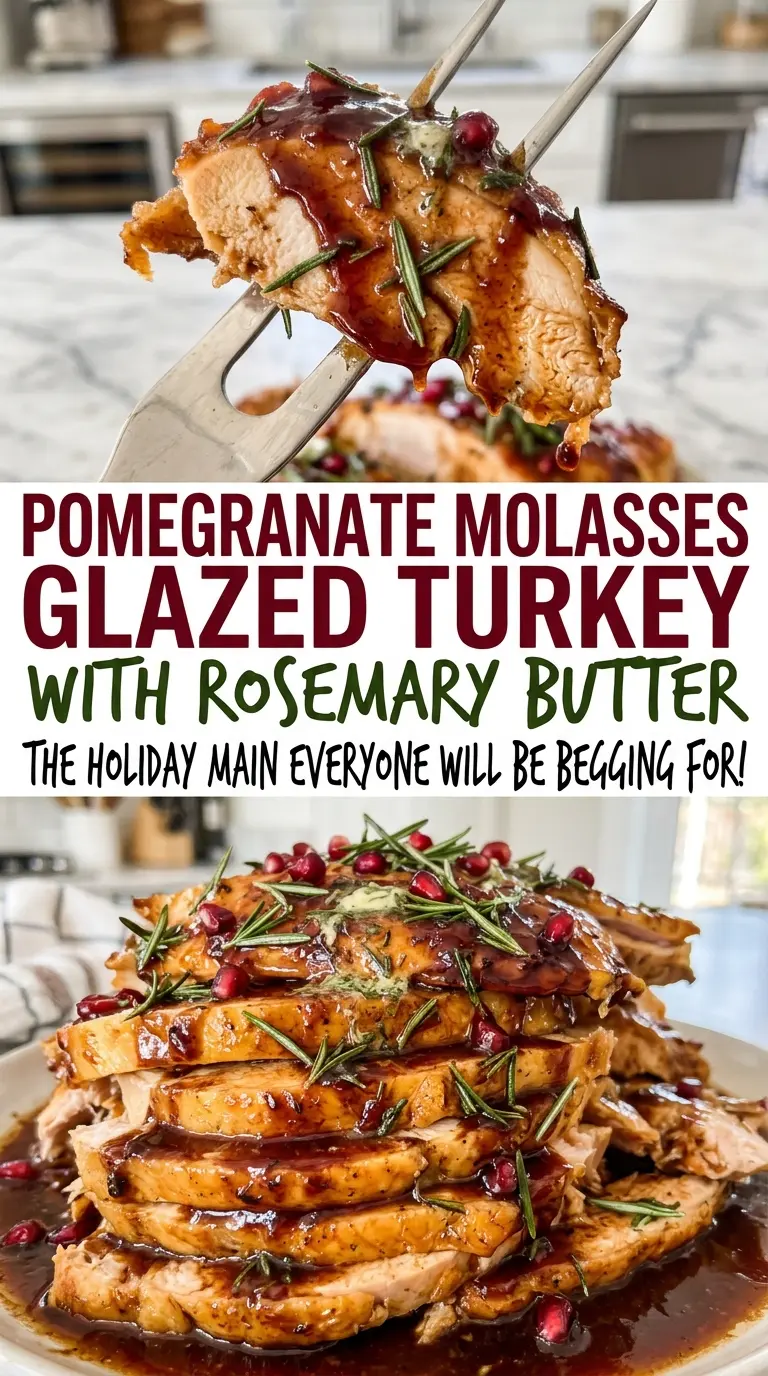
Once carved, the glaze catches the light in a thin, jewel-dark coating, while the garlic and rosemary linger in the warm, buttery meat.
Kitchen Note
Use softened butter, not melted butter. It stays in place when you spread it under the skin, so you can coat the breast and thighs evenly before roasting.
Save this pomegranate molasses glazed turkey for its rosemary butter and glossy, sweet-tart finish.
Why the Pomegranate Glaze Goes on Only Near the End
Pomegranate molasses is concentrated, and the glaze also contains honey. Brush it on at the beginning of a long roast and those sugars have hours to darken; by the time the turkey is cooked, the coating may be much darker than you want. Waiting until the breast is already well into its roast gives the glaze time to turn shiny and cling without leaving it in the oven for the full cooking time.
There’s a second benefit to glazing in two passes. The first coat gets a short stretch of heat to settle onto the skin, then the last coat gives the surface another fresh layer of color and tart-sweet flavor. The glaze should simmer gently on the stove, not boil hard or reduce to a sticky candy. Its job is to brush on smoothly and finish the turkey, not become a thick syrup before it reaches the pan.
What Each Ingredient Brings to the Rosemary Butter and Pomegranate Glaze
- Unbrined turkey — Starting with an unbrined bird gives you control over the seasoning. A bird that’s already been salted in a brine can turn out too salty with the full seasoning used here, so check the label before you buy. Choose a bird that’s fully thawed, with the giblets and neck removed.
- Unsalted butter, rosemary, and garlic — Unsalted butter lets the kosher salt season the turkey without extra salt hiding in the fat. Fresh rosemary gives the butter a fragrant, piney lift, and minced garlic spreads its savory flavor through the coating. For a dairy-free version, use softened unsalted plant-based butter; it won’t taste quite as rich, but it spreads in the same way.
- Pomegranate molasses — This is the glaze’s defining ingredient: thick, tart, and more concentrated than pomegranate juice. Juice won’t make a direct substitute because it’s much thinner and less intense. If you can’t find pomegranate molasses, it’s better to choose another glaze recipe than to expect juice to give the same result.
- Honey, orange juice, and Dijon mustard — Honey rounds the molasses’ sharp edge and helps the glaze coat the skin. Orange juice brings a little brightness, and Dijon adds a savory, tangy note that keeps the mixture balanced. Bottled orange juice works well here; use Dijon rather than a grainy mustard so the glaze whisks together smoothly.
Roast the Turkey First, Then Build the Glossy Glaze in Two Passes
Set Up the Bird and Rosemary Butter
Heat the oven to 325°F and put a rack in the lower third. Stir the softened butter with the finely chopped rosemary and minced garlic until evenly combined. Pat the thawed turkey dry, then set it breast side up on a rack in a 16-inch roasting pan. Loosen the skin over the breast and thighs, spread the butter beneath it and over the outside, then season evenly with kosher salt and black pepper.
Simmer the Pomegranate Glaze
Whisk the pomegranate molasses, honey, orange juice, and Dijon mustard together in a small saucepan. Bring the mixture to a gentle simmer over medium-low heat and cook it for 2 minutes. Keep the heat steady rather than letting the glaze bubble vigorously. Take the pan off the heat after simmering.
Give the Turkey Its First Roast
Roast the turkey at 325°F for 2 1/2 hours before brushing on any glaze. This first stretch cooks the bird without exposing the sweet coating to prolonged oven heat. Near the end of that time, check the thickest part of the breast with a thermometer. Wait until it reaches about 145°F before moving on to the first glaze coat.
Brush in Two Coats and Check Both Parts
Brush half of the glaze over the turkey and roast for 15 minutes. Add the remaining glaze, then continue roasting for 15 to 30 minutes, checking every 15 minutes. The turkey is ready when the thickest part of the breast and the innermost thigh both reach 165°F; total roasting time is usually 3 to 3 3/4 hours. If one area reaches temperature before the other, keep checking the cooler spot rather than judging by the skin color.
Rest Before Carving
Transfer the turkey to a carving board and tent it loosely with foil. Let it rest for 30 minutes before carving so the hot juices have time to settle back through the meat. Keep the foil loose rather than wrapping the bird tightly, which helps prevent the glazed skin from steaming under its cover. Carve after the rest and serve the slices with any juices from the board.
Small Changes That Keep This Turkey’s Sweet-Tart Balance
Make the Rosemary Butter Dairy-Free
Use softened unsalted stick-style plant-based butter in place of the dairy butter. The flavor will be a little less creamy, but a firm butter alternative still holds together well enough to spread under the turkey skin.
Make the Glaze Less Sweet
Leave out the honey if you prefer a sharper finish. The pomegranate molasses will still give the turkey a tart, dark coating, though the glaze will taste less rounded and may be a little less glossy.
Trade Rosemary for Fresh Thyme
Use chopped fresh thyme in the butter instead of rosemary for a softer, earthier herbal note. Keep the rest of the butter and turkey preparation the same; the glaze’s tart fruit flavor still pairs naturally with thyme.
Storage and Reheating
- Refrigerator: Store carved turkey in an airtight container for 3 to 4 days. The skin will soften as it sits, but the meat stays good for sandwiches or another warm meal.
- Freezer: Freeze carved portions in airtight packaging for up to 3 months for best quality. A little reserved pan juice packed with the meat helps it stay moist.
- Reheating: Warm slices covered in a baking dish with a little pan juice until hot throughout. Reheat leftovers to 165°F, and don’t leave the turkey uncovered in a hot oven, where thin slices can dry out before the center warms.
Questions That Come Up While Roasting This Turkey
Pomegranate Molasses Glazed Turkey with Rosemary Butter
Ingredients
Equipment
Method
- Heat the oven to 325°F and position a rack in the lower third.
- Stir the softened butter, rosemary, and garlic together in a small bowl.
- Pat the turkey dry and place it breast side up on a rack in a 16-inch roasting pan.
- Loosen the skin over the breast and thighs.
- Spread the rosemary butter underneath and over the outside of the skin.
- Season evenly with the salt and pepper.
- Whisk the pomegranate molasses, honey, orange juice, and Dijon mustard in a small saucepan.
- Bring to a gentle simmer over medium-low heat and cook for 2 minutes, then remove from the heat.
- Roast the turkey at 325°F for 2 1/2 hours.
- Check the thickest part of the breast; when it reaches about 145°F, brush half the glaze over the turkey.
- Roast for 15 minutes.
- Brush with the remaining glaze and continue roasting for 15 to 30 minutes, checking every 15 minutes, until the thickest part of the breast and the innermost thigh reach 165°F; total roasting time is usually 3 to 3 3/4 hours.
- Transfer the turkey to a carving board, tent loosely with foil, and rest for 30 minutes before carving.