
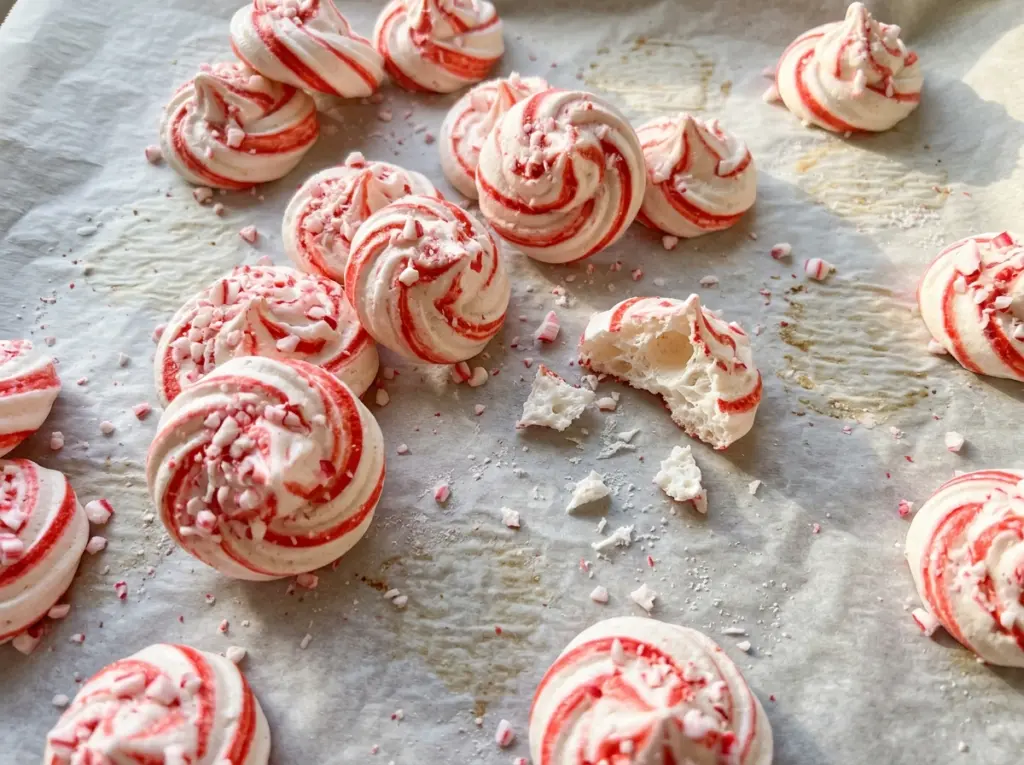
Peppermint Meringue Cookies
The mixer starts with a bowl of foamy egg whites, and for a few minutes it can seem like nothing is happening. Then the whites turn glossy and hold their…

By Ava
•
•
Reading time: 8 min
Tip: save now, make later.
The mixer starts with a bowl of foamy egg whites, and for a few minutes it can seem like nothing is happening. Then the whites turn glossy and hold their shape, and you know the cookies are on their way. These peppermint meringue cookies bake slowly until they’re crisp and dry, with a cool peppermint flavor and a little candy crunch on top.
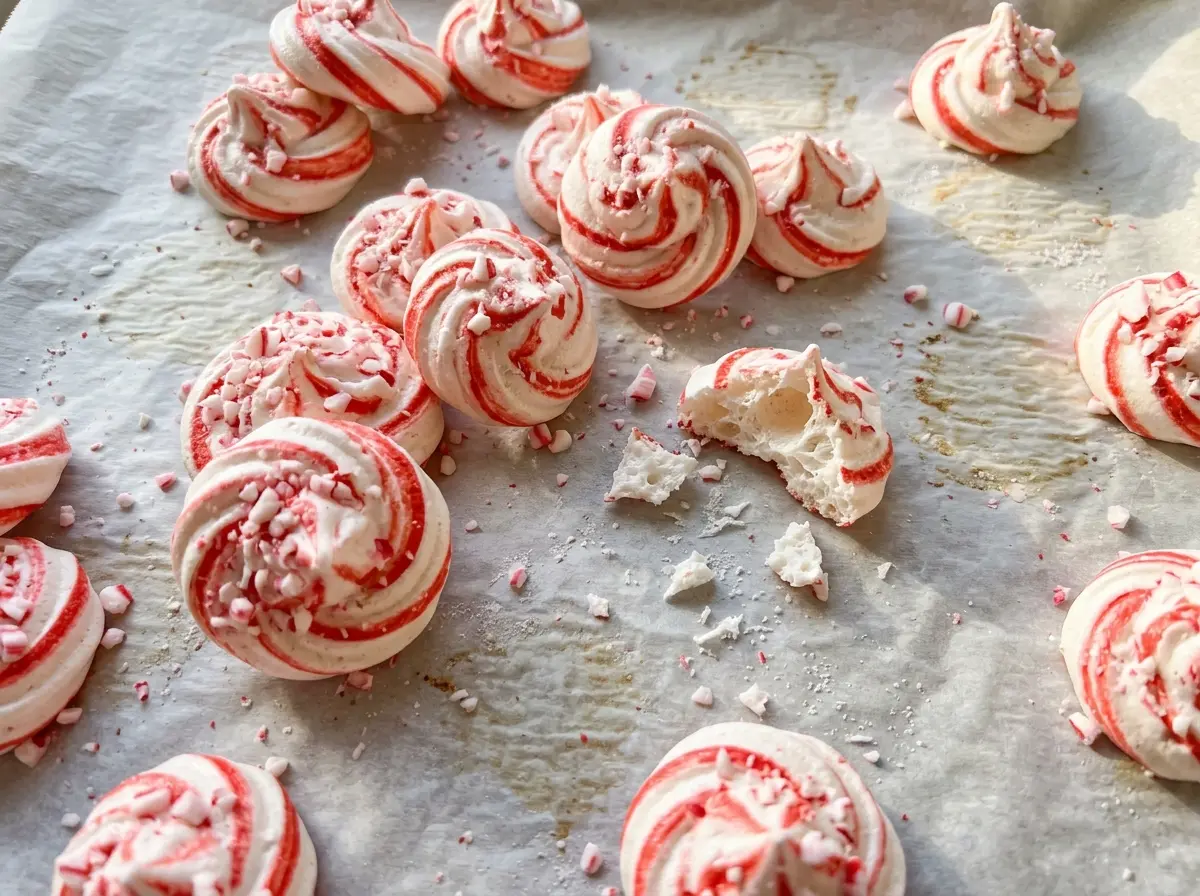
I’ve learned not to rush the sugar or the oven. Adding the sugar gradually gives it time to dissolve into the whites, while the low oven dries the cookies instead of browning them. The result is light and crisp all the way through, not sticky in the middle. A clean bowl, room-temperature egg whites, and a patient finish make all the difference when you lift a cookie from the parchment and hear that faint, delicate crack.
Kitchen Note
A trace of grease can keep egg whites from building the volume you need, so I start with a clean, grease-free bowl. If you’re unsure, wash and dry the bowl and beaters before you begin.
Save these peppermint meringue cookies for a crisp, minty treat with a light candy crunch on top.
Why the Sugar Has to Disappear Into the Egg Whites
A meringue can look stiff and still feel gritty. That graininess means the sugar hasn’t dissolved fully, and undissolved crystals can leave the finished cookies rough rather than smooth. Adding granulated sugar a tablespoon at a time gives the whites a chance to absorb it as they’re beaten.
There’s a useful test before the peppermint goes in: rub a little meringue between your fingers. It should feel smooth, not sandy. The mixture should also look glossy and hold stiff peaks when you lift the beaters. Those cues matter more than stopping the mixer as soon as the whites seem thick. Beating on high for the full 7 to 10 minutes after adding the sugar gives the meringue time to reach that smooth, stable finish.
Don’t try to solve graininess by putting the sugar in all at once or by switching to powdered sugar. Powdered sugar has a different texture and often contains starch, so it changes how this simple meringue behaves. Gradual additions and a patient mix are what give these cookies their delicate, even texture.
What Makes Each Part of a Peppermint Meringue Matter

- Egg whites — These create the airy structure, so use large whites at room temperature and keep yolk out of the bowl. The whites don’t need to be a specialty brand; careful separation and the right temperature matter more. Carton egg whites can behave differently from freshly separated whites, so I stick with large eggs for reliable volume.
- Cream of tartar — This helps stabilize the whipped whites so they can hold the peaks needed for shaping. It’s a small but purposeful part of the formula, and I don’t leave it out or replace it with another acid here.
- Granulated sugar — Regular granulated sugar gives the meringue sweetness and helps build its crisp structure. Use the standard granulated kind rather than powdered sugar; a premium brand isn’t necessary.
- Peppermint extract — Extract carries the peppermint flavor through the meringue itself, while the crushed candies add a sharper minty bite on the surface. Peppermint extracts vary in strength, so choose one you like; the amount in the recipe keeps the flavor focused without letting the extract take over.
- Peppermint candies — The finely crushed pieces add crunch and a bright candy finish. Any familiar hard peppermint candy works; crush it finely enough to sprinkle evenly, since large chunks are harder to distribute over the small cookies.
From Foamy Whites to Crisp Peppermint Cookies
Set Up the Pans and Oven
Heat the oven to 200°F and line two 18×13-inch rimmed baking sheets with parchment paper. Getting the pans ready first matters because the meringue is easiest to portion soon after it’s whipped. Keep the parchment flat so the small cookies sit evenly and lift cleanly after baking.
Whip the Whites to Soft Peaks
Beat the egg whites with the cream of tartar and salt on medium speed until foamy. Increase the mixer to medium-high and continue until soft peaks form; when you lift the beaters, the peaks should bend over rather than stand upright. If the whites still look loose and bubbly, give them more time before adding sugar.
Build a Glossy, Stable Meringue
With the mixer running, add the sugar one tablespoon at a time. Once it’s all incorporated, beat on high for 7 to 10 minutes, until the meringue is glossy and forms stiff peaks. Rub a little between your fingers to check that it feels smooth. Beat in the peppermint extract just until combined, then stop so you don’t keep working the meringue unnecessarily.
Portion, Top, and Dry Slowly
Drop rounded teaspoonfuls onto the prepared sheets, leaving about 1 inch between cookies, then sprinkle the crushed peppermint candies evenly over them. Bake for 1 hour 30 minutes to 2 hours, switching the sheets between oven racks halfway through. They’re ready when they feel dry and lift easily from the parchment; if they cling or feel tacky underneath, give them more time in the oven. Turn the oven off and let the cookies cool completely inside for about 1 hour before removing them from the sheets.
Two Simple Ways to Change the Peppermint Finish
Peppermint meringues without the candy crunch
Leave off the crushed peppermint candies and keep the peppermint extract in the meringue. You’ll get a smoother, more delicate cookie with the same mint flavor running through each bite, rather than the added crunch on top.
Plain, candy-free meringues
For a simple sweet meringue, leave out both the peppermint extract and the candy topping. The cookies keep their crisp, airy texture, but the peppermint flavor is gone; use the same whipping and drying cues to judge when they’re ready.
Storage and Reheating
- Refrigerator: Skip the refrigerator; its moisture can soften crisp meringues. Keep them in an airtight container at room temperature for up to 1 week.
- Freezer: I don’t recommend freezing these. Condensation as they thaw can soften the cookies and make the peppermint candy topping tacky.
- Reheating: These are served at room temperature, so reheating isn’t needed. Keep the container sealed between servings to protect their crisp texture.
The Peppermint Meringue Questions That Come Up Most
Peppermint Meringue Cookies
Ingredients
Equipment
Method
- Heat the oven to 200°F.
- Line two 18x13-inch rimmed baking sheets with parchment paper.
- In a clean, grease-free mixing bowl, beat the egg whites, cream of tartar, and salt with an electric mixer on medium speed until foamy.
- Increase to medium-high and beat until soft peaks form.
- With the mixer running, add the sugar a tablespoon at a time.
- Beat on high for 7 to 10 minutes, until the meringue is glossy, forms stiff peaks, and feels smooth when rubbed between your fingers.
- Beat in the peppermint extract just until combined.
- Drop rounded teaspoonfuls of meringue onto the prepared sheets, spacing them about 1 inch apart.
- Sprinkle the crushed peppermint candies evenly over the cookies.
- Bake for 1 hour 30 minutes to 2 hours, until the cookies are dry and lift easily from the parchment.
- Switch the sheets between oven racks halfway through baking.
- Turn off the oven.
- Let the cookies cool completely inside for about 1 hour before removing them from the sheets.