
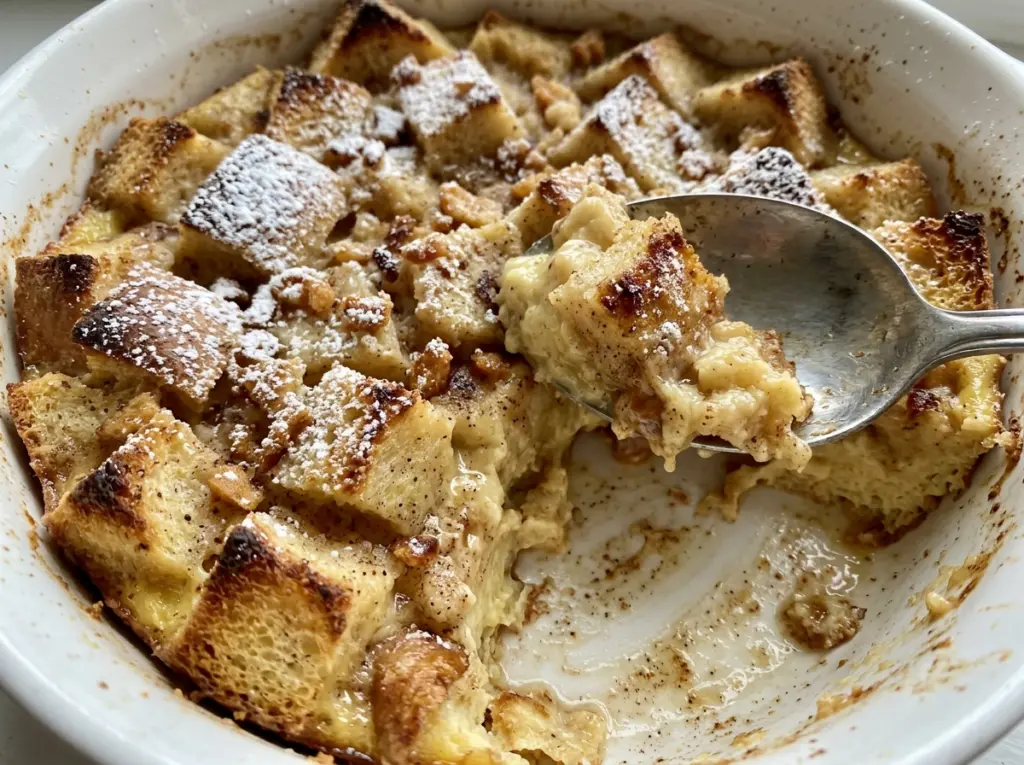
Overnight Eggnog French Toast Bake
The custard can look uneven when it first hits the bread: a few cubes sit high while others are already soaking underneath. Giving the loaf time to absorb the eggnog…

By Ava
•
•
Reading time: 9 min
Tip: save now, make later.
The custard can look uneven when it first hits the bread: a few cubes sit high while others are already soaking underneath. Giving the loaf time to absorb the eggnog mixture before baking is what makes this Overnight Eggnog French Toast Bake work as a casserole instead of a pile of dry bread and soft custard. The center turns tender and rich, while the cubes still have enough shape to serve neatly.
I like the balance here: eggnog brings its own sweetness and warm spice, and whole milk keeps the custard from becoming too heavy. A cinnamon-brown sugar topping adds a crisp, buttery contrast to the soft bread beneath it. Since the dish rests in the refrigerator overnight, breakfast prep is mostly finished ahead of time, and the kitchen smells like nutmeg and toasted butter by the time it reaches the table.
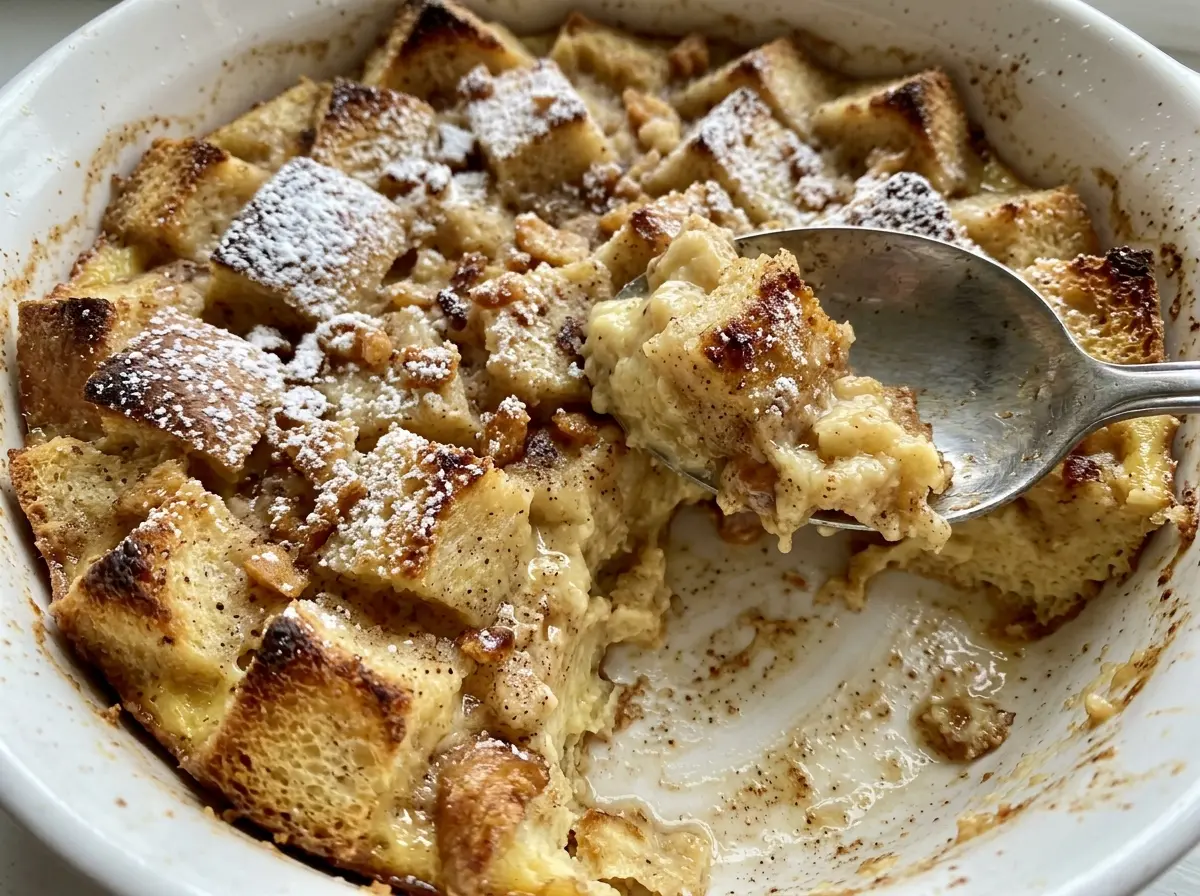
Kitchen Note
For the topping, stop working the cold butter in when you have coarse, uneven crumbs. If you keep rubbing, the mixture starts to feel pasty instead of crumbly, and you lose those little crisp bits on top.
Save this Overnight Eggnog French Toast Bake for a make-ahead breakfast with a soft custardy center and cinnamon crumb topping.
Why the overnight soak keeps the bread tender instead of waterlogged
A French toast bake needs time for the custard to travel beyond the surface of each cube. With a short soak, the outside can turn soft while the middle stays relatively dry; in the oven, that difference shows up as uneven bites. An overnight rest gives the egg mixture a chance to spread through the bread, so the center bakes into a more consistent custard.
Day-old French bread helps with that balance. Its surface is drier than fresh bread, so it can take in the eggnog mixture without collapsing as quickly. Cutting it into even cubes also matters: small pieces soften faster, while oversized pieces can leave you with dry centers. Gently pressing the cubes into the custard at assembly gives the higher pieces a better chance to absorb it before the dish goes into the refrigerator.
There’s no need to mash the bread or pack it down hard. You want the cubes coated and nestled evenly in the dish, not compressed into a solid layer. That little bit of space lets the custard settle around the bread and gives the casserole its soft, spoon-tender middle.
Eggnog brings the sweetness; the crumb topping brings the contrast
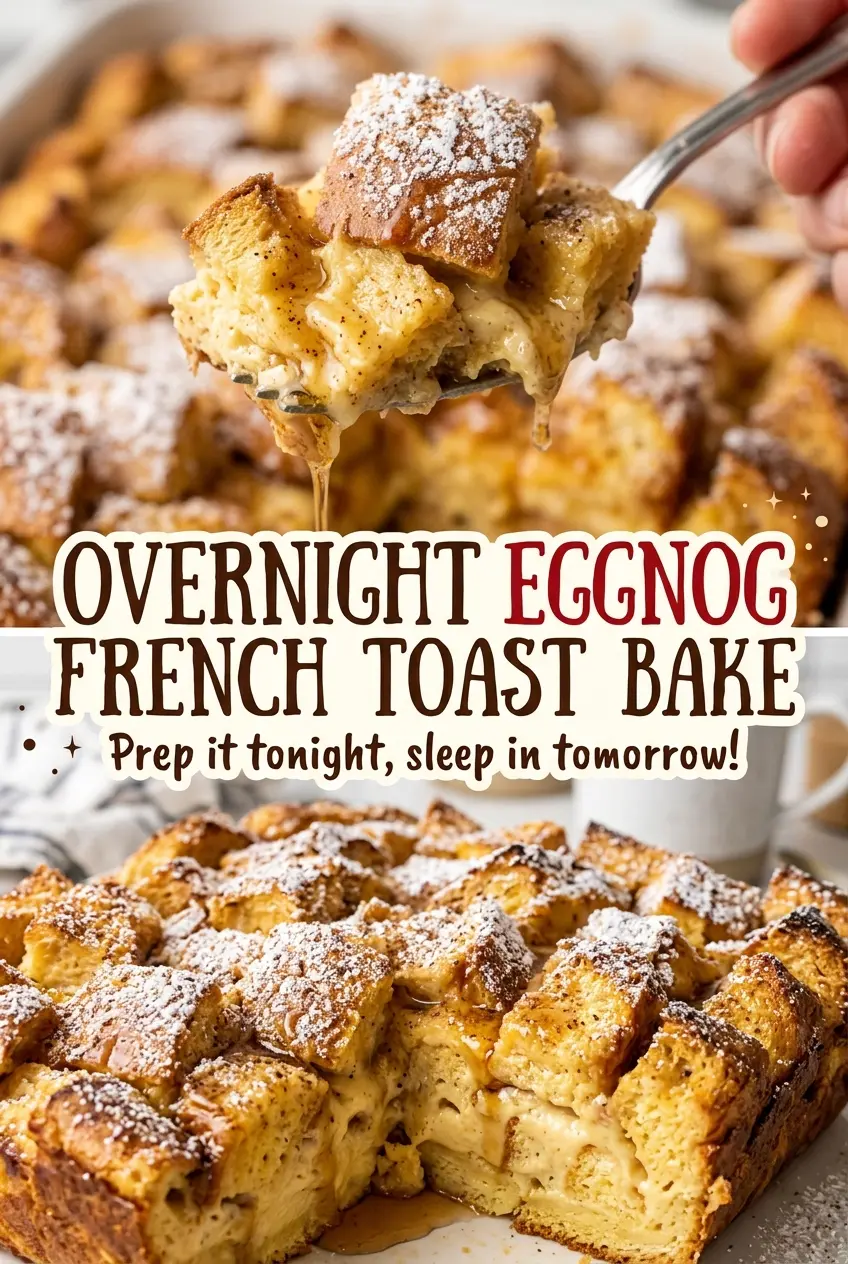
- French bread — A sturdy loaf gives the custard something to soak into while keeping the cubes recognizable after baking. Day-old bread is useful here; there’s no need to seek out an expensive artisan loaf. If you want a richer variation, day-old brioche works in the same loaf weight, though the finished bake will be softer and more buttery.
- Eggs — The eggs set the custard as the casserole bakes, so large eggs are the right choice for the balance of liquid and structure. They don’t need to be a specialty brand; consistent size matters more than premium packaging.
- Eggnog and whole milk — Eggnog supplies sweetness and its characteristic spiced, creamy taste, while whole milk loosens the mixture so it can coat the bread. Plain store-bought eggnog works well; a strongly flavored variety will shift the taste of the whole dish. If you only have 2% milk, it can stand in for the whole milk in the same amount, with a slightly less rich custard.
- Vanilla and nutmeg — These round out the eggnog flavor without competing with it. Standard vanilla extract and ground nutmeg are all you need; the nutmeg should smell warm and aromatic, not dusty.
- Flour, brown sugar, cinnamon, and butter — The flour gives the topping its crumbly structure, brown sugar adds a caramel-like note, and cinnamon ties it back to the custard’s nutmeg. Unsalted butter lets the topping stay balanced with the salt already in the custard. Use cold butter so it stays in small pieces as you work it into the dry ingredients.
Build the casserole in four stages, from even cubes to a set center
Arrange the bread without packing it down
Coat a 9×13-inch baking dish with cooking spray, then arrange the 1-inch bread cubes evenly in the dish. Spread them into a level layer so the custard can reach across the whole casserole. Keep the pieces loose rather than pressing them into the pan at this stage. Even coverage now makes it easier to pour the custard over every part of the bread.
Whisk the custard and let it soak overnight
Whisk the eggs, eggnog, whole milk, vanilla, nutmeg, and kosher salt in a large bowl until combined. Pour the mixture evenly over the bread and gently press the cubes down so they absorb the custard. Cover the dish and refrigerate it for 8 to 12 hours. The bread should be soaked through before it goes into the oven.
Make the cinnamon crumbs while the dish loses its chill
Preheat the oven to 350°F, then let the casserole sit at room temperature for 20 to 30 minutes while the oven heats. Stir the flour, brown sugar, and cinnamon together in a medium bowl. Work in the cold butter with your fingertips until coarse crumbs form, then scatter the topping evenly over the casserole. Keep the topping on the surface rather than pressing it into the bread.
Bake covered first, then uncover to finish
Cover the casserole loosely with foil and bake for 30 minutes. Remove the foil and continue baking for 15 to 25 minutes, until the center is set and reaches 160°F. The center should no longer look liquid when you check it, and a thermometer gives you the clearest doneness cue. Let the casserole rest for 10 minutes before serving so the custard settles enough to portion.
Three swaps that change the loaf or topping without changing the plan
Use brioche for a softer, richer center
Replace the French bread with the same weight of day-old brioche and cut it into the same size cubes. Brioche makes the bake more tender and buttery, but it has a delicate crumb, so keep the cubes loose when you arrange them.
Make a gluten-free version with two flour swaps
Use a day-old gluten-free French-style loaf in place of the French bread, and use a cup-for-cup gluten-free baking flour in place of the all-purpose flour in the topping. Keep the same measurements. The topping may be a little more delicate, but the egg custard still sets around the bread.
Use dark brown sugar for a deeper topping
Swap dark brown sugar for the light brown sugar in the same measure. The topping takes on a stronger molasses flavor and a slightly deeper color, which pairs well with the nutmeg in the custard.
Storage and Reheating
- Refrigerator: Refrigerate leftovers within 2 hours and keep them covered for 3 to 4 days. The crumb topping softens as it sits.
- Freezer: Freeze baked portions in an airtight container for up to 2 months. Thaw them in the refrigerator overnight; the topping will be softer after freezing.
- Reheating: Reheat portions in a 350°F oven until the center reaches 165°F. Avoid prolonged reheating, which can dry the bread around the edges.
Questions I get asked about this eggnog French toast bake
Overnight Eggnog French Toast Bake
Ingredients
Equipment
Method
- Coat a 9x13-inch baking dish with cooking spray.
- Arrange the bread cubes evenly in the dish.
- In a large bowl, whisk the eggs, eggnog, milk, vanilla, nutmeg, and salt until combined.
- Pour the egg mixture evenly over the bread and gently press the bread down so it absorbs the custard.
- Cover and refrigerate for 8 to 12 hours.
- Preheat the oven to 350°F.
- Let the casserole sit at room temperature for 20 to 30 minutes while the oven heats.
- Stir the flour, brown sugar, and cinnamon together in a medium bowl.
- Work in the butter with your fingertips until coarse crumbs form.
- Sprinkle the topping evenly over the casserole and cover loosely with foil.
- Bake for 30 minutes.
- Uncover and bake for 15 to 25 minutes more, until the center is set and reaches 160°F.
- Let the casserole rest for 10 minutes before serving.