

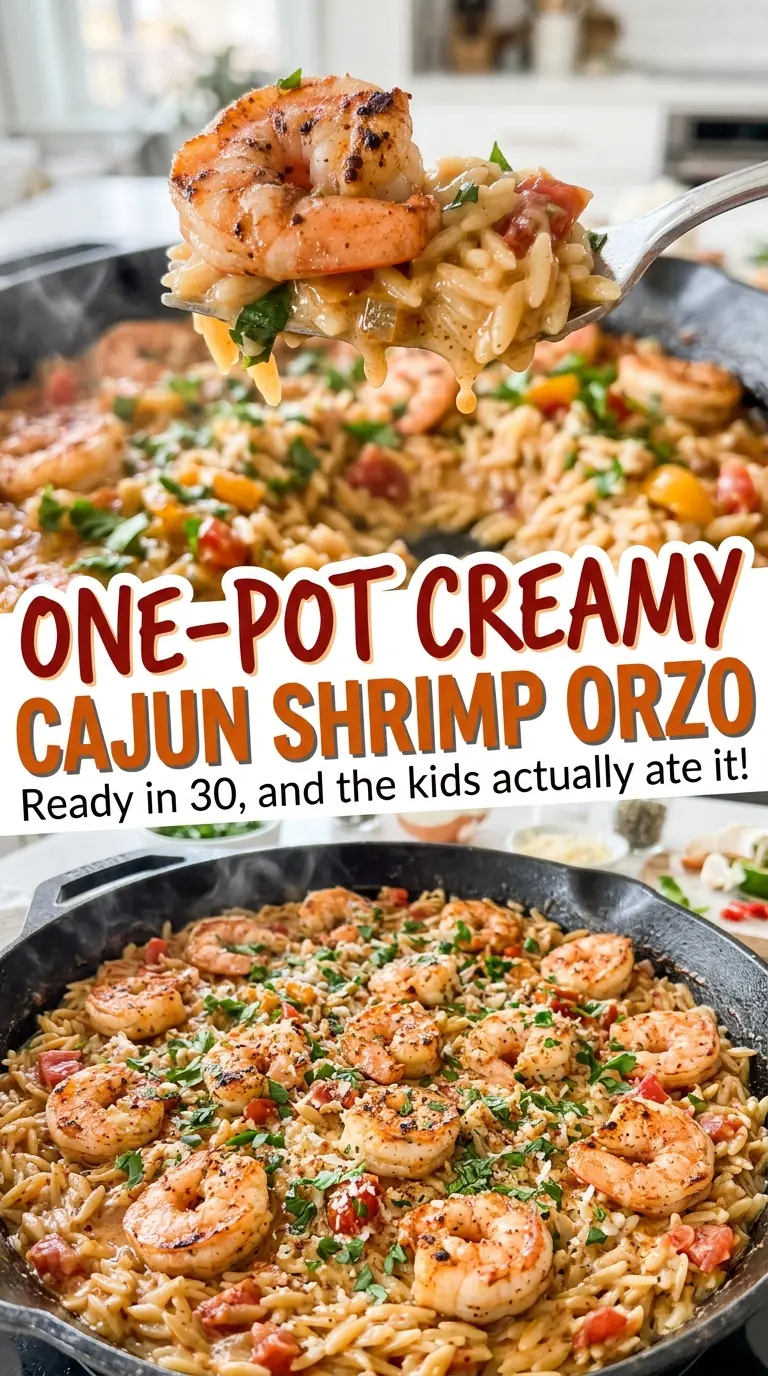
One Pot Creamy Cajun Shrimp Orzo
When shrimp hit a hot skillet, the window between plump and rubbery is short. I like cooking them first, then getting them out of the pan while the vegetables and…

By Ava
•
•
Reading time: 9 min
Tip: save now, make later.
When shrimp hit a hot skillet, the window between plump and rubbery is short. I like cooking them first, then getting them out of the pan while the vegetables and orzo take their turn. That little change in order makes this one pot creamy Cajun shrimp orzo much easier to manage: the shrimp stay tender, and the orzo cooks in the same skillet without losing the flavor left behind.
The broth goes in before the cream and Parmesan, so the orzo has time to cook through before the sauce gets its rich finish. I stir while it simmers and watch for the pasta to turn tender as most of the broth disappears. Then the cream, cheese, lemon, and shrimp come together in a skillet full of glossy, gently spicy orzo.

Kitchen Note
I measure the lemon juice before the orzo finishes simmering. The final stir moves quickly once the cream and Parmesan are in, and having it ready keeps the skillet moving.
Save this creamy Cajun shrimp orzo for a one-skillet dinner with tender shrimp and a Parmesan-finished sauce.
Why the broth goes in all at once, but the orzo still needs your spoon
Orzo looks a little like rice, but it cooks like pasta. Here, all of the chicken broth goes into the skillet at once, and the orzo simmers uncovered until tender. It doesn’t need the slow, ladle-by-ladle additions used for risotto. It does need frequent stirring: small pasta can settle as it cooks, and a quick stir keeps the bottom of the skillet from becoming a sticky layer.
That simmer also sets up the sauce. The orzo takes in most of the broth first, so the cream and Parmesan can finish it without turning the whole skillet soupy. Don’t wait until every drop of liquid has vanished; the useful cue is tender orzo with most of the broth absorbed. That little bit of moisture helps the cheese melt into a creamy coating instead of clumping against dry pasta.
What the shrimp, Cajun seasoning, and Parmesan each bring
- Large shrimp — Peeled and deveined shrimp are quick to season and easy to cook evenly in a single layer. Thawed frozen shrimp work too; drain and pat them dry so excess water doesn’t interfere with browning. There isn’t a direct protein swap that keeps the same quick cooking time, so don’t use the shrimp timing for chicken.
- Cajun seasoning — The blend brings the dish’s signature heat and savory spice. Brands vary in both salt and heat, so taste your blend before choosing it; a milder Cajun blend keeps the same character without as much kick. The low-sodium broth leaves room for the seasoning and Parmesan to contribute flavor without making the sauce too salty.
- Orzo — Its small pasta shape cooks quickly and releases starch into the broth, which helps the finished sauce cling. Rice isn’t a one-for-one substitute: it needs different liquid and cooking time, so the skillet won’t follow the same schedule.
- Heavy cream and Parmesan — Heavy cream gives the sauce body, while finely grated Parmesan melts in smoothly and adds a savory, salty finish. Store-brand cream is fine; a block of Parmesan grated finely is a good choice for an even melt. Pecorino Romano can stand in for Parmesan, though it tastes saltier. Half-and-half can replace the cream for a lighter sauce, but the finish will be thinner.
- Fresh lemon juice — Its acidity balances the rich cream and cheese. Freshly squeezed juice has a cleaner, brighter taste than bottled juice in this small finishing addition.
The skillet sequence that keeps the shrimp tender and the orzo creamy
Sear the shrimp, then get them out of the pan
Toss the shrimp with 2 teaspoons of the Cajun seasoning until each piece is coated. Heat the olive oil in a 12-inch deep skillet over medium-high heat, then arrange the shrimp in a single layer. Cook for 1 to 2 minutes per side, until opaque and 145°F in the thickest part, and transfer them to a plate. If the skillet is crowded, the shrimp won’t cook as evenly, so work in a single layer.
Soften the vegetables and coat the orzo
Reduce the heat to medium and melt the butter in the same skillet. Add the finely chopped onion and diced red bell pepper, stirring occasionally for 4 to 5 minutes until softened. Stir in the minced garlic and orzo and cook for 1 minute; the garlic should smell fragrant, not browned. Keeping the garlic’s time in the pan short helps it stay sweet rather than bitter.
Simmer until the pasta is tender
Add the chicken broth and the remaining Cajun seasoning, then bring the skillet to a boil. Reduce the heat to medium-low and simmer uncovered for 8 to 10 minutes, stirring frequently. The orzo should be tender, with most of the broth absorbed. If it still has a firm center, give it a little more time while you keep stirring and check its texture again.
Finish with cream, cheese, and lemon
Stir in the heavy cream and finely grated Parmesan until the sauce looks creamy. Fold in the cooked shrimp and lemon juice, then heat for about 1 minute, until the shrimp are hot. Keep the final heating brief; the shrimp are already cooked, and this step is just to bring everything together. The finished sauce should coat the orzo rather than pool thinly around it.
Three ways to adjust the Cajun shrimp orzo
Make the seasoning gentler
Choose a mild Cajun seasoning blend and use it in the same portions. You’ll keep the savory Cajun character while dialing back the heat; changing the blend is more reliable than leaving the orzo underseasoned.
Shift more Cajun flavor onto the shrimp
Keep the total amount of Cajun seasoning the same, but put a little more in the shrimp coating and a little less into the broth. The shrimp will taste more boldly seasoned, while the creamy orzo will have a gentler spice throughout.
Make it dairy-free
Use plant-based butter, unsweetened dairy-free cooking cream, and vegan Parmesan in place of the dairy ingredients. The result will be less rich, and vegan Parmesan may not melt as smoothly as finely grated dairy Parmesan, but the Cajun shrimp and orzo still make a satisfying skillet.
Storage and Reheating
- Refrigerator: Refrigerate leftovers within 2 hours and use them within 3 to 4 days. The orzo will absorb more sauce as it sits, so expect a thicker texture.
- Freezer: Freezing isn’t my pick for this dish. The orzo can turn soft and the cream sauce may separate when thawed.
- Reheating: Warm leftovers gently on the stovetop with a splash of chicken broth, stirring until hot throughout, or heat to 165°F. High heat can make the sauce separate and the shrimp tough.
Questions that come up when making Cajun shrimp orzo
One Pot Creamy Cajun Shrimp Orzo
Ingredients
Equipment
Method
- Toss the shrimp with 2 teaspoons of the Cajun seasoning until evenly coated.
- Heat the olive oil in a 12-inch deep skillet over medium-high heat.
- Cook the shrimp in a single layer for 1 to 2 minutes per side, until opaque and 145°F in the thickest part, then transfer to a plate.
- Reduce the heat to medium and melt the butter in the same skillet.
- Add the onion and bell pepper and cook for 4 to 5 minutes, stirring occasionally, until softened.
- Stir in the garlic and orzo and cook for 1 minute.
- Add the broth and remaining 1 teaspoon Cajun seasoning.
- Bring to a boil, then reduce the heat to medium-low.
- Simmer uncovered for 8 to 10 minutes, stirring frequently, until the orzo is tender and most of the broth is absorbed.
- Stir in the heavy cream and Parmesan until creamy.
- Fold in the cooked shrimp and lemon juice and heat for about 1 minute, until the shrimp are hot.