
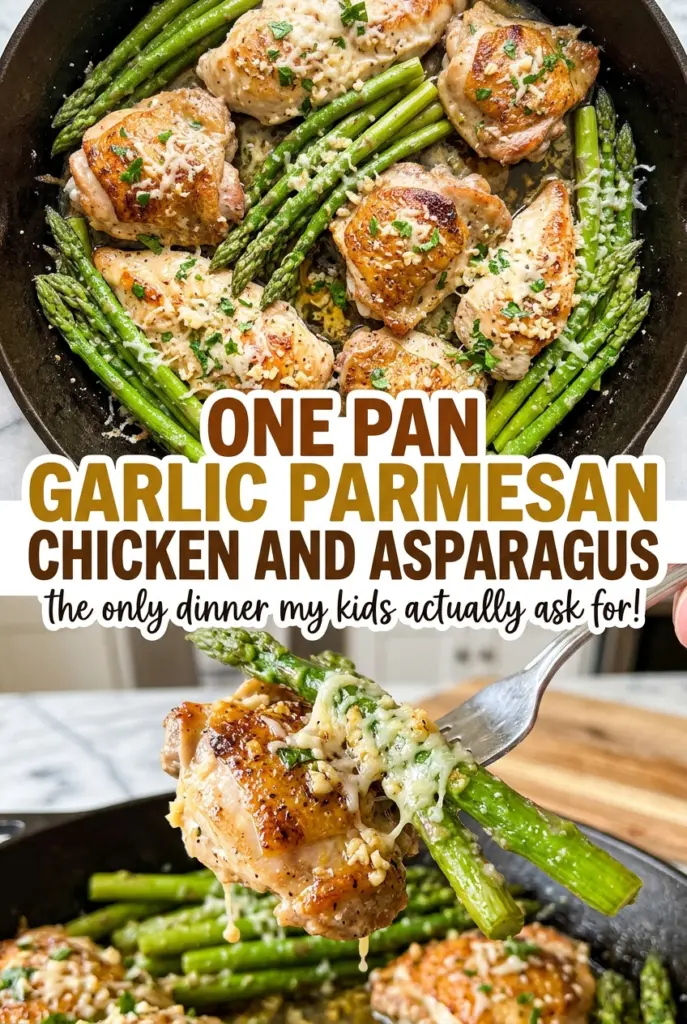
One Pan Garlic Parmesan Chicken and Asparagus
At 425°F, the Parmesan turns into a savory coating while the asparagus softens beside the chicken—without a skillet to wash afterward. The first thing I learned making this One Pan…

By Ava
•
•
Reading time: 9 min
Tip: save now, make later.
At 425°F, the Parmesan turns into a savory coating while the asparagus softens beside the chicken—without a skillet to wash afterward. The first thing I learned making this One Pan Garlic Parmesan Chicken and Asparagus is that “one pan” only works when the chicken and vegetables can finish at about the same time. Thin chicken cutlets and medium-thick asparagus make that possible.
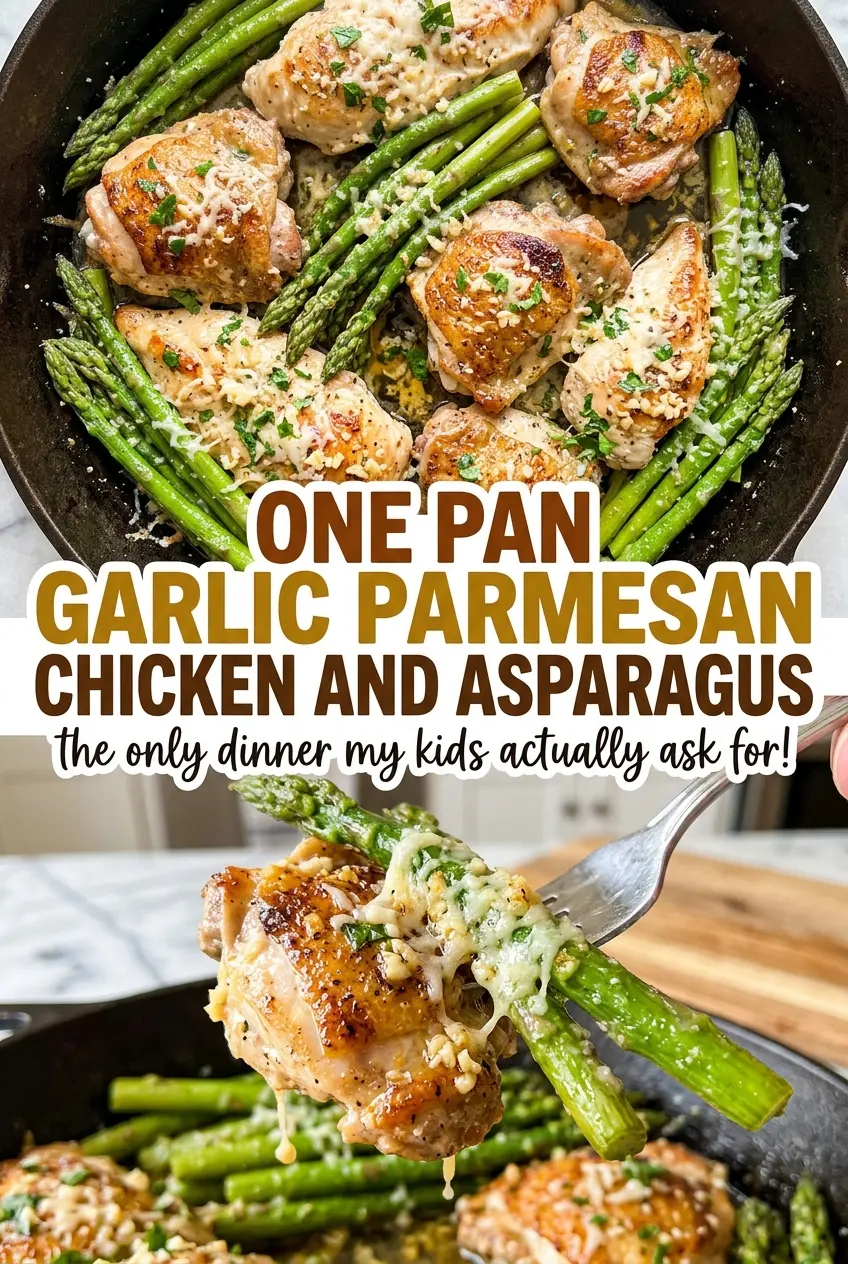
I keep the chicken on one side of the sheet pan and the asparagus on the other, so each gets its own space. The chicken is seasoned before the finely grated Parmesan goes on top, while a little olive oil helps the asparagus cook through. The result is tender chicken with a cheesy top and asparagus that still has some bite.
There’s no sauce to stir or separate pan to watch. Let the chicken rest right on the pan for a few minutes, then bring the Parmesan-coated cutlets and tender asparagus straight to the table.
Kitchen Note
Pat the chicken dry before adding the oil and seasonings. If the surface is damp, the coating can turn wet instead of sitting neatly on the cutlets.
Save this One Pan Garlic Parmesan Chicken and Asparagus for a no-fuss dinner with tender cutlets and a cheesy top.
Why Thin Cutlets and Medium Asparagus Finish Together
A sheet pan dinner can look simple and still turn out uneven: the chicken dries out while a thick vegetable is catching up, or the asparagus collapses before the meat is ready. Here, the chicken cutlets are about half an inch thick, and the asparagus is medium-thick. Those choices matter because neither ingredient needs a long, slow bake.
Keep the pieces close to their intended thickness when you shop or prep. A full chicken breast is much thicker than a cutlet, so it won’t cook at the same pace. Very thin asparagus has the opposite problem: it can become limp while the chicken finishes. The goal isn’t to crowd the pan with extra vegetables or make the chicken thicker; it’s to give the cutlets and asparagus room to bake alongside each other.
The 18×13-inch rimmed pan also gives both ingredients space on separate sides. When everything is spread out rather than piled together, hot oven air can circulate around the food. That helps the asparagus turn tender instead of steaming in its own moisture, while the chicken cooks through under its Parmesan topping.
What Parmesan, Cutlets, and Asparagus Bring to This Pan
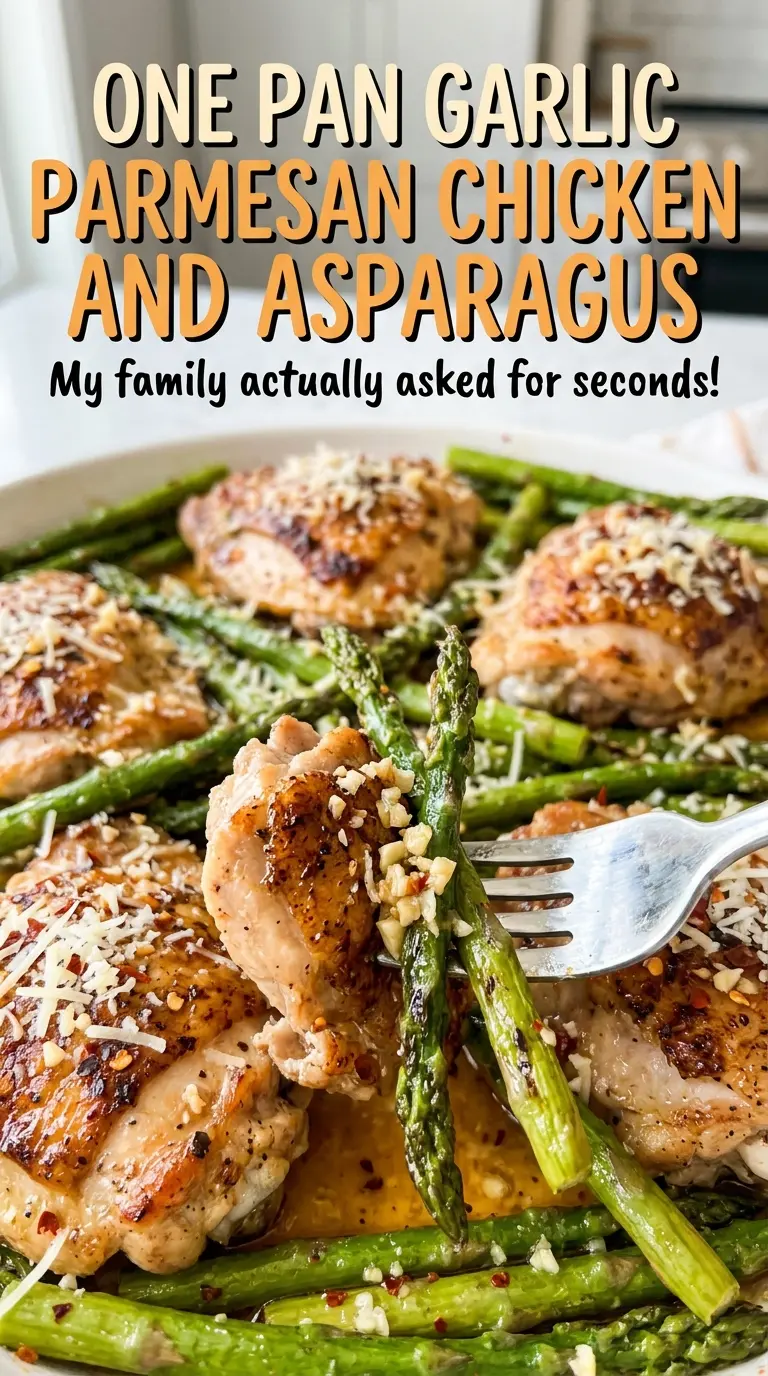
- Chicken breast cutlets — Cutlets about half an inch thick cook quickly and evenly. If you’re starting with whole boneless, skinless chicken breasts, slice them horizontally into cutlets of a similar thickness. Freshness matters more than choosing a premium brand; look for pieces that are even so one isn’t finished long before another.
- Finely grated Parmesan — Fine shreds cover the chicken in a more even layer than thick curls, so each bite gets a little cheese. A block grated finely at home melts and clings well, but packaged finely grated Parmesan is convenient here. Pecorino Romano can stand in if needed, though it tastes saltier and sharper.
- Medium-thick asparagus — Spears in this size range hold their shape during the chicken’s bake. Choose firm stalks with closed tips, and trim the woody ends before arranging them on the pan. Very thin spears soften faster, while especially thick ones may stay firm when the chicken is ready.
- Olive oil — Dividing the oil lets you coat the chicken before seasoning and the asparagus separately. A standard olive oil is a good choice; a delicate, expensive finishing oil won’t add much here because the food bakes in a hot oven.
- Garlic powder and Italian seasoning — Garlic powder spreads evenly across the cutlets without adding moisture, and Italian seasoning brings a balanced dried-herb flavor. Use the familiar blend you already have; fresh garlic isn’t a direct replacement here because it can brown on the exposed surface during baking.
The Sheet-Pan Sequence That Keeps Dinner Moving
Heat the Oven and Prepare the Pan
Heat the oven to 425°F and line a large rimmed 18×13-inch sheet pan with parchment paper. The rim helps keep the oil and cooking juices contained, and parchment makes serving and cleanup easier. Use a pan large enough to hold the chicken on one side and the asparagus on the other. If the ingredients are packed into a smaller space, they’ll have less room to roast.
Season and Top the Cutlets
Pat the chicken dry, then rub it with one tablespoon of olive oil, the garlic powder, Italian seasoning, kosher salt, and black pepper. Arrange the cutlets on one side of the prepared pan. Sprinkle the finely grated Parmesan evenly over the chicken rather than leaving it in a thick mound in the middle. A light, even layer gives each cutlet a cheesy top.
Coat the Asparagus Separately
Arrange the trimmed asparagus on the open side of the pan. Drizzle it with the remaining tablespoon of olive oil and turn the spears so they’re coated. Keep the asparagus in a single layer, with the cutlets beside it rather than underneath. That separation makes it easier to lift out a spear without disturbing the Parmesan on the chicken.
Bake, Check, and Rest
Bake for 15 to 20 minutes, until the chicken reaches 165°F at its thickest point and the asparagus is tender. Check the thickest cutlet rather than judging doneness by the Parmesan’s color alone; the cheese can look pale even when the chicken is cooked. The asparagus should bend easily when lifted but shouldn’t be falling apart. Let the chicken rest on the pan for 5 minutes before serving so its juices settle.
Simple Swaps for a Different Take on This Pan
Use Pecorino for a Sharper Cheese Finish
Replace the Parmesan with finely grated Pecorino Romano in the same amount. It gives the chicken a saltier, more assertive flavor, so keep in mind that the cheese itself brings more salt to each bite.
Make the Chicken Dairy-Free
Leave off the Parmesan and sprinkle nutritional yeast over the seasoned cutlets instead. It brings a savory, cheese-like note, but it won’t melt into the same golden coating; the chicken will have a drier, less crisp top.
Add a Little Heat
Add a pinch of red pepper flakes to the chicken’s seasoning before rubbing it on. The Parmesan stays savory, while the chicken gets a gentle warmth; start small if you want the herbs and garlic to remain the main flavors.
Storage and Reheating
- Refrigerator: Store leftovers in an airtight container for 3 to 4 days. The asparagus softens as it sits, and the Parmesan topping loses some of its freshly baked texture.
- Freezer: The chicken freezes better than the asparagus. Freeze cooled chicken in an airtight container for up to 2 to 3 months; expect the asparagus to become softer and watery after thawing.
- Reheating: Warm the chicken and asparagus covered in a 325°F oven until hot throughout, or heat individual portions in the microwave in short bursts. Avoid reheating uncovered for too long, which can dry the chicken and soften the asparagus further.
Questions That Come Up With This Chicken and Asparagus
One Pan Garlic Parmesan Chicken and Asparagus
Ingredients
Equipment
Method
- Heat the oven to 425°F.
- Line a large rimmed 18x13-inch sheet pan with parchment paper.
- Pat the chicken dry.
- Rub the chicken with 1 tablespoon of the olive oil, garlic powder, Italian seasoning, salt, and pepper.
- Arrange the chicken on one side of the pan.
- Sprinkle the chicken evenly with Parmesan.
- Arrange the asparagus on the other side of the pan.
- Drizzle the asparagus with the remaining 1 tablespoon olive oil and turn to coat.
- Bake for 15 to 20 minutes, until the chicken reaches 165°F at its thickest point and the asparagus is tender.
- Let the chicken rest on the pan for 5 minutes before serving.