

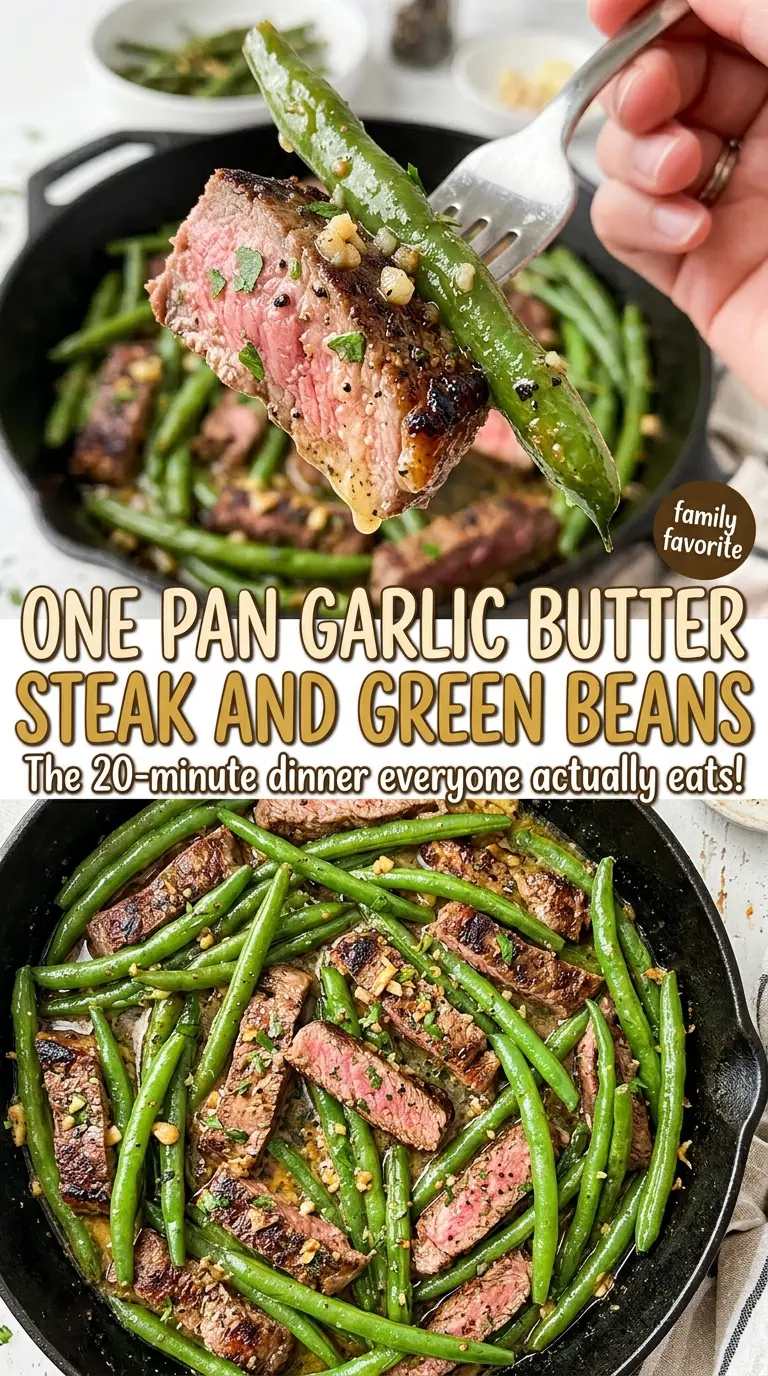
One Pan Garlic Butter Steak and Green Beans
The oil should shimmer before the steak hits the skillet; if it doesn’t, the meat starts releasing moisture before the pan can give it a good sear. Once the steaks…

By Ava
•
•
Reading time: 9 min
Tip: save now, make later.
The oil should shimmer before the steak hits the skillet; if it doesn’t, the meat starts releasing moisture before the pan can give it a good sear. Once the steaks are browned, they get a short rest while the green beans cook in the same pan. That simple handoff is what makes this One Pan Garlic Butter Steak and Green Beans feel like a complete dinner without leaving you with a sink full of dishes.
I like this method because the beans pick up the browned bits left by the steak, then finish in butter and garlic. The water first steams the beans until they’re crisp-tender, but it needs to evaporate before the butter goes in. That leaves the garlic butter glossy rather than watery, ready to coat the steak and beans together. The skillet brings everything to the table warm, with the steak still juicy and the green beans bright and tender.

Kitchen Note
Pat the steaks thoroughly dry before seasoning. A dry surface browns more readily, while surface moisture has to cook off first and can leave the steak pale.
Save this one-pan garlic butter steak and green beans for a dinner with browned sirloin, crisp-tender beans, and garlicky butter from the same skillet.
Why the Green Beans Need a Dry Pan Before the Garlic Butter
The beans need water to steam, but that water has a job with a clear ending: once they’re crisp-tender, uncover the skillet and let the remaining liquid evaporate. Butter added while water is still pooling in the bottom gets diluted, and the garlic butter won’t cling to the beans or steak as well. Waiting for a dry skillet gives the butter a chance to coat instead of turn thin.
The order matters for the garlic, too. Minced garlic goes into the butter only after the water has cooked off, where it needs about 30 seconds to become fragrant. Add it earlier and it spends the steaming stage in a wet pan; leave it much longer over the heat and it can darken before the butter is ready. I keep the transition simple: steam, uncover, let the water disappear, then stir in the butter and garlic.
Because the steak rests on a plate while the beans cook, any juices that collect there aren’t lost. They go back into the skillet at the end, joining the butter and the browned flavor left behind by the sear. That last turn coats the steak without asking it to cook through a second time.
What Sirloin, Green Beans, and Butter Each Bring to the Skillet
- Boneless sirloin — Sirloin gives this skillet dinner a beefy steak bite without needing a long cooking time. Look for steaks cut to an even thickness so both pieces cook at a similar pace; the one-inch cut also gives you room to brown the outside while checking the center with a thermometer. A different cut can have a different thickness or fat content, so it won’t necessarily follow the same timing.
- Fresh green beans — Choose beans that look firm and feel crisp rather than limp. Trimming the ends gives them a neat, even finish, and keeping them whole lets the covered skillet steam them without turning them into small pieces that soften sooner. Frozen beans release more moisture, so they aren’t a like-for-like choice for this particular pan sequence.
- Canola oil — Its neutral taste lets the browned steak and garlic butter take the lead, and it’s suited to the medium-high sear. The useful cue is the oil shimmering in the skillet before the meat goes in; if it’s smoking heavily, the pan is hotter than you need.
- Unsalted butter and fresh garlic — Butter rounds out the pan juices, while minced garlic gives the finish its savory aroma. Freshly minced cloves have a brighter, more direct flavor than dried garlic, and the short time in the pan keeps that flavor noticeable. Unsalted butter also leaves the seasoning in your hands rather than adding an unknown amount of salt.
The Order That Gets Steak and Beans Done Together
Dry and Season the Steaks
Blot both sides of the steaks dry, then season each side with the kosher salt and black pepper. Get the green beans trimmed before heating the pan so they’re ready to go while the steak rests. Have a plate nearby for the cooked steaks; the beans move quickly once they’re covered.
Build a Browned Sear
Heat the canola oil in a 12-inch skillet over medium-high heat until it shimmers. Add the steaks and leave space around them so the surfaces can brown rather than steam. Sear for 4 to 6 minutes per side, checking the thickest part with a thermometer until it reads 145°F. If the steak hasn’t browned yet, give it a little longer in the pan instead of turning it repeatedly.
Steam the Beans Until Crisp-Tender
Move the steaks to a plate and let them rest for at least 3 minutes while the beans cook. Add the trimmed green beans and water to the same skillet, cover, and cook over medium heat for 4 to 6 minutes. Look for beans that have softened but still give a little bite when you test one. If they’re still firm, continue cooking until they reach that crisp-tender texture.
Let the Garlic Butter Coat Everything
Uncover the skillet and let any remaining water evaporate before adding the butter and minced garlic. Stir for about 30 seconds, just until the garlic smells fragrant. Return the steaks along with any juices on the plate, then turn them in the garlic butter so the surfaces pick up the pan flavor. Serve while the beans are warm and the butter is still glossy.
Two Small Changes That Shift the Texture
Cut the Beans Into Shorter Bites
After trimming, cut the beans into shorter lengths before they go into the skillet. They’ll be easier to pick up alongside a bite of steak, and smaller pieces soften a bit sooner, so start checking them at the early end of the cooking window.
Slice the Steak Before Its Final Turn
Keep the steaks whole for the sear and rest, then slice them across the grain before returning them to the skillet. The thinner pieces pick up more garlic butter in each bite and make the dish easier to serve, though they’ll lose heat faster than whole steaks. Turn them through the butter briefly rather than leaving the slices to cook in the pan.
Storage and Reheating
- Refrigerator: Store leftovers in an airtight container for 3 to 4 days. The green beans soften after chilling, and the steak will be less juicy than when freshly cooked.
- Freezer: Freeze in an airtight container for up to 2 to 3 months for best quality. The steak holds up better than the beans, which soften further after thawing.
- Reheating: Reheat covered in the microwave in short bursts, or warm gently in a skillet, until the leftovers reach 165°F. Avoid high heat or a long reheat; both can make the steak tough before the beans are hot.
Questions That Come Up While the Skillet Is Hot
One Pan Garlic Butter Steak and Green Beans
Ingredients
Equipment
Method
- Pat the steaks dry and season both sides with the salt and pepper.
- Heat the oil in a 12-inch skillet over medium-high heat until shimmering.
- Add the steaks and sear for 4 to 6 minutes per side, until browned and a thermometer inserted into the thickest part reads 145°F.
- Transfer the steaks to a plate and let them rest for at least 3 minutes while you cook the green beans.
- Add the green beans and water to the skillet, cover, and cook over medium heat for 4 to 6 minutes, until the beans are crisp-tender.
- Uncover the skillet and cook until any remaining water evaporates.
- Add the butter and garlic and stir for about 30 seconds, until fragrant.
- Return the steaks and any accumulated juices to the skillet, turn them in the garlic butter, and serve.