
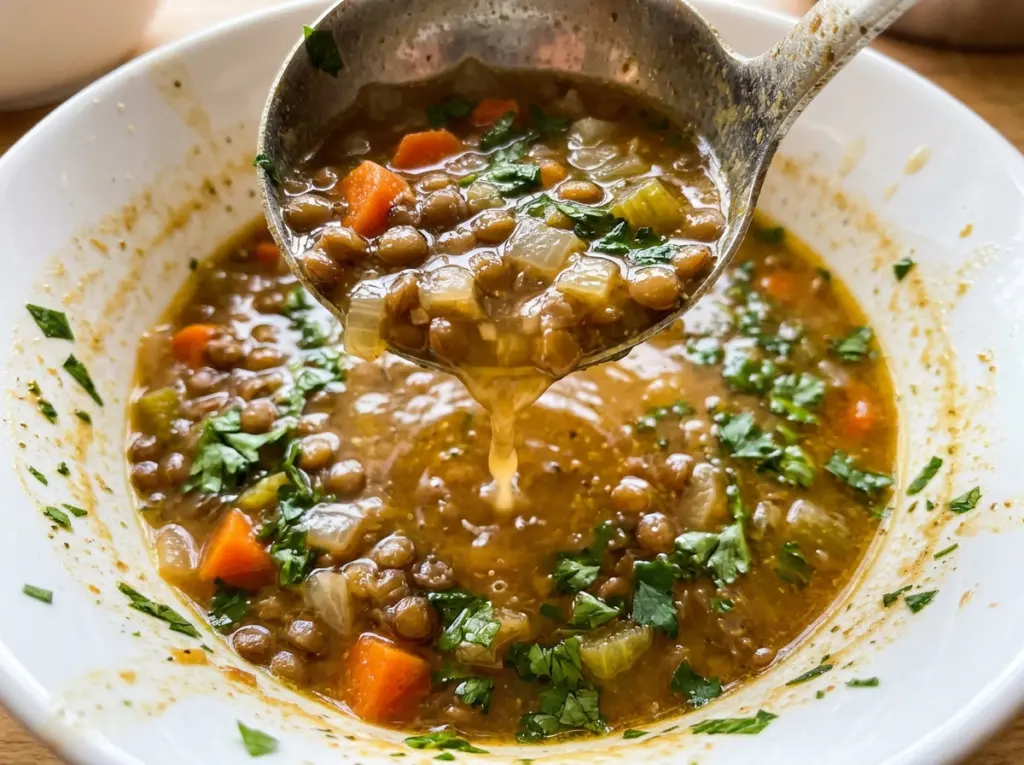
New Year’s Day Lentil Soup
The sausage starts to brown, and within a few minutes the kitchen smells like garlic and Sunday dinner—even though this soup is headed for the New Year’s table. I like…

By Ava
•
•
Reading time: 9 min
Tip: save now, make later.
The sausage starts to brown, and within a few minutes the kitchen smells like garlic and Sunday dinner—even though this soup is headed for the New Year’s table. I like how a pound of lentils turns a pot of broth into a filling meal without needing a separate thickener. The sweet Italian sausage gives the broth its savory base, while carrots, celery, tomatoes, and kale keep every spoonful from feeling heavy.
For New Year’s Day Lentil Soup, the small details matter more than a long ingredient list. Brown the sausage before adding the vegetables, then give the lentils a gentle simmer instead of a hard boil. That leaves them tender while they still hold their shape. A splash of red wine vinegar goes in at the end, where its brightness cuts through the rich sausage and earthy lentils. The result is a hearty soup with a lively finish and plenty of texture.
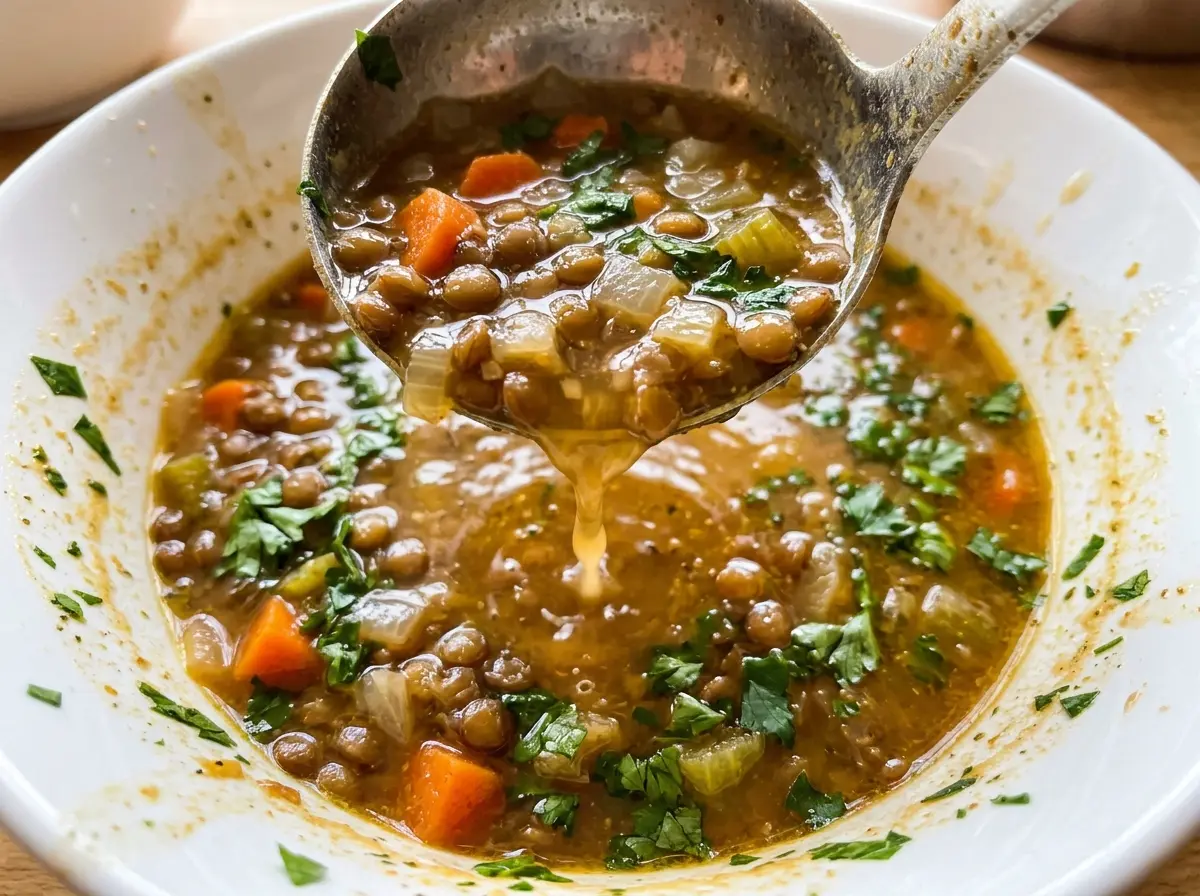
Kitchen Note
Add the red wine vinegar after you’ve removed the bay leaf, not while the soup is simmering. It keeps that little sharp, bright note clear against the sausage-rich broth.
Save New Year’s Day Lentil Soup for a cold-weather meal with savory sausage, tender lentils, and a bright finish of red wine vinegar.
How Lentils Give This Soup Body Without Turning It Into a Purée
There’s no flour, cream, or blended portion hiding in this pot. The lentils do the work of giving the broth more body as they cook, while the diced tomatoes and vegetables keep it from becoming a one-note bowl. Because the lentils simmer right in the broth, they take on the sausage and oregano as they soften instead of tasting like a separate addition.
That balance depends on using lentils that can handle a longer simmer. Brown and green lentils stay intact better than red lentils, which soften much faster and can lose their shape before the soup is ready. A gentle simmer also helps: a vigorous boil knocks the lentils around and can make the outside fall apart before the centers are tender. When the soup is finished, you should have a broth with a little body and distinct lentils, not a thick puree.
The vegetables have a job beyond adding color, too. Onion, carrot, and celery bring a sweet, savory base; tomatoes add a little acidity; kale gives the finished soup a leafy bite. Together, they make the lentils feel at home in a full meal rather than a bowl of plain beans.
Why Brown and Green Lentils Give This Soup Different Textures

- Brown or green lentils — Both work here, and either should be rinsed and picked over before it goes into the pot. Green lentils tend to keep a firmer, more defined shape; brown lentils soften more readily for a slightly gentler bite. Choose whole, unbroken lentils from a package that hasn’t been sitting open in the pantry for ages.
- Sweet Italian sausage — This supplies the main savory flavor and seasons the broth as it cooks. Ask for it without casings or remove the casings yourself; breaking it into small pieces gives you some in each spoonful. Fresh sausage from the grocery store is fine—there’s no need for a specialty butcher.
- Low-sodium chicken broth — Low-sodium broth gives you room to season the soup with the listed kosher salt without the finished pot becoming overly salty. A basic carton works well. The sausage and tomatoes add their own savory character, so a premium broth isn’t essential.
- Kale — Remove the tough stems before chopping so the leaves become tender during their short simmer. Fresh kale with sturdy, unwilted leaves holds up well in the soup; the tough ribs don’t soften as quickly as the chopped leaves.
- Diced tomatoes and red wine vinegar — Canned diced tomatoes bring their juices along, adding acidity and small bites of tomato throughout the broth. Red wine vinegar gives the finished soup a sharper lift; use it at the end rather than expecting the tomatoes alone to provide that same bright finish.
- Onion, carrots, celery, garlic, and oregano — These build a familiar savory base without needing an extra seasoning blend. Chop the vegetables to a similar size so they soften evenly, and mince the garlic so it can cook briefly without leaving large raw-tasting pieces.
From Browned Sausage to a Pot of Tender Lentils
Brown the sausage before building the soup
Heat the olive oil in a 6-quart Dutch oven over medium-high heat, then add the sausage without its casings. Break it into small pieces as it cooks, letting the pieces brown rather than stirring constantly. It takes about 6 to 8 minutes to brown and cook through to 160°F. If the pan is crowded with one large mass of sausage, keep breaking it apart so the pieces cook evenly.
Soften the vegetables, then add the garlic
Stir in the chopped onion, carrots, and celery, and cook until the onion softens, about 5 minutes. Stir occasionally so the vegetables cook evenly and pick up the browned bits in the bottom of the pot. Add the minced garlic only after the vegetables have softened, and cook it for 30 seconds. Garlic can turn bitter if it sits too long over the heat, so move promptly to the broth ingredients.
Bring the lentils to a gentle simmer
Stir in the rinsed, picked-over lentils, chicken broth, diced tomatoes with their juices, oregano, bay leaf, salt, and pepper. Bring the pot to a boil over high heat, then reduce the heat until the soup holds a gentle simmer. Partially cover the Dutch oven and cook for about 30 to 40 minutes. Check for lentils that are tender but still hold their shape; if they’re still firm, let the simmer continue until they reach that texture.
Finish with kale and vinegar
Stir in the chopped kale after the lentils are tender, then simmer uncovered for about 5 minutes, until the leaves have softened. Keep the pot uncovered during this short finish so the kale can cook without trapping extra steam. Remove and discard the bay leaf, then stir in the red wine vinegar. Give the soup a final stir so the vinegar is distributed through the broth.
Choose the Lentil Texture That Suits Your Bowl
Use green lentils for a firmer, more distinct bite
Green lentils are a good pick if you want each spoonful to show clearly defined lentils alongside the sausage and vegetables. They’re one of the two types that work in this soup, and they bring a firmer texture to the bowl.
Choose brown lentils for a softer finish
Brown lentils soften more readily, giving the broth a slightly fuller feel while still leaving the lentils whole. Pick them when you prefer a tender, less firm bite; they’re an equal fit for the soup’s savory sausage-and-kale base.
Storage and Reheating
- Refrigerator: Store in a covered container for 3 to 4 days. The lentils continue to absorb broth, so the soup will be thicker after chilling.
- Freezer: Freeze cooled soup in airtight containers for up to 3 months. Leave a little room at the top for expansion; the kale may soften further after thawing.
- Reheating: Warm gently on the stovetop or in the microwave, stirring so the lentils heat evenly, until the soup reaches 165°F. Avoid a hard boil, which can break down the lentils.
Questions I Get About New Year’s Day Lentil Soup
New Year's Day Lentil Soup
Ingredients
Equipment
Method
- Heat the olive oil in a 6-quart Dutch oven over medium-high heat.
- Add the sausage and cook, breaking it into small pieces, until browned and cooked to 160°F, about 6 to 8 minutes.
- Add the onion, carrots, and celery and cook, stirring occasionally, until the onion softens, about 5 minutes.
- Stir in the garlic and cook for 30 seconds.
- Stir in the lentils, broth, tomatoes and their juices, oregano, bay leaf, salt, and pepper.
- Bring the soup to a boil over high heat.
- Reduce the heat to maintain a gentle simmer, partially cover, and cook until the lentils are tender but still hold their shape, about 30 to 40 minutes.
- Stir in the kale and simmer uncovered until tender, about 5 minutes.
- Remove and discard the bay leaf.
- Stir in the red wine vinegar.