
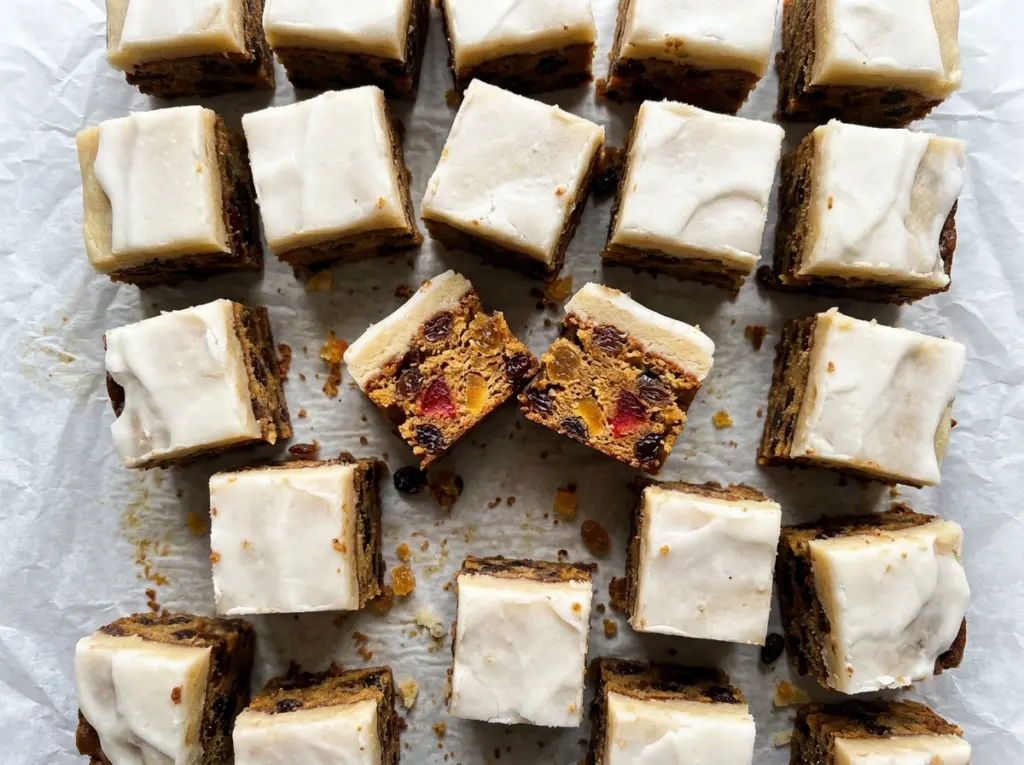
Mary Berry Christmas Cake Bites
The top of a fruit cake can look ready well before the center is baked through. This one needs a slow oven and a patient check with a skewer, especially…

By Ava
•
•
Reading time: 10 min
Tip: save now, make later.
The top of a fruit cake can look ready well before the center is baked through. This one needs a slow oven and a patient check with a skewer, especially with all that fruit packed into an 8-inch square. Mary Berry Christmas Cake Bites turn that dense, warmly spiced cake into small squares with a layer of marzipan and a bright lemon icing finish.
I soak the dried fruit and candied peel in brandy before they go anywhere near the batter. That gives the fruit time to soften and lets the brandy flavor settle in, rather than leaving pockets of dry fruit in the finished cake. Once the cake has cooled completely, the marzipan rolls out into a tidy sheet, and each bite gets its own little spoonful of icing. The result is a rich fruit cake with a soft, sweet almond layer and a clean citrus finish.
Kitchen Note
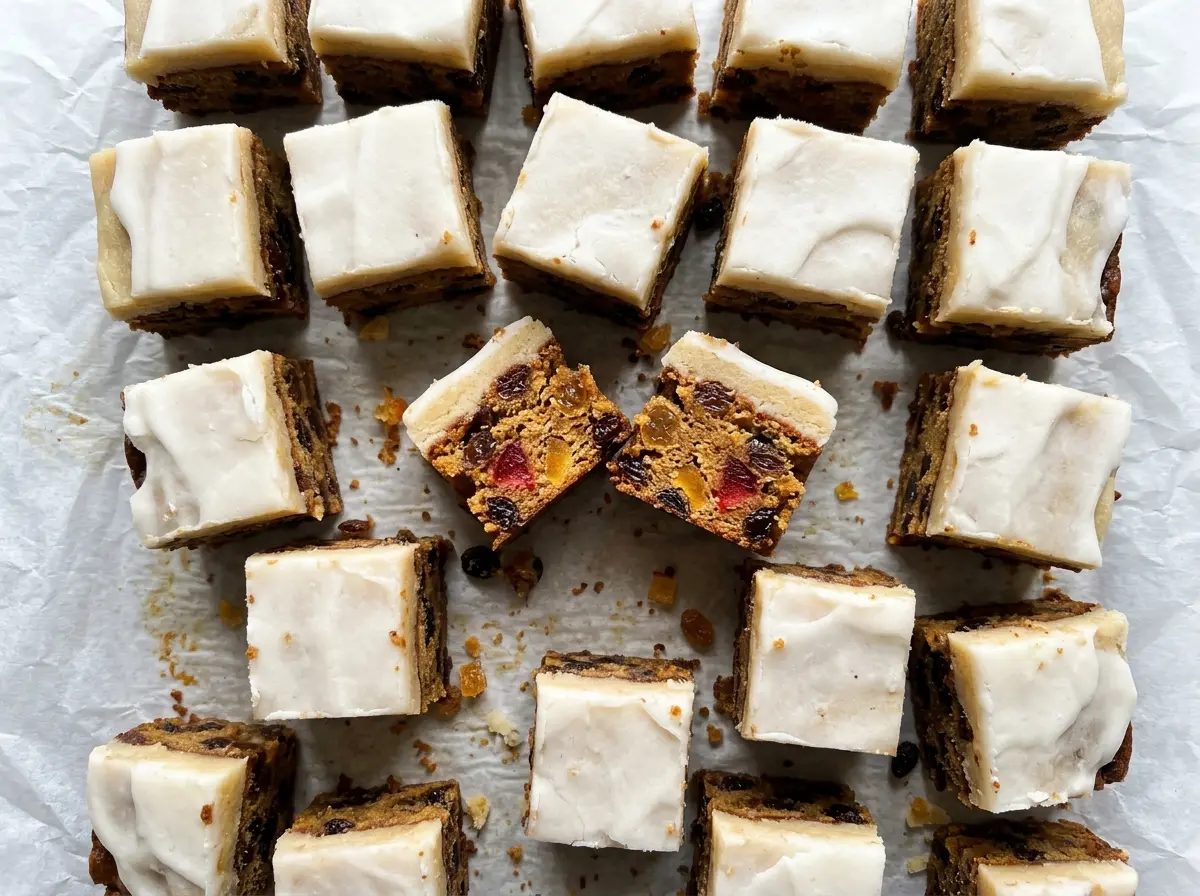
Wipe the knife blade between cuts, especially once it passes through the marzipan. A clean blade keeps the edges of these little squares neat instead of dragging fruit and almond paste across each cut.
Save Mary Berry Christmas Cake Bites for a holiday treat with brandy-soaked fruit, a smooth marzipan layer, and lemon icing on every square.
Why This Fruit Cake Needs a Low, Patient Bake
This cake has a substantial amount of dried fruit folded through a relatively compact batter. A hotter oven can brown the surface before the middle has time to bake, leaving you with a dark top and a center that still needs work. Baking at a low temperature gives the heat time to move through the cake without rushing the outside.
That’s also why color alone isn’t a dependable doneness test here. A fruit cake’s surface can deepen in color while the middle is still catching up, and the baking window varies with the pan and oven. The skewer test tells you more than the top does: the center needs to be baked through before you lift the cake out to cool. If the top is darkening too quickly, a loose foil tent slows the browning while the center finishes. The patient bake leaves you with a cake sturdy enough to slice into bites but moist and close-crumbed beneath the marzipan.
The Fruit, Almonds, and Marzipan Each Have a Job

- Mixed dried fruit and candied citrus peel — Raisins, currants, and golden raisins give you a mix of sweetness and chew, while the peel adds a sharper citrus note. Everyday dried fruit works well; choose fruit that’s soft rather than hard and clumped together so it can absorb the brandy during its soak.
- Brandy — The brandy seasons the fruit as it softens and brings a warm note to the cake. There’s no need to use an expensive bottle here. For an alcohol-free version, use the same amount of apple juice; the fruit will taste a little sweeter and less warmly spiced.
- Ground almonds — They give the cake a tender, slightly nutty crumb that extra flour won’t quite reproduce. Use finely ground almonds for an even texture; coarse pieces can make the crumb feel uneven. The ground almonds are not a safe swap for someone avoiding nuts.
- Butter and eggs — Softened butter creams smoothly with the sugar, and room-temperature eggs blend into that mixture more easily than cold ones. Use butter rather than a soft tub spread, which can make the batter looser and change the cake’s texture.
- Marzipan and apricot preserves — Ready-to-roll marzipan gives the bites their smooth almond topping, while the warmed preserves help it adhere to the cooled cake. A pliable block of marzipan is easier to roll into an even sheet than a soft spread.
From Brandy-Soaked Fruit to Iced Little Squares
Soak the Fruit Until It Softens
Stir the dried fruit and candied peel with the brandy in a large bowl, cover it, and leave it at room temperature for at least 2 hours. The fruit should look plumper and feel less dry when you stir it. Keep any brandy left in the bowl; it goes into the batter along with the fruit.
Cream and Fold Without Overworking
Heat the oven to 300°F and coat an 8-inch square pan with nonstick cooking spray, then line the bottom and sides with parchment. Beat the softened butter and brown sugar until light and fluffy, about 3 minutes, before adding the room-temperature eggs one at a time and mixing in the lemon zest. Whisk the flour, ground almonds, cinnamon, nutmeg, and salt separately, then fold them into the butter mixture just until combined. Fold in the soaked fruit and any remaining brandy; stop once the fruit is spread evenly through the thick batter.
Bake the Center Through, Not Just the Top
Spread the batter into the prepared pan and bake for 1 hour 50 minutes to 2 hours 20 minutes. Start checking with a skewer near the end of that range; it should come out clean when inserted in the center. If the surface darkens before the center is ready, loosely tent the cake with foil and keep baking. Cool it in the pan for 30 minutes, then lift it out by the parchment and let it cool completely.
Roll the Marzipan Over the Cooled Cake
Warm the apricot preserves in a small saucepan over low heat until loose, about 1 minute, then brush them over the cake’s top. Dust the work surface with confectioners’ sugar and roll the marzipan into an 8-inch square about 1/4 inch thick. Lay it over the cake and trim the edges so the topping reaches the sides evenly. Don’t add it while the cake is warm; the cake needs to be completely cool first.
Cut First, Then Add the Lemon Icing
Cut the topped cake into 36 equal bites with a sharp knife. Stir the confectioners’ sugar, lemon juice, and water until the icing is smooth and thick, then spoon a small mound onto each piece. Let the icing set for 30 minutes before arranging or storing the bites. If it runs off the edges, it’s too loose to sit as a neat little cap, so keep the mixture thick rather than adding extra liquid.
Simple Changes That Still Feel Like Christmas Cake
Make the Fruit Mix More Currant-Forward
Keep the total amount of dried fruit the same, but let currants make up the largest share and use fewer golden raisins. The bites will taste less sweet and have a slightly sharper fruitiness, while the candied peel still brings its citrus note.
Bake a Gluten-Free Version
Replace the all-purpose flour with the same amount of a cup-for-cup gluten-free baking blend that includes xanthan gum. The cake may have a slightly more delicate crumb, so fold gently and use the clean-skewer cue rather than relying only on the surface color.
Make the Cake Dairy-Free
Use the same amount of a firm, dairy-free baking stick in place of the butter. Choose a block-style product rather than a soft tub spread, which contains more water and can make the batter looser. The cake will have a slightly different buttery flavor, but the fruit and spices remain front and center.
Storage and Reheating
- Refrigerator: Keep the bites in an airtight container for up to 5 days. The marzipan will feel firmer when chilled.
- Freezer: Freeze the fully set bites in a single layer until firm, then wrap them well or pack them with parchment between layers for up to 2 months. The icing may look less smooth after thawing.
- Reheating: These bites don’t need reheating. Let them lose their refrigerator chill before serving; microwaving can soften the marzipan and melt the icing.
Questions I Get Asked About These Christmas Cake Bites
Mary Berry Christmas Cake Bites
Ingredients
Equipment
Method
- Stir the dried fruit, candied peel, and brandy together in a large bowl, cover, and soak for at least 2 hours at room temperature.
- Heat the oven to 300°F.
- Coat an 8-inch square baking pan with nonstick cooking spray.
- Line the bottom and sides of the pan with parchment paper.
- Beat the butter and brown sugar in a large bowl until light and fluffy, about 3 minutes.
- Beat in the eggs one at a time.
- Mix in the lemon zest.
- Whisk the flour, ground almonds, cinnamon, nutmeg, and salt in a separate bowl.
- Fold the dry ingredients into the butter mixture just until combined.
- Fold in the soaked fruit and any remaining brandy until evenly distributed.
- Spread the batter in the prepared pan.
- Bake for 1 hour 50 minutes to 2 hours 20 minutes, until a skewer inserted in the center comes out clean; loosely tent with foil if the top darkens too quickly.
- Cool the cake in the pan for 30 minutes.
- Lift it out using the parchment and cool completely.
- Warm the apricot preserves in a small saucepan over low heat until loose, about 1 minute.
- Brush the preserves over the top of the cooled cake.
- Dust the work surface with the confectioners’ sugar.
- Roll the marzipan into an 8-inch square about 1/4 inch thick.
- Lay the marzipan over the cake and trim the edges.
- Cut the cake into 36 equal bites, using a sharp knife and wiping the blade between cuts.
- Stir the confectioners’ sugar, lemon juice, and water together until smooth and thick.
- Spoon a small mound of icing onto each bite.
- Let the icing set for 30 minutes.