
Maple Walnut Fudge
The bubbles start quietly, then the maple syrup and cream turn into a glossy, fast-rising boil that needs your full attention. I learned not to judge this fudge by the…

By Ava
•
•
Reading time: 8 min
Tip: save now, make later.
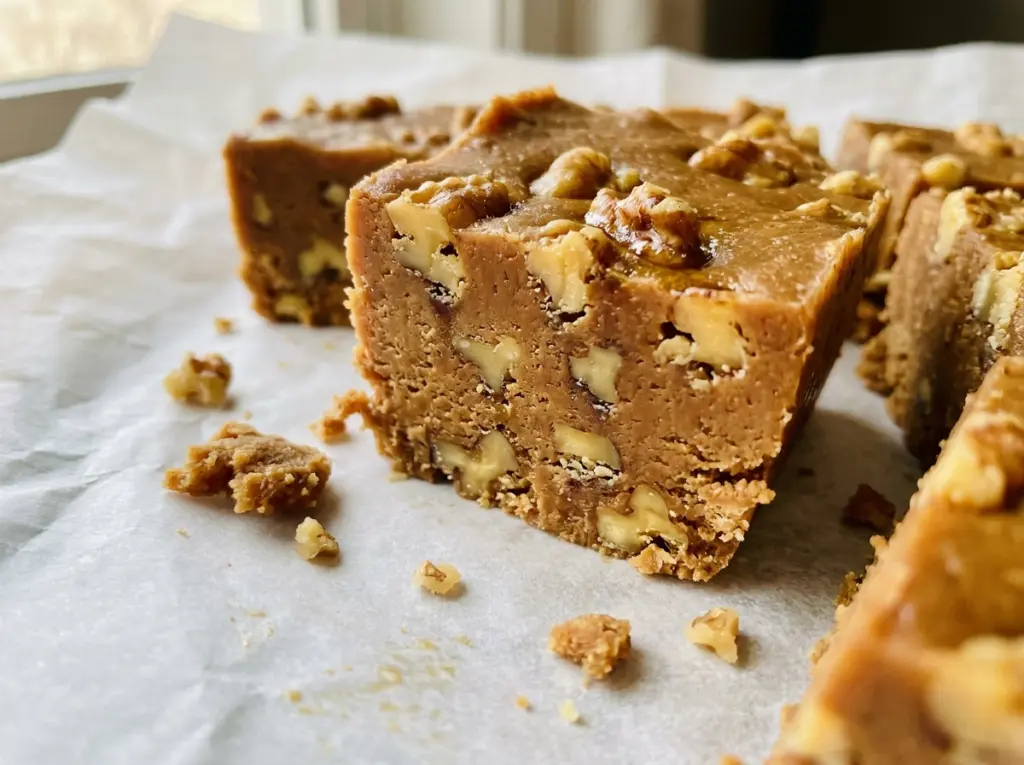
The bubbles start quietly, then the maple syrup and cream turn into a glossy, fast-rising boil that needs your full attention. I learned not to judge this fudge by the way it looks in the saucepan; the candy thermometer gives a much more reliable answer than the bubbles do. Maple walnut fudge gets its deep maple taste from pure maple syrup cooked right into the base, with chopped walnuts folded through at the end.
The texture depends on letting the syrup cool before you beat it. Start beating too soon and the mixture can stay loose; wait until it reaches 110°F, then keep working until it thickens and loses its shine. That change from glossy to matte is easy to see, and it tells you the fudge is ready for the walnuts and the pan. The finished squares are rich, smooth, and dotted with walnut crunch.
Kitchen Note
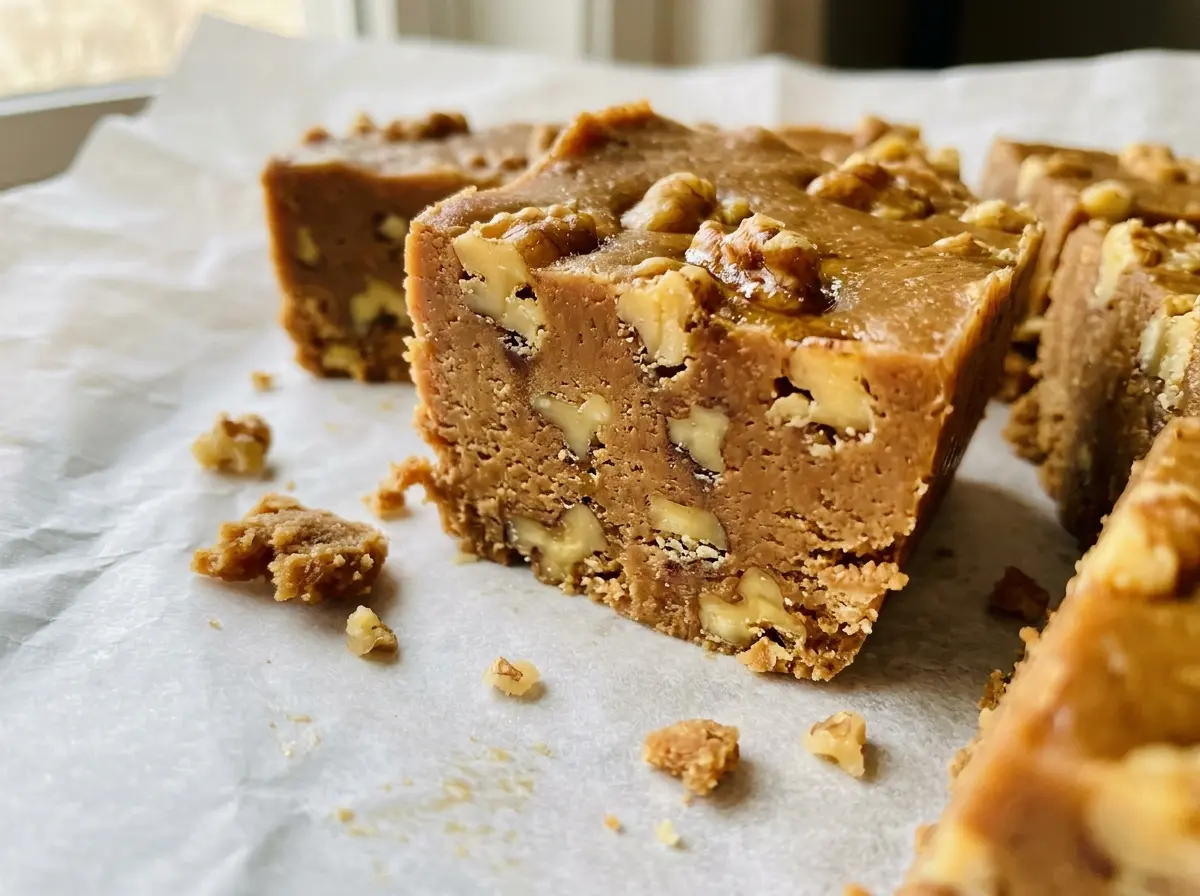
Leave parchment hanging over two sides of the pan, rather than trimming it flush. Those paper handles let you lift the set slab out without bending or breaking the edges.
Save this maple walnut fudge for a homemade candy tray: smooth maple squares with a generous walnut crunch.
Why the Two-Minute Cover Helps Keep Maple Fudge Smooth
Grainy fudge often starts with sugar crystals that cling to the sides of the saucepan. Once one crystal drops back into the bubbling syrup, it can encourage more sugar to crystallize, leaving the finished candy sandy instead of smooth. Covering the pan for two minutes after the mixture boils creates steam that condenses along the sides and washes those crystals back down.
After you uncover the pan, leave the spoon out and let the mixture cook undisturbed to 238°F. Stirring at this point can introduce crystals right when the sugar syrup is concentrating. A heavy-bottomed saucepan helps the heat spread more evenly, while a candy thermometer lets you stop at the soft-ball stage instead of guessing from the look of the bubbles. That careful cook-and-cool sequence gives the maple base a smooth start before you beat it.
Pure Maple Syrup Is Doing More Than Supplying Maple Flavor
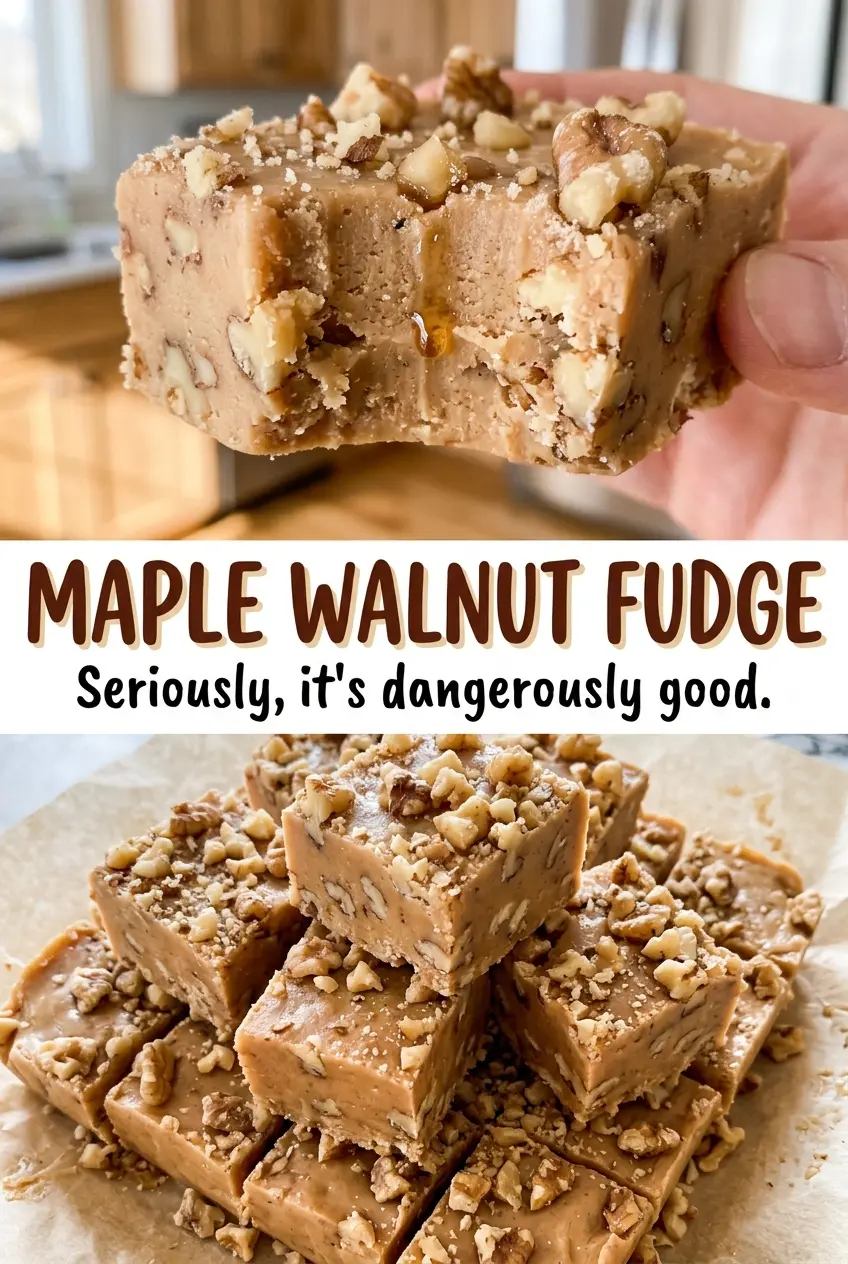
- Pure maple syrup — It brings the defining maple flavor and contributes liquid to the cooked candy base. Use pure maple syrup, not pancake syrup; the latter has a different balance of sweeteners and won’t give the same result. The syrup doesn’t need to be an expensive specialty bottle, but it should be genuine maple syrup.
- Heavy cream — Its fat gives the fudge a rich, tender bite. Milk or half-and-half isn’t a dependable swap here because the lower fat content changes the candy’s texture. Choose fresh cream, but there’s no need to seek out a premium brand.
- Granulated sugar — This is the main sugar in the candy and supports the set once the mixture reaches its target temperature. Brown sugar brings extra moisture and a molasses note, so it isn’t a straight substitute for the granulated sugar in this batch.
- Unsalted butter — Butter rounds out the cooked cream and maple mixture. Unsalted butter gives you control over the salt; if salted butter is all you have, leave out the added salt so the fudge doesn’t turn overly salty.
- Vanilla extract — Added after cooling, vanilla softens the maple’s sharp sweetness and gives the finished fudge a fuller aroma. Use the extract you already keep for baking; no special variety is needed.
- Chopped walnuts — Their earthy flavor and crunch balance the sweet, smooth candy. Fresh walnuts taste cleaner than nuts that have been sitting open for months, and chopping them before you start means you can fold them in as soon as the fudge is ready.
From a Controlled Boil to a Matte, Set Fudge
Set Up the Pan and Dissolve the Sugar
Line an 8-inch square pan with parchment, leaving an overhang on two sides. In a 3-quart heavy-bottomed saucepan, combine the sugar, heavy cream, maple syrup, butter, and salt. Stir over medium heat until the sugar dissolves and the mixture comes to a boil. Keep stirring only during this initial dissolving stage; once it boils, move on to the covered step.
Cook to the Soft-Ball Temperature
Cover the boiling mixture for two minutes, then uncover it and cook without stirring. Watch the candy thermometer and take the saucepan off the heat when the mixture reaches 238°F. Don’t pull it early because the syrup looks thick; the thermometer reading is the reliable cue for a fudge that will set.
Let the Syrup Cool Undisturbed
Set the pan aside and leave the mixture alone until it cools to 110°F, which takes about 45 to 60 minutes. The surface may look calmer and thicker as it loses heat, but don’t stir it while it rests. Cooling to the stated temperature gives the candy the right starting point for beating.
Beat Until Matte, Then Spread at Once
Add the vanilla and beat with a sturdy wooden spoon until the mixture thickens and loses its shine. It should look less glossy and hold its shape more than it did at the start; fold in the walnuts as soon as that change appears. Spread the fudge in the lined pan immediately, since it firms quickly, then let it set at room temperature for about two hours before cutting it into squares.
Small Changes That Keep the Maple Flavor Front and Center
Make a Walnut-Free Batch
Leave out the walnuts for a nut-free version. The fudge still sets, but the pieces will have a smoother texture and a more direct maple taste instead of the crunchy, earthy contrast.
Skip the Vanilla for a Bolder Maple Note
Leave out the vanilla if you want the maple to come through more plainly. The candy will still set, though its aroma will be less rounded and the sweetness may taste more direct.
Storage and Reheating
- Refrigerator: Store the cut fudge in an airtight container for up to two weeks. Chilled pieces will be firmer than they are at room temperature.
- Freezer: Freeze the pieces in an airtight container, with parchment between layers, for up to three months. Thaw them in the refrigerator while still covered to limit condensation on the surface.
- Reheating: Don’t microwave the fudge; it can soften unevenly or melt. Let a chilled square sit out briefly before serving if you prefer a softer bite.
Maple Walnut Fudge Questions That Come Up at the Stove
Maple Walnut Fudge
Ingredients
Equipment
Method
- Line an 8-inch square pan with parchment paper, leaving an overhang on two sides.
- Combine the granulated sugar, heavy cream, pure maple syrup, unsalted butter, and salt in a 3-quart heavy-bottomed saucepan and stir over medium heat until the sugar dissolves and the mixture comes to a boil.
- Cover the boiling mixture for 2 minutes.
- Uncover and cook without stirring until it reaches 238°F on a candy thermometer.
- Remove the pan from the heat and let the mixture cool undisturbed to 110°F, about 45 to 60 minutes.
- Add the vanilla extract and beat with a sturdy wooden spoon until the mixture thickens and loses its shine.
- Fold in the chopped walnuts.
- Immediately spread the fudge in the prepared pan.
- Let it set at room temperature for about 2 hours before cutting into squares.