
Maple Roasted Carrots and Parsnips
At the 15-minute mark, the carrots and parsnips have started to soften, but their edges are still finding color. That’s when I stir them and add the maple syrup, rather…

By Ava
•
•
Reading time: 8 min
Tip: save now, make later.
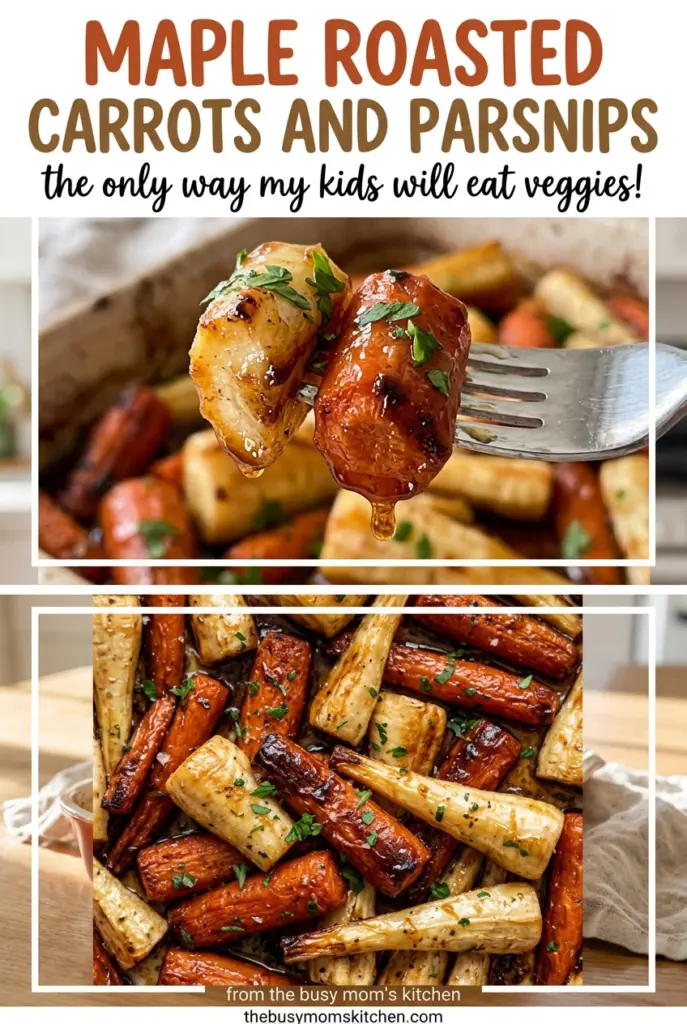
At the 15-minute mark, the carrots and parsnips have started to soften, but their edges are still finding color. That’s when I stir them and add the maple syrup, rather than letting it sit on the vegetables through the whole roast. It’s a small timing choice that gives these maple roasted carrots and parsnips browned edges without losing the maple’s clean sweetness.
I cut both vegetables into pieces about the same thickness, even though their shapes don’t need to match perfectly. That helps them roast at a similar pace, so you’re not waiting on a thick parsnip while thin carrot pieces get too soft. A large rimmed baking sheet gives the pieces room to spread out in one layer.
The finish is easy to judge by sight and touch: the vegetables should be tender, with browned edges, and lightly coated in maple. They’re a simple side that brings a little sweetness to the table without turning the vegetables into a glaze-heavy dish.
Kitchen Note
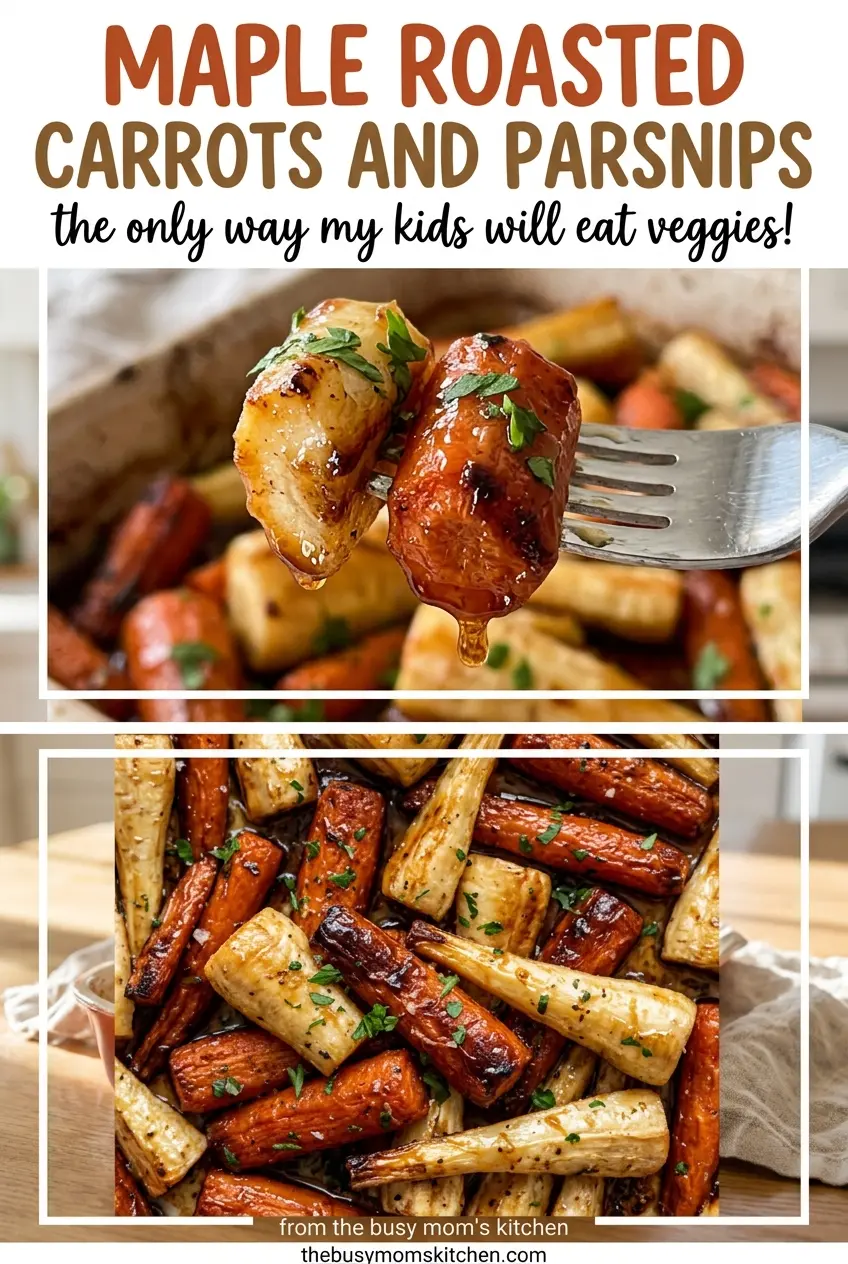
Spread the vegetables in a single layer, with a little breathing room between pieces. If they’re piled together, they’ll steam against one another instead of browning at the edges.
Save these maple roasted carrots and parsnips for a side with tender centers, browned edges, and a light maple finish.
Why the Maple Goes on After the First Roast
Maple syrup is sweet and quick to darken in a hot oven. Add it before the vegetables have had time to roast, and the syrup spends the entire cooking time exposed to the heat. The vegetables, meanwhile, need that first stretch to soften and begin browning on their own.
Roasting the carrots and parsnips with olive oil, salt, and pepper first gives them a head start. After 15 minutes, a stir turns the pieces and exposes new surfaces to the pan; then the maple goes on for the final 10 to 15 minutes. That shorter maple-roasting window is enough to coat the vegetables and bring the sweetness forward, while the edges continue to brown.
This order also makes the finish easier to control. Once you drizzle in the syrup, toss the vegetables right away so it spreads over the pieces rather than pooling on the parchment. The result should taste like roasted roots first, maple second—not like vegetables buried under a sticky coating.
Carrots and Parsnips Need the Same Cut, Not the Same Shape
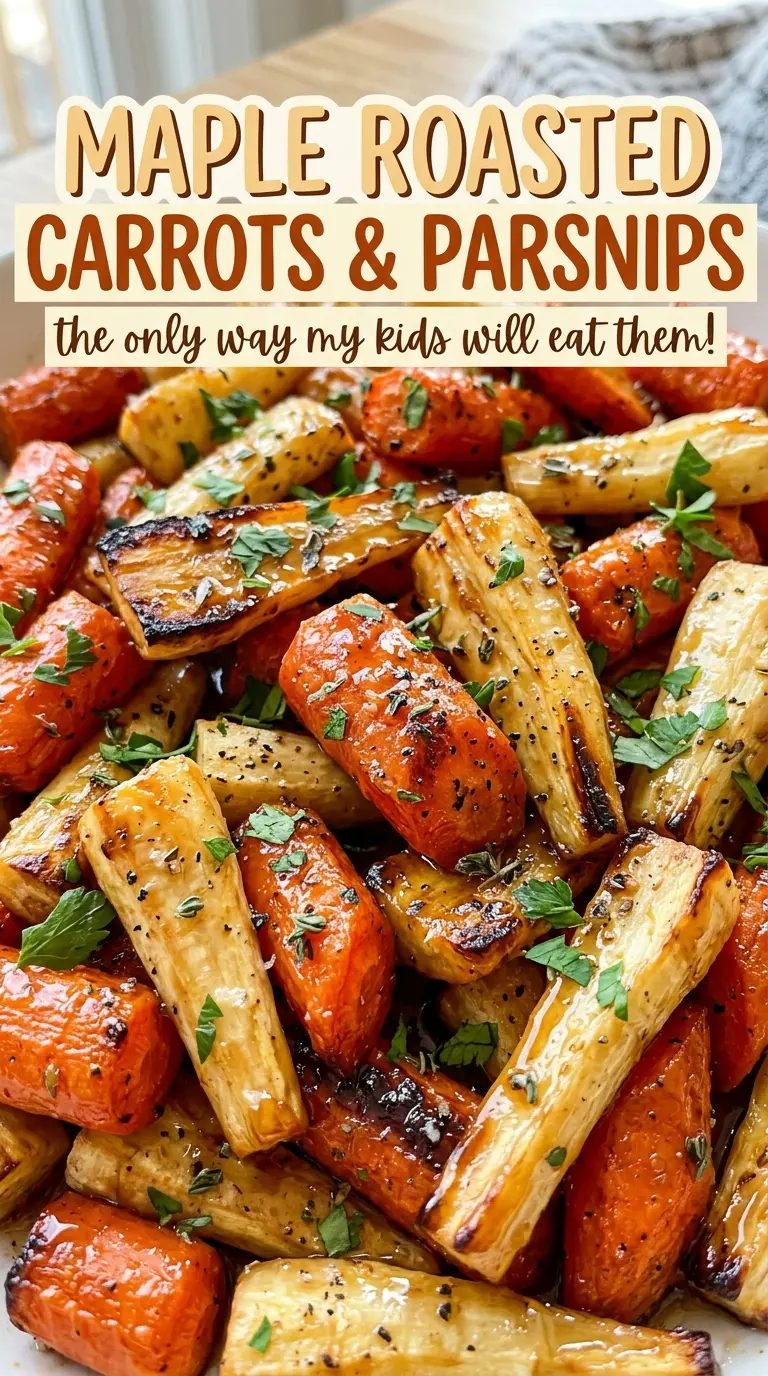
- Carrots — Their sweetness is familiar and mellow, which balances the earthier parsnips. Peel them, then cut them into 2-inch pieces and halve or quarter each piece lengthwise until it’s about 1/2 inch thick. Firm carrots are the best choice; there’s no need to seek out a specialty variety.
- Parsnips — Parsnips bring a more distinctive, earthy sweetness, so they’re not interchangeable with carrots if you want the same balance. Peel them as you would the carrots, and cut them to the same approximate thickness. If a parsnip is especially wide, quarter it lengthwise so the pieces aren’t much thicker than the rest.
- Olive oil — Oil helps the vegetables roast and keeps the salt and pepper distributed over their surfaces. A basic olive oil works well here; a costly finishing oil won’t add much because the vegetables roast in the oven. Use enough to toss everything evenly before it goes onto the pan.
- Pure maple syrup — Pure maple syrup gives the finish its recognizable maple aroma and sweetness. Pancake syrup isn’t the same ingredient and can leave a different, heavier coating. If you want to keep the vegetables less sweet, leaving out the syrup is a better fit than swapping in another sweetener.
Roast the Roots First, Then Add the Maple
Cut the Vegetables to an Even Thickness
Peel the carrots and parsnips, then cut them into 2-inch pieces. Halve or quarter each piece lengthwise so the pieces are about 1/2 inch thick. The shapes can vary; matching their thickness matters more than making every piece look identical. Keeping the cuts close in size helps the carrots and parsnips reach tenderness together.
Oil and Season Before the First Roast
Heat the oven to 425°F and line a large rimmed baking sheet with parchment paper. Toss the vegetables with olive oil, kosher salt, and black pepper until the seasoning is spread over the pieces. Arrange them in one layer on the prepared sheet. Don’t leave a mound in the middle, where the vegetables will sit close together rather than roast evenly.
Give the Vegetables Their First 15 Minutes
Roast the vegetables for 15 minutes, then stir them. Use a spatula to turn pieces from the outside toward the center and bring the pan-facing sides up. At this point, the vegetables won’t be finished; the second roast gives them time to turn tender and develop browned edges. Stirring before the maple goes on also gives the syrup a more even surface to cling to.
Toss with Maple and Roast Until Tender
Drizzle the maple syrup over the vegetables and toss to coat. Return the pan to the oven for 10 to 15 minutes more. Start checking near the shorter end of that range: the vegetables are ready when they’re tender and browned at the edges. If they still feel firm, let them roast for the remaining time and check again.
Small Changes for a Different Maple-Roasted Root Vegetable Tray
Make it carrot-only
Use carrots in place of the parsnips for a milder, more familiar roasted-vegetable side. Keep the pieces about 1/2 inch thick and use the same roasting sequence; the tray will lose the parsnips’ earthy note but keep the maple finish.
Leave out the maple for a less-sweet side
Skip the maple syrup and roast the seasoned vegetables until tender and browned at the edges. The carrots and parsnips will taste more plainly roasted, without the glossy sweetness of the maple finish.
Keep the tray plant-based and gluten-free
The ingredients in this vegetable side are already plant-based and gluten-free, so no replacement is needed for those menus. Keep the vegetables, olive oil, seasonings, and pure maple syrup as listed for the same sweet-roasted result.
Storage and Reheating
- Refrigerator: Store leftovers in an airtight container for 3 to 4 days. The vegetables soften as they sit, and the browned edges won’t stay as crisp.
- Freezer: They can be frozen in an airtight freezer-safe container for up to 3 months, though thawed carrots and parsnips will be softer. Thaw them in the refrigerator before reheating.
- Reheating: Spread the vegetables on a baking sheet and warm them in a 350°F oven until heated through. Avoid reheating them in a deep pile; trapped steam makes the softened texture more noticeable.
Questions That Come Up With Maple-Roasted Root Vegetables
Maple Roasted Carrots and Parsnips
Ingredients
Equipment
Method
- Heat the oven to 425°F.
- Line a large rimmed baking sheet with parchment paper.
- Toss the carrots and parsnips with the olive oil, salt, and pepper.
- Spread the vegetables in a single layer on the baking sheet.
- Roast for 15 minutes.
- Stir the vegetables.
- Drizzle with the maple syrup, tossing to coat.
- Roast for 10 to 15 minutes more, until the vegetables are tender and browned at the edges.