
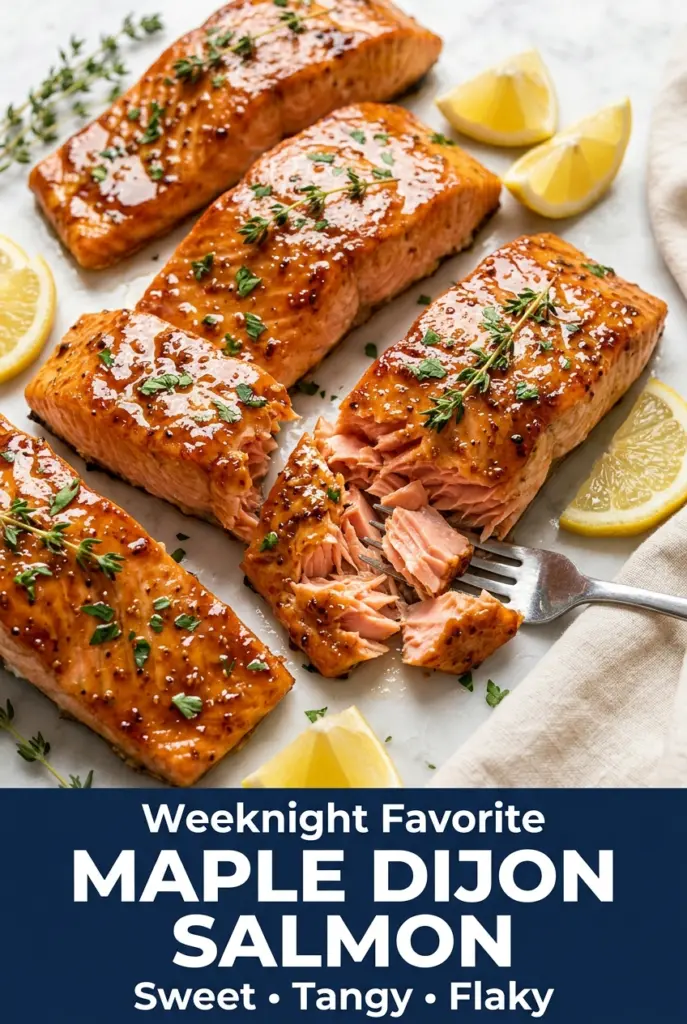
Maple Dijon Salmon
Maple Dijon salmon hits that sweet spot between effortless and special. The glaze turns glossy in the oven, the edges caramelize just enough to give the fish a little bite,…

By Ava
•
•
Reading time: 8 min
Tip: save now, make later.
Maple Dijon salmon hits that sweet spot between effortless and special. The glaze turns glossy in the oven, the edges caramelize just enough to give the fish a little bite, and the salmon underneath stays tender and flaky instead of drying out. It’s the kind of dinner that looks like you paid attention, even though it comes together fast enough for a busy night.
What makes this version work is the balance in the glaze. Maple syrup brings sweetness and helps the surface brown, while Dijon keeps it from tasting flat or sticky. A little soy sauce deepens the savory side, lemon brightens the whole pan, and garlic plus thyme keep the flavor grounded. The key is brushing on enough glaze to coat the fish without drowning it, then letting the oven do the rest.
Below, I’ve included the small details that matter: how to keep salmon from overcooking, what to swap if you’re out of one ingredient, and how to get the glaze to cling instead of sliding off the fillets.
The glaze caramelized beautifully and the salmon stayed moist all the way through. I loved that the lemon kept it from being too sweet, and it was on the table in under 30 minutes.
Save this Maple Dijon Salmon for nights when you want a caramelized glaze and flaky fish without a long ingredient list.
The Trick to Salmon That Stays Moist Under a Sticky Glaze
Salmon dries out when it stays in the oven too long, and a sugary glaze can hide that mistake until the first bite. The fix is to treat the fish and the glaze as two separate jobs: get the salmon into the oven only until it’s just starting to flake, then let the residual heat finish the center. If the fillets are thin, shave a minute or two off the bake time instead of waiting for the glaze to look darker.
Another common problem is overbasting. If you brush on too much glaze too early, it can slide off the fish and pool on the pan instead of caramelizing on top. A light first coat, then a second brush halfway through, gives you that shiny finish without burning the sugar.
What Each Ingredient Is Doing in This Dish

- Salmon fillets — Choose center-cut fillets if you can, since they cook more evenly than thin tail pieces. Skin-on salmon works well here because it helps hold the fish together on the pan and makes lifting easier after baking.
- Pure maple syrup — Use the real thing, not pancake syrup. Maple syrup gives the glaze its glossy finish and clean sweetness, and the fake stuff tends to taste flat and overly sticky.
- Dijon mustard — This is the sharp edge that keeps the glaze from leaning too sweet. Grainy mustard can work in a pinch, but smooth Dijon blends best and coats the salmon evenly.
- Soy sauce — Just a small amount adds salt and depth. If you need a gluten-free swap, use tamari in the same amount.
- Lemon juice and thyme — The lemon keeps the glaze lively, and the thyme gives the fish a fresh, savory note. Bottled lemon juice can work, but fresh juice tastes cleaner here.
Building the Glaze and Baking It Just Long Enough
Whisk the glaze until it looks smooth and loose
Mix the maple syrup, Dijon, garlic, soy sauce, lemon juice, thyme, smoked paprika, salt, and pepper until the glaze looks even and glossy. If the mustard is left in streaks, the flavor ends up uneven on the fish. The garlic should be minced fine so it softens in the oven instead of sitting there raw and sharp.
Brush on a thin coat before the salmon goes into the oven
Pat the salmon dry first. Wet fish steams, and steamed fish won’t take on that caramelized edge. Set the fillets skin-side down, brush them generously, and leave a little glaze behind for the second pass so you’re not scraping the same spoon over raw fish.
Finish with a second glaze halfway through baking
Bake at 400°F until the salmon flakes at the thickest part and reaches 145°F in the center. Halfway through, add the reserved glaze so the surface stays glossy and builds a lacquer instead of drying out. If the top starts browning too quickly, the salmon is probably on the thinner side — pull it a minute early rather than waiting for the glaze to darken further.
Three Ways to Adjust This Recipe Without Losing the Balance
Gluten-Free Version
Swap the soy sauce for tamari or coconut aminos. Tamari gives the closest flavor match, while coconut aminos tastes a little sweeter and lighter, so you may want to add a tiny extra splash of lemon to keep the glaze balanced.
Dijon to Whole-Grain Mustard
Whole-grain mustard works if that’s what you have, but the glaze will look a little more rustic and less smooth. The flavor stays sharp and tangy, though the texture won’t cling quite as evenly to the fish.
Lower-Sugar Option
Reduce the maple syrup a little and add an extra teaspoon of Dijon plus a few more drops of lemon. You’ll lose some of the caramelized shine, but the salmon still tastes balanced instead of overly sweet.
Storage and Reheating
- Refrigerator: Store leftovers in an airtight container for up to 3 days. The glaze will loosen a bit as it sits, but the flavor holds up well.
- Freezer: Cooked salmon can be frozen, though the texture gets softer after thawing. Wrap portions tightly and freeze for up to 2 months for the best quality.
- Reheating: Warm it gently in a 275°F oven, covered loosely with foil, until just heated through. High heat dries salmon out fast, and the sugars in the glaze can scorch before the center is warm.
Answers to the Questions Worth Asking
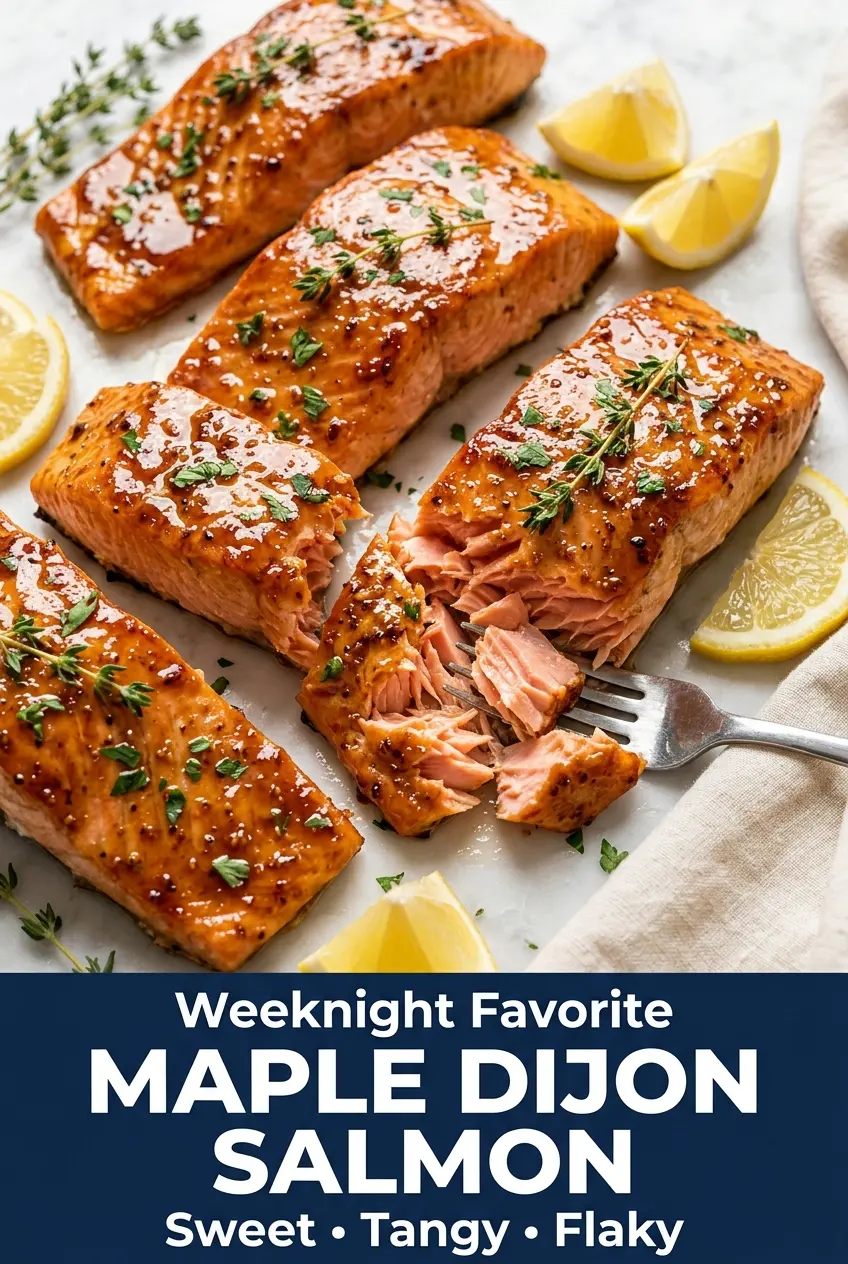
Maple Dijon Salmon
Ingredients
Equipment
Method
- Preheat the oven to 400°F and line a baking sheet with parchment paper or lightly grease a baking dish, using a clear, even baking surface.
- Pat the salmon fillets dry, place them skin-side down on the baking sheet, and drizzle with the olive oil to help the glaze caramelize.
- Whisk together the pure maple syrup, Dijon mustard, minced garlic, soy sauce, fresh lemon juice, chopped thyme, smoked paprika, salt, and black pepper until smooth.
- Brush the maple Dijon glaze generously over each salmon fillet, reserving a small amount for a second coating.
- Bake at 400°F for 12–15 minutes, brushing with the remaining glaze halfway through so the surface turns glossy and caramelized.
- Check doneness: cook until the salmon flakes easily with a fork and reaches an internal temperature of 145°F for tender, moist results.
- Sprinkle the chopped fresh parsley over the salmon and serve immediately with lemon wedges for bright finishing flavor.