
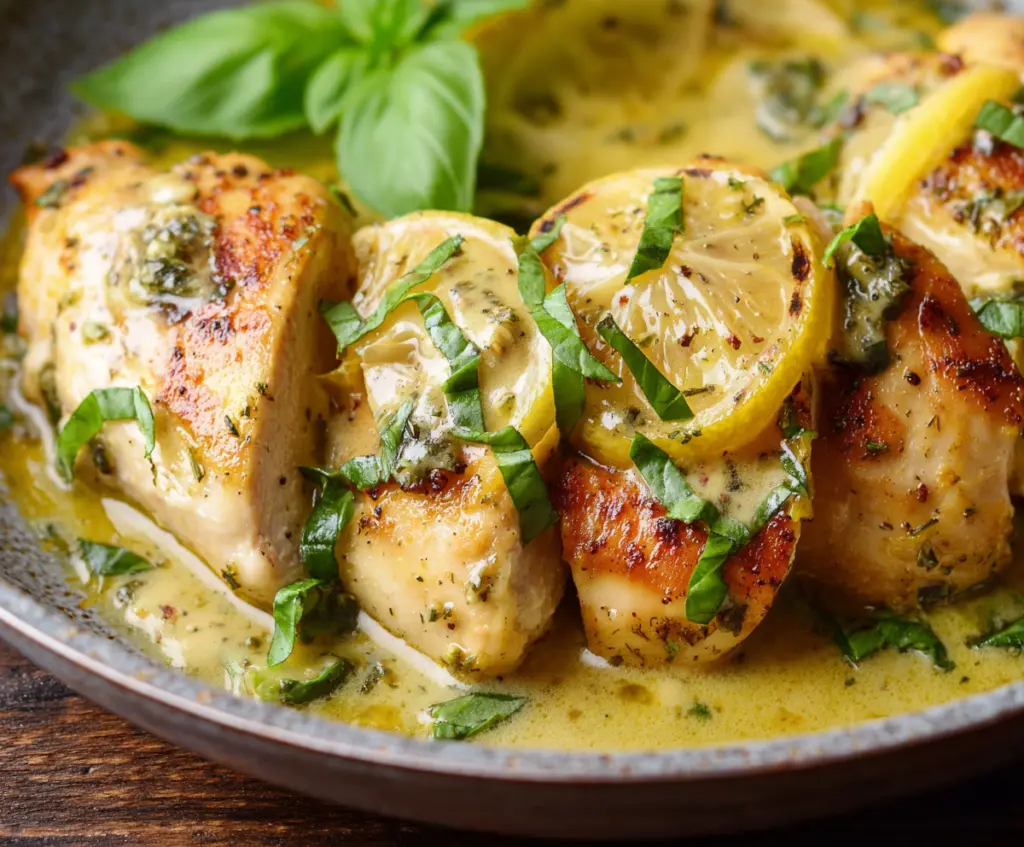
Lemon Basil Chicken
Lemon Basil Chicken is a bright and fresh dish that combines the zesty flavor of lemon with the fragrant touch of fresh basil. Tender chicken pieces are cooked until golden…

By Ava
•
•
Reading time: 6 min
Tip: save now, make later.
Lemon Basil Chicken is a bright and fresh dish that combines the zesty flavor of lemon with the fragrant touch of fresh basil. Tender chicken pieces are cooked until golden and then tossed in a simple sauce made from lemon juice, garlic, and plenty of chopped basil. The result is light, tasty, and perfect for a quick weeknight dinner.
I love making this dish when I want something that feels a little special but isn’t complicated. The lemon juice adds a nice tang that wakes up your taste buds, and the basil brings a sweet, herbal note that pairs perfectly with chicken. A quick tip: be generous with the basil—it really makes the dish sing!
One of my favorite ways to serve Lemon Basil Chicken is over a bed of fluffy rice or alongside some roasted veggies. It’s simple, colorful, and satisfying. Plus, it reheats well, so it’s great for lunch the next day. Whenever I make it, it always feels like a fresh, sunny meal that leaves everyone happy and coming back for seconds.
Key Ingredients & Substitutions
Chicken Breasts: I like using boneless, skinless chicken breasts for a quick, lean protein. You can swap for thighs if you prefer juicier meat—it will also add more richness to the dish.
Lemon: Fresh lemon slices and juice brighten this dish wonderfully. If lemons aren’t available, you can use lime juice, but the flavor will be a bit different—still fresh and tasty.
Fresh Basil: Fresh basil gives the sauce a lovely herbal note. If you only have dried basil, use about 1 teaspoon, and add it earlier to blend fully. Fresh herbs always taste best here.
Heavy Cream & Butter: They make the sauce rich and smooth. For a lighter version, use half-and-half or a mix of milk and cream, but the sauce won’t be as thick or creamy.
How Can I Make the Sauce Thick and Flavorful Without It Breaking?
The sauce needs gentle cooking to keep it smooth. Here’s what works for me:
- Sauté garlic just until fragrant (about 30 seconds); don’t let it burn or get bitter.
- After adding chicken broth, simmer to reduce flavor and thicken the sauce slightly before cream.
- Add heavy cream and lemon juice slowly, stirring gently, then let it simmer on low heat.
- Finish the sauce by melting butter in the pan off the heat or on very low heat for a nice shine and smooth texture.
Avoid boiling the cream sauce, which can cause it to separate. Patience with low heat is key!
Equipment You’ll Need
- Large skillet – perfect for browning chicken evenly and making the sauce in one pan.
- Tongs – help you flip the chicken safely without splattering hot oil.
- Garlic press or small knife – makes mincing garlic quick and easy.
- Measuring cups and spoons – important for adding the right amount of broth, cream, and lemon juice.
- Spoon or spatula – great for stirring the sauce smoothly and scraping the pan.
Flavor Variations & Add-Ins
- Swap chicken breasts with boneless thighs for a juicier, richer taste.
- Add capers or green olives to the sauce for a briny, tangy twist.
- Mix in sun-dried tomatoes for a sweet and slightly tart flavor boost.
- Stir in grated Parmesan just before serving for extra cheesy richness.
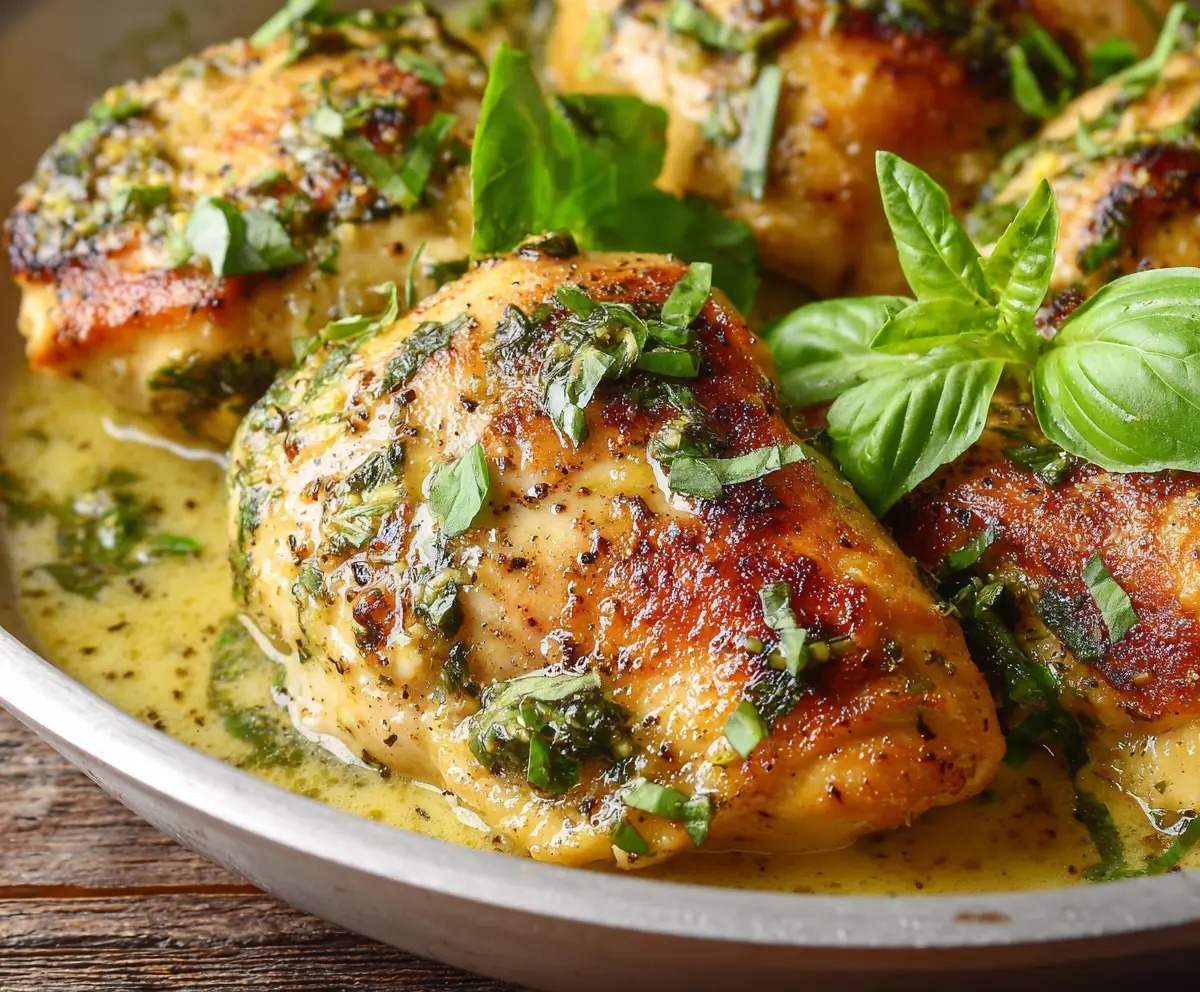
How to Make Lemon Basil Chicken?
Ingredients You’ll Need:
For the Chicken:
- 4 boneless, skinless chicken breasts
- Salt and pepper, to taste
- 2 tablespoons olive oil
For the Sauce:
- 3 cloves garlic, minced
- 1 cup chicken broth
- ½ cup heavy cream
- 1 lemon, thinly sliced (plus 2 tablespoons lemon juice)
- ¼ cup fresh basil leaves, thinly sliced, plus extra for garnish
- 2 tablespoons unsalted butter
- 1 teaspoon dried thyme or 1 tablespoon fresh thyme leaves (optional)
How Much Time Will You Need?
This dish takes about 25 minutes to prepare and cook. Most of the time is spent cooking the chicken and letting the sauce simmer and thicken. It’s a quick and delicious meal that comes together fast!
Step-by-Step Instructions:
1. Season and Cook the Chicken:
Start by seasoning both sides of the chicken breasts with salt and pepper. Heat olive oil in a large skillet over medium-high heat. Place the chicken in the skillet and cook for 5 to 7 minutes on each side until golden brown and cooked through. Once cooked, remove the chicken and set it aside.
2. Make the Lemon Basil Sauce:
In the same skillet, add the minced garlic and sauté for about 30 seconds until you smell its lovely aroma. Then, pour in the chicken broth and use a spoon to scrape up any browned bits from the pan bottom. Let the broth simmer gently for 2 to 3 minutes to reduce just a little.
Next, stir in the heavy cream, lemon juice, and thyme if you’re using it. Bring the sauce to a gentle simmer.
Add the lemon slices and half of the sliced basil into the sauce. Let it simmer for another 3 to 4 minutes until it thickens slightly. Then stir in the butter until it melts and the sauce becomes smooth and creamy.
3. Finish and Serve:
Return the chicken breasts to the skillet, spooning the sauce over them to coat. Cook for another 2 minutes so the flavors blend nicely and everything heats through. Finally, sprinkle the remaining basil slices over the top for a fresh and bright garnish.
Serve your lemon basil chicken hot, spooning plenty of the creamy sauce over each piece. Enjoy!
Can I Use Frozen Chicken Breasts for This Recipe?
Yes, you can! Just make sure to fully thaw the chicken breasts in the refrigerator overnight before cooking. This helps them cook evenly and safely.
Can I Substitute Heavy Cream with Something Healthier?
Absolutely! You can use half-and-half, coconut milk, or a mixture of milk and Greek yogurt for a lighter creamy sauce. Keep in mind the texture might be slightly less rich.
How Do I Store Leftovers?
Store any leftovers in an airtight container in the refrigerator for up to 3 days. Reheat gently on the stove or in the microwave, adding a splash of broth or cream if the sauce has thickened too much.
Can I Prepare This Dish Ahead of Time?
Yes! Cook the chicken and sauce separately, then combine and reheat before serving. This works well for busy weeknights or meal prepping.