

Leftover Turkey Tetrazzini
The turkey is already cooked, but that doesn’t mean it’s destined for another dry sandwich. When the sauce is thick enough to cling to the spaghetti before it goes into…

By Ava
•
•
Reading time: 9 min
Tip: save now, make later.
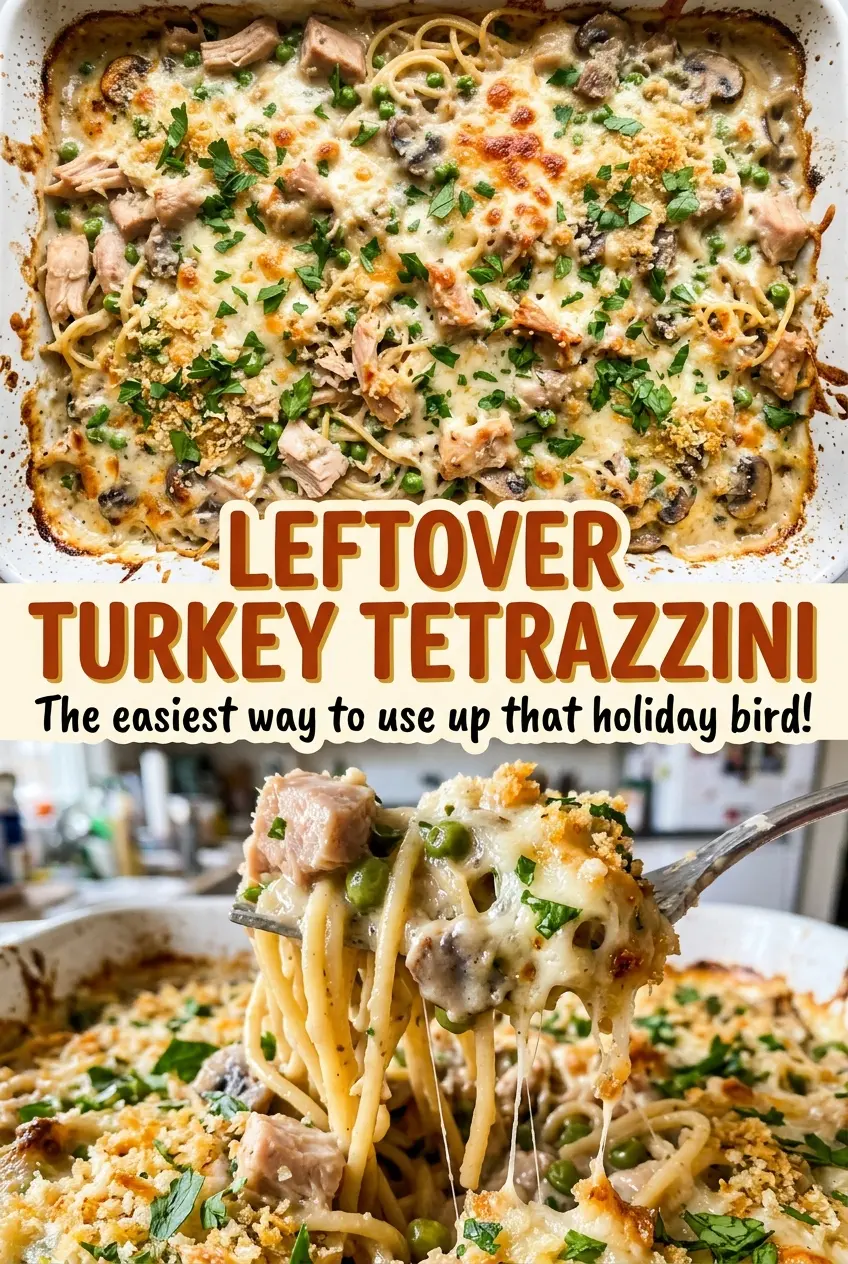
The turkey is already cooked, but that doesn’t mean it’s destined for another dry sandwich. When the sauce is thick enough to cling to the spaghetti before it goes into the oven, the noodles bake up creamy instead of swimming in liquid. That’s what makes this Leftover Turkey Tetrazzini a satisfying way to use cooked turkey without turning it into an afterthought.
I build the sauce with browned mushrooms, onion, broth, milk, and cream, then fold it through spaghetti with peas and bite-size turkey. The panko topping gets tossed with melted butter and Parmesan, so it bakes into a crisp, golden layer over the bubbling casserole. The sauce and topping bring different textures to every scoop, while the turkey makes this a filling meal for eight.
Kitchen Note
Give the casserole the full 10-minute rest before scooping. The sauce is loose when it first comes out of the oven, and that short pause lets it settle around the spaghetti so portions hold together better.
Save this Leftover Turkey Tetrazzini for your next batch of cooked turkey: creamy spaghetti, sweet peas, and a buttery Parmesan-panko top.
Why the Mushrooms Need to Give Up Their Liquid Before the Sauce Goes In
A watery casserole often starts before the sauce is even made. Mushrooms release liquid as they cook, and if that moisture stays in the skillet, it carries straight into the creamy base. I cook the mushrooms and onion until the mushrooms are browned and their liquid has evaporated; that gives the sauce a concentrated savory foundation instead of a thin, mushroom-flavored broth.
The flour then gives the broth, milk, and cream enough body to coat a spoon before they meet the pasta. That texture matters because the casserole spends more time in the oven, where the noodles continue absorbing sauce. Starting with a sauce that’s already thickened means the finished dish stays creamy without relying on a long bake to reduce excess liquid. You want a casserole that holds its shape on the plate, with sauce clinging to spaghetti rather than pooling around it.
What the Turkey, Parmesan, and Panko Each Bring to the Casserole
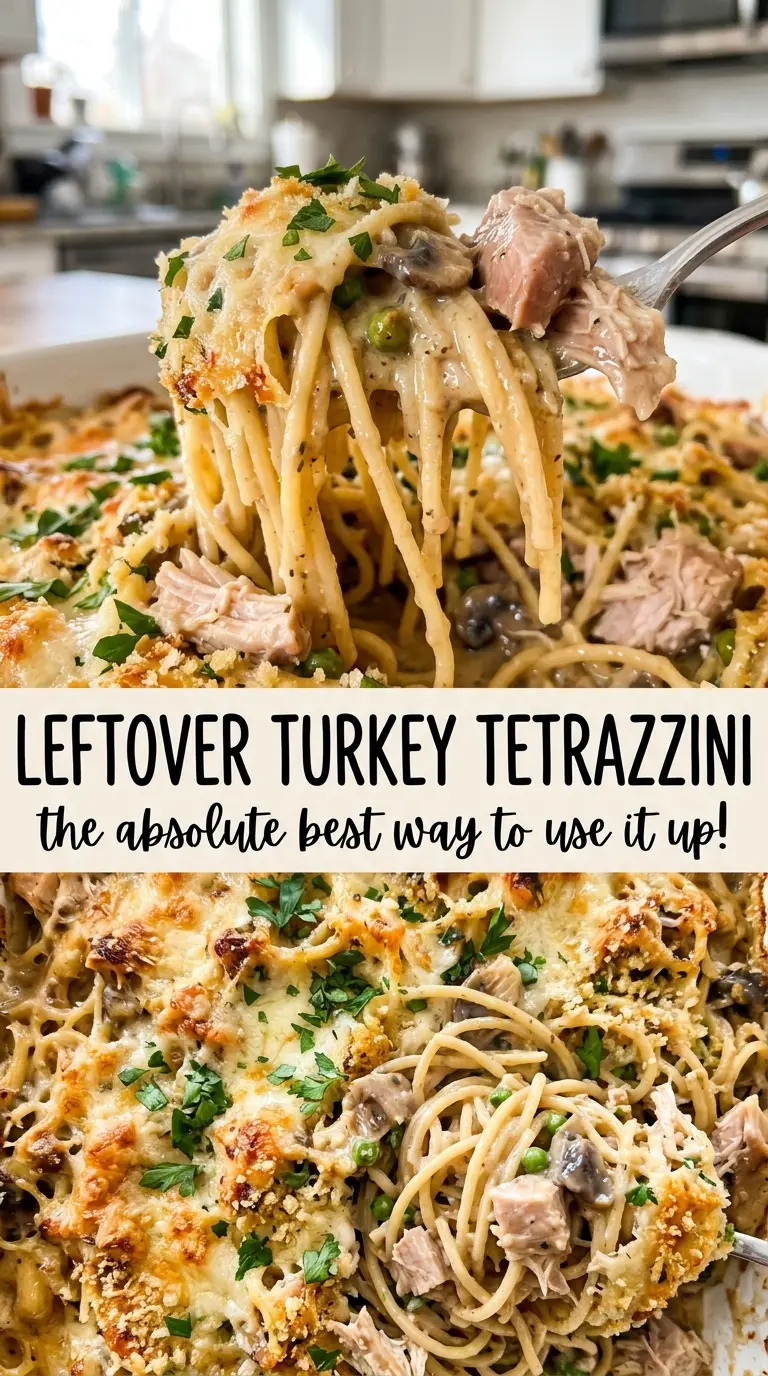
- Cooked turkey — Bite-size pieces distribute through the casserole more evenly than large chunks. Leftover roasted turkey works well, and a mix of breast and dark meat gives you a range of textures.
- Spaghetti — Dried spaghetti gives the dish long strands that hold the creamy sauce. Cook it just shy of al dente so it has structure after baking; pasta cooked all the way through in the pot can turn soft in the oven.
- Cremini mushrooms and yellow onion — Creminis bring a deep, savory note, while finely chopped onion softens into the sauce. Slicing the mushrooms evenly helps them brown at a similar pace.
- Whole milk, heavy cream, and chicken broth — The milk and cream make the sauce rich, while broth keeps it from tasting like straight cream. Low-sodium broth leaves room for the Parmesan to season the sauce without making it overly salty.
- Finely grated Parmesan — Parmesan adds a salty, savory edge to both the sauce and the topping. Finely grated cheese melts into the sauce more smoothly than large shreds, so it’s worth taking a moment to grate it finely.
- Panko and butter — Panko stays light and crisp on top, and melted butter helps the crumbs toast evenly. Toss them together with the topping portion of Parmesan before scattering them over the casserole.
- Frozen peas — Thaw the peas before mixing them in so they don’t add icy pockets to the dish. Their gentle sweetness gives the creamy sauce a little contrast.
Building the Sauce and Baking Until the Center Is Hot
Get the Spaghetti Ready for the Oven
Heat the oven to 375°F and coat a 9×13-inch baking dish with nonstick cooking spray. Bring 4 quarts of water to a boil, add the kosher salt, and cook the spaghetti just shy of al dente according to the package directions. Drain it and set it aside while you make the sauce. Don’t cook the noodles until fully tender in the pot; they’ll continue cooking once they’re mixed with sauce and baked.
Brown the Mushrooms and Build the Sauce
Melt 4 tablespoons of butter in a large skillet over medium heat, then add the sliced mushrooms and finely chopped onion. Cook for 7 to 9 minutes, until the mushrooms are browned and their liquid has evaporated. Stir in the flour and cook for 1 minute, then gradually whisk in the chicken broth, milk, and heavy cream until smooth. Bring the sauce to a gentle simmer and cook, stirring, for 4 to 6 minutes, until it thickens enough to coat a spoon.
Melt the Parmesan Into the Creamy Base
Take the skillet off the heat before stirring in 3/4 cup of the Parmesan, the black pepper, and the ground nutmeg. Stir until the cheese melts into the sauce. If the sauce looks a little loose before the cheese goes in, give it the full simmering time and look for that spoon-coating texture rather than trying to compensate with extra flour. Keep the heat gentle; the sauce should simmer, not boil hard.
Assemble the Casserole and Bake the Topping
Combine the spaghetti, cooked turkey, thawed peas, and sauce in a large bowl, then transfer the mixture to the prepared baking dish. Melt the remaining 2 tablespoons of butter and toss it with the panko and remaining 1/4 cup Parmesan; scatter the mixture evenly over the casserole. Bake for 25 to 35 minutes, until the topping is golden, the edges are bubbling, and the center reaches 165°F. If the top browns too quickly, loosely cover the dish with foil.
Two Useful Ways to Adapt Leftover Turkey Tetrazzini
Make It Gluten-Free
Use gluten-free spaghetti, a gluten-free all-purpose flour blend in place of the flour, and gluten-free panko. Cook the spaghetti according to its package directions and still pull it just shy of al dente. The sauce and crisp topping keep the same overall character, though gluten-free pasta may have a slightly different bite.
Use Cooked Chicken Instead of Turkey
Cooked chicken works in the same place as the turkey, cut into bite-size pieces and folded in with the spaghetti and peas. It keeps the creamy casserole format intact, with a slightly milder flavor. This is a handy option when you want tetrazzini but don’t have leftover turkey.
Storage and Reheating
- Refrigerator: Refrigerate leftovers within 2 hours and keep them covered for 3 to 4 days. The pasta will soften as it sits, but the casserole stays creamy.
- Freezer: Freeze cooled portions in airtight containers for up to 2 months. Thaw them in the refrigerator before reheating; the sauce may look slightly less silky after freezing.
- Reheating: Warm portions in a covered oven-safe dish at 350°F until heated through to 165°F. Uncover near the end if you want to crisp the topping again; reheating uncovered the whole time can dry out the pasta.
Questions That Come Up When Making Turkey Tetrazzini
Leftover Turkey Tetrazzini
Ingredients
Equipment
Method
- Heat the oven to 375°F.
- Coat a 9x13-inch baking dish with the nonstick cooking spray.
- Bring the 4 quarts water to a boil in a large pot, then add the 1 tablespoon kosher salt and 12 ounces spaghetti.
- Cook the spaghetti until just shy of al dente according to the package directions.
- Drain the spaghetti and set it aside.
- Melt 4 tablespoons butter in a large skillet over medium heat.
- Add the mushrooms and onion, and cook for 7 to 9 minutes until the mushrooms are browned and their liquid has evaporated.
- Stir in the flour and cook for 1 minute.
- Gradually whisk in the chicken broth, milk, and heavy cream until smooth.
- Bring the sauce to a gentle simmer and cook for 4 to 6 minutes, stirring, until it thickens enough to coat a spoon.
- Stir in 3/4 cup Parmesan, the black pepper, and nutmeg until the cheese melts.
- Combine the spaghetti, turkey, peas, and sauce in a large bowl.
- Transfer the mixture to the prepared baking dish.
- Melt the remaining 2 tablespoons butter.
- Toss the melted butter with the panko and remaining 1/4 cup Parmesan.
- Scatter the topping evenly over the casserole.
- Bake for 25 to 35 minutes until the top is golden, the edges are bubbling, and the center reaches 165°F; loosely cover with foil if the topping browns too quickly.
- Rest the casserole for 10 minutes before serving.