
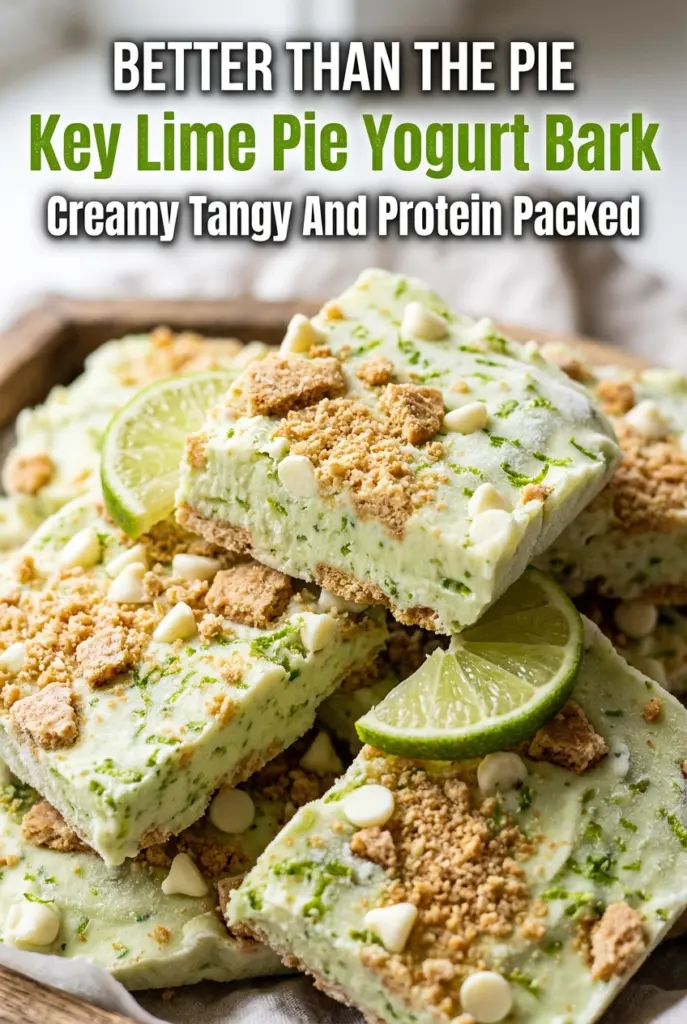
Key Lime Pie Yogurt Bark
Cold, creamy key lime pie yogurt bark hits the same bright, tangy notes as the dessert that inspired it, but with a cleaner snap and a lighter finish. The yogurt…

By Ava
•
•
Reading time: 10 min
Tip: save now, make later.
Cold, creamy key lime pie yogurt bark hits the same bright, tangy notes as the dessert that inspired it, but with a cleaner snap and a lighter finish. The yogurt freezes into a firm sheet that cracks into shards, and the graham cracker crumbs give each bite that unmistakable pie-crust crunch. It’s the kind of frozen treat that disappears fast because it tastes like dessert without feeling heavy.
The key here is balancing the yogurt so it freezes up creamy instead of icy. Greek yogurt gives the bark structure, honey softens the tart lime, and vanilla rounds out the sharp edges just enough to keep the whole thing from tasting flat. A thin layer on the tray sets up better than a thick slab, and the toppings need to go on before freezing so they stay put when you break the bark apart.
Below, you’ll find the little details that matter most: how to keep the bark from turning brittle, which limes give the strongest flavor, and the quickest way to store it so it stays snackable straight from the freezer.
The yogurt froze up creamy, not icy, and the lime flavor came through in every bite. I loved how the graham crumbs stayed crunchy even after a day in the freezer.
Creamy key lime pie yogurt bark with crunchy graham topping is the freezer snack you’ll want on repeat.
The Reason This Bark Stays Creamy Instead of Freezing Hard
Yogurt bark can go wrong in one of two ways: it freezes into a rock, or it turns slushy and melts too fast. The difference is the balance of moisture and sugar. Greek yogurt gives this bark body, while honey lowers the freezing point just enough to keep it scoopable once it’s broken into pieces. If you use a thinner yogurt, the bark sets up icier and the texture gets brittle in an unpleasant way.
The other mistake is adding too much lime juice. Citrus brightens the flavor, but it also thins the yogurt. That’s why this version leans on zest for a big lime punch and keeps the juice to a level that still lets the mixture spread cleanly and freeze into a creamy slab. The graham crumbs also help by adding a dry topping that cuts through the soft base.
What Each Ingredient Is Doing in This Bark
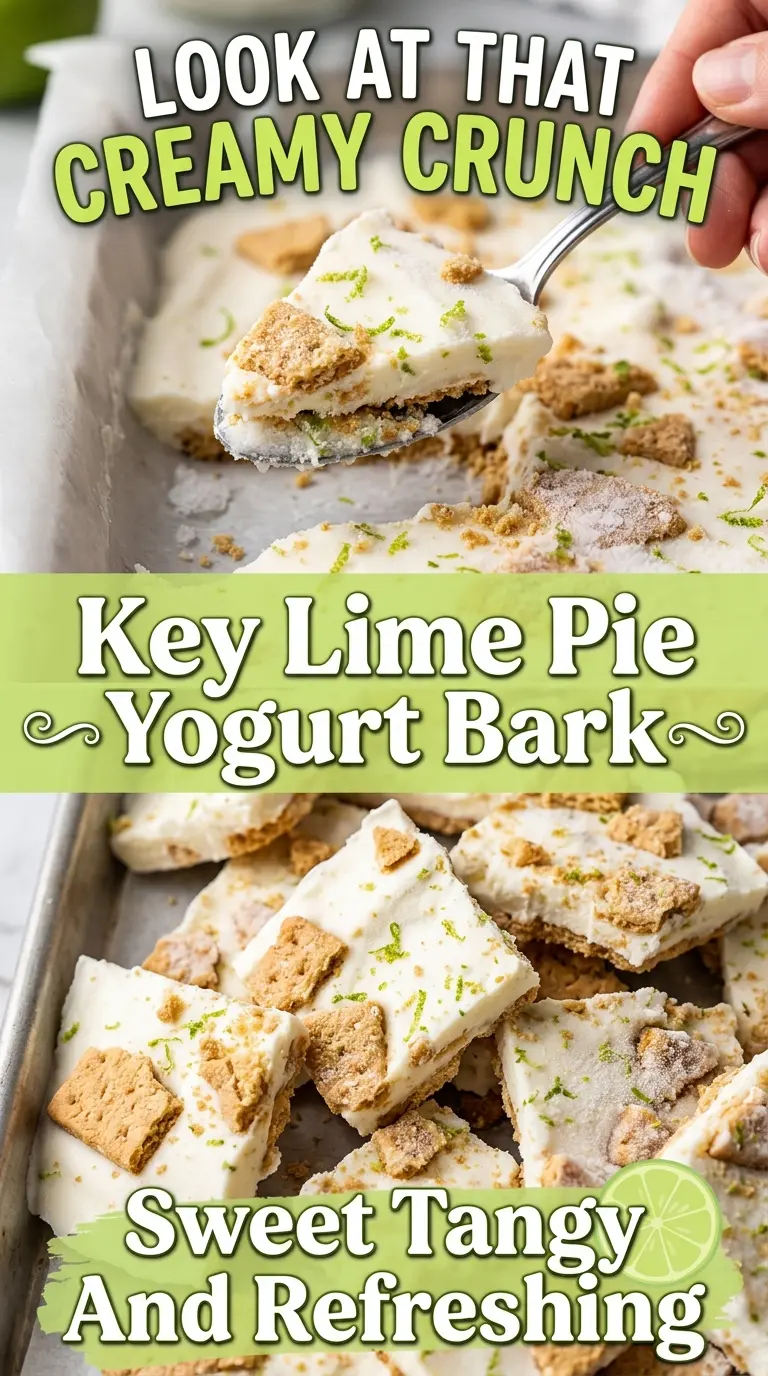
- Plain Greek yogurt — This is the backbone of the bark. Full-fat Greek yogurt gives the richest texture, but low-fat works too if that’s what you keep on hand. Regular yogurt is too loose and tends to freeze icy unless you strain it first.
- Fresh key lime juice — Key limes have a sharper, more floral tang than standard limes, and that’s part of what makes this taste like pie. If you can’t find them, regular lime juice is the best swap. Use fresh juice, not bottled, because bottled citrus often tastes dull after freezing.
- Key lime zest — The zest carries the strongest lime aroma in the whole recipe. It’s what makes the bark taste bright even after it’s frozen. Don’t skip it unless you have to.
- Honey — Honey sweetens and softens the freeze, which keeps the bark from eating like flavored ice. Maple syrup can work, but it adds a different flavor and the final bark won’t taste as pie-like.
- Vanilla extract — A small amount smooths out the tartness and makes the whole thing taste more like key lime pie filling than plain sweetened yogurt. It’s a background note, but it matters.
- Graham cracker crumbs — These give you the pie crust effect without extra work. Crush them finely enough that they stick to the yogurt, but leave a little texture so they stay crunchy after freezing.
- White chocolate chips — They add little sweet pockets that echo the creamy richness of pie filling. If you want a cleaner lime flavor, you can leave them out, but they do make the bark taste more dessert-like.
The 10 Minutes of Prep That Decide the Texture
Whisk the Base Until It’s Smooth
Start by whisking the yogurt, lime juice, zest, honey, and vanilla until the mixture looks glossy and completely even. Any streaks of honey or pools of juice show up later as uneven freezing, so take the extra minute here. The mixture should be thick but spreadable, almost like soft frosting. If it looks loose, the yogurt was probably thin to begin with.
Spread It Thin and Even
Line the tray with parchment and spread the yogurt into an even layer. Aim for about 1/4 inch thickness; too thick and the center freezes slower, too thin and the bark shatters into scraps. A spatula works well here because it lets you push the mixture all the way to the edges without tearing the parchment. Smooth the surface before you add toppings so the crumbs don’t sink into rough patches.
Add the Toppings Before Freezing
Sprinkle the graham crumbs over the surface, then scatter the white chocolate chips and extra zest on top. Press the crumbs in lightly so they stick once frozen. The lime slices are best kept thin; thick slices can turn icy and make the bark harder to break cleanly. Once everything is on the tray, freeze it flat so the toppings set in place instead of sliding around.
Freeze Until Firm All the Way Through
Give the bark at least 4 hours in the freezer, and longer if the layer is thicker than you planned. It should feel firm from edge to center before you break it apart. If it’s even slightly soft in the middle, it’ll bend instead of snapping. Break it into pieces only after it’s fully set, then move the pieces to a container right away so they don’t absorb moisture from the freezer air.
How to Make It Work With What You Have
Dairy-Free Version
Use a thick coconut-based yogurt with enough body to hold its shape on the tray. The flavor shifts from classic key lime pie toward a tropical lime dessert, and the bark freezes a little softer, so keep the layer thin and store it well wrapped.
Regular Lime Instead of Key Lime
If key limes aren’t available, regular limes work just fine. The bark will taste a little less floral and a touch more bold, but the balance of creaminess and crunch stays the same. Keep the zest in the mix so the lime flavor doesn’t fade in the freezer.
Lower-Sugar Version
Cut the honey back slightly if you want a tarter bark, but don’t remove it completely. The sweetness helps the texture stay soft enough to bite. If you go too lean on sugar, the bark freezes harder and the lime will taste sharper than you probably want.
Storage and Reheating
- Refrigerator: Not recommended. The bark softens fast and loses its snap.
- Freezer: Store in an airtight container with parchment between layers for up to 2 weeks. After that, the texture starts to pick up freezer flavor.
- Reheating: No reheating needed. Serve straight from the freezer, and let it sit at room temperature for 2 to 3 minutes only if you want a slightly softer bite.
The Questions That Come Up Before the First Batch Is Gone
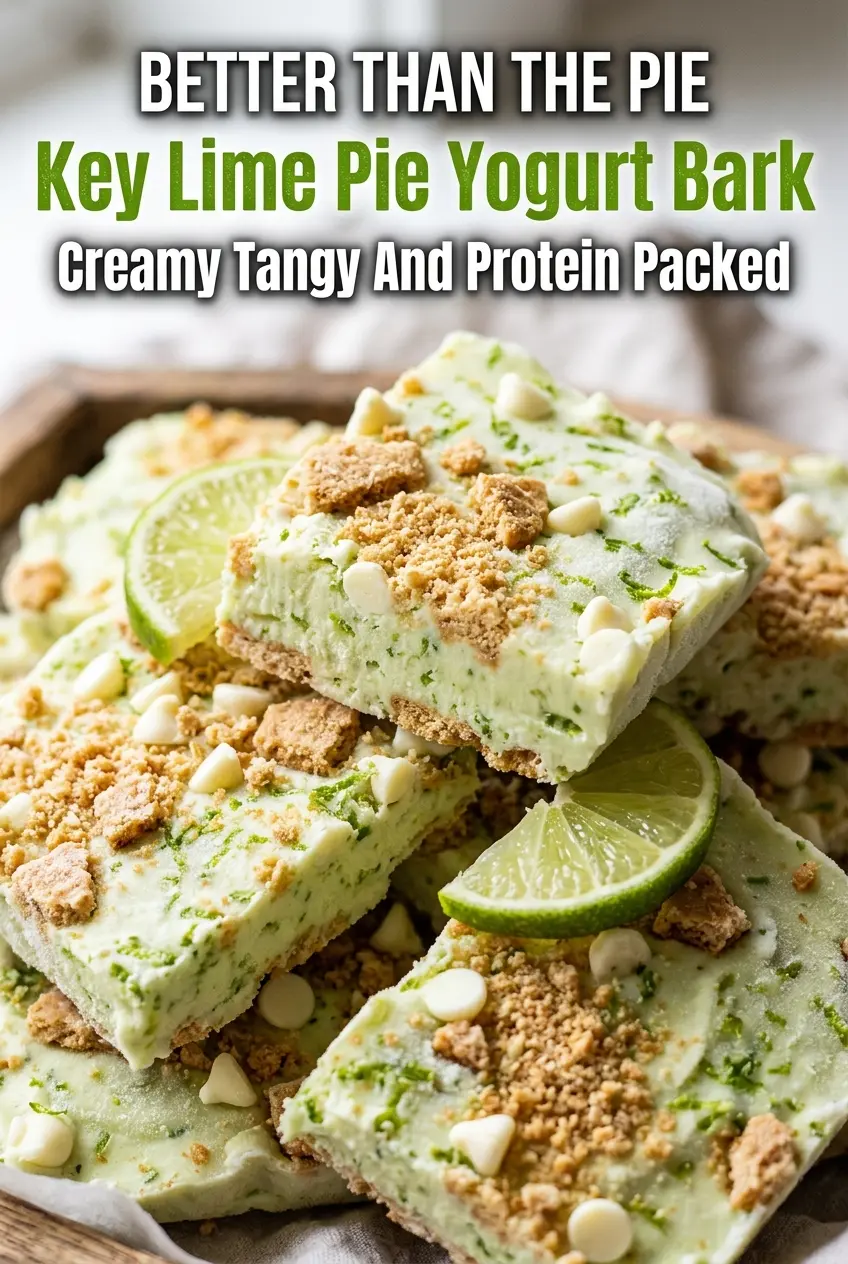
Key Lime Pie Yogurt Bark
Ingredients
Method
- Line a small baking sheet or tray with parchment paper for easy release after freezing.
- In a bowl, whisk together Greek yogurt, key lime juice, lime zest, honey, and vanilla extract until smooth and evenly combined.
- Spread the mixture evenly onto the prepared tray so it freezes into a uniform bark thickness.
- Sprinkle graham cracker crumbs over the surface for a crisp, pie-like bite.
- Add white chocolate chips and additional lime zest, then gently press them in so they adhere as the bark firms up.
- Garnish with thin lime slices for a classic key lime pie look on top.
- Freeze for at least 4 hours (until completely firm), with no stirring, so the bark sets cleanly.
- Break into bark-sized pieces right before serving to keep the texture crisp and scoopable.
- Serve immediately, or store frozen until ready to enjoy; let sit at room temperature for 2 minutes for easier breaking.