
Homemade Eggnog – Holiday Recipe
When the milk starts to steam, little bubbles gather around the edge of the saucepan before the surface ever boils. That’s the moment to slow down and pay attention. I…

By Ava
•
•
Reading time: 8 min
Tip: save now, make later.
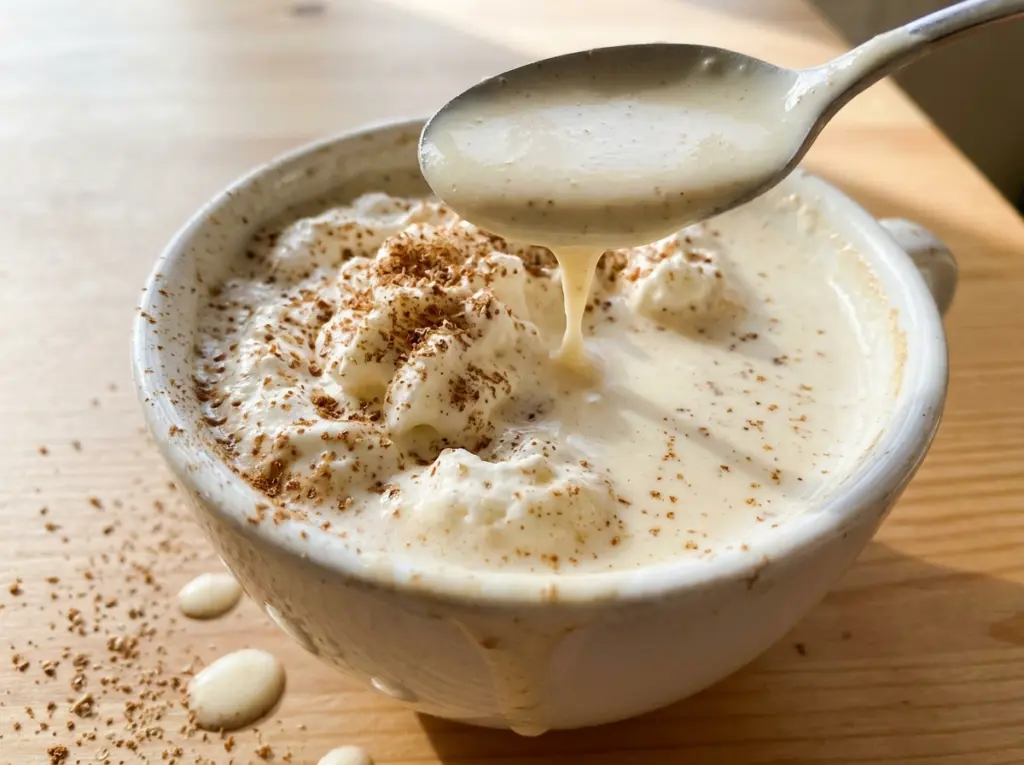
When the milk starts to steam, little bubbles gather around the edge of the saucepan before the surface ever boils. That’s the moment to slow down and pay attention. I learned that a gentle hand here makes all the difference between a smooth homemade eggnog and one with bits of cooked egg.
This holiday eggnog gets its body from egg yolks, not a thickener, so the warming and stirring matter. I whisk a little hot milk into the yolks first, then return that mixture to the pan; it brings the eggs up to temperature gradually instead of shocking them with heat.
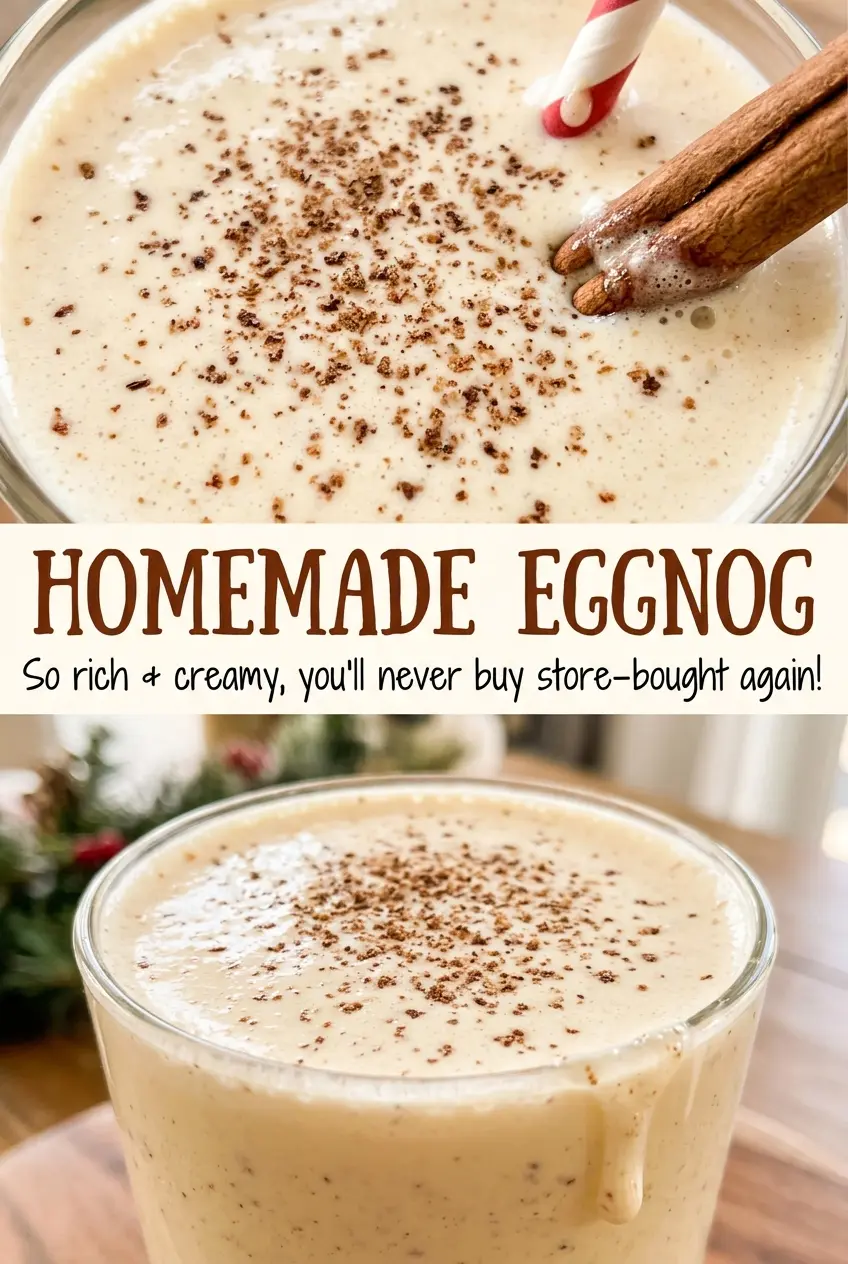
After a quick strain and a long chill, it’s creamy, softly spiced, and ready to pour cold. The nutmeg comes through without burying the vanilla, and the texture feels rich without being heavy.
Kitchen Note
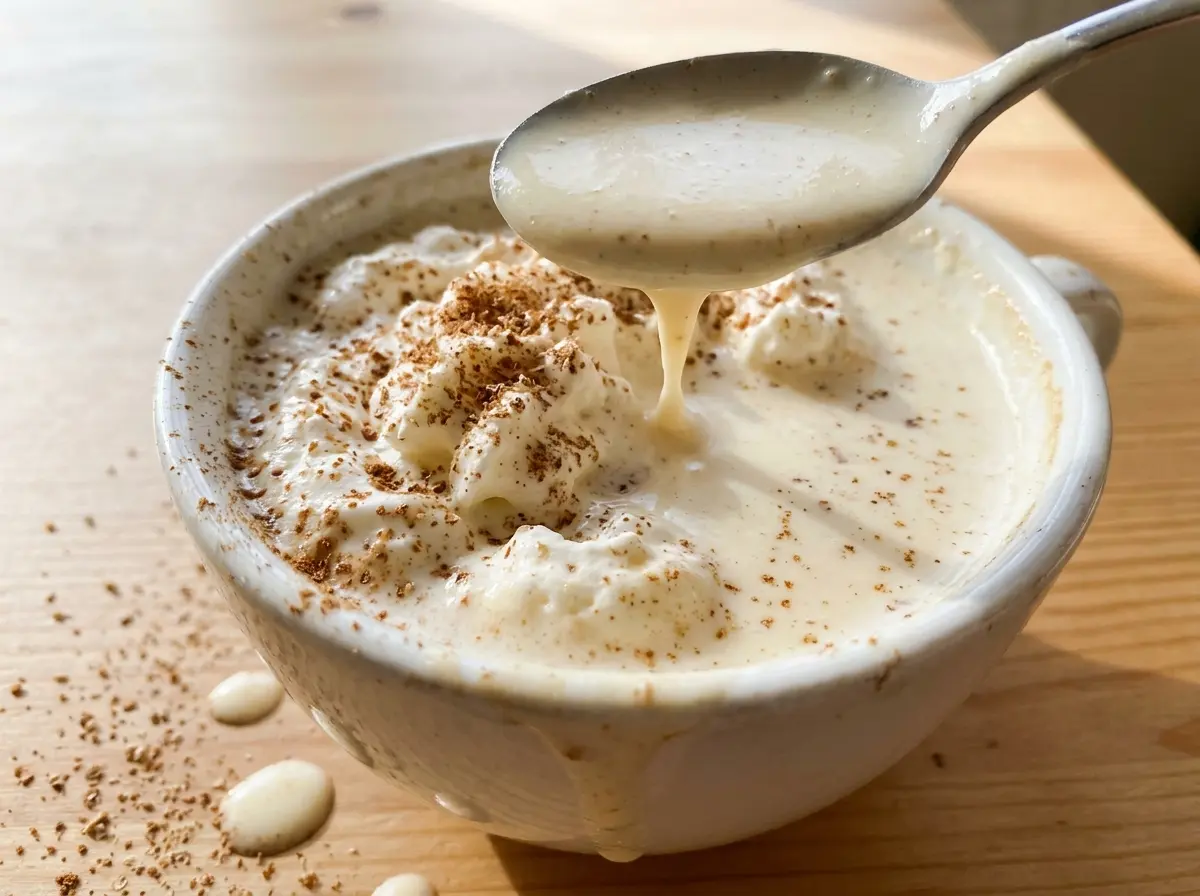
Give the eggnog at least 4 hours in the refrigerator before serving. It needs that time to become thoroughly cold, and tasting it warm won’t tell you how the finished drink will feel.
Save this homemade holiday eggnog for a smooth, nutmeg-scented drink you can chill ahead and serve cold.
Why Eggnog Turns Into Sweet Scrambled Eggs Before It Turns Silky
Egg yolks thicken this drink as they warm, but they don’t have much patience for a sudden blast of heat. Pouring hot milk straight into the bowl can cook the yolks in uneven patches before they have a chance to blend into the liquid. Tempering solves that problem: a slow whisk of warm milk raises the yolks’ temperature gradually, so they can join the saucepan smoothly.
There’s a second point where texture can go wrong. Once the egg mixture is back in the pan, high heat or a pause in stirring can leave cooked flecks on the bottom before the rest of the liquid thickens. Keep the heat at medium-low and move a heatproof spatula across the base as you stir. The mixture should coat the spatula lightly, not bubble like a sauce at a rolling boil. That gentle finish gives you a pourable custard instead of a thick, eggy one.
What the Yolks, Cream, and Nutmeg Each Bring to the Glass
- Egg yolks — They give the eggnog its custard-like body and help the dairy feel cohesive. Use large yolks as listed; the whites aren’t part of this mixture and would make it foamy rather than silky.
- Whole milk and heavy cream — Whole milk keeps the drink fluid enough to pour, while cream supplies its round, rich texture. The balance matters here, so I stick with both rather than replacing one with more of the other.
- Granulated sugar — Sugar sweetens the dairy and is whisked directly with the yolks, where it helps form a smooth starting mixture. Granulated sugar is the right choice for this method; a coarse or liquid sweetener would change how the yolks combine.
- Ground nutmeg and vanilla extract — Nutmeg gives the drink its familiar warm spice, while vanilla rounds out the custard flavor. Fresh, fragrant ground nutmeg makes a noticeable difference, but the vanilla can be a standard pure extract; measure both carefully so one doesn’t overwhelm the other.
How to Warm and Thicken Eggnog Without Curdling It
Whisk the Yolks Until Pale
Put the yolks, sugar, and kosher salt in a medium heatproof bowl. Whisk until the mixture looks thick and noticeably paler, with no dry sugar sitting around the edges. This gives the yolks an even base before the warm dairy goes in. Set the bowl somewhere stable so you can whisk continuously during tempering.
Heat the Dairy to Steaming, Not Boiling
Combine the whole milk, heavy cream, and nutmeg in a 3-quart saucepan. Warm over medium heat, stirring occasionally, until steam rises and small bubbles appear around the edge. Don’t wait for the center to boil; a bubbling pan is hotter than you need for tempering and makes the next step harder to control. The surface should look gently active at the perimeter, not roiling.
Temper the Yolks Gradually
Whisk about 1 cup of the hot milk mixture into the yolks in a slow, steady stream. Keep whisking while you pour so the bowl stays smooth instead of developing cooked bits. Then gradually whisk the warmed yolk mixture back into the saucepan. Pouring it in all at once can make the temperature jump too quickly, so take your time through both additions.
Stir to 160°F, Then Strain
Lower the heat to medium-low and stir constantly with a heatproof spatula. In about 3 to 5 minutes, the eggnog should reach 160°F and lightly coat the spatula; check the temperature with an instant-read thermometer. Take the pan off the heat before stirring in the vanilla. Pour the mixture through a fine-mesh strainer into a covered container, then refrigerate until thoroughly chilled.
Small Flavor Adjustments That Keep This Eggnog’s Custard Base
Let the Nutmeg Lead
For a more pronounced spice note, increase the ground nutmeg slightly while leaving the rest of the method unchanged. Add it to the milk and cream as they heat, so its flavor disperses through the liquid rather than landing in concentrated specks in the finished glass.
Make the Vanilla More Noticeable
For a softer spice impression, keep the nutmeg restrained and let the vanilla stand out by adding a little more extract off the heat. Stir it in after cooking, as usual; adding vanilla to the hot pan earlier dulls its aroma. The result stays custardy but smells more like vanilla than warm spice.
Storage and Reheating
- Refrigerator: Keep the eggnog covered at 40°F or below and use it within 3 to 4 days. It may thicken a little as it sits.
- Freezer: Freezing isn’t my pick for this custard. The egg and cream mixture may separate or turn grainy when thawed.
- Reheating: This eggnog is served cold, so there’s no need to reheat it. Warming it again risks overcooking the yolks and changing the smooth texture.
Questions That Come Up When Making Homemade Eggnog
Homemade Eggnog – Holiday Recipe
Ingredients
Equipment
Method
- In a medium heatproof bowl, whisk the egg yolks, sugar, and salt until thick and pale.
- Combine the milk, heavy cream, and nutmeg in a 3-quart saucepan.
- Heat over medium, stirring occasionally, until steaming with small bubbles around the edge; do not boil.
- Slowly whisk about 1 cup of the hot milk mixture into the yolks.
- Gradually whisk the tempered yolk mixture back into the saucepan.
- Cook over medium-low heat, stirring constantly with a heatproof spatula, until the mixture reaches 160°F on an instant-read thermometer and lightly coats the spatula, about 3 to 5 minutes.
- Remove the saucepan from the heat and stir in the vanilla.
- Pour the eggnog through a fine-mesh strainer into a covered container.
- Refrigerate until thoroughly chilled, at least 4 hours.
- Serve cold.