
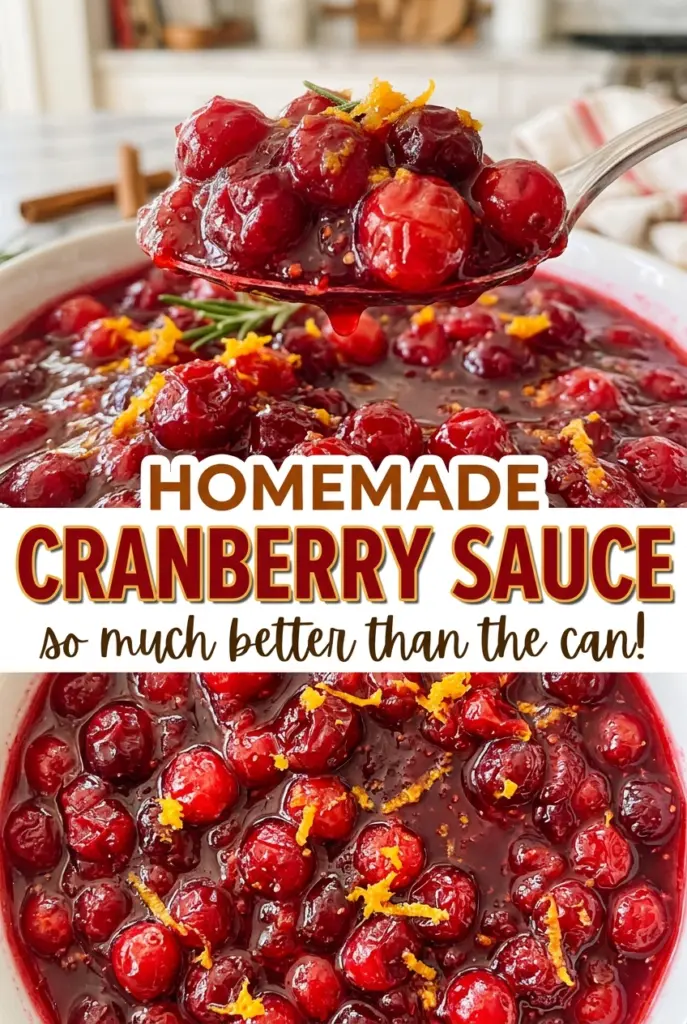
Homemade Cranberry Sauce
The first cranberry pops with a little snap, then the rest start bursting one after another, turning the clear syrup ruby red. I like watching that change because it tells…

By Ava
•
•
Reading time: 8 min
Tip: save now, make later.
The first cranberry pops with a little snap, then the rest start bursting one after another, turning the clear syrup ruby red. I like watching that change because it tells me the sauce is coming together without any extra thickener or fuss. This homemade cranberry sauce uses just cranberries, sugar, water, and a pinch of salt, but it still lands with that bright, tart flavor that cuts through a rich meal.
I stir the sugar into the water before the cranberries go in. That gives it time to dissolve in the hot syrup instead of clinging to the fruit, and it keeps the sauce smooth rather than gritty. Once the berries are simmering, a few stirs are enough; the cranberries do most of the work as they soften and pop.
The sauce will look looser in the saucepan than it does after its rest in the refrigerator. Give it the full cooling and chilling time, and it settles into a glossy, spoonable condiment with plenty of whole berry pieces.
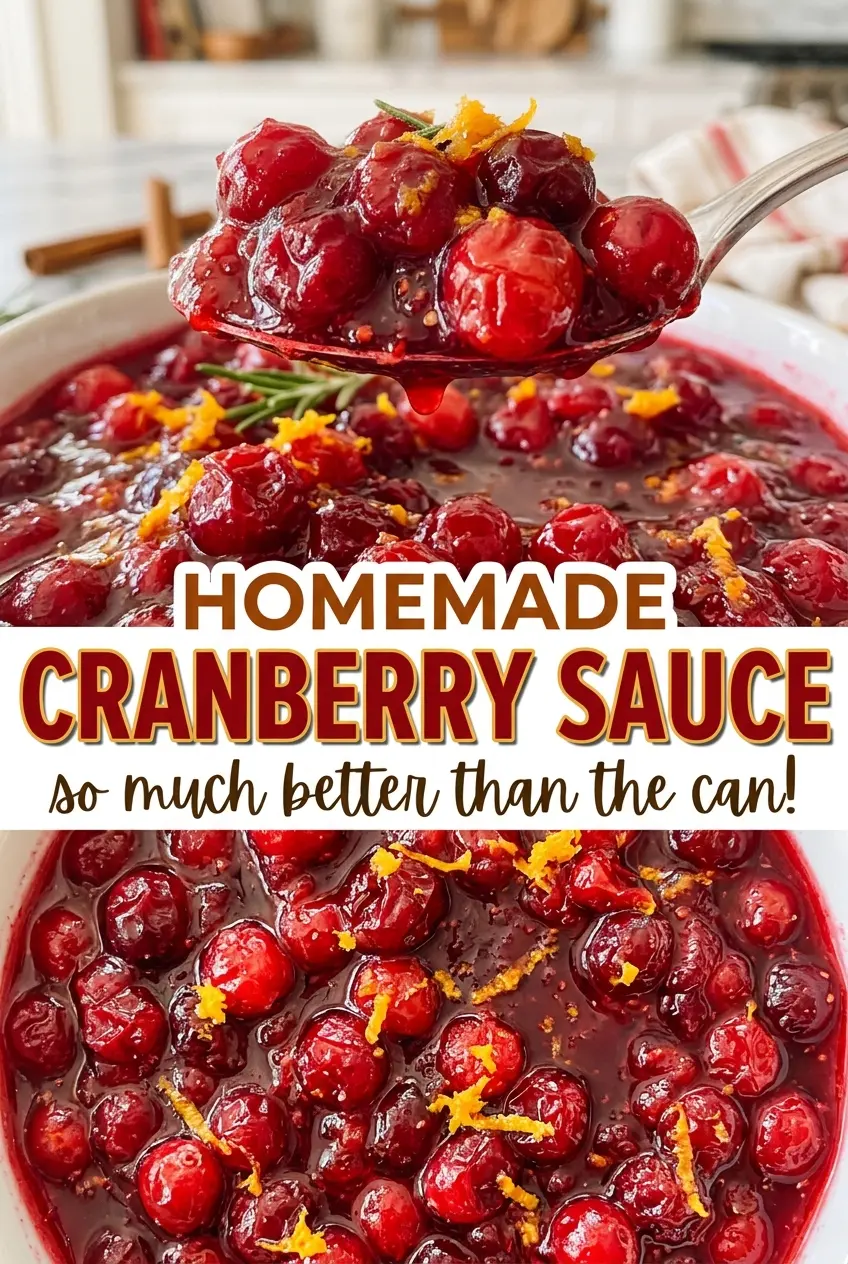
Kitchen Note
Let the sugar disappear into the boiling water before the cranberries go in. If you can still see crystals on the bottom of the pan, keep stirring; they dissolve quickly, and starting with clear syrup makes the finished sauce evenly sweet.
Save this homemade cranberry sauce for its bright, tart berries and glossy, spoonable finish—fresh or frozen cranberries both work.
Why This Cranberry Sauce Thickens Without Added Pectin
Cranberries bring their own natural pectin, so this sauce doesn’t need gelatin, cornstarch, or a long reduction to turn spoonable. As the berries heat, their skins soften and split, releasing juices and pectin into the sugar syrup. That change happens gradually: at first, the saucepan looks like berries floating in liquid; by the end, most of the fruit has popped and the liquid clings more readily to a spoon.
Don’t judge the final thickness while the sauce is still bubbling. The hot mixture is naturally more fluid, and it thickens further as it cools and chills. If you keep cooking until it looks as firm as cold cranberry sauce, you can take it too far and end up with a stiff, jammy texture. Aim for a thickened but still pourable sauce in the pan, then let time do the rest.
A few whole cranberries are welcome. The goal isn’t to crush every berry into a uniform puree; those intact pieces give each spoonful a little texture against the glossy sauce.
What the Cranberries, Sugar, and Water Each Bring
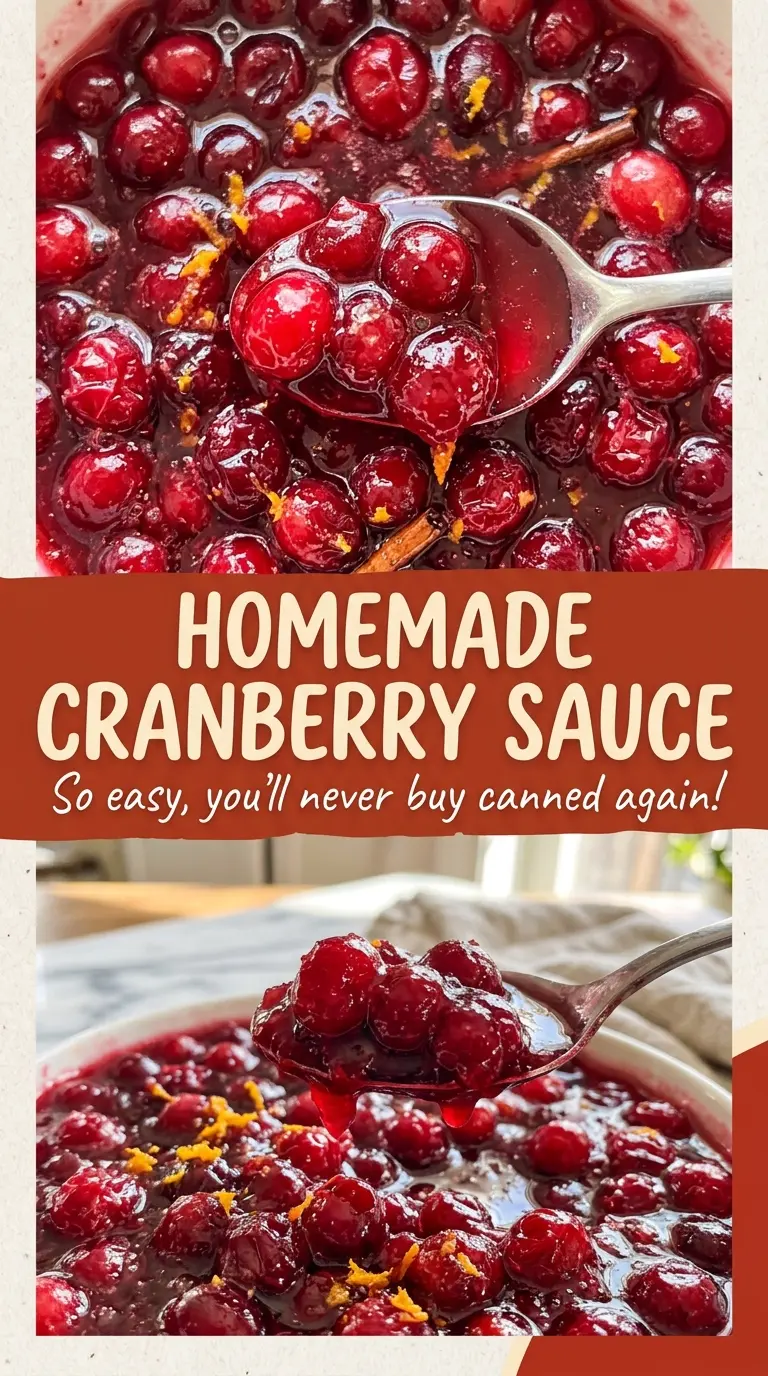
- Cranberries — Fresh or frozen berries both suit this method. Look for fruit without soft, damaged spots if you’re choosing fresh; frozen cranberries are a useful option when fresh ones aren’t on hand. Their tartness gives the sauce its character, while their natural pectin helps it thicken as it cools.
- Granulated sugar — Sugar balances the cranberries’ sharp acidity and dissolves cleanly into the water. Regular granulated sugar is the right choice here; coarse crystals take longer to dissolve, and a liquid sweetener would change the syrup’s proportions and finished texture.
- Water — Water creates the syrup that softens the fruit and keeps it from scorching as the cranberries begin to release juice. It also gives the sauce enough liquid to simmer before the berries have popped.
- Fine salt — A small pinch sharpens the sweet-tart balance without making the sauce taste salty. Fine salt disperses quickly through the syrup, so there’s no need to use a coarser grind.
From Clear Syrup to Chilled, Spoonable Sauce
Dissolve the sugar in the water
Combine the water and granulated sugar in a medium saucepan, then bring the mixture to a boil over medium-high heat while stirring. Watch the surface and the bottom of the pan; the syrup should look clear rather than cloudy with visible sugar crystals. Stir until the sugar dissolves before moving on, so it doesn’t settle and stick as the fruit cooks.
Add the cranberries and salt
Stir in the cranberries and fine salt once the syrup is ready. The pan will become crowded with berries, and the clear syrup will take on their color as they heat. Give everything a stir so the fruit is coated, then reduce the heat to medium-low. Avoid turning the heat back up to rush the simmer; a steadier temperature gives the berries time to soften.
Simmer until most berries pop
Simmer for 10 to 12 minutes, stirring occasionally. You’ll hear and see the cranberries burst, and the sauce will shift from thin syrup toward a thicker, glossy mixture. Look for most of the berries to have popped, with a few whole pieces left; if the sauce still seems loose, remember that it thickens more after chilling. Stir around the bottom when you check it so the fruit and syrup cook evenly.
Cool, then chill before serving
Transfer the sauce to a serving bowl and leave it to cool for 30 minutes. It will still be warmer and looser than the finished condiment at this point. Refrigerate it for at least 2 hours before serving, which gives the sauce time to settle into its final texture. Cover the bowl once the sauce has cooled so it doesn’t pick up refrigerator odors.
Fresh or Frozen Cranberries: Two Good Ways to Make It
Use frozen cranberries when fresh aren’t available
Frozen cranberries are an easy direct swap for fresh in this sauce, so you can make it whenever you have a bag on hand. They soften as they simmer and give you the same tart, berry-forward result; follow the same visual cue of most berries popping and the sauce thickening.
Choose fresh berries for a seasonal batch
Fresh cranberries are a natural choice when they’re easy to find and in good condition. They cook in the same simple syrup and bring the same clean, tart flavor; the berries’ size and ripeness can vary, so use the popping and thickening cues rather than expecting every cranberry to burst at exactly the same moment.
Storage and Reheating
- Refrigerator: Keep the sauce covered and refrigerated for up to 4 days. It will firm up as it chills.
- Freezer: Freeze in an airtight freezer-safe container for up to 2 months, leaving a little room at the top. Thaw it in the refrigerator; the texture may be slightly softer after thawing.
- Reheating: This sauce is served chilled, but if you prefer it warm, heat it gently in a saucepan over low heat, stirring until warmed through. Avoid a hard boil, which can reduce the sauce further and make it overly thick.
The Cranberry Sauce Questions That Come Up Most
Homemade Cranberry Sauce
Ingredients
Method
- Combine the water and sugar in a medium saucepan.
- Bring to a boil over medium-high heat, stirring until the sugar dissolves.
- Stir in the cranberries and salt.
- Reduce the heat to medium-low and simmer for 10 to 12 minutes, stirring occasionally, until most of the cranberries have popped and the sauce has thickened.
- Transfer the sauce to a serving bowl.
- Let it cool for 30 minutes.
- Refrigerate for at least 2 hours before serving.