
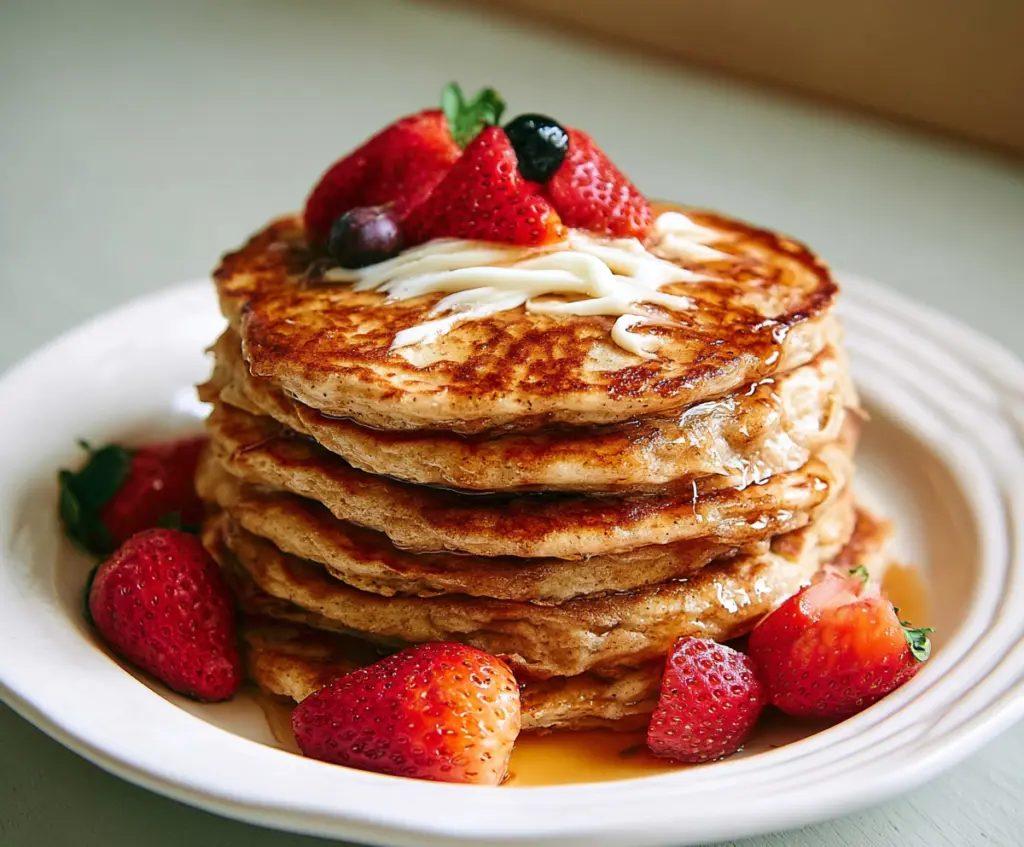
High-Protein Cottage Cheese Pancakes
High-Protein Cottage Cheese Pancakes are a simple and tasty way to start your day with a boost of energy. These pancakes are light and fluffy, with a creamy texture from…

By Ava
•
•
Reading time: 6 min
Tip: save now, make later.
High-Protein Cottage Cheese Pancakes are a simple and tasty way to start your day with a boost of energy. These pancakes are light and fluffy, with a creamy texture from the cottage cheese, and packed with protein to keep you feeling full for longer. They’re perfect if you want something a little different from your usual pancake routine but still crave that classic breakfast comfort.
I love making these pancakes because they come together quickly and don’t require a lot of fancy ingredients. The cottage cheese adds a nice tang and moisture that keeps the pancakes soft without needing much oil or butter in the pan. Plus, they have just the right amount of sweetness, so I like to add a drizzle of honey or fresh berries on top for a little extra flavor.
These pancakes also work great for meal prep or a weekend brunch with friends or family. I often double the batch and save the leftovers to warm up during the week when breakfast time feels rushed. If you haven’t tried cottage cheese in your pancakes before, I think you’ll be pleasantly surprised by how delicious and filling they are!
Key Ingredients & Substitutions
Cottage Cheese: This is the star ingredient that adds protein and moisture. Full-fat gives creamier pancakes, but low-fat works well too. If you prefer, you can use ricotta cheese as a similar alternative.
Oats & Whole Wheat Flour: Rolled oats add texture and fiber. Use oat flour to keep the batter smooth. Whole wheat flour is optional but gives extra nuttiness and structure. You can swap for all-purpose flour if needed.
Eggs: Eggs help bind everything together and add protein. Be sure to use large eggs for consistent results.
Baking Powder: This helps the pancakes rise and become fluffy. Don’t skip it unless you want denser pancakes.
Sweetener & Vanilla: Honey or maple syrup adds gentle sweetness, but you can leave it out or use a sugar substitute. Vanilla extract enhances flavor but is optional.
How Can I Make Sure My Pancakes Cook Evenly Without Burning?
Cooking protein-rich pancakes can be tricky because they can brown too fast without cooking inside. Here’s how to get it just right:
- Use medium heat, not high. This allows pancakes to cook through without burning the outside.
- Lightly grease the pan so pancakes don’t stick and get a nice crust.
- Wait until you see bubbles forming and edges setting before flipping—about 2-3 minutes.
- Use a thin spatula to flip gently to keep pancakes intact.
- Cook the second side for 1.5-2 minutes until golden and cooked inside.
Patience is key here. It’s better to cook a little slower for soft, fluffy pancakes.
Equipment You’ll Need
- Blender or food processor – helps you mix the batter smooth and fast without lumps.
- Non-stick skillet or griddle – cooks pancakes evenly and prevents sticking.
- Spatula – lets you flip pancakes gently without breaking them.
- Measuring cups and spoons – ensures you get the right amount of each ingredient.
- Mixing bowl (optional) – handy if you want to stir in add-ins by hand.
Flavor Variations & Add-Ins
- Add cinnamon or nutmeg for warm spices that pair well with the vanilla.
- Fold in fresh blueberries or chopped apples for bursts of fruity sweetness.
- Swap cottage cheese with ricotta for a creamier texture and mild flavor.
- Mix in a scoop of protein powder to boost protein even more, especially after workouts.
How to Make High-Protein Cottage Cheese Pancakes?
Ingredients You’ll Need:
Main Ingredients:
- 1 cup cottage cheese (full fat or low fat)
- 3 large eggs
- 1/2 cup rolled oats or oat flour
- 1/2 cup whole wheat flour (optional for extra texture)
- 1/2 tsp baking powder
- 1 tsp vanilla extract
- 1 tbsp honey or maple syrup (optional for sweetness)
- Pinch of salt
For Cooking & Serving:
- Cooking spray or a small amount of butter/oil for the pan
- Fresh strawberries and blueberries for garnish
- Additional maple syrup or honey for serving
- Optional: Greek yogurt or light cream cheese for topping
How Much Time Will You Need?
This recipe takes about 10 minutes to prepare and around 10-12 minutes to cook the pancakes, so you’ll be enjoying a warm, healthy breakfast in about 20-25 minutes total.
Step-by-Step Instructions:
1. Make the Batter:
Put the cottage cheese, eggs, rolled oats or oat flour, whole wheat flour, baking powder, vanilla extract, honey or maple syrup, and a pinch of salt into a blender or food processor. Blend everything until the batter is smooth and creamy.
2. Heat the Pan:
Preheat your non-stick skillet or griddle over medium heat. Lightly spray or grease it with a little butter or oil so the pancakes don’t stick.
3. Cook the Pancakes:
Pour about 1/4 cup of batter for each pancake onto the skillet. Cook for 2 to 3 minutes until the edges look set and you see bubbles forming on the surface.
4. Flip and Finish Cooking:
Carefully flip each pancake and cook for another 2 minutes, or until the other side is golden brown and the pancakes are cooked through.
5. Serve and Enjoy:
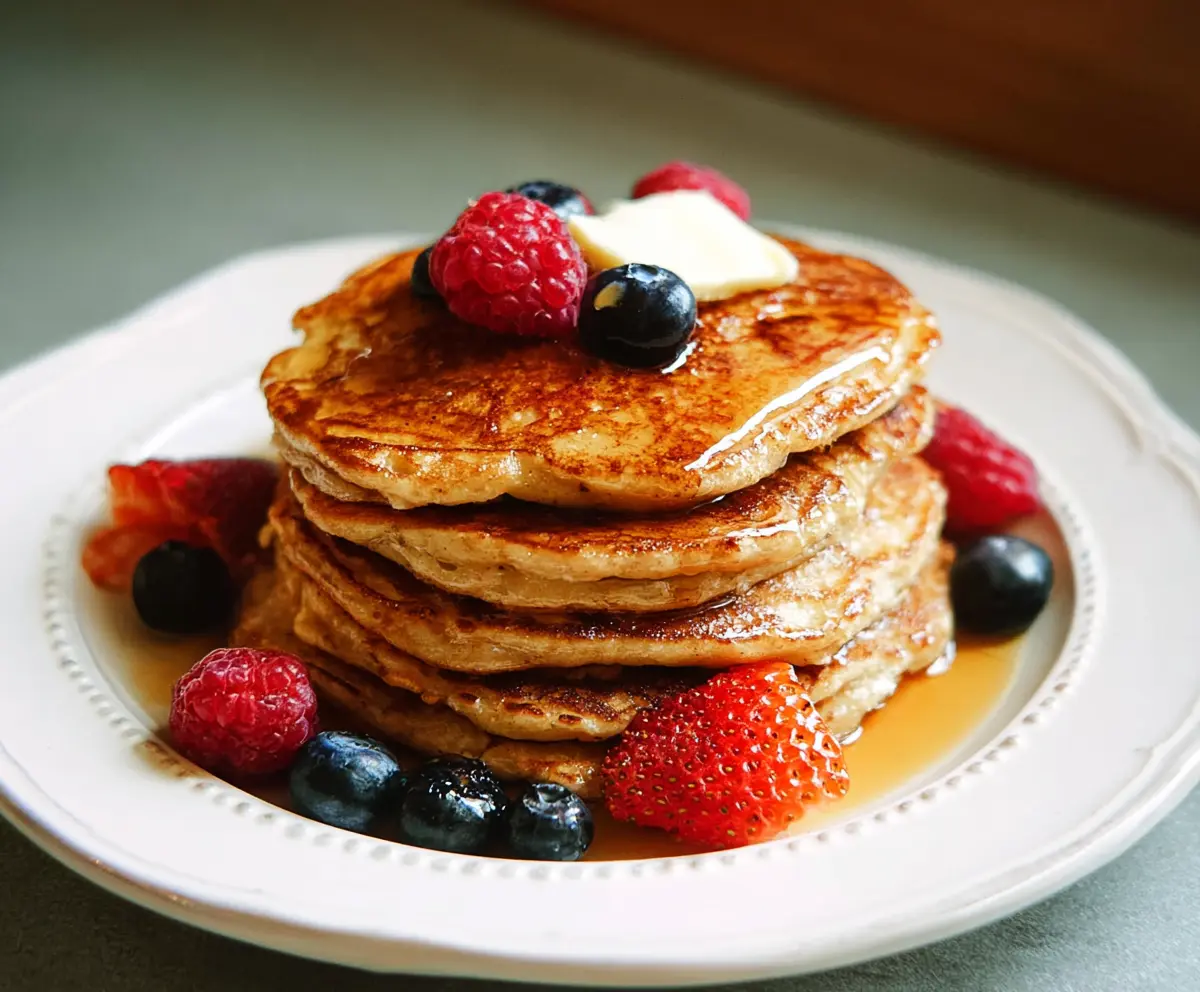
Stack the pancakes on a plate. Add a dollop of Greek yogurt or cream cheese on top if you like. Garnish with fresh strawberries and blueberries. Drizzle with your favorite maple syrup or honey. Serve warm and enjoy your protein-packed breakfast!
Can I Use Frozen Cottage Cheese for These Pancakes?
It’s best to use fresh cottage cheese for the creamiest texture. If using frozen, thaw it completely in the fridge and drain any excess liquid before blending.
Can I Make the Batter Ahead of Time?
Yes! You can prepare the batter the night before and store it covered in the fridge. Give it a quick stir before cooking as the oats may absorb liquid and thicken the batter.
How Should I Store Leftover Pancakes?
Store leftovers in an airtight container in the fridge for up to 3 days. Reheat gently in a pan or microwave with a damp paper towel to keep them moist.
What Are Good Substitutions for the Flours?
You can swap whole wheat flour for all-purpose flour or use almond flour for a gluten-free option. Just keep in mind the texture and cooking time might vary slightly.