
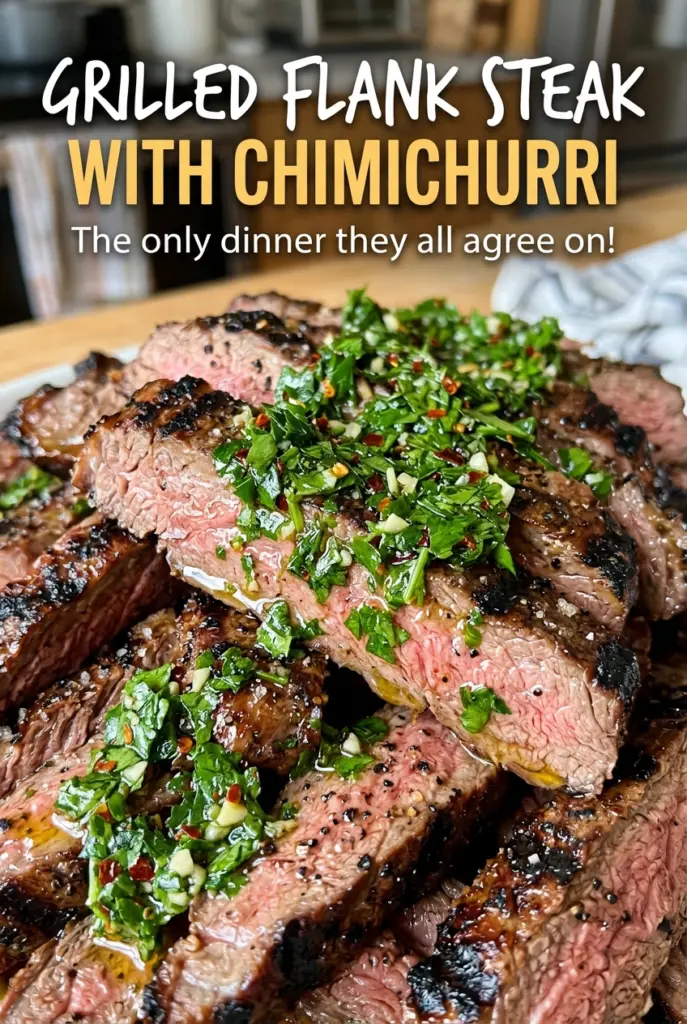
Grilled Flank Steak with Chimichurri
The first slice of flank steak can look tender right up until you bite into it. The long muscle fibers are easy to miss, and cutting in the wrong direction…

By Ava
•
•
Reading time: 8 min
Tip: save now, make later.
The first slice of flank steak can look tender right up until you bite into it. The long muscle fibers are easy to miss, and cutting in the wrong direction leaves each piece chewy. For this grilled flank steak with chimichurri, I look for those fibers before slicing so every bite is short, juicy, and easy to eat.
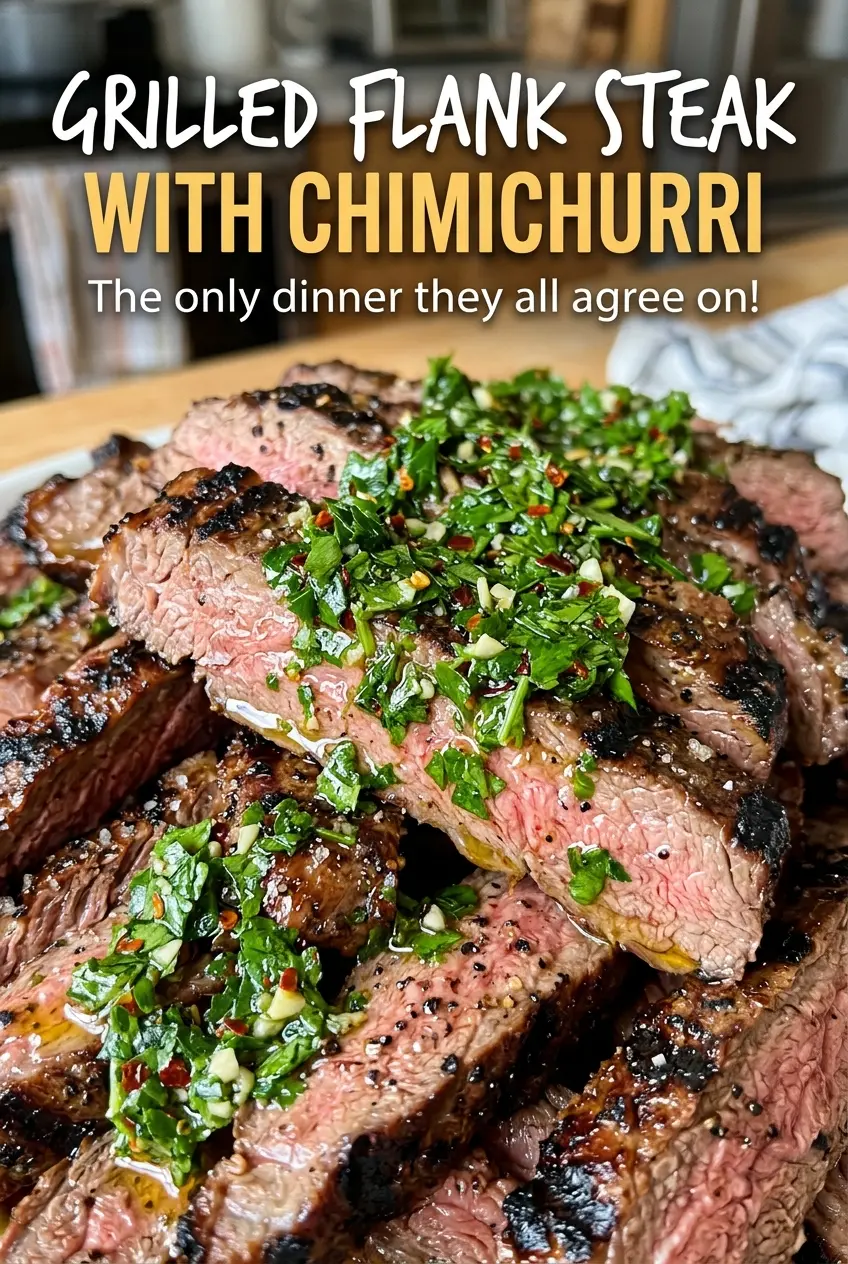
The chimichurri brings a fresh, tangy finish without covering up the grilled beef. Fresh parsley, garlic, oregano, red pepper flakes, red wine vinegar, and olive oil make a loose sauce that comes together in a bowl while the grill heats. The steak gets a simple coating of canola oil, salt, and black pepper, so the grill and the herbs do the talking. It’s a straightforward dinner for four, with bright green sauce spooned over thin slices of steak.
Kitchen Note
Pat the steak dry before adding the oil. A dry surface is easier to season evenly, and it helps keep the oil and seasoning from sliding around when you move the steak to the grill.
Save this grilled flank steak with chimichurri for a meal with a bright parsley-and-garlic sauce and tender, thin-sliced steak.
Why Flank Steak Gets Chewy When You Follow the Grain
Flank steak has long, visible muscle fibers running along its length. If you cut parallel to those lines, each slice keeps the fibers long, and they take more work to chew. Cutting across the grain shortens those fibers; the slices feel more tender even though the steak itself hasn’t changed.
Look closely at the steak before it goes on the grill and note which direction the fibers run. Grilling can make that pattern less obvious, so keep the direction in mind while you’re cooking. Once the steak has rested, turn it so your knife crosses those lines rather than following them. Aim for thin slices, not thick strips. It’s a small detail, but it makes a noticeable difference with this lean, boldly flavored cut.
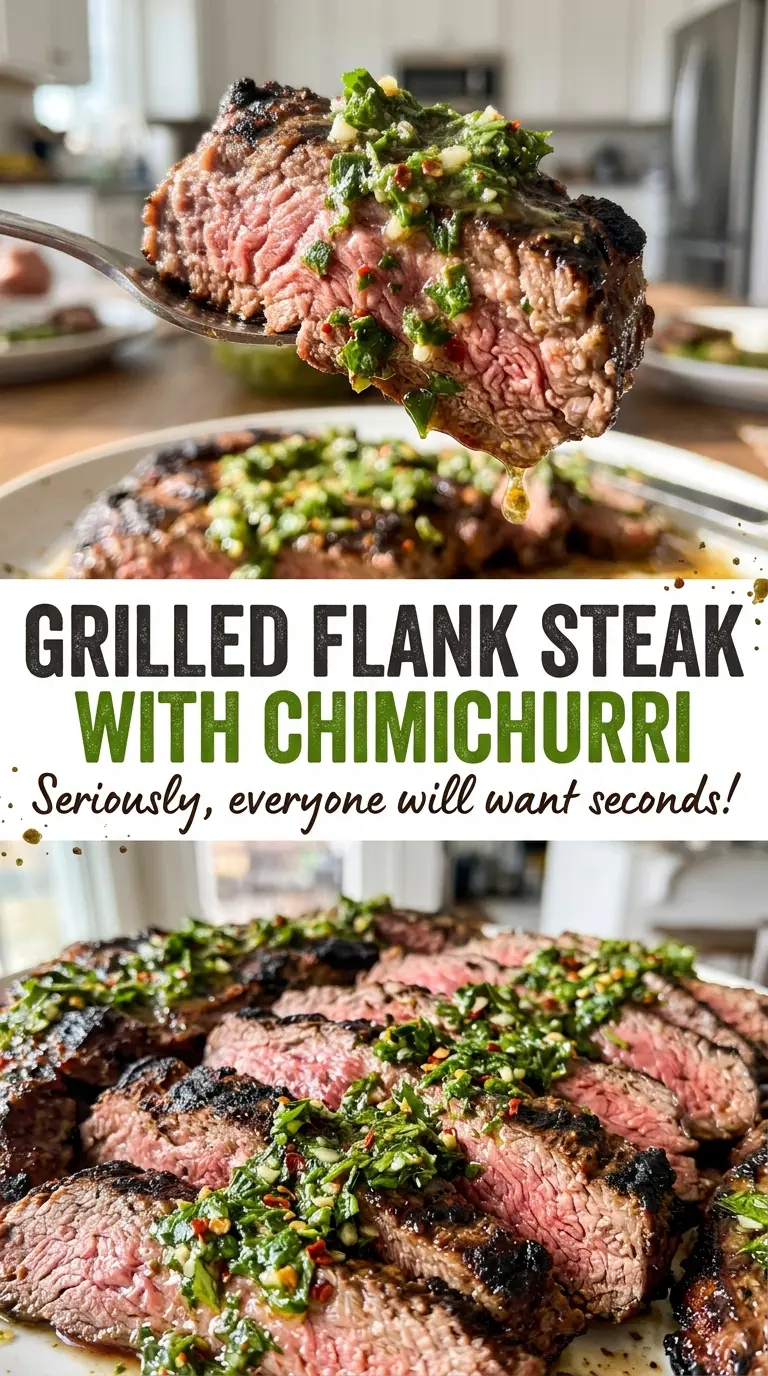
The chimichurri plays a different role: its vinegar and fresh herbs brighten the beef, while the oil carries the chopped parsley and garlic across each slice. Because the sauce is served with the steak rather than cooked on it, the herb flavor stays fresh and distinct. You get both the savory char from the grill and a sharp, green finish in the same forkful.
What Gives This Chimichurri Its Fresh, Tangy Balance
- Flat-leaf parsley — Fresh leaves give the sauce its green color and clean herbal taste. Choose crisp leaves rather than wilted bunches; dried parsley won’t give this uncooked sauce the same texture or freshness. Pick the leaves from any thick stems before chopping.
- Garlic and dried oregano — Garlic brings a sharp savory note, while oregano gives the sauce its earthy backbone. Fresh garlic has the clearest bite here; mince it finely so a large piece doesn’t dominate one spoonful. Dried oregano is a good fit because its concentrated flavor holds its own against the vinegar and oil.
- Red wine vinegar — This is the sauce’s bright, tart counterpoint to the beef and oil. Use a bottle that tastes pleasantly acidic, not harsh or stale. There isn’t another acid in the ingredient list that would keep the same balance, so I’d stick with red wine vinegar.
- Extra-virgin olive oil — Since the oil stays uncooked, its taste comes through in the finished sauce. A basic, fresh bottle works well; there’s no need to use a special finishing oil. The canola oil in the steak ingredients is a more neutral choice for coating the meat.
- Flank steak — Look for a piece with an even thickness so it cooks more consistently from end to end. A very thin end will cook faster than the thickest section, which is why the thermometer check matters more than judging by color alone.
Build the Sauce, Then Grill to a Temperature Cue
Stir Together the Chimichurri
Combine the finely chopped parsley, minced garlic, dried oregano, red pepper flakes, red wine vinegar, olive oil, and one-quarter teaspoon of the kosher salt in a small bowl. Stir until the herbs are coated and the ingredients are distributed through the oil and vinegar. Let the bowl stand at room temperature for at least 15 minutes while you prepare the steak. This gives the flavors time to mingle; the sauce should still look loose rather than creamy.
Season the Steak Evenly
Preheat the grill to medium-high, about 450°F. Pat the flank steak dry, rub it all over with the canola oil, then season both sides with the remaining kosher salt and the black pepper. Spread the seasoning across the full surface instead of leaving it in a few concentrated patches. Get the steak onto the grill once it’s hot so the cooking time starts consistently.
Grill, Rest, and Slice Across the Fibers
Grill the steak for 5 to 7 minutes per side, turning it once. Check the thickest part with a thermometer and cook until it reads 145°F; don’t rely on the outside color to judge the center. Transfer the steak to a cutting board and let it rest for 3 minutes before slicing thinly against the grain. Serve the slices with the chimichurri.
Two Small Changes for a Different Chimichurri
Make the Sauce Milder
Leave out the red pepper flakes and keep the rest of the chimichurri ingredients the same. You’ll still have the parsley, garlic, oregano, vinegar, and olive oil, but without the peppery warmth at the finish.
Keep the Parsley More Textured
For a more rustic sauce, chop the parsley leaves less finely before stirring everything together. The herbs will feel more prominent on the steak, though the sauce won’t coat each slice as evenly as a finer chop.
Storage and Reheating
- Refrigerator: Store the steak and chimichurri separately in covered containers and use within 3 to 4 days. The steak will firm up when chilled, and the oil in the sauce may look cloudy or solid.
- Freezer: The cooked steak freezes well in an airtight freezer-safe container for up to 2 to 3 months. Freeze the chimichurri separately if you like, but expect the parsley to lose some of its fresh color and texture after thawing.
- Reheating: Warm steak gently in a covered skillet over low heat or in short bursts in the microwave, stopping as soon as it’s hot so it doesn’t dry out. Reheat leftovers to 165°F, and bring the sauce back to a stir before serving.
Questions That Come Up When Grilling Flank Steak
Grilled Flank Steak with Chimichurri
Ingredients
Equipment
Method
- Stir together the parsley, garlic, oregano, red pepper flakes, red wine vinegar, olive oil, and 1/4 teaspoon of the kosher salt in a small bowl.
- Let the chimichurri stand at room temperature for at least 15 minutes while you prepare the steak.
- Preheat a grill to medium-high heat, about 450°F.
- Pat the steak dry.
- Rub the steak all over with the canola oil.
- Season both sides with the remaining 3/4 teaspoon kosher salt and the black pepper.
- Grill the steak for 5 to 7 minutes per side, turning once, until a thermometer inserted into the thickest part reads 145°F.
- Transfer the steak to a cutting board and let it rest for 3 minutes.
- Slice thinly against the grain and serve with the chimichurri.