
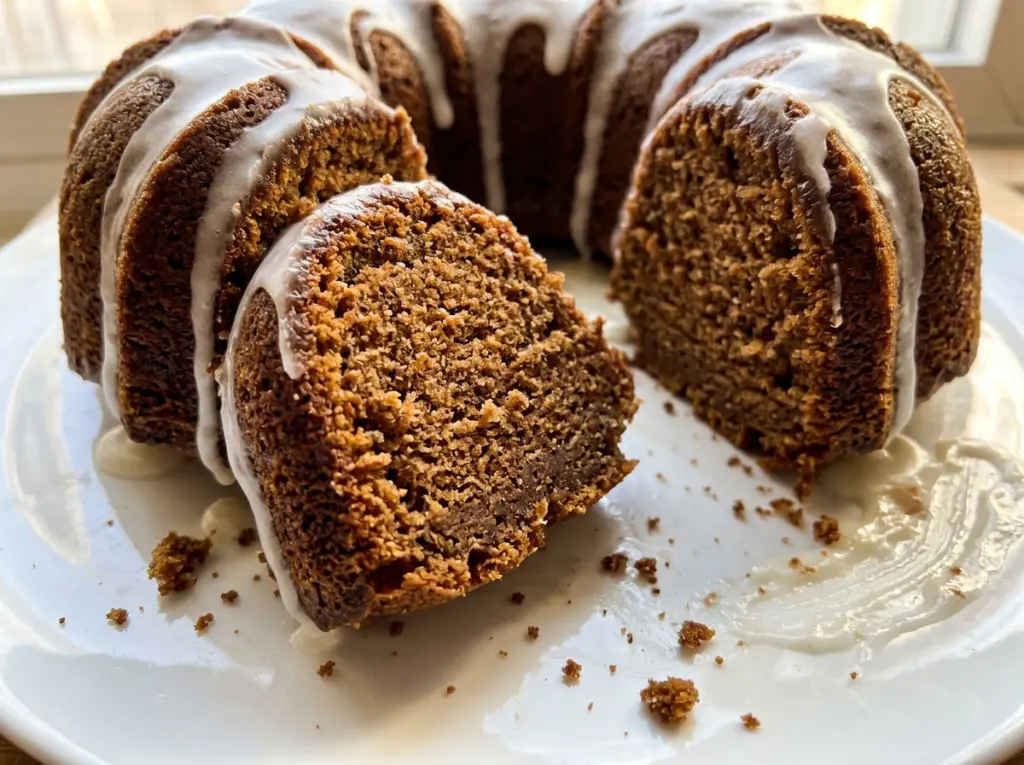
Gingerbread Bundt Cake with Vanilla Glaze
The butter and brown sugar should look pale and fluffy before anything else goes into the bowl. That takes a few minutes, but it gives this gingerbread Bundt cake a…

By Ava
•
•
Reading time: 9 min
Tip: save now, make later.
The butter and brown sugar should look pale and fluffy before anything else goes into the bowl. That takes a few minutes, but it gives this gingerbread Bundt cake a lighter start than a quick stir-together batter. Once the molasses goes in, the mixture turns dark and glossy, and the warm ginger and cinnamon become unmistakable.
I like this cake because its spice is bold without the crumb feeling dry or heavy. Unsulfured molasses brings the deep gingerbread flavor, while buttermilk keeps the batter balanced. Alternating the dry ingredients with the buttermilk also makes it easier to stop mixing as soon as the flour disappears.
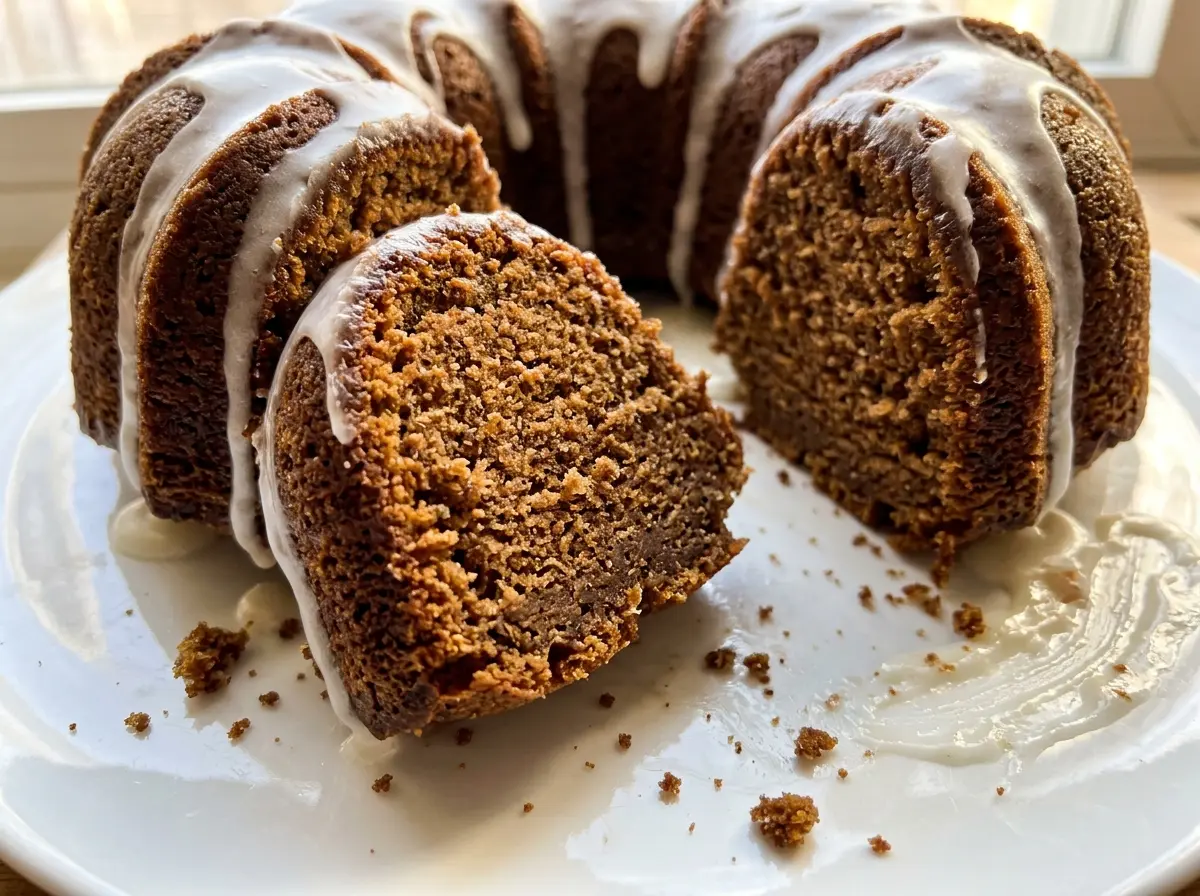
After the cake cools, a smooth vanilla glaze runs over the ridges and settles into a thin, sweet finish. Slice it once the glaze has set, and you’ll get tender, warmly spiced cake with a little vanilla in every bite.
Kitchen Note
Bring the eggs and buttermilk to room temperature before you start. Cold ingredients can make the softened butter firm up in the bowl, and the batter won’t come together as smoothly.
Save this gingerbread Bundt cake for a bake with deep molasses warmth, a tender crumb, and a simple vanilla glaze.
Why Scooping Flour Can Make This Bundt Dry
Flour is easy to overmeasure when you dip the cup straight into the bag. That packs extra flour into the cup, and a heavier flour-to-liquid balance can leave this cake dry or tight instead of tender. Spoon the flour into the measuring cup, then level the top without pressing it down. That small detail matters in a batter with a full cup of molasses and buttermilk.
Bundt cakes also have a wide surface area and a center tube, so a dry crumb is especially noticeable in each slice. Measuring the flour gently keeps the batter in the proportions that let the butter and leaveners do their work. If you’re weighing ingredients, use the equivalent weight for your flour rather than packing it into a cup; brands can vary a little, so spooning and leveling is the dependable cup-measuring method.
What Molasses and Buttermilk Bring to This Gingerbread Bundt
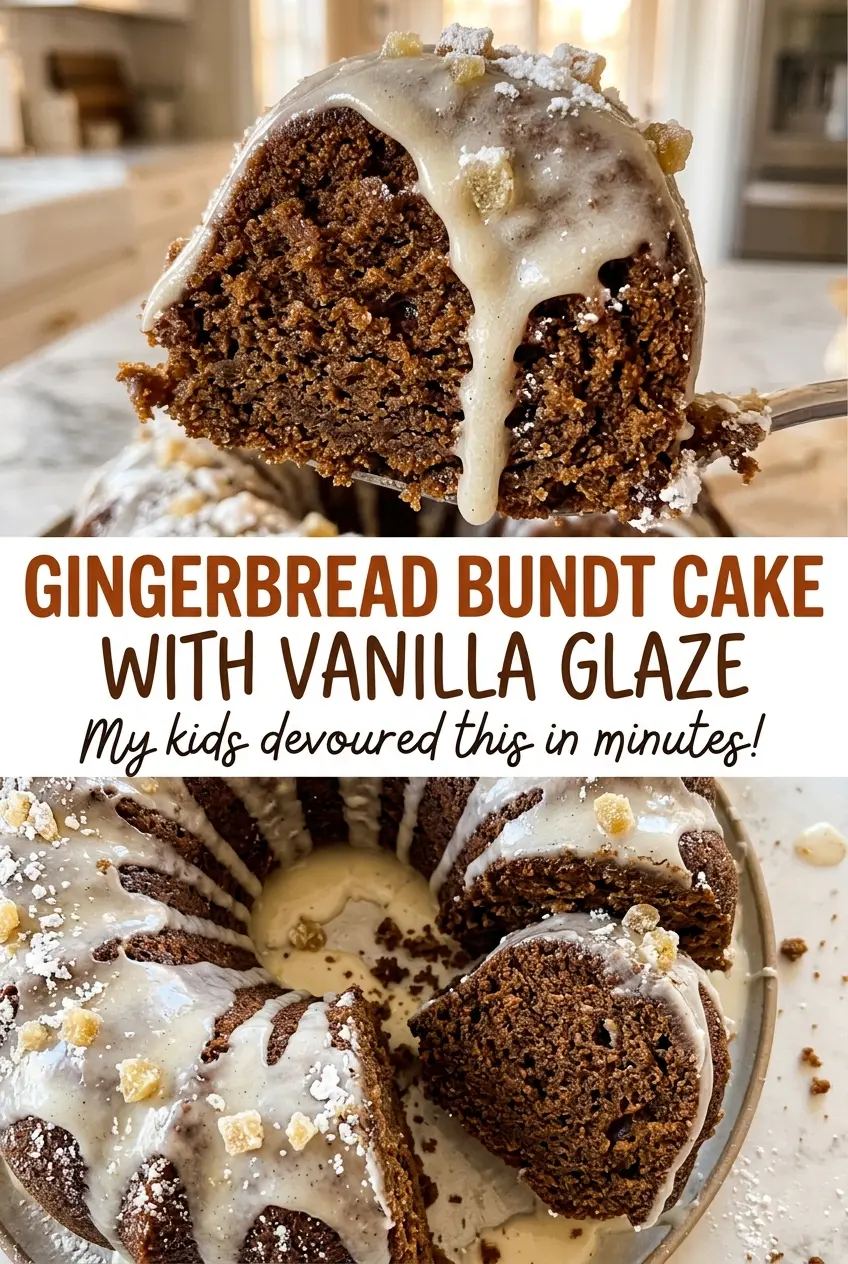
- Unsulfured molasses — This is the backbone of the gingerbread flavor, giving the cake its dark color and rounded sweetness. Blackstrap molasses is much more intense and bitter, so it isn’t a direct stand-in here. Check the label and choose unsulfured molasses that isn’t marked blackstrap.
- Buttermilk — Its gentle tang balances the molasses, and its acidity works with the baking soda in the batter. Whole buttermilk gives the cake a richer crumb; avoid replacing it with plain milk, which won’t bring the same acidity.
- Ground spices — Ginger leads, with cinnamon, cloves, and nutmeg adding warmth behind it. Fresh, fragrant spices make a clear difference in a cake where the spice blend is prominent. If a jar smells faint when you open it, the finished cake will taste muted too.
- Butter and light brown sugar — Softened butter can trap air as it’s beaten with the sugar, and the sugar adds a mellow caramel note alongside the molasses. Use butter that yields to a finger but isn’t shiny or melted; melted butter won’t cream the same way.
- Confectioners’ sugar and vanilla — Confectioners’ sugar gives the glaze its smooth, delicate finish, while vanilla keeps it from tasting one-note sweet. Whole milk makes the glaze creamy, and the pinch of salt helps sharpen its flavor.
Building the Batter Without Losing Its Lift
Whisk the dry ingredients evenly
Heat the oven to 350°F and coat every curve of a 10- to 12-cup Bundt pan with baking spray with flour. In a medium bowl, whisk together the flour, baking soda, baking powder, ginger, cinnamon, cloves, nutmeg, and salt. Take a moment to break up any visible spice clumps so the flavor is distributed through the cake. Set the bowl aside while you cream the butter and sugar.
Cream the butter, sugar, and eggs
Beat the softened butter and packed light brown sugar in a large bowl with an electric mixer on medium speed for 3 to 4 minutes. The mixture should look lighter and fluffy rather than dense and greasy. Beat in the eggs one at a time, then add the molasses and vanilla until combined. Scrape down the sides of the bowl if streaks are hiding above the beaters.
Alternate the flour mixture and buttermilk
Turn the mixer to low and add the flour mixture in three additions, alternating with the buttermilk in two additions. Start and finish with the flour mixture. This order helps the liquids and dry ingredients incorporate without leaving you tempted to beat the batter for too long. Stop as soon as the flour is combined; a few strokes too many can make the crumb less tender.
Use the cake’s cues, not just the timer
Scrape the batter into the prepared pan and bake for 45 to 55 minutes. A toothpick inserted near the center should come out with a few moist crumbs, and the cake should begin pulling away from the pan. If the toothpick comes out coated in wet batter, it needs more time; check again rather than taking it out early. The top may look set before the center is ready.
Cool before glazing
Let the cake rest in the pan for 15 minutes, then invert it onto a wire rack and cool completely. Whisk the confectioners’ sugar, whole milk, vanilla, and salt in a small bowl until smooth. Drizzle the glaze over the cooled cake, letting it run naturally down the ridges, then give it 15 minutes to set before slicing. Glazing a warm cake makes the icing runnier and less defined.
Ways to Adapt the Spice and Finish
A gluten-free Bundt
Replace the all-purpose flour with the same volume of a cup-for-cup gluten-free baking blend formulated for cakes. Choose a blend that already includes a binder such as xanthan gum, rather than adding one separately. The cake may be a little more delicate, so let it cool completely before turning it out.
A less-sweet finish
Leave off the vanilla glaze and serve the cake plain. The gingerbread flavor comes through more directly, and the crumb is still rich from the butter and molasses. This is a useful option when you want a simple slice alongside coffee without an extra sweet topping.
A gentler spice blend
For a softer clove note, leave the ground cloves out and keep the ginger, cinnamon, and nutmeg unchanged. The cake will still read as gingerbread, but the aroma will be less assertive. This is a flavor adjustment, not a change to the mixing method.
Storage and Reheating
- Refrigerator: Keep the cake covered for up to 4 days. The crumb will firm up when cold, so let a slice come to room temperature before serving.
- Freezer: Freeze the cake unglazed, whole or in slices, wrapped tightly and placed in an airtight container for up to 2 months. Thaw it wrapped at room temperature, then glaze if you like.
- Reheating: It doesn’t need reheating; room-temperature slices have the best texture. Avoid microwaving glazed slices, since the glaze melts and turns sticky.
Questions About Gingerbread Bundt Cake
Gingerbread Bundt Cake with Vanilla Glaze
Ingredients
Equipment
Method
- Heat the oven to 350°F.
- Thoroughly coat a 10- to 12-cup Bundt pan with baking spray with flour.
- Whisk the flour, baking soda, baking powder, ginger, cinnamon, cloves, nutmeg, and salt in a medium bowl.
- Beat the butter and brown sugar in a large bowl with an electric mixer on medium speed until light and fluffy, 3 to 4 minutes.
- Beat in the eggs one at a time.
- Beat in the molasses and vanilla until combined, scraping down the bowl as needed.
- With the mixer on low, add the flour mixture in three additions, alternating with the buttermilk in two additions, beginning and ending with the flour mixture; mix just until combined.
- Scrape the batter into the prepared pan.
- Bake for 45 to 55 minutes, until a toothpick inserted near the center comes out with a few moist crumbs and the cake begins to pull away from the pan.
- Cool the cake in the pan for 15 minutes.
- Invert it onto a wire rack and cool completely.
- Whisk the confectioners’ sugar, milk, vanilla, and salt in a small bowl until smooth.
- Drizzle the glaze over the completely cooled cake.
- Let it set for 15 minutes before serving.