
Garlic Dijon Shrimp and Salmon Foil Packs
The first lift of a foil corner sends up a cloud of garlic and lemon, and the butter gathered around the asparagus smells like the best part of the meal.…

By Ava
•
•
Reading time: 8 min
Tip: save now, make later.
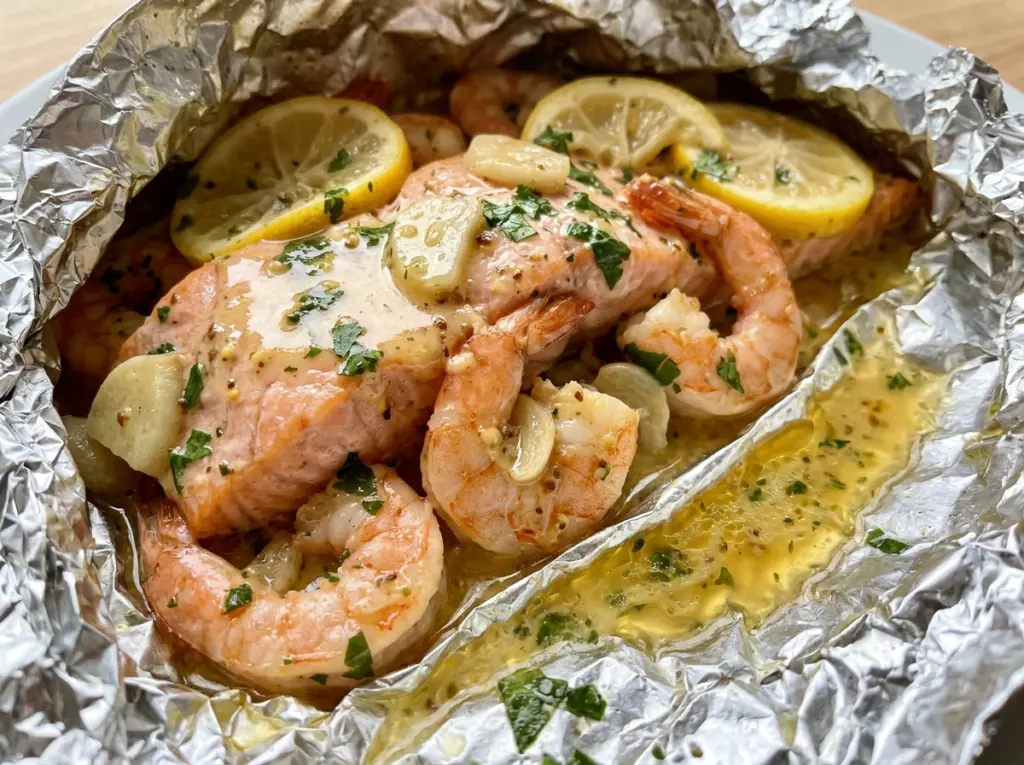
The first lift of a foil corner sends up a cloud of garlic and lemon, and the butter gathered around the asparagus smells like the best part of the meal. I make these Garlic Dijon Shrimp and Salmon Foil Packs when I want seafood and vegetables to cook together without a stack of pans to wash afterward. Each packet gets its own salmon fillet, shrimp, asparagus, and a spoonful of mustardy butter.
The order matters more than it looks: asparagus goes down first, then the seafood sits on top. Cutting the asparagus into 2-inch pieces gives it a chance to cook alongside the salmon and shrimp, while the sealed foil keeps the butter and cooking juices close to everything. Use large shrimp and salmon fillets of the same size so the timing stays predictable. The finished packets bring tender asparagus, flaky salmon, and shrimp together in one bright, savory bite.
Kitchen Note
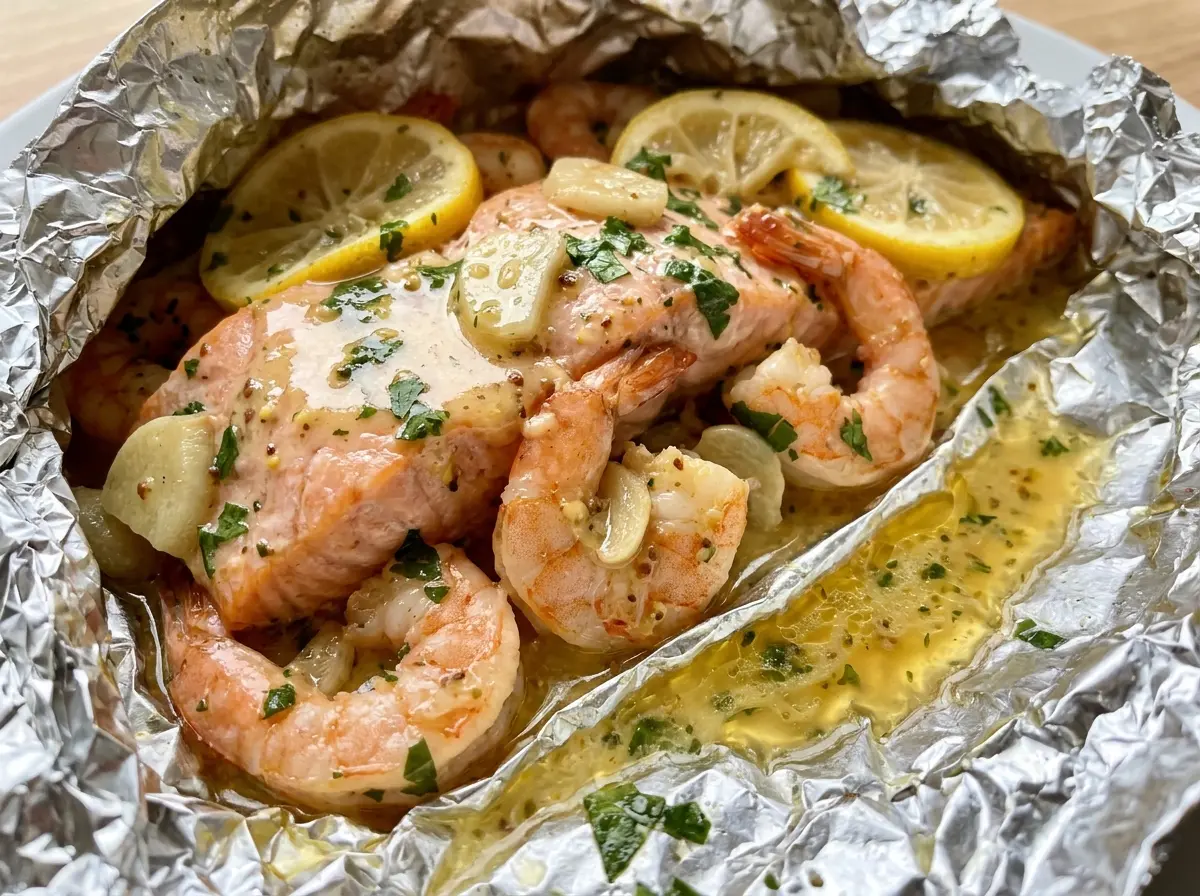
Heavy-duty foil is worth using here. Each packet holds seafood, asparagus, and buttery liquid, and thin foil is easier to tear while you fold and move the packs.
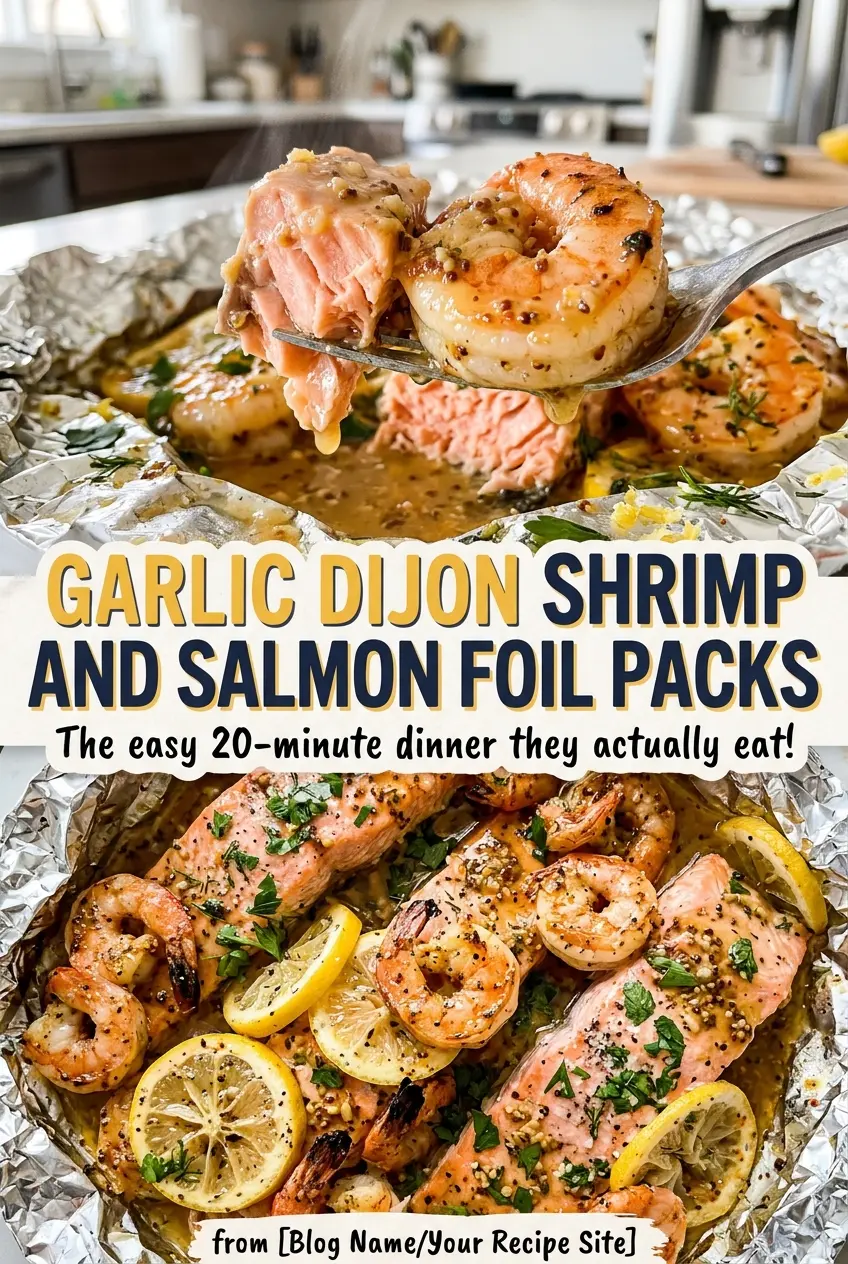
Save these Garlic Dijon Shrimp and Salmon Foil Packs for a seafood dinner with asparagus and lemon-garlic butter, all tucked into individual packets.
Why the Asparagus Belongs Under the Seafood
These packets cook several ingredients at once, and their placement gives the asparagus a useful head start. It sits directly on the foil while the salmon and shrimp rest above it, so the vegetables are surrounded by the buttery juices as everything cooks in the closed packet. The asparagus also isn’t hidden beneath a thick layer of seafood; each portion has a clear base and an even amount of protein.
The 2-inch cut is practical, too. Short pieces divide neatly among four packets and are easier to eat alongside a forkful of salmon or shrimp than long stalks would be. Keep the pieces close in size so they cook at a similar pace. If you leave the asparagus in long sections or cut some pieces much thicker than others, you’ll make the portions less consistent. This simple layering also means there’s no need to toss the asparagus in a separate bowl before assembling.
What the Dijon Butter and Seafood Each Bring
- Unsalted butter — Melted butter carries the garlic, mustard, and lemon over the seafood and vegetables. Unsalted butter lets the measured kosher salt do the seasoning; I wouldn’t casually swap in salted butter because the finished seasoning would be harder to control.
- Dijon mustard and lemon juice — Dijon gives the butter a sharp, savory edge, and lemon juice keeps that richness from feeling heavy. Stir them together with the melted butter until blended. Yellow mustard has a milder, sweeter character, so it won’t give the sauce the same balance.
- Garlic — Minced garlic spreads through the butter instead of leaving large pieces in one bite. Freshly minced cloves give the sauce its direct, aromatic flavor; jarred minced garlic can work in a pinch, though its flavor is often less lively.
- Salmon fillets — Skinless fillets weighing 6 ounces each give the four portions a consistent size and make them easy to place in separate packets. Thaw frozen fillets before assembling so the cooking time is not thrown off by a frozen center.
- Large shrimp — Shrimp sized 16 to 20 per pound are substantial enough to cook alongside the salmon without disappearing into the asparagus. Buy them peeled and deveined to keep prep straightforward, and thaw them first if they were frozen.
- Asparagus — Trim the ends before cutting the stalks into pieces. Choose asparagus that looks fresh and firm; very thin and thick stalks can soften at different rates, so keep the pieces you cut as even as you can.
How to Assemble the Packets for Even Cooking
Stir the Garlic Dijon Butter
Combine the melted butter, Dijon mustard, minced garlic, lemon juice, kosher salt, and black pepper in a small bowl. Stir until the mustard and seasonings are distributed through the butter rather than sitting in separate streaks. The mixture should look cohesive and smell distinctly of garlic and lemon. If it separates while you assemble the packets, give it another quick stir before spooning it over the portions.
Layer Four Individual Portions
Heat the oven to 425°F and cut four 12-by-18-inch pieces of heavy-duty aluminum foil. Divide the trimmed, 2-inch asparagus pieces among the foil, then place one 6-ounce salmon fillet and one-quarter of the shrimp on each portion. Spoon the garlic Dijon butter evenly over the salmon, shrimp, and asparagus. Fold and seal each piece into a packet, then arrange all four packets on a rimmed baking sheet.
Bake Until the Seafood Is Done
Bake the packets for 14 to 18 minutes. Check the thickest part of a salmon fillet with a thermometer; it should reach 145°F, while the shrimp should look opaque and feel firm. If the salmon is not there yet, return the sealed packets to the oven and check again rather than relying on color alone. Open each packet carefully after baking, keeping your hands and face away from the hot steam.
Two Practical Ways to Adapt These Foil Packs
Make a Half Batch for Two
Halve every ingredient and assemble two packets, keeping one 6-ounce salmon fillet in each. The individual portions stay the same size, so the method and doneness checks still apply; you’ll just have fewer packets on the baking sheet.
Leave Out the Shrimp for Salmon-Only Packs
For a simpler seafood portion, keep the four salmon fillets and asparagus but omit the shrimp. Divide the same garlic Dijon butter among the packets, and use the salmon’s temperature rather than shrimp appearance to judge when the fish is ready.
Storage and Reheating
- Refrigerator: Transfer leftovers to an airtight container and refrigerate for 3 to 4 days. The asparagus will soften as it sits.
- Freezer: Freeze leftovers in a tightly sealed container for up to 2 months for best quality. The seafood and asparagus may be softer after thawing.
- Reheating: Reheat in a covered baking dish or on a microwave-safe plate, not in foil in the microwave, until the food reaches 165°F. Warm it just until heated through; prolonged reheating can make the shrimp tough.
Questions That Come Up With Seafood Foil Packs
Garlic Dijon Shrimp and Salmon Foil Packs
Ingredients
Equipment
Method
- In a small bowl, stir together the melted butter, Dijon mustard, garlic, lemon juice, salt, and pepper.
- Heat the oven to 425°F.
- Cut four 12-by-18-inch pieces of heavy-duty aluminum foil.
- Divide the asparagus among the foil pieces, then place a salmon fillet and one-quarter of the shrimp on each portion.
- Spoon the garlic Dijon butter evenly over the salmon, shrimp, and asparagus.
- Fold and seal each foil piece into a packet.
- Arrange the packets on a rimmed baking sheet.
- Bake for 14 to 18 minutes, until the salmon reaches 145°F in the thickest part and the shrimp are opaque and firm.
- Carefully open the packets, watching for hot steam.