
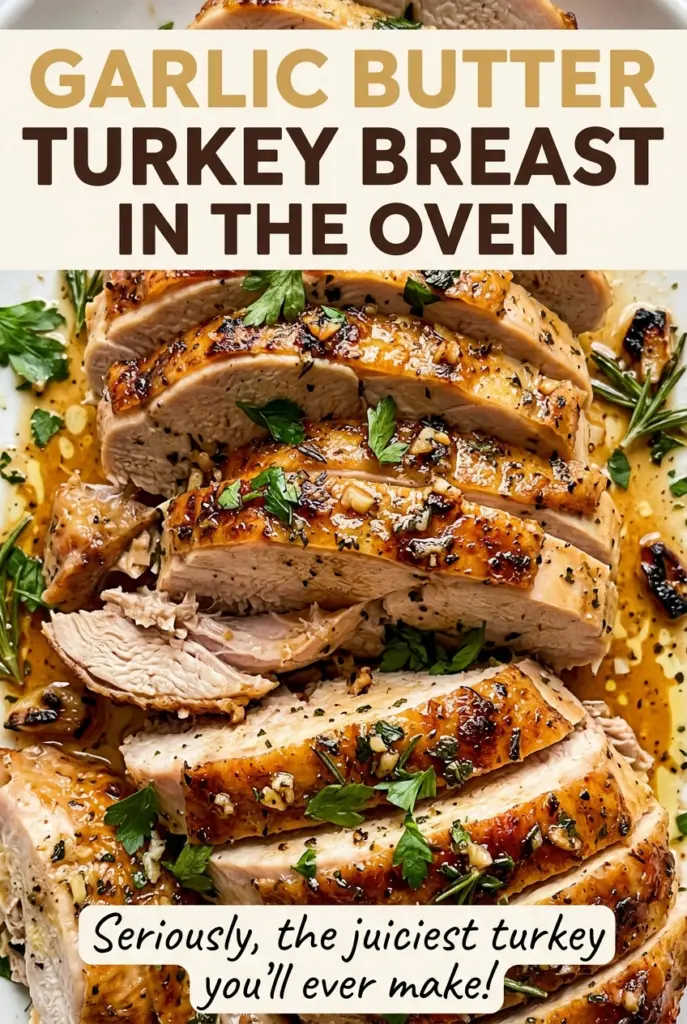
Garlic Butter Turkey Breast in the Oven
Once the garlic and herbs are stirred into softened butter, the whole kitchen starts to smell like the best part of a roast dinner. For this garlic butter turkey breast…

By Ava
•
•
Reading time: 9 min
Tip: save now, make later.
Once the garlic and herbs are stirred into softened butter, the whole kitchen starts to smell like the best part of a roast dinner. For this garlic butter turkey breast in the oven, I tuck most of that fragrant butter beneath the skin, where it seasons the meat as it roasts, and spread the rest across the top.
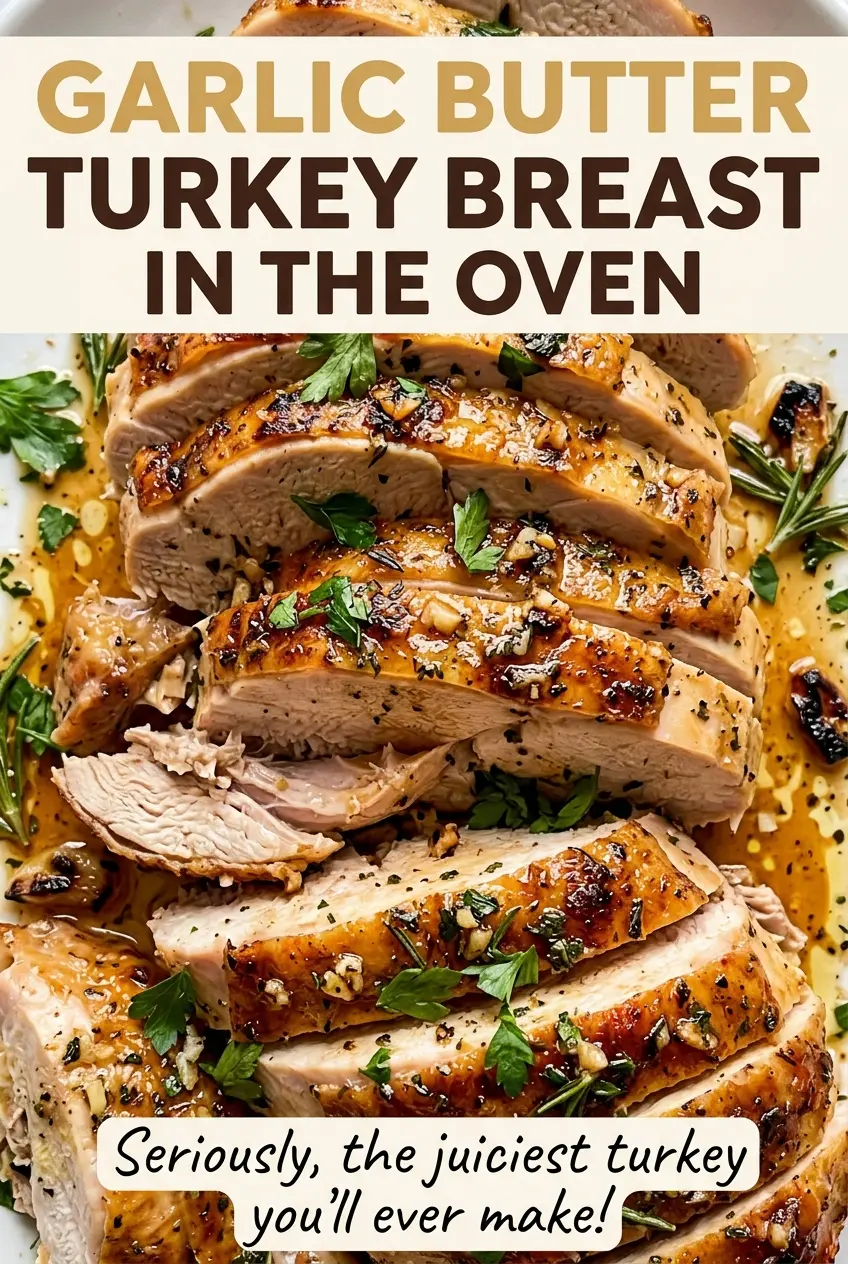
A bone-in, skin-on breast gives you the familiar carved-turkey look without roasting a whole bird, and this one serves six. The chicken broth sits in the roasting pan while the turkey cooks, and the fresh rosemary and thyme keep the butter savory rather than heavy. After a short rest, the breast is ready to carve into moist slices with garlic-herb flavor all the way through.
Kitchen Note
The butter should be soft enough to stir smoothly, but not melted. Melted butter runs off the skin before you can spread it into an even layer.
Save this garlic butter turkey breast for a roast with golden herb skin and garlic-seasoned slices from the first cut to the last.
Why the Broth Goes Into the Pan, Not Over the Turkey
The broth belongs beneath the roasting rack, not on the skin. Pouring liquid over the breast would wash some of the garlic butter and seasoning off the surface just before the turkey goes into the oven. Keeping the top dry lets the skin roast directly in the oven’s heat, while the broth stays in the pan beneath it.
That placement also gives you a useful reminder while you’re setting up: pour slowly and aim for the open pan, not the bird. The breast should sit skin-side up on the rack, with room for the air to circulate around it. If the skin starts browning faster than you want, a loose foil tent slows that browning without changing the roasting temperature. It’s a small detail, but it keeps the butter where you put it and gives the skin a better chance to turn evenly golden.
What the Butter, Herbs, and Turkey Each Bring to the Roast
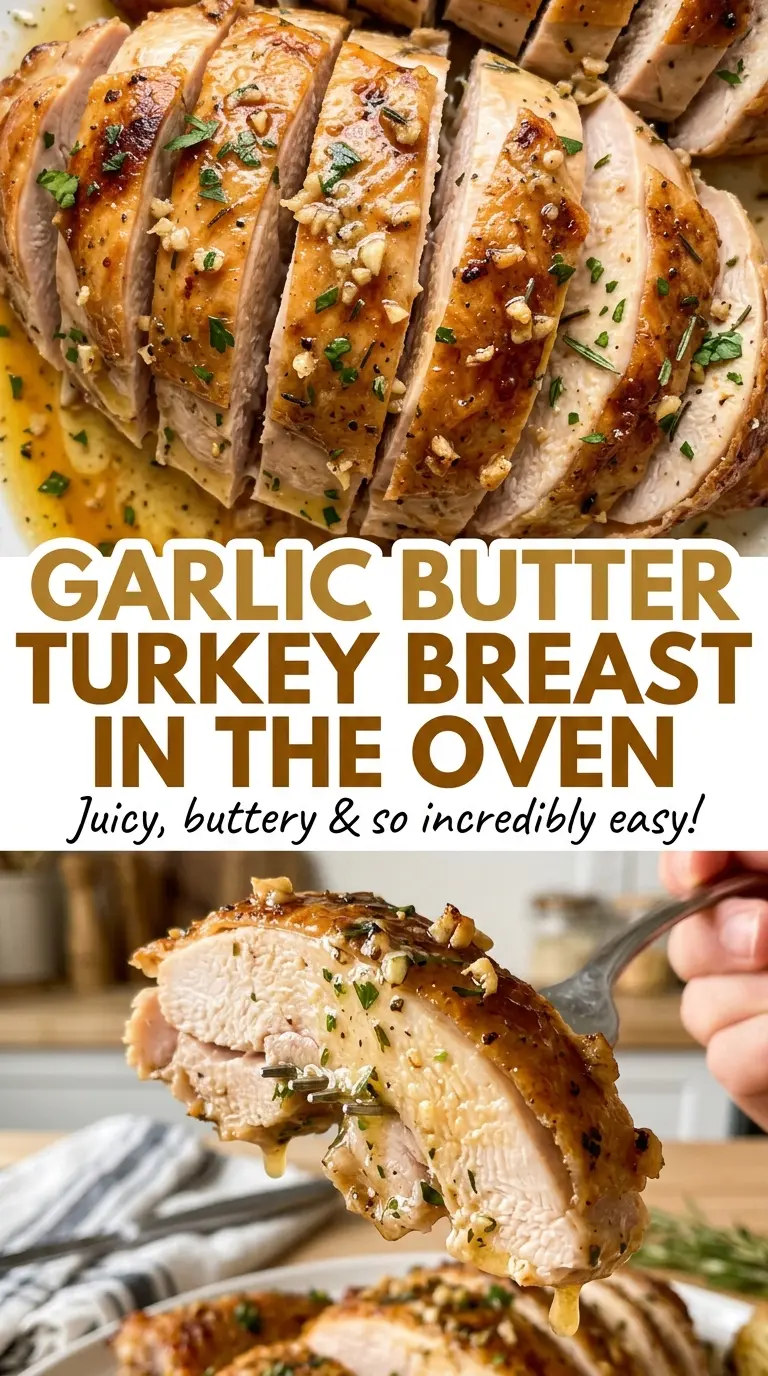
- Bone-in, skin-on turkey breast — The skin holds the herb butter against the meat, and the bone is part of what makes this particular roast cook differently from a boneless cut. Start with it fully thawed; a partly frozen center makes the roasting time difficult to judge. For the stated timing, stick with a breast in the 4- to 5-pound range.
- Unsalted butter — It carries the garlic and herbs and lets you control the salt separately. A regular grocery-store butter works well here; there’s no need for a specialty brand. If you need a dairy-free option, use unsalted plant-based butter sticks, not a soft tub spread.
- Fresh garlic — Minced cloves give the butter a sharper, fresher aroma than garlic powder. Prepared minced garlic can stand in spoon-for-spoon if that’s what you have, though its flavor is usually milder.
- Fresh rosemary and thyme — Their fragrance carries through the butter and suits turkey especially well. If you’re using dried herbs, use about one-third as much by volume as the fresh herbs and crush them between your fingers before mixing to release their aroma.
- Low-sodium chicken broth — It adds savory liquid to the bottom of the pan without making the drippings as salty as regular broth might. An inexpensive carton is fine. Vegetable broth can replace it, though the pan juices will taste a little less like roast turkey.
Getting the Garlic Butter Under the Skin Without Tearing It
Set Up the Turkey on the Rack
Heat the oven to 350°F and set a rack inside a 12×16-inch roasting pan. Pat the thawed turkey breast dry with paper towels, then place it skin-side up on the rack. Drying the surface gives the butter something to cling to instead of sliding over damp skin. Check that the breast sits securely before you start spreading the butter.
Mix the Garlic and Herb Butter
Stir the softened butter with the minced garlic, chopped rosemary, thyme leaves, kosher salt, and black pepper in a small bowl. Keep mixing until the herbs and garlic are distributed throughout, rather than clumped in one spot. If a few bits of garlic gather at the bottom of the bowl, scrape them back into the butter. An even mixture makes it easier to season both beneath and on top of the skin.
Spread Most of the Butter Beneath the Skin
Gently work your fingers beneath the skin over the breast to loosen it, taking care not to tear it. Spread about two-thirds of the garlic butter underneath, moving it across the breast in an even layer. Then smooth the remaining butter over the skin. If the skin pulls or resists, loosen it gradually rather than forcing your hand farther in one motion.
Roast, Check, and Let the Meat Rest
Pour the chicken broth into the pan around the rack, keeping it off the turkey, and roast for 1 1/2 to 2 1/4 hours. Start checking toward the earlier end of that range because breast size and oven behavior affect the timing. Insert a thermometer into the thickest part of the breast without touching bone; the exact temperature to look for is answered below. If the skin browns too quickly, tent it loosely with foil. Transfer the turkey to a cutting board, tent it loosely with foil, and let it rest for 20 minutes before carving.
Three Ways to Change the Herb Butter Without Losing the Roast
Make It Dairy-Free With Plant-Based Butter
Replace the dairy butter with the same amount of unsalted plant-based butter sticks and mix in the garlic and herbs as usual. Sticks hold their shape better than tub spreads, which tend to be too soft for getting an even layer under the skin. The roast will have a slightly different buttery richness, but the herb-and-garlic seasoning still works well.
Add Lemon Zest for a Brighter Finish
Finely grate lemon zest into the butter mixture before spreading it under the skin. The citrus lifts the rich butter and fresh herbs without adding extra liquid to the pan or changing how the turkey roasts. Keep the zest fine so it blends evenly instead of forming clumps.
Give the Butter a Little Heat
Stir a pinch of cayenne into the butter for a gentle warmth alongside the garlic and herbs. It adds a subtle kick without changing the roasting method. Keep the amount modest so the rosemary and thyme still come through.
Storage and Reheating
- Refrigerator: Store carved turkey in an airtight container for 3 to 4 days. The skin will soften in the refrigerator, but the meat stays useful for sandwiches or another warm meal.
- Freezer: Freeze carved slices in a freezer-safe airtight container, with a little pan juice if you have it, for up to 3 months for best quality. Thaw in the refrigerator before reheating.
- Reheating: Put slices in a covered baking dish with a splash of broth and warm them in a 325°F oven until steaming hot throughout. Keep the dish covered; reheating uncovered or for too long dries the lean breast meat.
Questions That Come Up While Roasting a Bone-In Turkey Breast
Garlic Butter Turkey Breast in the Oven
Ingredients
Equipment
Method
- Heat the oven to 350°F.
- Set a rack in a 12x16-inch roasting pan.
- Pat the turkey breast dry with paper towels.
- Place the turkey skin-side up on the rack.
- Mix the softened butter, garlic, rosemary, thyme, salt, and pepper in a small bowl until combined.
- Carefully loosen the skin over the breast.
- Spread about two-thirds of the garlic butter underneath the skin.
- Spread the remaining garlic butter over the skin.
- Pour the chicken broth into the roasting pan, taking care not to pour it over the turkey.
- Roast for 1 1/2 to 2 1/4 hours, until a thermometer inserted into the thickest part of the breast without touching bone reads 165°F; loosely tent with foil if the skin browns too quickly.
- Transfer the turkey to a cutting board.
- Tent the turkey loosely with foil.
- Rest for 20 minutes before carving.