

Garlic Butter Salmon Bites with Lemon
When the salmon cubes hit the hot oil, the skillet gets quiet for a beat, then you hear the sear. If too many pieces go in at once, that sound…

By Ava
•
•
Reading time: 8 min
Tip: save now, make later.
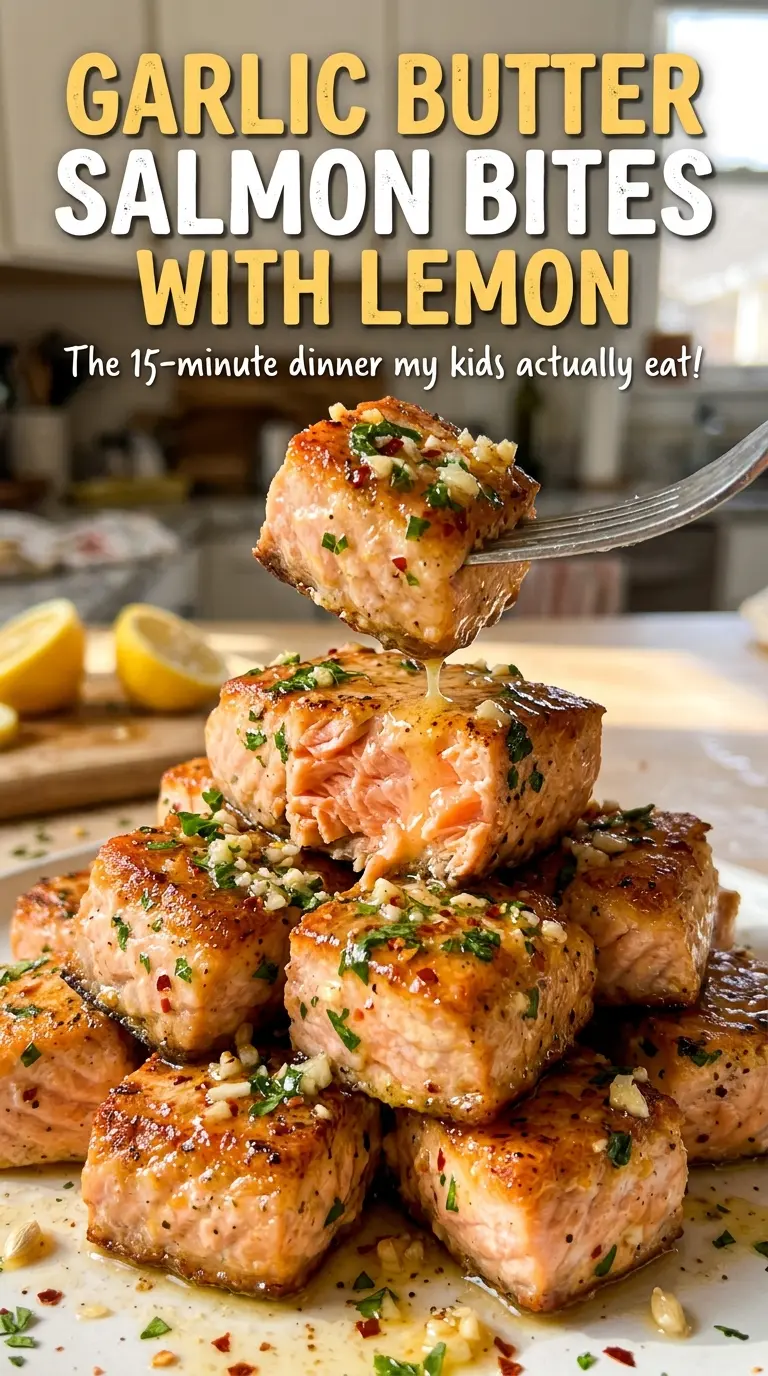
When the salmon cubes hit the hot oil, the skillet gets quiet for a beat, then you hear the sear. If too many pieces go in at once, that sound fades and the fish starts giving off moisture instead of browning. I cook these garlic butter salmon bites with lemon in two rounds, so each piece has room to color before it gets tossed through the quick sauce.
The sauce comes together in the same skillet, after the salmon comes out. Butter catches the browned bits, garlic takes only a short turn in the pan, and fresh lemon juice and zest brighten the salmon without covering it up. Parsley goes in at the end, keeping the finish fresh while the cubes hold onto their browned edges under a light, glossy coating.
Cutting the salmon into even cubes and having the lemon, garlic, and parsley ready before the skillet heats makes the cooking feel unhurried. The pieces cook quickly, and the sauce needs your attention for just a moment. What lands on the plate is tender salmon with buttery lemon at the edges and a gentle garlic finish.

Kitchen Note
Dry the salmon well before seasoning it. Any dampness on the surface makes it harder to get those browned edges, so take an extra moment with paper towels before the cubes go into the skillet.
Save these garlic butter salmon bites with lemon for a skillet dinner with browned edges and a quick, bright butter sauce.
Why These Salmon Bites Need Two Passes Through the Skillet
Salmon releases moisture as it cooks. When the cubes are crowded, that moisture gets trapped between them, and the fish steams before its surface has a chance to brown. Cooking in two batches gives the pieces enough open skillet to make contact with the hot oil and develop color.
That browned surface matters beyond looks. It gives the finished bites a little contrast against the tender center, and the bits left behind in the pan become part of the lemon-butter sauce. A 12-inch skillet gives the salmon room to sit in a single layer, but the amount of fish still makes two rounds the more reliable choice. If you try to force all the cubes in together, the pan cools and the browning suffers.
Between batches, the first portion waits on a plate while the next cooks. Once both portions are ready, they return to the skillet only after the sauce is made. That order protects the browned edges and keeps the salmon from spending extra time over the heat while the garlic cooks.
Fresh Lemon Does Two Different Jobs in the Butter Sauce
- Salmon — A skinless fillet is easy to portion into neat cubes, and pieces cut to a similar size cook at a similar pace. Fresh salmon is a good choice, but a plain, thawed fillet works too; the important part is that it’s skinless and cut evenly.
- Olive oil — The oil helps the salmon brown in the skillet without the butter needing to take the high heat. Use a cooking olive oil you like, but there’s no need to reach for an expensive finishing oil here.
- Butter and garlic — Unsalted butter keeps the sauce rich while leaving the seasoning in your control. Freshly minced garlic gives the short-cooked sauce its fragrance; jarred minced garlic tends to taste less bright and can cook differently in the pan.
- Lemon juice and zest — Juice brings the sharp, tangy note, while finely grated zest adds fragrant lemon aroma without making the sauce more sour. Fresh lemon matters most here because you need both parts; zest only the yellow outer peel, not the bitter white pith.
- Parsley — Fresh chopped parsley gives the buttery sauce a clean herbal finish. If parsley isn’t on hand, leave it out rather than reaching for dried parsley; the sauce will still be lemony and garlicky, just less fresh-tasting.
Sear the Salmon, Then Finish It in the Lemon Butter
Season the Cubes Evenly
Cut the skinless salmon into 1-inch cubes, then toss them with kosher salt and black pepper. Check the pieces as you season so the pepper isn’t gathered at the bottom of the bowl. Evenly sized cubes are easier to cook consistently, while a mix of tiny and oversized pieces makes it harder to judge when the batch is ready.
Brown the Salmon in Two Batches
Heat 1/2 tablespoon olive oil in a 12-inch skillet over medium-high heat, then add half the salmon in a single layer. Cook for 2 minutes, turn the pieces, and cook for 1 to 2 minutes more, until browned and cooked to 145°F in the center. Transfer that batch to a plate, add the remaining oil, and repeat with the rest of the salmon. If the cubes are pressed together, give them more space rather than trying to turn them all at once.
Make the Garlic Butter Sauce
Reduce the heat to medium-low and melt the butter in the same skillet. Add the minced garlic and cook for about 30 seconds, stopping when it smells fragrant; garlic can turn bitter if it browns too far. Stir in the lemon juice, finely grated zest, and chopped parsley so they’re distributed through the butter. The sauce should smell bright and garlicky, not toasted.
Coat the Salmon Gently
Return the salmon to the skillet and toss gently until the cubes are coated. Use a light hand so the cooked pieces keep their shape instead of breaking apart. The sauce clings in a thin, glossy layer, with little flecks of parsley and zest across the browned surfaces.
How to Shift the Lemon-Garlic Balance
A Milder Lemon Finish
Leave out the lemon zest and keep the lemon juice. The sauce will still taste bright, but it won’t have the same fragrant lemon aroma; this is a useful adjustment if you prefer the garlic and butter to lead.
A Parsley-Free Sauce
Skip the parsley if you don’t have fresh herbs. You’ll lose its crisp green finish, but the garlic, lemon, butter, and browned salmon still make a balanced skillet dish.
A Dairy-Free Skillet
Use olive oil in place of the butter when making the sauce. The result is dairy-free and lighter, with less of the rounded richness butter brings; the lemon, garlic, and parsley still make a lively coating for the salmon.
Storage and Reheating
- Refrigerator: Refrigerate leftovers in an airtight container within 2 hours and eat them within 3 days. The salmon will lose some of its just-seared texture as it sits.
- Freezer: Freeze in an airtight freezer-safe container for up to 2 months for best quality. Thaw overnight in the refrigerator; the salmon may be a little softer after thawing.
- Reheating: Warm gently in a skillet over low heat, turning the pieces carefully, just until hot. Avoid high heat or a long reheat, which can dry out the salmon and separate the butter sauce.
Questions That Come Up Before the Salmon Hits the Pan
Garlic Butter Salmon Bites with Lemon
Ingredients
Equipment
Method
- Pat the salmon dry.
- Toss the salmon with the kosher salt and black pepper.
- Heat 1/2 tablespoon olive oil in a 12-inch skillet over medium-high heat.
- Add half the salmon in a single layer.
- Cook for 2 minutes, then turn the salmon.
- Cook for 1 to 2 minutes more, until browned and cooked to 145°F in the center.
- Transfer the salmon to a plate.
- Add the remaining oil to the skillet.
- Repeat with the remaining salmon.
- Reduce the heat to medium-low.
- Melt the butter in the skillet.
- Cook the garlic for about 30 seconds, until fragrant.
- Stir in the lemon juice, lemon zest, and parsley.
- Return the salmon to the skillet.
- Toss gently to coat.