
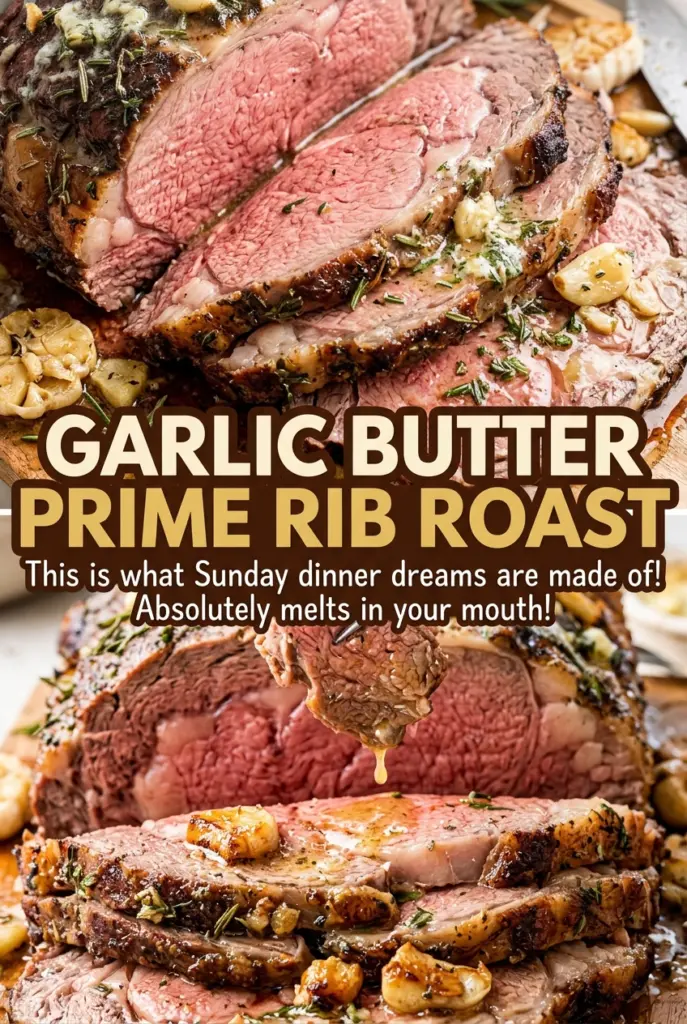
Garlic Butter Prime Rib Roast
The garlic butter starts to soften and slide over the roast as soon as it hits the warm surface, so I spread it while the butter is soft but still…

By Ava
•
•
Reading time: 8 min
Tip: save now, make later.
The garlic butter starts to soften and slide over the roast as soon as it hits the warm surface, so I spread it while the butter is soft but still thick enough to cling. That coating is what gives this Garlic Butter Prime Rib Roast its fragrant, savory outside without a complicated rub or a long list of prep steps.
I roast the beef at a high temperature first, then lower the oven to let the center cook more gently. The timing has a wide range because roasts don’t all have the same shape, so I rely on a thermometer rather than the clock alone. A short rest gives the juices time to settle before slicing, and the tied boneless roast makes neat portions for eight.
Kitchen Note
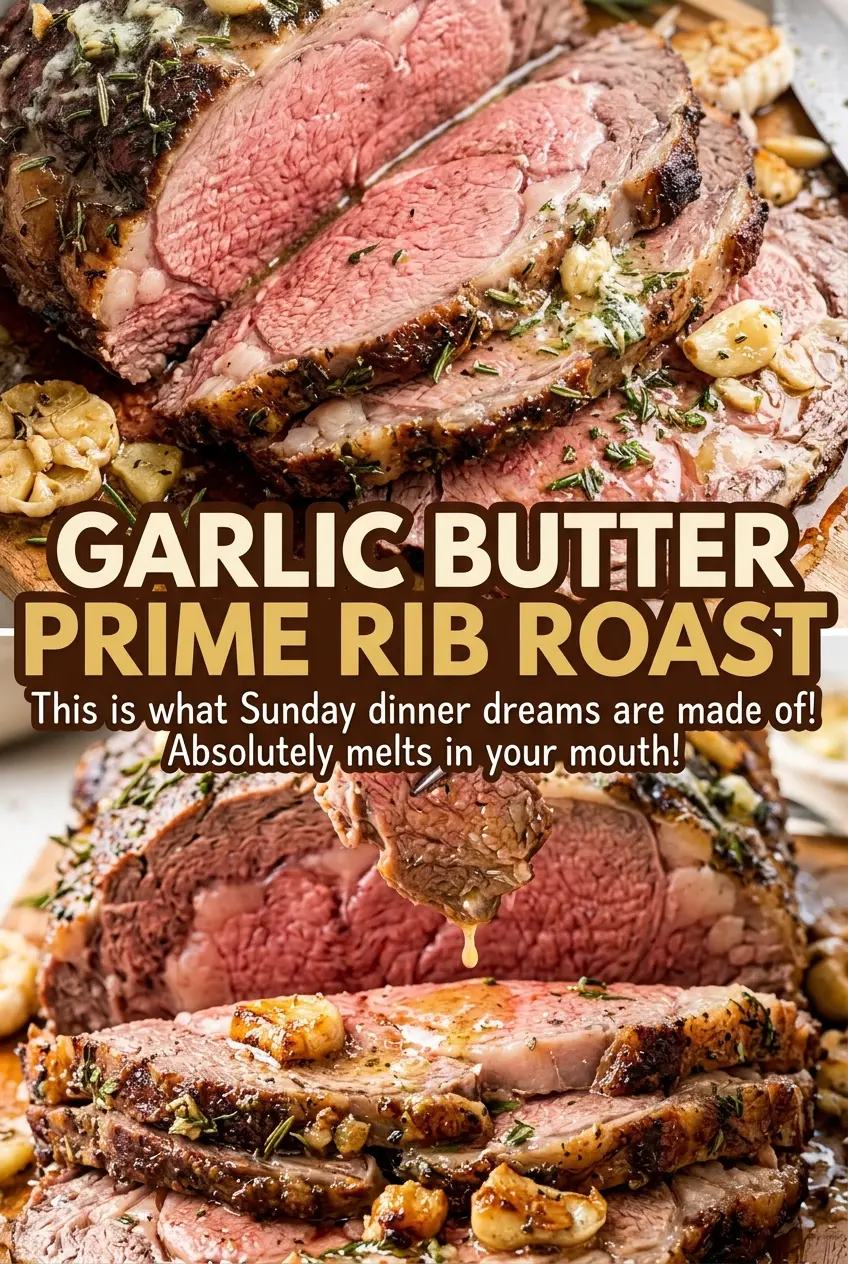
Use softened butter, not melted butter. Melted butter runs off the roast before it has a chance to hold the garlic and herbs in an even layer.
Save this garlic butter prime rib roast for a centerpiece dinner with a crisp, fragrant herb coating and tender slices.
Why the Roast Needs Two Oven Temperatures
A prime rib roast is thick enough that its outside and center need different treatment. Starting in a hot oven gives the surface a head start, while lowering the heat lets the middle continue cooking without keeping the entire roast at that initial intensity. It’s a simple change, but it matters more than adding extra seasoning or fussing with the pan.
That wide roasting window isn’t a reason to guess. A roast’s shape and your oven can affect how quickly it cooks, so the clock is a guide and the thermometer makes the call. Insert it into the thickest part, avoiding fat or bone, where a reading can be misleading. Check near the early end of the estimated cooking time rather than waiting until the very end to take your first reading.
The roast also needs space around it. Setting it on a rack in the pan keeps it raised instead of sitting directly in its juices, and placing it fat-side up lets the seasoned surface face the heat. Once it comes out, leave it alone while it rests; cutting immediately sends more of those juices onto the board instead of keeping them in the slices.
What the Beef, Butter, and Fresh Herbs Bring to the Roast
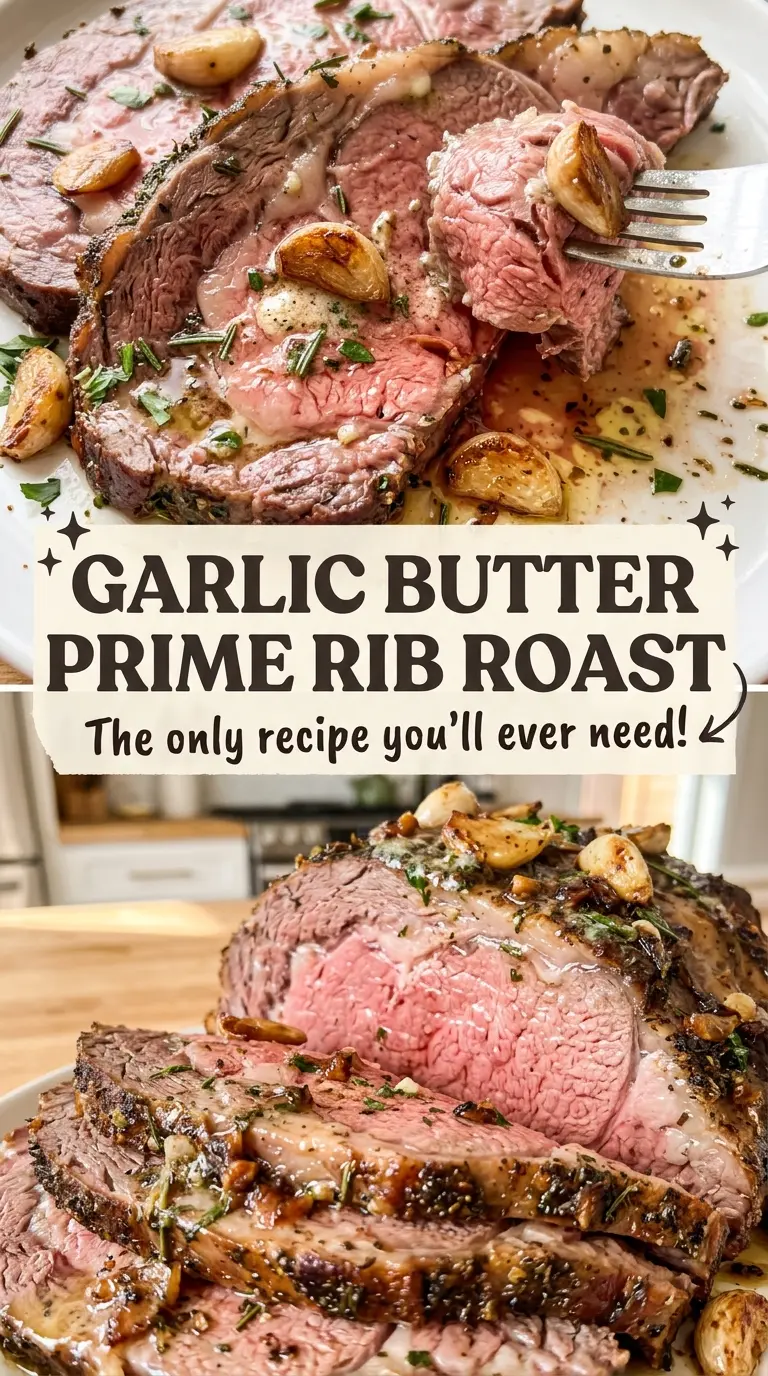
- Boneless beef rib roast — The rich beef flavor and generous size make this cut the center of the meal. Choose a roast that is already tied; the twine helps it hold a more even shape as it cooks. A different cut won’t have the same texture or follow this timing as predictably.
- Unsalted butter — Butter carries the garlic and herbs across the surface and helps the coating cling. A standard grocery-store butter works well; the useful detail is that it should be softened, not melted. Oil isn’t a close swap here because it won’t make the same thick, spreadable coating.
- Fresh garlic — Minced garlic gives the butter its bold, savory aroma. Fresh cloves have a brighter bite than dried garlic, and there isn’t a direct replacement that gives quite the same character. If you need to simplify, you can leave the garlic out, though the roast will no longer have its defining garlic-butter flavor.
- Rosemary and thyme — Fresh rosemary brings a piney note, while thyme is gentler and earthy. Use fresh leaves so they mix evenly into the butter; if rosemary is the one you don’t have, leave it out and keep the thyme, accepting a less aromatic crust rather than trying to replace it with an unrelated seasoning.
- Kosher salt and black pepper — Salt seasons the beef beyond the surface, and pepper gives the coating a mild bite. Keep the salt in the mixture as listed; reducing it substantially leaves a large roast underseasoned. Freshly ground or standard ground black pepper both work, with freshly ground pepper tasting a little more pronounced.
From Herb Butter to Carving Board: The Stages That Matter
Dry the Roast and Make the Coating
Heat the oven to 450°F and set a rack in a roasting pan. Pat the roast dry before seasoning; moisture on the surface makes the butter mixture harder to spread evenly. Stir the softened butter with the minced garlic, rosemary, thyme, kosher salt, and black pepper in a small bowl, then coat the roast all over.
Give the Outside Its Hot Start
Set the roast fat-side up on the rack and roast it for 15 minutes at the higher oven temperature. You should start to smell the garlic and herbs as the butter warms. Don’t turn the roast or try to baste away the coating; let the heat work on the exposed surface.
Lower the Heat and Check the Center
Reduce the oven to 325°F and continue roasting for about 1 1/2 to 2 1/2 hours. The exterior will deepen in color while the center takes longer to cook, so start checking with an instant-read thermometer near the early end of that range. Place the thermometer in the thickest part, away from bone or fat, and take the roast out when it registers 145°F.
Rest Before You Slice
Move the roast to a cutting board and tent it loosely with foil for a 20-minute rest. Keep the foil loose rather than sealing it tightly over the crust. When the rest is finished, remove the twine and carve the roast into slices; cutting too soon makes it harder for the meat to hold onto its juices.
Three Small Changes for a Different Herb-Butter Roast
A Milder Rosemary Crust
Leave out the rosemary and keep the thyme, garlic, butter, salt, and pepper in the coating. The roast will still have an herb-and-garlic crust, but the flavor will be softer and less piney.
A More Garlic-Forward Finish
Use a little more of the minced garlic and pull back on the rosemary in the butter mixture. The flavor leans more savory and pungent, with less of the resinous herb aroma; keep the garlic finely minced so it spreads through the coating instead of clumping.
A Pepperier Crust
Add extra black pepper to the butter mixture while keeping the garlic and herbs in place. It gives the outside a sharper bite that stands up well to the rich beef, though the pepper will be more noticeable in every slice.
Storage and Reheating
- Refrigerator: Refrigerate leftovers within 2 hours and keep them covered for 3 to 4 days. The chilled slices will be firmer than freshly carved beef.
- Freezer: Freeze sliced portions in an airtight container or freezer bag for up to 2 to 3 months. Thaw them in the refrigerator before reheating.
- Reheating: Warm slices gently, covered, in a low oven or in short bursts in the microwave. High heat for too long dries out lean slices and toughens the edges.
Questions That Come Up Before the Roast Goes in the Oven
Garlic Butter Prime Rib Roast
Ingredients
Equipment
Method
- Preheat the oven to 450°F.
- Set a rack in a roasting pan.
- Pat the roast dry.
- Mix the softened butter, garlic, rosemary, thyme, salt, and pepper in a small bowl.
- Spread the mixture over the roast.
- Set the roast fat-side up on the rack and roast for 15 minutes.
- Reduce the oven to 325°F.
- Continue roasting for about 1 1/2 to 2 1/2 hours, until a thermometer inserted in the thickest part away from bone or fat registers 145°F.
- Transfer the roast to a cutting board and tent loosely with foil.
- Rest for 20 minutes; let it rest at least 3 minutes before carving.
- Remove the twine.
- Carve the roast into slices and serve.