
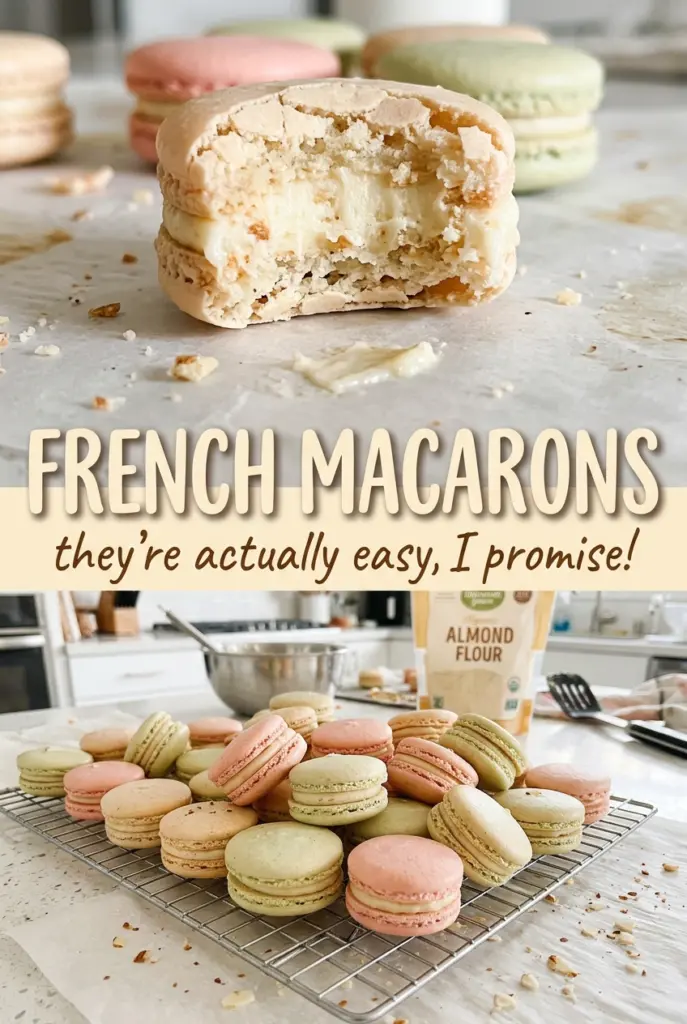
French Macarons
The first shell I picked up was still warm, and it cracked right down the middle when I tried to peel it off the parchment. Letting the shells cool completely…

By Ava
•
•
Reading time: 10 min
Tip: save now, make later.
The first shell I picked up was still warm, and it cracked right down the middle when I tried to peel it off the parchment. Letting the shells cool completely on the baking sheets makes a real difference: once they’re set, they lift away much more gently. These French macarons have smooth almond shells with a simple vanilla buttercream tucked between them, and the ingredient list is short enough that each step matters.
I pay the closest attention to the meringue and the way the batter moves after the almond flour goes in. Stiff, glossy peaks give the shells structure, but the folding has to bring the batter to the right consistency without knocking out too much air. Pipe even rounds, give the trays a firm tap, and let the surfaces dry before they go into the oven. The finished macarons are delicate, lightly crisp outside, and tender around the buttercream.
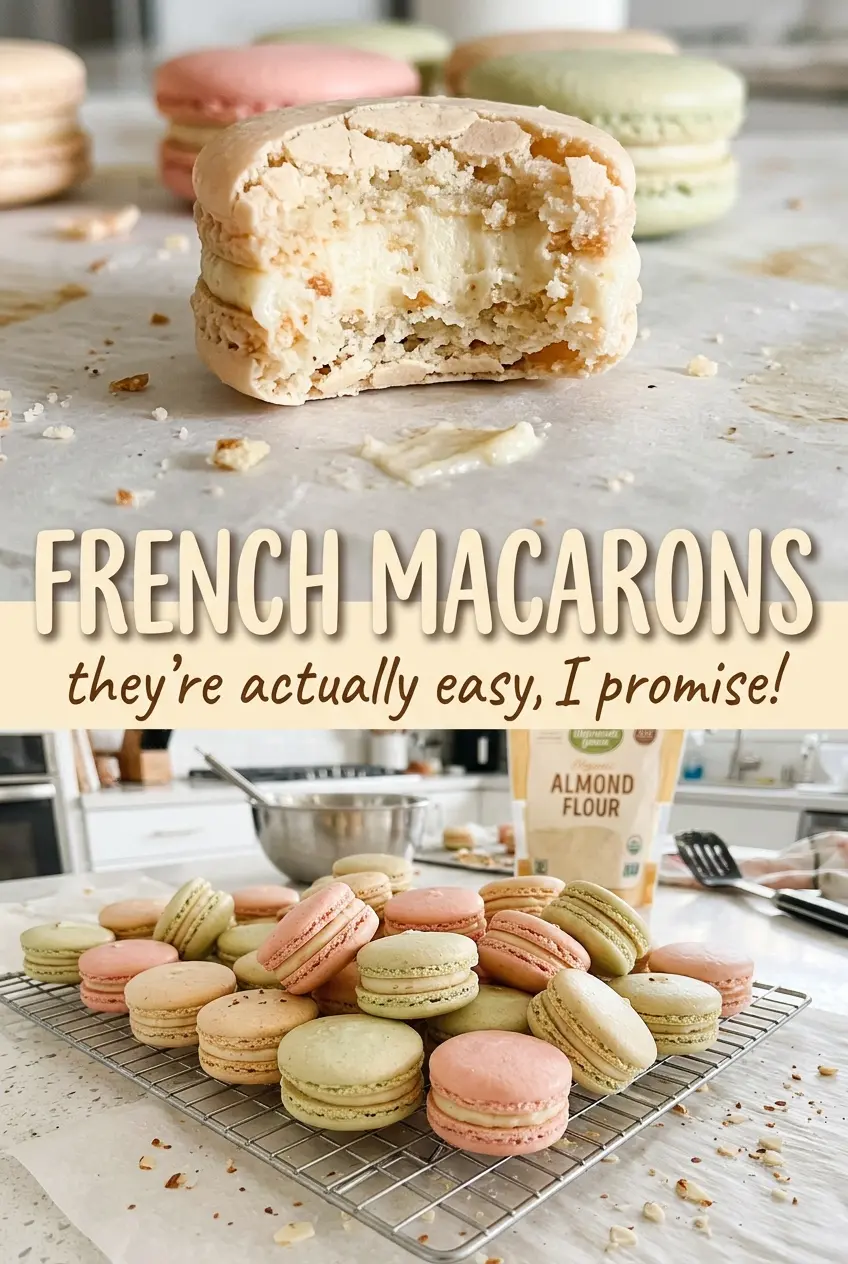
Kitchen Note
Stop folding when the batter falls in a thick ribbon and settles back into itself in about 10 seconds. If it still sits in a mound, fold a little more; if it runs flat right away, you’ve gone too far.
Save these French macarons for a weekend bake: delicate almond shells, vanilla buttercream, and a make-ahead chill before serving.
Why French Macaron Shells Need a Dry Surface Before Baking
Macarons go into the oven only after their tops feel dry to a light touch. That wait gives the surface time to form a delicate skin; the inside can then rise as the shells bake, helping create the ruffled feet around the bottom. Skip the rest or rush it, and the shells are more likely to crack or spread instead of holding their shape.
Room conditions affect how long that surface takes to dry, which is why the timing is a range rather than a promise. Start checking at 30 minutes, then touch a shell lightly with a clean fingertip. It should feel dry, not tacky. The tops also need to be set before you pull the tray from the oven, and the feet should be visible. Baking one sheet at a time on the center rack keeps the oven load consistent, so both trays get their own chance to bake evenly.
What the Almond Flour and Egg Whites Each Bring to These Shells
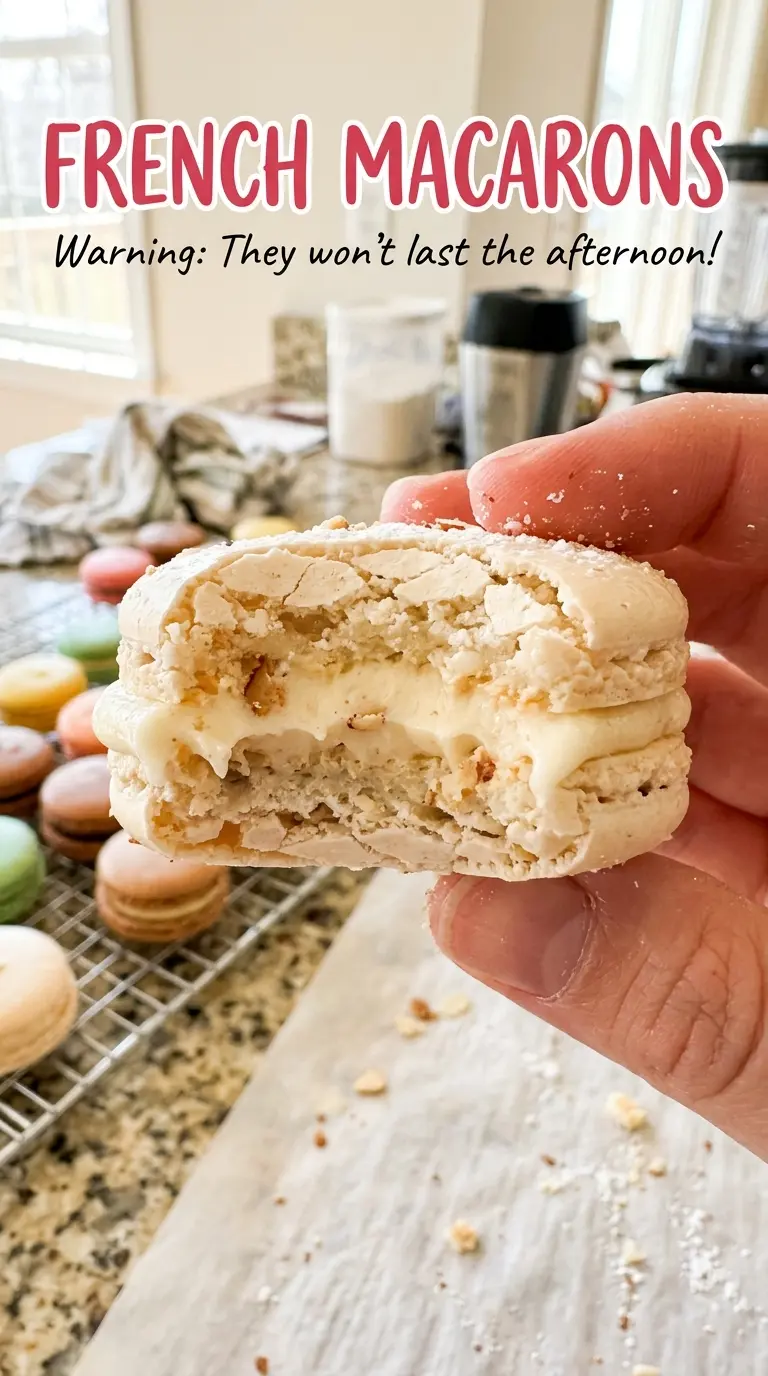
- Blanched almond flour — This gives the shells their almond flavor and tender, fine crumb. Finely ground flour matters; coarse bits can leave the tops bumpy, so sift it with the confectioners’ sugar and press any larger pieces through the sieve. There isn’t a direct flour substitute in this formula that keeps the same shell texture.
- Confectioners’ sugar — In the shells, it blends with the almond flour into a fine dry mixture that folds smoothly into the meringue. Sifting both together helps catch lumps before they end up in the batter. In the buttercream, it sweetens and thickens the filling; a different kind of sugar won’t give the same smooth result.
- Egg whites — Room-temperature whites whip into the foam that gives these shells their lift and structure. Use the measured amount rather than estimating by egg count, since eggs vary in size. Keep the bowl clean and dry; grease or moisture can make the whites harder to whip.
- Granulated sugar and cream of tartar — The sugar goes in gradually as the whites become foamy, helping build a glossy meringue. Cream of tartar supports the foam. Both are doing a specific job here, so I wouldn’t leave either out or swap in another sweetener.
- Butter, vanilla, and heavy cream — Softened butter gives the filling its creamy body, while vanilla provides the flavor and a little heavy cream brings the mixture to a spreadable consistency. The butter should be soft enough to beat smoothly, not melted. There isn’t a tested dairy-free replacement for this buttercream in this version.
From Glossy Meringue to Smooth, Sandwiched Shells
Sift the Almond Mixture Before You Start Whipping
Heat the oven to 300°F with a rack in the center, and line two 18×13-inch rimmed baking sheets with parchment paper. Sift the almond flour and confectioners’ sugar together, pressing larger pieces through the sieve. Getting the dry mixture ready first means you can fold it in as soon as the meringue is ready. Don’t skip the sifting; coarse pieces make the batter harder to pipe smoothly.
Beat the Whites Until the Peaks Stand Tall
In a clean, dry bowl, beat the room-temperature egg whites with the cream of tartar on medium speed until foamy, about 1 minute. Add the granulated sugar gradually, then raise the mixer to high. Beat for about 3 to 5 minutes, until the meringue looks glossy and holds stiff peaks. If the peaks droop when you lift the beaters, keep beating and check again rather than folding in the flour too early.
Fold Gently, Then Pipe Even Rounds
Add the almond flour mixture to the meringue in three additions, folding and scraping around the bowl as you go. Once the batter reaches the thick-ribbon consistency described in the Kitchen Note, transfer it to a piping bag fitted with a 1/2-inch round tip. Pipe 1 1/2-inch rounds onto the parchment, leaving about 1 inch between them. Try to keep the rounds similar in size so the paired shells bake at the same rate.
Let the Tops Dry, Then Bake One Sheet at a Time
Tap each sheet firmly on the counter to release air bubbles, then leave the shells at room temperature until their surfaces feel dry to a light touch; this takes 30 to 60 minutes. Bake one sheet at a time for 15 to 18 minutes. Look for formed feet and tops that are set and no longer glossy. If the centers still look wet or the tops wobble, give them more time within the baking window.
Cool Completely Before Filling
Leave the shells on the baking sheets for about 20 to 30 minutes, until completely cool, then gently peel them from the parchment. For the buttercream, beat the softened butter until creamy, then beat in the confectioners’ sugar, vanilla, salt, and heavy cream until smooth and spreadable. Spread about 1 teaspoon on the flat side of half the shells and top with the remaining shells. Refrigerate the assembled macarons in an airtight container for at least 12 hours and up to 3 days; bring them to room temperature for 20 minutes before serving.
Two Ways to Change the Shape of the Finished Treat
Dairy-free almond shells
For a dairy-free adaptation, leave out the buttercream and serve the shells plain. The shells use almond flour and egg whites rather than dairy, but you’ll have a crisp, delicate cookie instead of a filled macaron sandwich. This doesn’t make the recipe suitable for anyone with an almond or egg allergy.
Open-faced vanilla macarons
Instead of sandwiching the shells, spread the buttercream over the flat side of each shell and serve them open-faced. You’ll get more of the buttercream in each bite, and there’s no need to match shells by size. Keep the assembled treats in the same airtight refrigerated storage as the sandwiches.
Storage and Reheating
- Refrigerator: Keep assembled macarons in an airtight container for up to 3 days. They need at least 12 hours in the refrigerator before serving.
- Freezer: Freezing isn’t part of this storage method; keep them refrigerated and use them within the stated 3-day window.
- Reheating: Don’t reheat macarons. Bring them to room temperature for 20 minutes before serving; heat can soften the buttercream and damage the delicate shells.
Questions That Come Up When Making French Macarons
French Macarons
Ingredients
Equipment
Method
- Preheat the oven to 300°F with a rack in the center.
- Line two 18x13-inch rimmed baking sheets with parchment paper.
- Sift the almond flour and confectioners’ sugar together into a bowl, pressing any larger pieces through the sieve.
- In a clean, dry bowl, beat the egg whites and cream of tartar with an electric mixer on medium speed until foamy, about 1 minute.
- Gradually beat in the granulated sugar.
- Increase the mixer speed to high and beat until the meringue is glossy and holds stiff peaks, about 3 to 5 minutes.
- Fold the almond flour mixture into the meringue in three additions, scraping around the bowl, until the batter flows in a thick ribbon and settles back into itself in about 10 seconds.
- Transfer the batter to a piping bag fitted with a 1/2-inch round tip.
- Pipe 1 1/2-inch rounds onto the prepared sheets, leaving about 1 inch between them.
- Tap each sheet firmly on the counter to release air bubbles.
- Leave the shells at room temperature until their surfaces feel dry to a light touch, 30 to 60 minutes.
- Bake one sheet at a time for 15 to 18 minutes, until the shells have formed feet and their tops are set and no longer glossy.
- Cool the shells completely on the baking sheets, about 20 to 30 minutes.
- Gently peel the shells from the parchment.
- Beat the butter until creamy.
- Beat in the confectioners’ sugar, vanilla, salt, and heavy cream until smooth and spreadable.
- Spread about 1 teaspoon of buttercream on the flat side of half the shells.
- Top with the remaining shells.
- Refrigerate in an airtight container for at least 12 hours and up to 3 days.
- Bring to room temperature for 20 minutes before serving.