
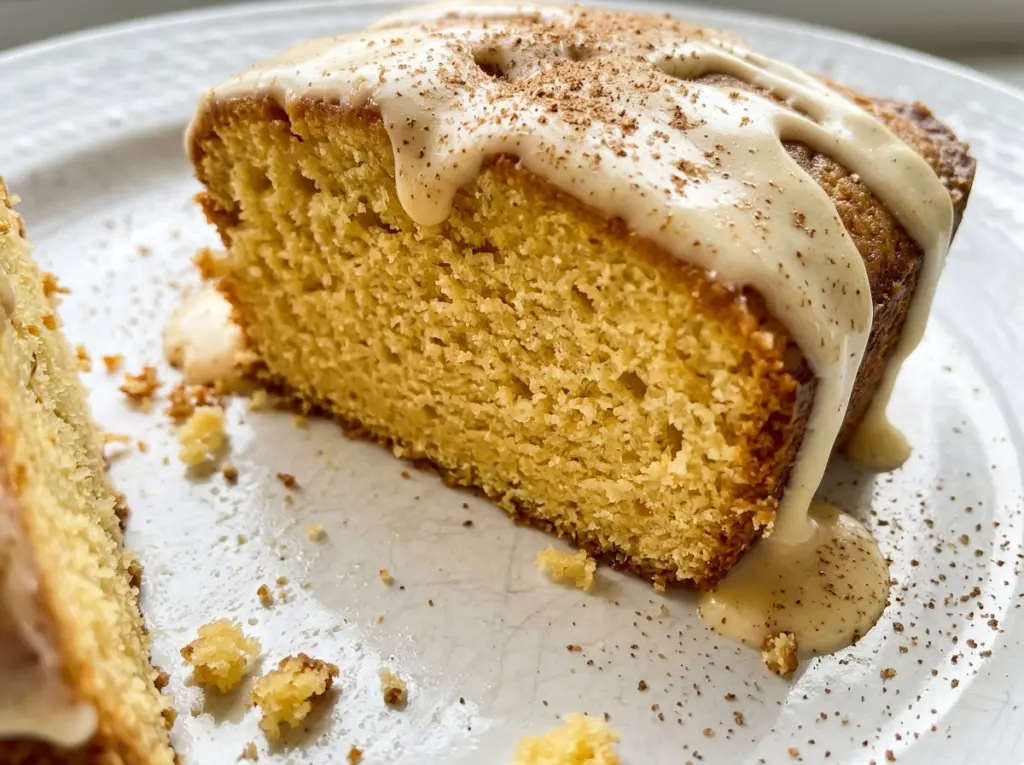
Eggnog Pound Cake
The first sign that this cake is ready isn’t the timer; it’s the warm nutmeg scent drifting out of the oven while the top turns an even golden brown. I’ve…

By Ava
•
•
Reading time: 9 min
Tip: save now, make later.
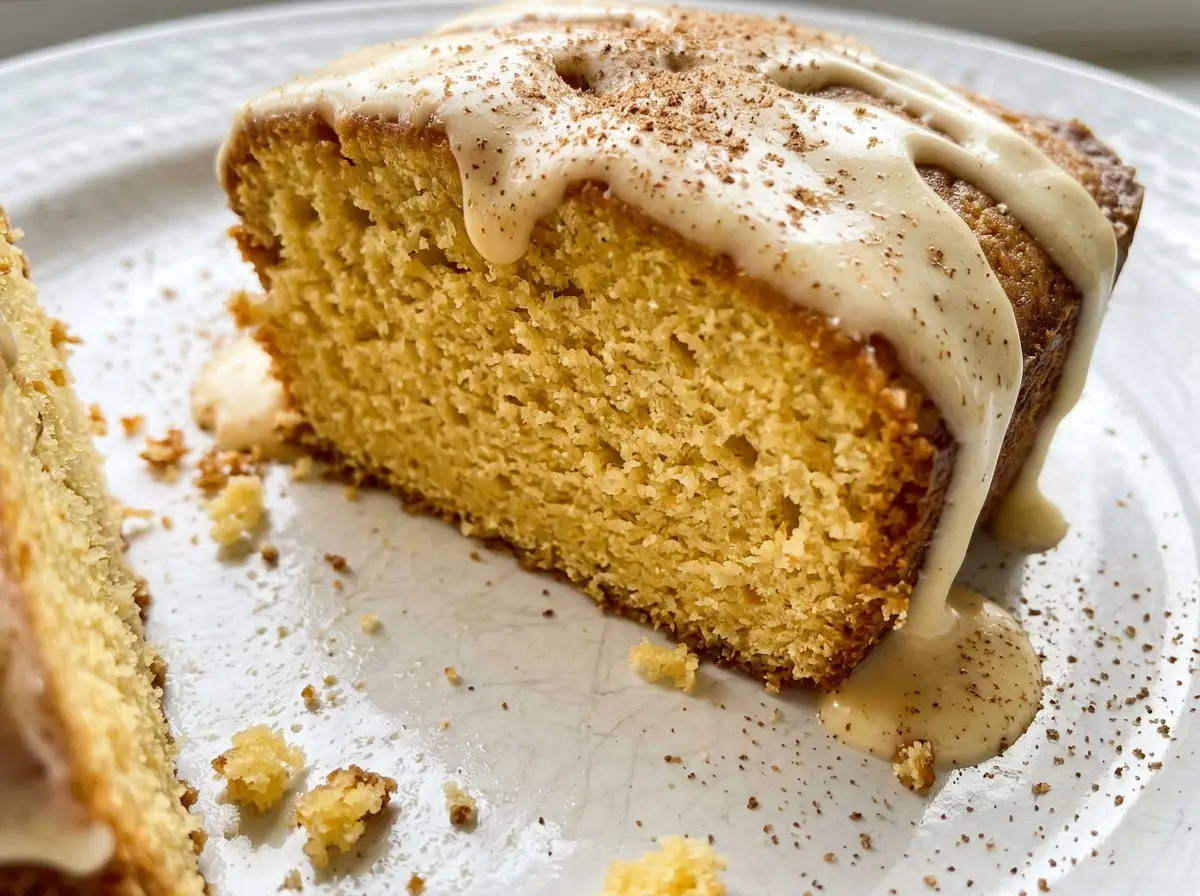
The first sign that this cake is ready isn’t the timer; it’s the warm nutmeg scent drifting out of the oven while the top turns an even golden brown. I’ve learned to give a Bundt cake a little attention before it goes in, because a small patch of bare pan can turn a beautiful cake into a stubborn one. This eggnog pound cake has a soft, close crumb and a gentle holiday-spice note, with eggnog lending richness without making the batter loose.
Room-temperature ingredients help the batter come together smoothly, and the order of mixing matters: butter and sugar get several minutes to turn pale and fluffy before the eggs go in one at a time. Then the flour and eggnog mixtures are added in alternating batches, so the batter stays cohesive instead of being worked all at once. Once baked, the cake is sturdy enough to release from its pan and slice into neat pieces, with a tender middle and a lightly browned edge.
Kitchen Note
Let the cake sit in the pan for the full 15 minutes before you invert it. That short rest gives the cake time to settle, while turning it out before it cools completely helps it release cleanly.
Save this eggnog pound cake for a tender, nutmeg-scented Bundt cake with a soft crumb and a golden edge.
Why the flour and eggnog go in by turns
Pouring all the liquid into a butter-and-sugar mixture at once can leave the batter looking uneven, and adding all the flour at once encourages heavy mixing to get it incorporated. This cake avoids both problems by alternating the dry mixture with the eggnog mixture. Flour starts and finishes the sequence, which gives the batter enough structure as the liquid is worked in without leaving a final pour of eggnog to loosen it.
The mixing speed matters just as much as the order. The butter and sugar need a few minutes at medium speed to become pale and fluffy; that step builds the base for the cake’s fine, even crumb. Once the eggs are added, the mixer stays on low, and the flour goes in only until combined. If you keep beating after the last streaks disappear, the cake can turn tougher than you want. Stop when the batter looks smooth and no dry pockets remain.
What eggnog, butter, and nutmeg bring to this Bundt cake
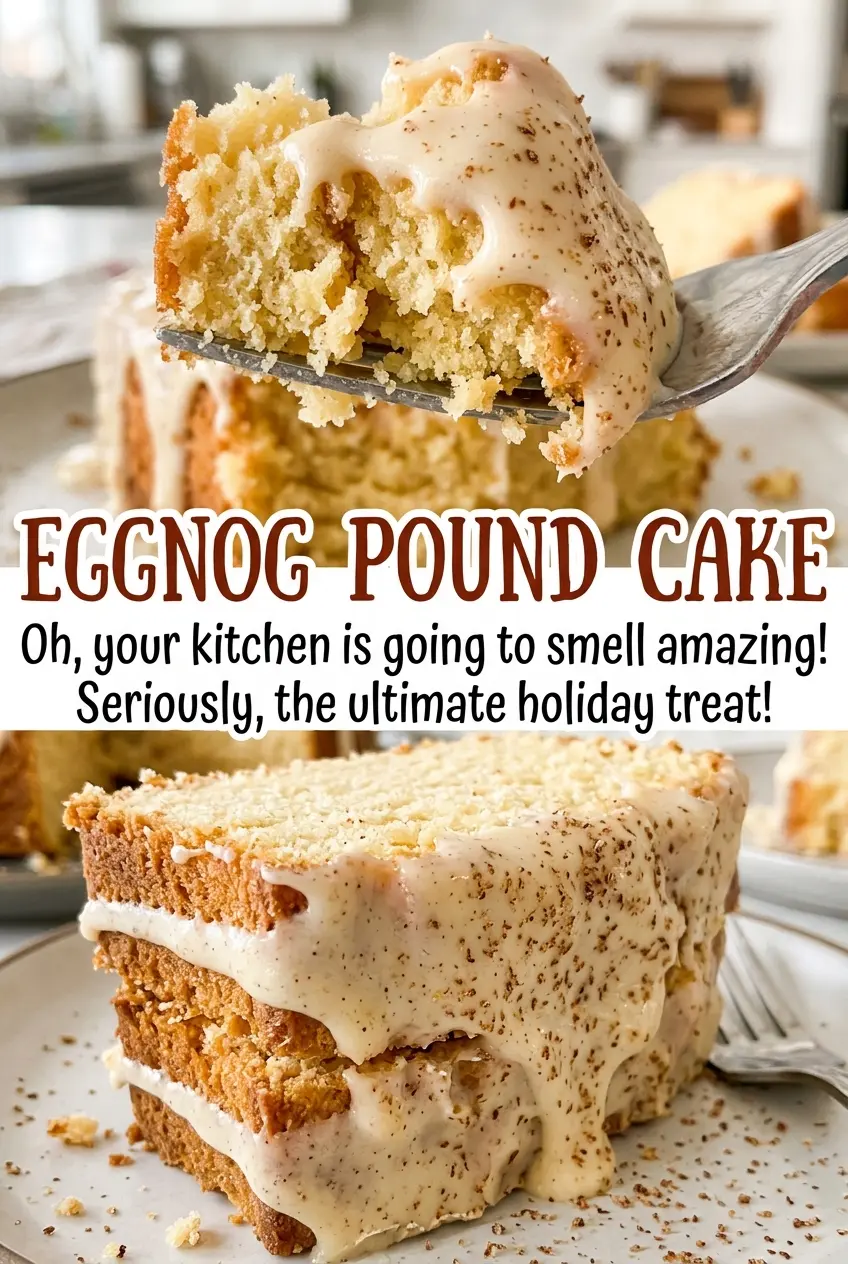
- Eggnog — It supplies the cake’s distinctive custardy flavor and contributes liquid and richness to the batter. Use eggnog you enjoy drinking; a very strongly spiced version will make the nutmeg note more pronounced. Keep it at room temperature so it blends smoothly with the creamed butter and sugar. I don’t recommend swapping in plain milk, which would remove the eggnog character and change the balance of the batter.
- Unsalted butter — Butter gives pound cake its rich flavor and helps create the structure when beaten with sugar. It should be softened enough to cream easily, but not melted or greasy. A fresh package is fine; there’s no need for a specialty butter here. Because the amount of salt is measured separately, salted butter would change the intended seasoning.
- All-purpose flour — It gives the cake enough structure to hold its Bundt shape. Spoon it into the measuring cup and level it rather than packing it down; excess flour is an easy way to get a dry, dense crumb. Cake flour isn’t a direct swap in this formula, so I keep the all-purpose flour.
- Nutmeg and vanilla — Nutmeg gives the cake its familiar eggnog warmth, while vanilla rounds out the flavor without taking over. Fresh, fragrant ground nutmeg makes a noticeable difference in aroma, but the everyday jar works if it still smells lively. Use vanilla extract rather than leaving it out; it helps the eggnog flavor taste balanced.
- Eggs — Large eggs at room temperature blend into the creamed butter more evenly than cold eggs. Add each one only after the previous egg has been incorporated, so the batter stays unified instead of looking broken.
Building the batter and baking an even Bundt cake
Prepare the Bundt pan and dry ingredients
Grease a 10- to 12-cup Bundt pan with the portion of butter set aside for the pan, then dust it with the flour reserved for that job. Tap out the excess so there isn’t a thick layer left in the grooves. Heat the oven to 325°F. Whisk the remaining flour with the baking powder, salt, and nutmeg in a medium bowl, and stir the eggnog and vanilla together in a small bowl.
Cream the butter and sugar until fluffy
Beat the softened butter and granulated sugar in a large bowl with an electric mixer on medium speed for 3 to 4 minutes. The mixture should look noticeably paler and fluffier than it did at the start, not like dense wet sand. Scrape the bowl if butter is sticking to the sides and escaping the beaters. Rushing this stage leaves less air in the batter and a heavier cake.
Add the eggs, then alternate the mixtures
Turn the mixer to low and add the room-temperature eggs one at a time, mixing until each is incorporated before adding the next. Add the flour mixture in three additions, alternating with the eggnog mixture in two additions; start and finish with flour. Keep the mixer on low and stop as soon as the last dry streaks disappear. A few seconds of extra beating here can make the crumb less tender.
Bake until the center tests clean
Scrape the batter into the prepared pan and smooth it into the grooves. Bake for 65 to 75 minutes, until the cake is golden and a toothpick inserted into the center comes out clean or with a few moist crumbs. A toothpick coated in wet batter means the center needs more time, so test again before taking the pan out. Let the cake cool in the pan for 15 minutes, then invert it onto a wire rack and cool completely.
Two Bundt pan sizes, with the same eggnog cake batter
A taller shape in a 10-cup Bundt pan
Use the smaller end of the stated pan range for a taller-looking cake with a fuller profile. Keep the batter and oven temperature unchanged, and rely on the toothpick test within the stated bake time rather than judging by height alone.
A broader shape in a 12-cup Bundt pan
The larger pan gives the same cake batter more room and a slightly lower profile. It’s a useful choice if you prefer a less tall slice; the ingredient proportions stay the same, and the cake is ready when the center passes the toothpick test.
Storage and Reheating
- Refrigerator: Store the completely cooled cake tightly covered for up to 5 days. The crumb will firm up in the refrigerator, so let a slice come closer to room temperature before eating.
- Freezer: This unfrosted cake freezes well. Wrap the completely cooled cake or individual slices tightly, place them in a freezer-safe container, and freeze for up to 2 months.
- Reheating: Let a frozen slice thaw, then warm it briefly in the microwave if you’d like it warm. Long microwave heating can dry out the crumb, so use short bursts rather than heating a slice until piping hot.
Questions that come up while baking eggnog pound cake
Eggnog Pound Cake
Ingredients
Equipment
Method
- Grease a 10- to 12-cup Bundt pan with 1 tablespoon butter.
- Dust the pan with 1 tablespoon flour, tapping out the excess.
- Preheat the oven to 325°F.
- Whisk the remaining 3 cups flour with the baking powder, salt, and nutmeg in a medium bowl.
- Stir the eggnog and vanilla together in a small bowl.
- Beat the remaining 1 cup butter and the sugar in a large bowl with an electric mixer on medium speed for 3 to 4 minutes, until pale and fluffy.
- Beat in the eggs one at a time on low speed, mixing until each is incorporated before adding the next.
- Add the flour mixture in three additions, alternating with the eggnog mixture in two additions; begin and end with the flour, mixing on low just until combined.
- Scrape the batter into the prepared pan.
- Bake for 65 to 75 minutes, until golden and a toothpick inserted into the center comes out clean or with a few moist crumbs.
- Cool the cake in the pan for 15 minutes.
- Invert it onto a wire rack and cool completely.