
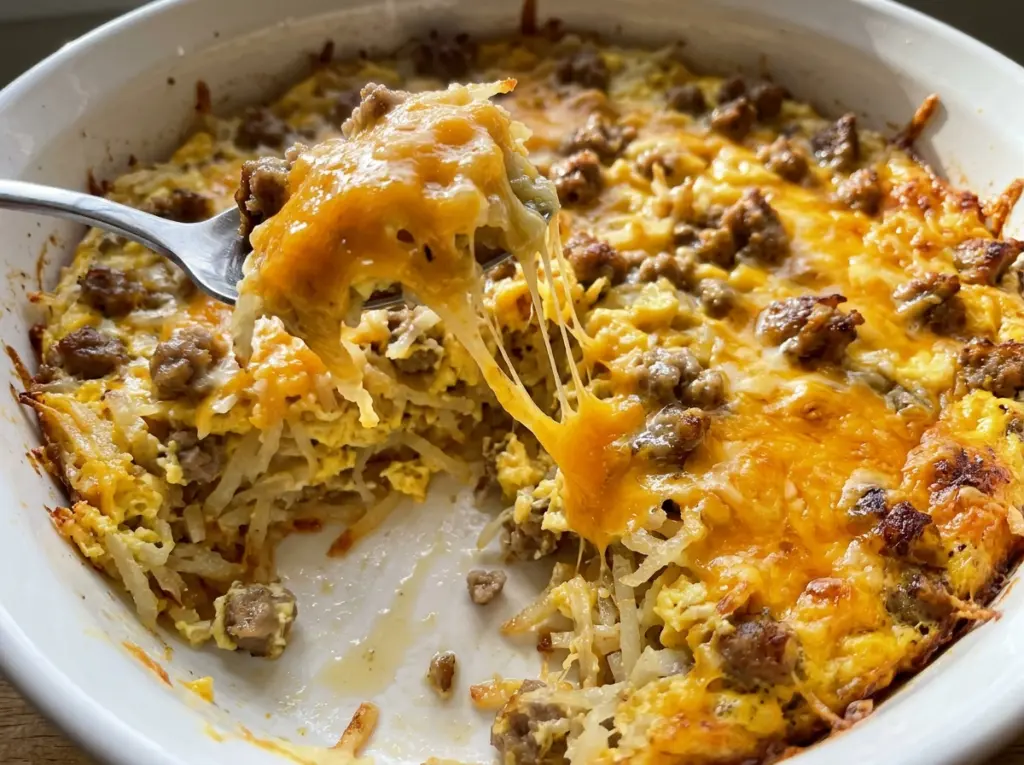
Easy Cheesy Hash Brown Breakfast Casserole
The sausage and onion brown in the skillet while the oven heats, and that’s where this casserole starts to smell like breakfast. I like that the rest is mostly layering:…

By Ava
•
•
Reading time: 9 min
Tip: save now, make later.
The sausage and onion brown in the skillet while the oven heats, and that’s where this casserole starts to smell like breakfast. I like that the rest is mostly layering: hash browns go into a buttered dish, then sausage and cheddar, then eggs whisked with milk. It’s a hearty, straightforward way to feed eight without juggling separate pans at the table.
For this Easy Cheesy Hash Brown Breakfast Casserole, the potatoes need a little attention before they go into the dish. Thawing them and patting them dry helps keep extra moisture from collecting beneath the eggs. Once everything is layered, the oven does the work: the cheddar melts into the sausage, and the egg mixture sets around the hash browns. Each slice comes out savory, cheesy, and substantial.
Kitchen Note
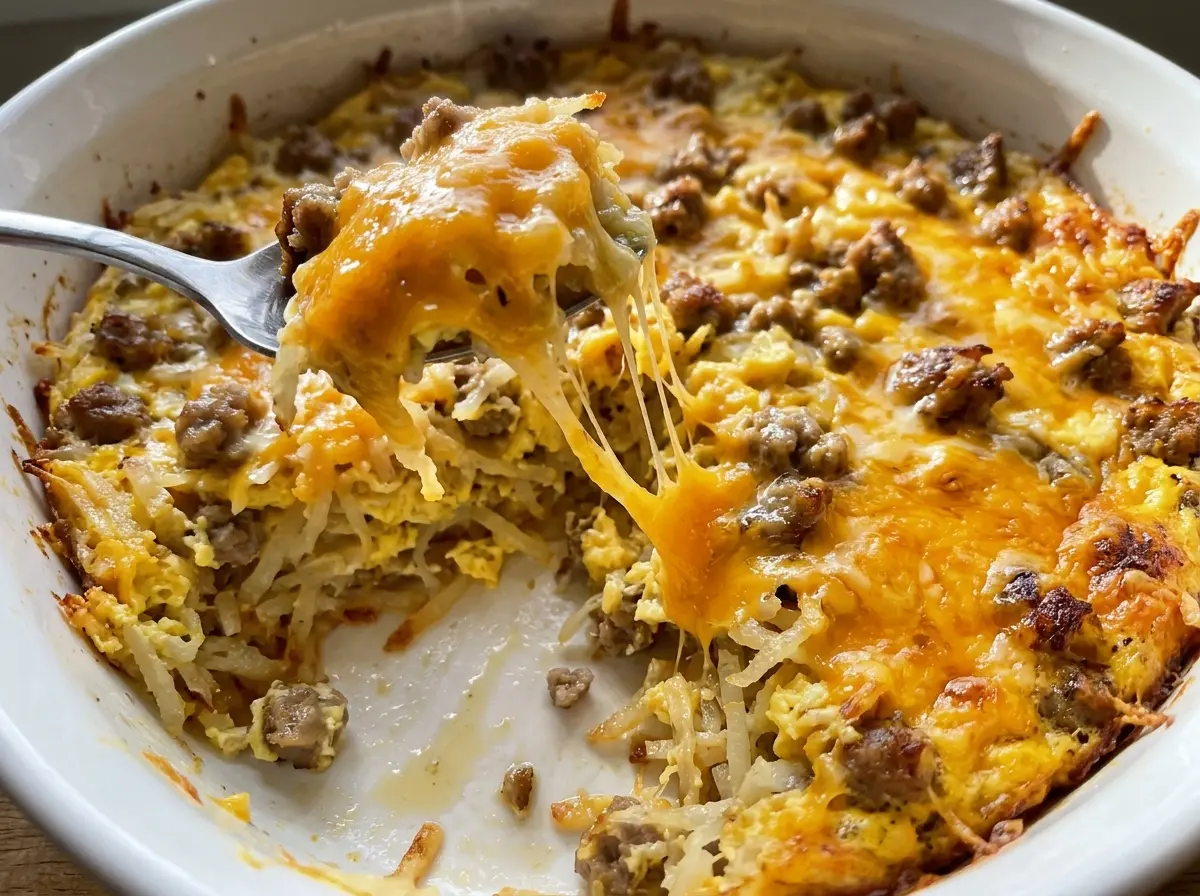
Give the casserole its full 10-minute rest before cutting. The eggs finish settling in the hot dish, so the slices hold together instead of slumping when you serve them.
Save this Easy Cheesy Hash Brown Breakfast Casserole for a make-ahead breakfast with browned sausage, tender potatoes, and a cheddar top.
Why thawed hash browns need a dry start in an egg casserole
Hash browns bring the potato layer, but thawed potatoes can carry more surface moisture than you expect. If that water goes into the baking dish, it has nowhere to escape once the egg mixture is poured over the top. The bottom can turn soft and damp while the center is still setting, and the slices won’t feel as cohesive.
Patting the thawed shreds dry before layering helps the eggs set around the potatoes instead of mixing with extra water. You don’t need to wring them into a dry clump; blot away visible moisture and spread them in an even layer. That even base matters, too. If the hash browns are piled high in one spot, the egg mixture won’t surround them consistently, so some bites can feel looser than others.
The other useful detail is the order of the layers. The sausage mixture sits on the potatoes, and the cheddar goes over that before the egg mixture is poured across the whole dish. Pouring slowly and evenly gives the eggs a chance to settle through the layers rather than leaving one corner dry. A little care at this stage makes the casserole easier to portion once it’s baked.
What the sausage, potatoes, and eggs each bring to the casserole
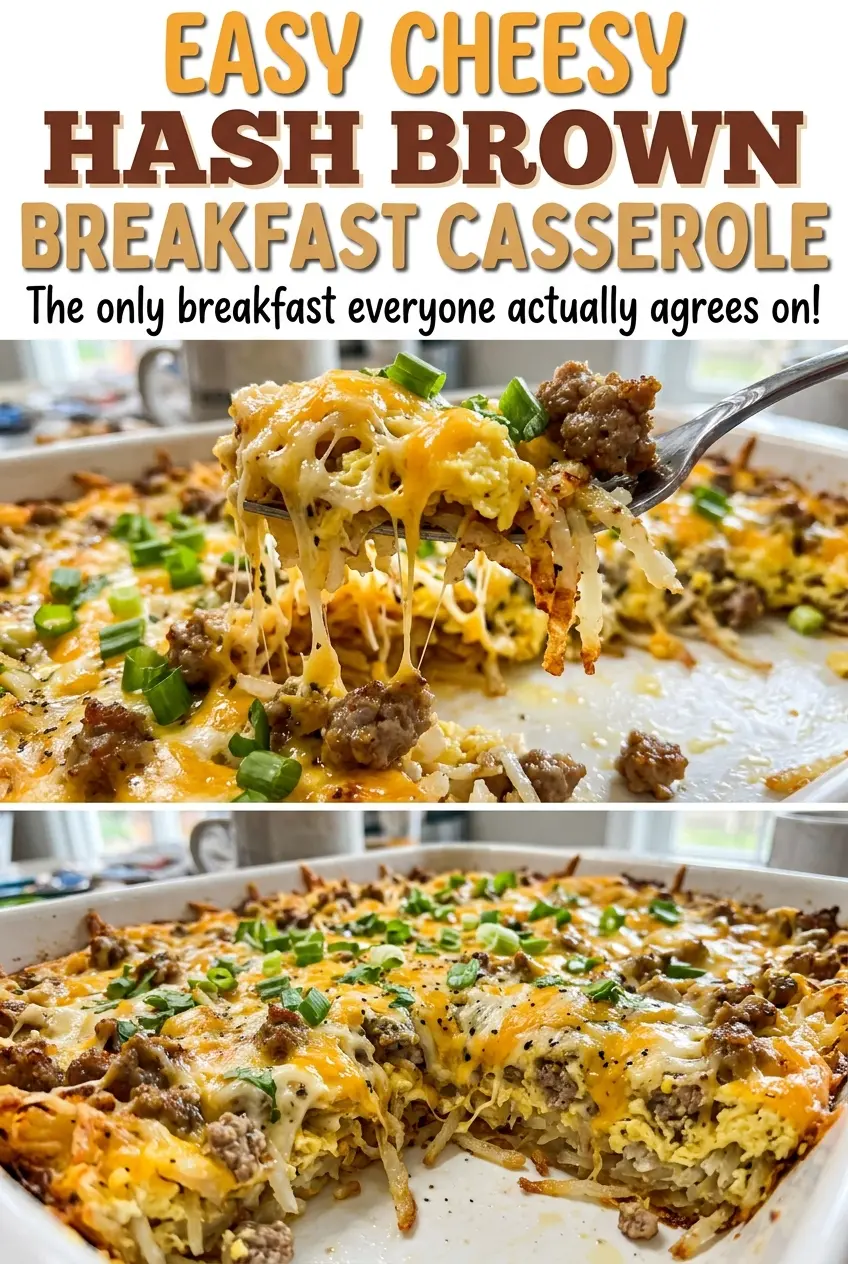
- Bulk pork breakfast sausage — It seasons the casserole from the inside and gives each portion a savory, meaty bite. Choose the style you like; a hot pork breakfast sausage is an easy way to add heat without changing the method. Bulk sausage also breaks into small pieces that spread well through the dish.
- Frozen shredded hash browns — The shreds create an even potato layer and are convenient once thawed. Keep them frozen until you’re ready to thaw them, then pat them dry before assembling. Freshly grated potatoes aren’t a direct swap here because their moisture and cooking behavior can vary.
- Cheddar — Cheddar brings a familiar sharp, savory note and melts over the sausage. A block you grate yourself usually melts smoothly; pre-shredded cheddar is convenient and works, though its coating can make the cheese less silky. Monterey Jack can replace it for a milder, softer-tasting layer.
- Eggs and whole milk — The eggs hold the layers together as they bake, while milk keeps the set tender rather than firm and dry. Unsweetened soy milk can replace the whole milk in the same amount for a dairy-free version; the result will be a little less rich. There isn’t a reliable one-for-one egg substitute that gives this casserole the same set.
- Softened butter — Butter coats the baking dish so the edges release more easily. For a dairy-free casserole, use dairy-free butter in its place.
Build the layers evenly, then bake until the center sets
Brown the sausage and onion together
Heat a large skillet over medium heat and cook the pork sausage with the finely chopped onion for 8 to 10 minutes. Break the sausage into small pieces as it cooks, so it distributes neatly instead of forming a few large clumps. Let the meat brown while the onion softens, and cook the sausage through to 160°F. Drain off excess grease before moving on; a pool of fat can make the potato layer heavy.
Make an even potato-and-sausage base
Heat the oven to 350°F and grease a 9×13-inch baking dish with the softened butter. Spread the thawed, patted-dry hash browns across the bottom rather than leaving a mound in the middle. Spoon the sausage and onion over the potatoes, then scatter the cheddar across the top. Try to cover the dish evenly so each serving gets some of every layer.
Pour the egg mixture across the dish
Whisk the eggs, whole milk, kosher salt, and black pepper together in a large bowl until the yolks and whites are fully blended. Pour the mixture slowly over the casserole, moving around the dish so it doesn’t all land in one spot. If you see a dry corner, give the dish a gentle tilt to help the egg mixture flow there. Avoid stirring the layers together; keeping them distinct gives each slice a clear potato, sausage, and cheese layer.
Bake through the center before slicing
Bake for 50 to 60 minutes, until the center is set and reaches 160°F. The edges should look firm, and the middle shouldn’t wobble like liquid when you carefully move the dish. If the center still looks loose, give it more oven time and check again rather than relying on the browned edges alone. Let the casserole rest before serving so the egg layer settles and portions more cleanly.
Three easy ways to change the flavor or make it dairy-free
Use hot pork breakfast sausage
Swap the mild bulk sausage for hot bulk pork breakfast sausage in the same quantity. It brings a peppery kick through the whole casserole without adding another ingredient or changing the layering.
Trade cheddar for pepper Jack
Use pepper Jack instead of cheddar for a gentle chile heat and a softer, creamier cheese flavor. It changes the character of the casserole while keeping the same layered format.
Make it dairy-free
Use dairy-free butter to grease the dish, dairy-free cheddar in place of the regular cheese, and plain unsweetened soy milk instead of whole milk. The eggs still bind the casserole, though the finished texture will be less rich and the dairy-free cheese may melt differently.
Storage and Reheating
- Refrigerator: Store leftovers covered in the refrigerator for 3 to 4 days. The potatoes soften a little after chilling.
- Freezer: Freeze baked portions tightly wrapped for up to 2 months. Thaw them in the refrigerator for the most even reheating.
- Reheating: Warm individual portions in the microwave, or cover a larger portion and heat it in the oven until hot throughout. Reheat leftovers to 165°F; uncovered reheating can dry out the edges before the middle warms.
Questions I get asked about this hash brown casserole
Easy Cheesy Hash Brown Breakfast Casserole
Ingredients
Equipment
Method
- Heat the oven to 350°F.
- Grease a 9x13-inch baking dish with the softened butter.
- Cook the sausage and onion in a large skillet over medium heat for 8 to 10 minutes, breaking up the sausage, until browned and cooked through to 160°F.
- Drain off excess grease.
- Spread the hash browns in the prepared dish.
- Distribute the sausage mixture over the hash browns and sprinkle with the cheddar.
- Whisk the eggs, milk, salt, and pepper in a large bowl.
- Pour the egg mixture evenly over the casserole.
- Bake for 50 to 60 minutes, until the center is set and reaches 160°F.
- Let the casserole rest for 10 minutes before serving.