

Crockpot Beef Tips with Onion Gravy
The skillet is full of browned bits by the time the last batch of beef is done, and that’s exactly what I want to see. Those savory bits dissolve into…

By Ava
•
•
Reading time: 9 min
Tip: save now, make later.
The skillet is full of browned bits by the time the last batch of beef is done, and that’s exactly what I want to see. Those savory bits dissolve into the broth when I deglaze the pan, giving Crockpot Beef Tips with Onion Gravy a deeper base than the slow cooker can build on its own. The beef cooks low and slow with sliced onions, garlic, thyme, and Worcestershire until it’s tender enough to pull apart with a fork.
I finish the gravy on the stovetop instead of trying to thicken it in the slow cooker. That gives me a steady simmer for the cornstarch slurry and lets me see when the sauce is thick enough to coat the beef. The method makes six servings, and the finished gravy has plenty of onion in every spoonful without losing the beefy flavor.

Kitchen Note
Brown the beef in batches rather than crowding all 3 pounds into the skillet. When the pan is packed, the meat steams instead of developing browned sides, and you lose the savory bits that make the gravy taste full.
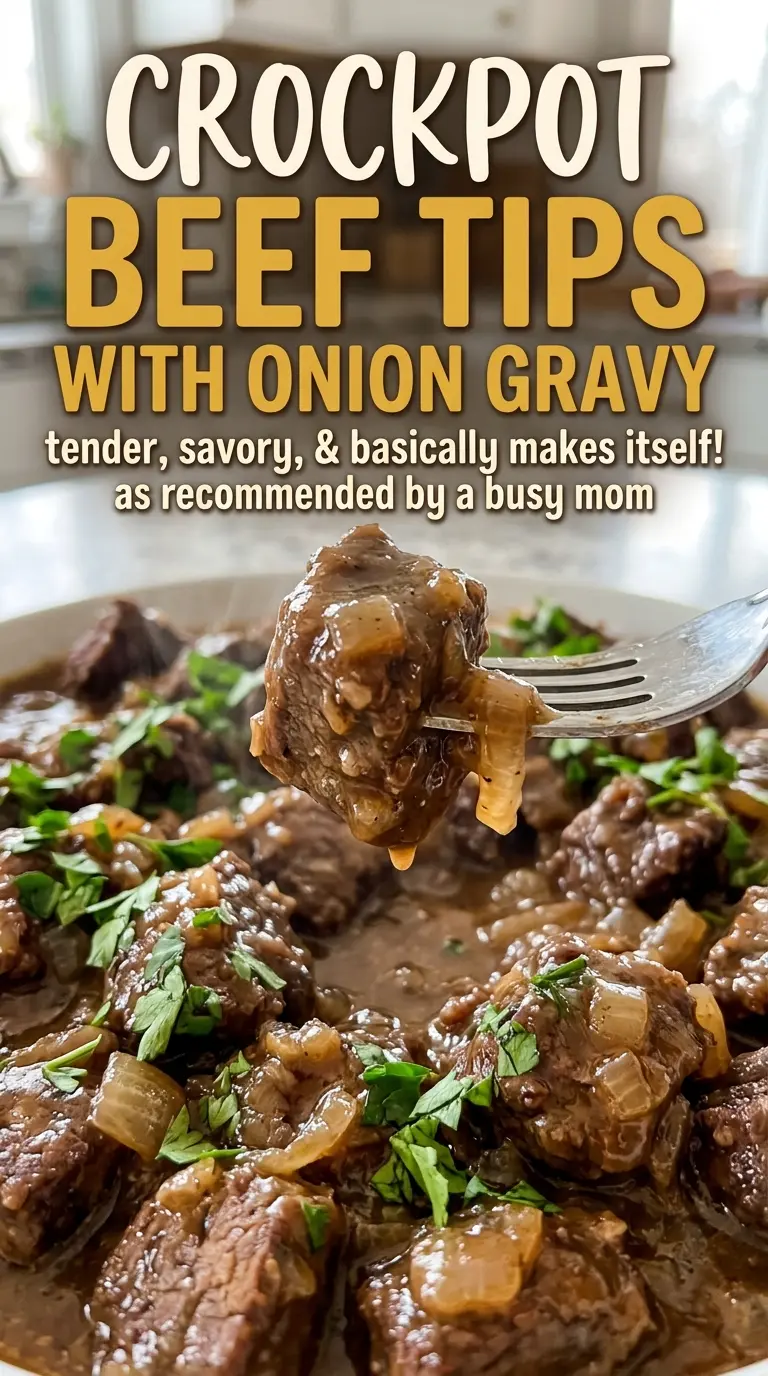
Save Crockpot Beef Tips with Onion Gravy for a slow-cooked dinner with fork-tender beef and a rich, onion-filled gravy.
Why the Onion Gravy Is Finished on the Stovetop
The slow cooker gives the chuck time to become tender, but it isn’t the best place to finish a gravy that needs to thicken quickly. Once the beef is tender, I move the cooking liquid and softened onions to a skillet, where the liquid can come to a simmer. That steady heat gives the cornstarch slurry a chance to thicken the sauce in just a few minutes.
There’s flavor in the slow cooker liquid before the thickener ever goes in. It has the broth, Worcestershire, garlic, thyme, and onions, plus the browned bits scraped from the skillet. The onions soften as the beef cooks, so they become part of the gravy rather than a separate garnish. Returning the beef to the skillet at the end coats each piece evenly.
This separate finish also gives you a clear visual cue. The gravy starts out loose, then turns glossy and thick enough to cling to the beef as you stir. If you try to judge that texture while everything is still in the slow cooker, you don’t get the same direct view of the simmer or the same control over the final minute.
Chuck, Yellow Onions, and Cornstarch Each Have a Job
- Beef chuck stew meat — Chuck has the richness and connective tissue that suit a long, moist cook. Pieces cut to the same 1 1/2-inch size cook at a similar pace, and choosing meat with some marbling helps the finished beef stay tender. Pre-cut chuck stew meat is convenient; if you’re cutting a chuck roast yourself, keep the pieces even.
- Yellow onions — Thin slices soften into the cooking liquid and give the gravy its rounded onion flavor. There’s no need to seek out unusually large or specialty onions; what matters most is slicing them thinly so they soften during the slow cook. Sweet onions work in the same quantity if you prefer a milder, sweeter result.
- Low-sodium beef broth and Worcestershire — The broth carries the beef and onion flavors, while Worcestershire adds a savory, tangy note that keeps the gravy from tasting flat. Low-sodium broth leaves more room for the salt you season the beef with. Use a broth and Worcestershire sauce you enjoy, since both remain noticeable in the finished sauce.
- Garlic and dried thyme — These aromatics season the cooking liquid without taking over the beef. Mince the garlic finely so it disperses, and measure the dried thyme rather than estimating from a large pinch; dried herbs are concentrated and can dominate if overused.
- Cornstarch and cold water — Cornstarch thickens the gravy without a flour-based roux, but it needs to be mixed with cold water first. A smooth slurry blends into the simmering liquid more evenly than dry cornstarch, which can leave pale lumps.
From Browning to a Glossy, Spoon-Coating Gravy
Season and Brown the Chuck
Pat the beef dry, then season it all over with kosher salt and black pepper. Heat the vegetable oil in a 12-inch skillet over medium-high heat and brown the beef in batches, turning each batch to brown several sides. Allow about 5 minutes per batch, then transfer the browned pieces to a 6-quart slow cooker. The goal is browned surfaces on several sides, not a fully cooked center.
Deglaze the Skillet and Build the Slow-Cooker Base
Add the thinly sliced onions to the slow cooker with the beef. Pour 1/2 cup of the beef broth into the hot skillet and scrape the browned bits from the bottom while the liquid loosens them. Pour that flavorful liquid into the slow cooker, then add the remaining 1 1/2 cups broth. Stir in the Worcestershire sauce, minced garlic, and dried thyme so the seasonings are distributed around the beef and onions.
Cook Until the Beef Gives Easily
Cover the slow cooker and cook on LOW for 7 to 8 hours or HIGH for 4 to 5 hours. The useful cue is fork tenderness: a fork should slide into a piece and turn it without much resistance. If the beef still feels firm, it needs more time rather than a higher temperature at the end. The finished pieces should be tender but still hold their shape when transferred.
Thicken the Gravy and Coat the Beef
Transfer the beef to a serving dish, then pour the cooking liquid and onions into the skillet. Bring the mixture to a simmer over medium heat. In a small bowl, whisk the cornstarch with cold water until smooth, then whisk that slurry into the simmering liquid. Cook for 1 to 2 minutes, until the gravy thickens, return the beef to the skillet, and stir to coat.
Three Small Swaps That Keep the Beef Tips Familiar
Use sweet onions for a gentler gravy
Replace the yellow onions with the same amount of thinly sliced sweet onions. They bring a softer, sweeter onion flavor while still cooking down into the broth; the gravy will taste less sharp but keep its familiar texture.
Make the gravy gluten-free
Choose gluten-free Worcestershire sauce and gluten-free beef broth, using the same amounts. Cornstarch is already the thickener here, so there’s no flour to replace; the sauce keeps its glossy texture and savory taste.
Cut chuck roast into stew-meat pieces
If you can’t find pre-cut chuck stew meat, use a 3-pound chuck roast and cut it into 1 1/2-inch pieces. That gives you the same cut and size with a little more control over how evenly the pieces are shaped.
Storage and Reheating
- Refrigerator: Refrigerate leftovers within 2 hours and keep them covered for 3 to 4 days. The gravy will firm up as it chills, then loosen as it warms.
- Freezer: Freeze the beef and gravy together in an airtight container for up to 2 to 3 months for best quality. Thaw it in the refrigerator before reheating.
- Reheating: Warm the beef and gravy in a skillet over medium-low heat, stirring gently until heated through to 165°F. Avoid a hard boil, which can make the gravy overly thick and the beef more prone to breaking apart.
Questions That Come Up With Slow-Cooker Beef Tips
Crockpot Beef Tips with Onion Gravy
Ingredients
Equipment
Method
- Pat the beef dry and season it all over with the salt and pepper.
- Heat the oil in a 12-inch skillet over medium-high heat and brown the beef in batches, turning to brown several sides, about 5 minutes per batch.
- Transfer the beef to a 6-quart slow cooker and add the onions.
- Pour 1/2 cup of the broth into the hot skillet and scrape up the browned bits.
- Pour this liquid and the remaining 1 1/2 cups broth into the slow cooker.
- Stir in the Worcestershire sauce, garlic, and thyme.
- Cover and cook on LOW for 7 to 8 hours or HIGH for 4 to 5 hours, until the beef is fork-tender.
- Transfer the beef to a serving dish and pour the cooking liquid and onions into the skillet.
- Bring the liquid and onions to a simmer over medium heat.
- Whisk the cornstarch and cold water together until smooth.
- Whisk the mixture into the simmering liquid and cook for 1 to 2 minutes, until the gravy thickens.
- Return the beef to the skillet and stir to coat.