
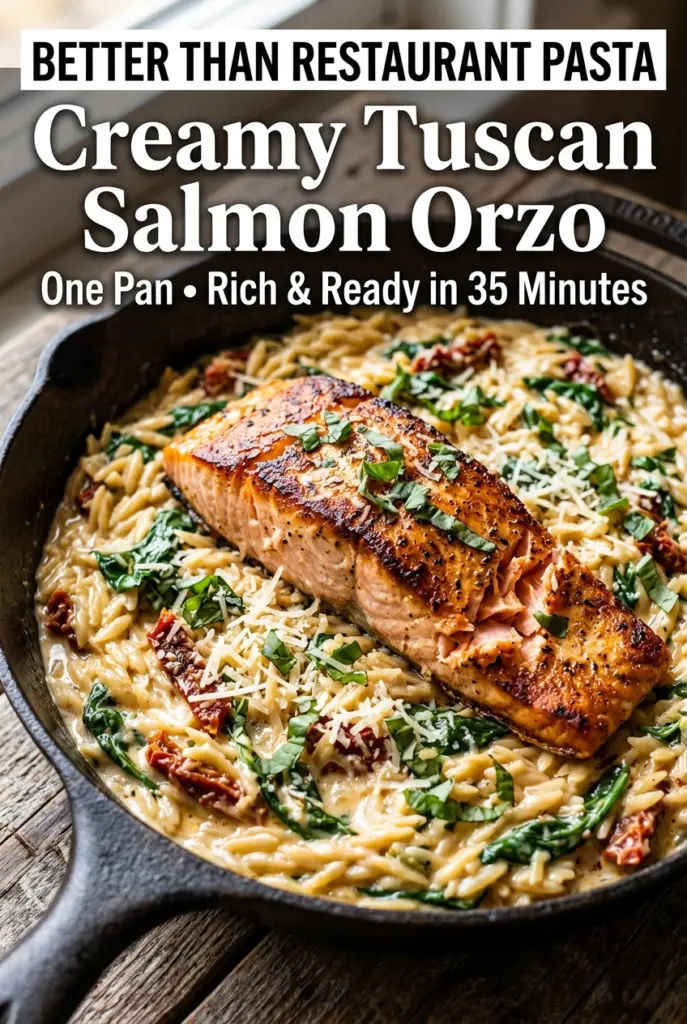
Creamy Tuscan Salmon Orzo
Flaky salmon, silky orzo, and a Parmesan cream sauce land in the same pan with sun-dried tomatoes and spinach, and the whole thing eats like a dinner you ordered somewhere…

By Ava
•
•
Reading time: 10 min
Tip: save now, make later.
Flaky salmon, silky orzo, and a Parmesan cream sauce land in the same pan with sun-dried tomatoes and spinach, and the whole thing eats like a dinner you ordered somewhere that knows what it’s doing. The salmon stays tender on top while the orzo soaks up the broth and cream underneath, which gives you a bowl that’s rich without turning heavy. It’s the kind of meal that looks polished on the table but still comes together on a weeknight without a lot of fuss.
The part that makes this version work is the timing. The salmon gets seared first so it builds color and stays intact, then it finishes gently in the sauce at the end instead of drying out while the orzo cooks. The orzo also gets toasted for a minute before the broth goes in, which gives it a little more backbone and keeps the final texture from turning soft and bland.
Below, I’ve laid out the one detail that keeps the sauce smooth, the ingredient swaps that actually make sense, and the best way to handle leftovers without losing that creamy finish.
The salmon stayed flaky, the orzo cooked up creamy instead of mushy, and the sun-dried tomatoes gave the sauce a lot of depth. I was surprised how well the lemon at the end pulled everything together.
Save this Creamy Tuscan Salmon Orzo for nights when you want a one-pan dinner with flaky salmon, tender orzo, and a silky Parmesan sauce.
The Trick to Keeping Salmon Tender While the Orzo Finishes
Salmon gets dry fast when it sits in a bubbling sauce for too long. That’s the mistake most one-pan seafood pastas make. The better approach is to sear the fillets first, pull them out while they’re still a little underdone in the center, and let the sauce finish them at the very end. That way the fish stays moist and the orzo gets the full simmer time it needs.
The other thing worth knowing is that the orzo isn’t just a side dish here. It’s the base of the sauce. It releases starch as it cooks, which helps the cream cling instead of sliding off into a thin pool. If your sauce ever feels loose, it usually means the pasta didn’t simmer long enough before the cream went in.
What Each Ingredient Is Actually Doing in This Dish

- Salmon — Use fillets that are similar in thickness so they cook at the same rate. Skin-on or skinless both work, but skin-on gives you a little more protection in the pan and usually holds together better during searing.
- Orzo — Dry orzo is what gives this dish its creamy body. Another small pasta can work in a pinch, but the texture changes; orzo makes a sauce that feels thicker and more spoonable because the grains are so small.
- Heavy cream — This is what gives the sauce its plush finish. Half-and-half can work, but it will be thinner and needs a little more simmer time. Don’t boil it hard once it’s in the pan or the texture can turn grainy.
- Parmesan — Freshly grated Parmesan melts much more smoothly than the shelf-stable shredded kind. If you use pre-shredded cheese, it can clump and the sauce won’t feel as silky.
- Sun-dried tomatoes — These bring concentrated sweetness and acidity, which keeps the cream sauce from tasting flat. Drain them well if they’re packed in oil so the dish doesn’t turn greasy.
- Spinach — Baby spinach wilts fast and disappears into the sauce without getting stringy. If you use mature spinach, chop it first so you don’t end up with long, tough ribbons.
- Lemon juice — A small splash at the end wakes everything up. It doesn’t make the dish taste lemony; it just cuts through the richness so the sauce tastes balanced instead of heavy.
How to Build the Sauce So It Stays Smooth
Sear the Salmon First
Heat the oil until it shimmers, then lay the salmon in the pan and let it sit long enough to form a crust before you turn it. If it sticks when you try to move it, it’s not ready yet. That crust is what gives the fish flavor and helps it hold together when you bring it back to the sauce later. Pull it out when it’s golden and nearly cooked through; carryover heat will do the rest.
Toast the Orzo in the Pan Drippings
After the salmon comes out, the butter and garlic go into the same skillet, then the orzo. That quick toast keeps the pasta from tasting raw and helps it pick up the browned bits left behind by the salmon. Stir for just a minute. If the garlic darkens too much, the whole sauce will taste bitter, so keep it moving and don’t walk away.
Let the Broth Do the Heavy Lifting
Pour in the broth and simmer the orzo until it’s tender but still has a little bite in the center. Stir often enough that it doesn’t stick, but not constantly; you want the liquid to reduce, not get agitated into mush. The orzo should look plump and the pan should still have a little loose liquid before the cream goes in. That’s the point where the sauce will finish thickening instead of turning gluey.
Finish Off Heat for the Creamiest Sauce
Lower the heat before adding the cream and Parmesan. If the pan is too hot, the cheese can seize and the sauce can look grainy instead of smooth. Stir until it turns glossy, then fold in the spinach and sun-dried tomatoes. Add the lemon juice last so the sauce tastes bright, not flat.
Bring the Salmon Back Briefly
Nestle the salmon into the orzo and let it warm through for just a couple of minutes. You’re not cooking it from scratch at this point. You’re finishing it. That keeps the center tender and keeps the top from turning chalky. Serve it right away while the sauce is still loose enough to coat the pasta.
Three Ways to Make This Work With What You Have
Dairy-Free Version
Use full-fat coconut milk or an unsweetened dairy-free cooking cream in place of the heavy cream, then skip the Parmesan or use a dairy-free hard cheese alternative. The sauce won’t taste exactly the same, but it will still be rich and spoonable. Keep the heat low so the alternative cream doesn’t separate.
Gluten-Free Swap
Use a gluten-free orzo-style pasta or another small gluten-free pasta with a similar cook time. The texture will be a little more delicate, so stir gently and check early, because gluten-free pasta can go from tender to soft fast. The sauce itself stays the same.
Chicken Instead of Salmon
Boneless chicken cutlets can stand in for the salmon if that’s what you’ve got. Sear them until cooked through, then remove them and add them back at the end just like you would with the fish. The dish becomes less delicate and a little more hearty, but the sauce still works beautifully.
Make It Spicier
Add a pinch of red pepper flakes with the garlic or finish with a small spoonful of Calabrian chili paste. That gives the creamy sauce a sharper edge without overpowering the salmon. Start with less than you think you need; heat builds fast in a dish this rich.
Storage and Reheating
- Refrigerator: Store leftovers in an airtight container for up to 3 days. The sauce thickens in the fridge, and the salmon texture softens a bit.
- Freezer: I don’t recommend freezing this dish. Cream sauces can split when thawed, and the salmon and orzo both lose their best texture.
- Reheating: Warm it gently in a skillet over low heat with a splash of broth or cream to loosen the sauce. The common mistake is blasting it in the microwave until the salmon turns dry and the sauce breaks.
Answers to the Questions Worth Asking
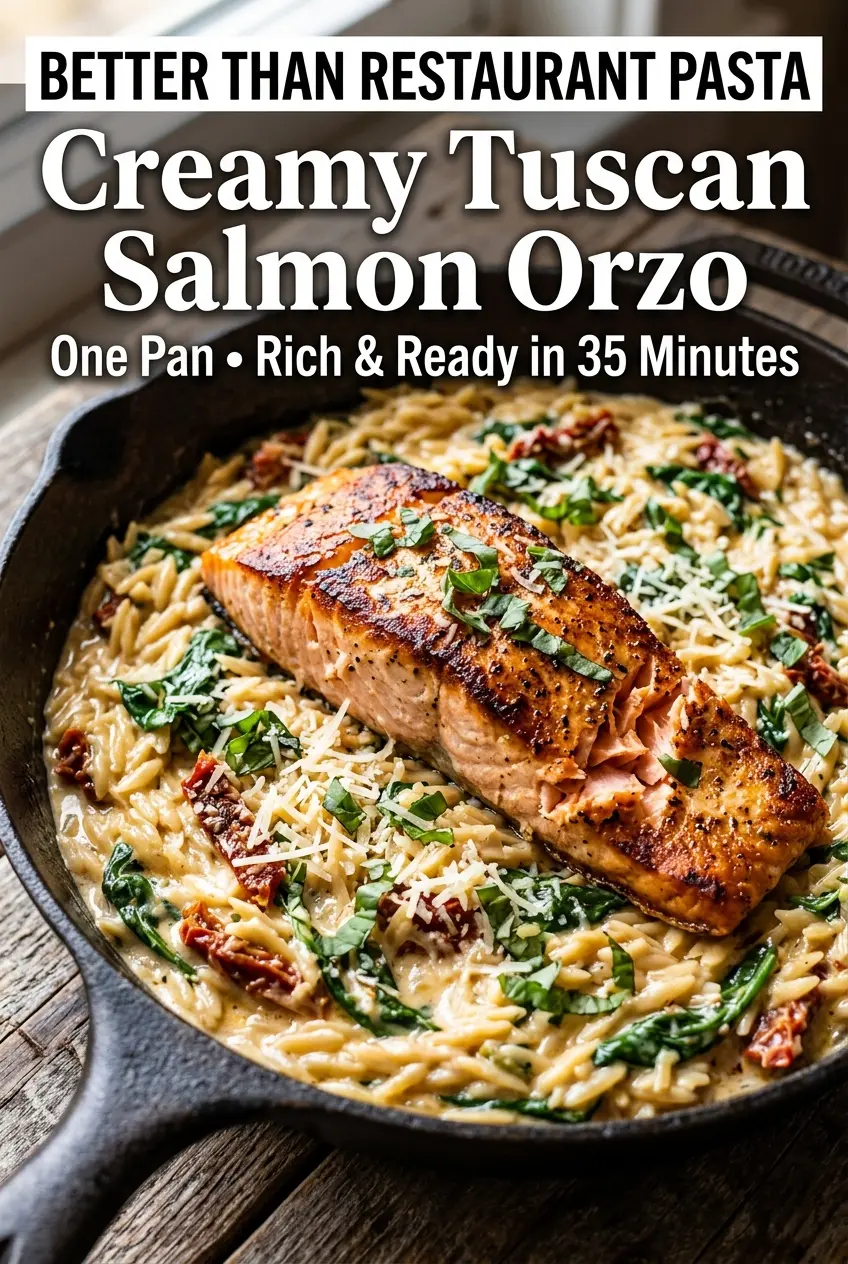
Creamy Tuscan Salmon Orzo
Ingredients
Equipment
Method
- Season the salmon fillets with garlic powder, Italian seasoning, paprika, kosher salt, and black pepper.
- Heat the olive oil in a large skillet over medium-high heat.
- Sear the salmon for 4–5 minutes per side until golden and nearly cooked through.
- Transfer the salmon to a plate.
- Melt the butter in the same skillet.
- Sauté the garlic for 30 seconds.
- Stir in the dry orzo and toast for 1 minute until fragrant.
- Pour in the chicken broth and simmer for 8–10 minutes, stirring occasionally, until the orzo is tender.
- Add the heavy cream, Parmesan cheese, Italian seasoning, and sun-dried tomatoes.
- Stir until the sauce is smooth.
- Fold in the baby spinach until wilted.
- Stir in the fresh lemon juice.
- Return the salmon to the skillet and simmer for 2–3 minutes until the salmon is cooked through.
- Garnish with fresh basil, extra Parmesan cheese, and cracked black pepper.
- Serve immediately with lemon wedges.