
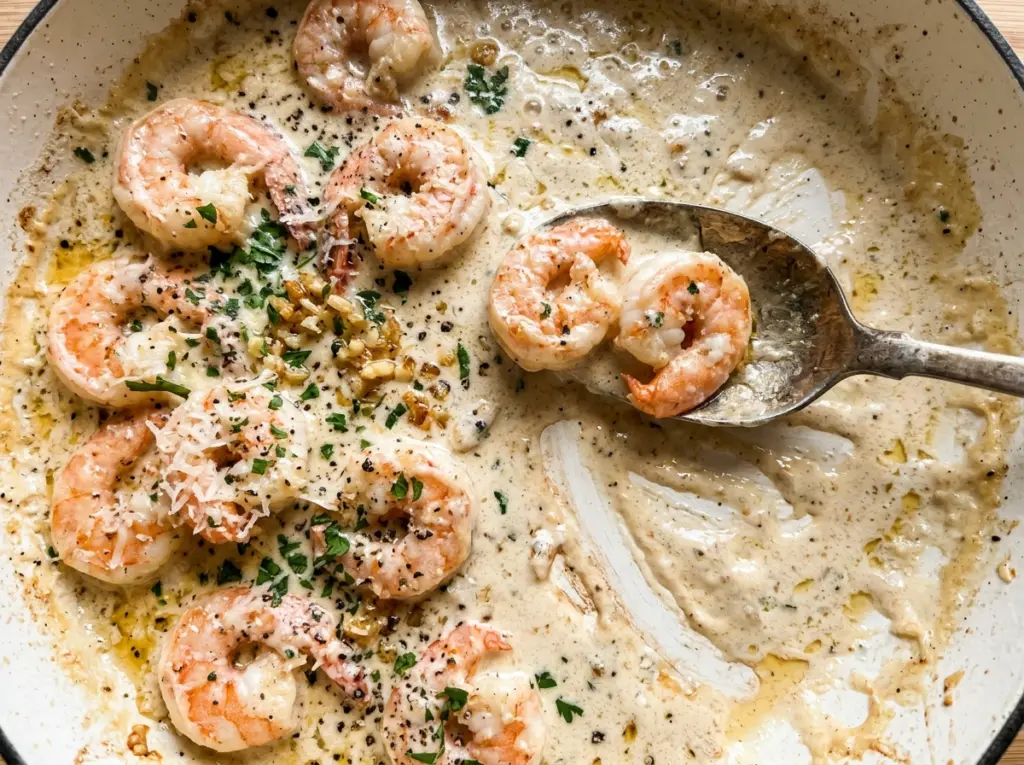
Creamy Garlic Parmesan Shrimp
When shrimp hit a hot skillet, they should sizzle right away; if the pan is crowded, they release moisture and turn pale before they get a chance to sear. I…

By Ava
•
•
Reading time: 8 min
Tip: save now, make later.
When shrimp hit a hot skillet, they should sizzle right away; if the pan is crowded, they release moisture and turn pale before they get a chance to sear. I cook them in two batches, which gives each piece room to color and keeps the centers tender. That small bit of patience makes a big difference in this Creamy Garlic Parmesan Shrimp.
The sauce comes together in the same skillet, so the buttery garlic picks up the savory bits left behind by the shrimp. I keep the heat gentle once the cream goes in, then turn it low before stirring in finely grated Parmesan. A little lemon juice brightens the finished sauce without covering up the garlic or cheese. The shrimp stay plump, and every bite gets a spoonful of smooth, creamy sauce.
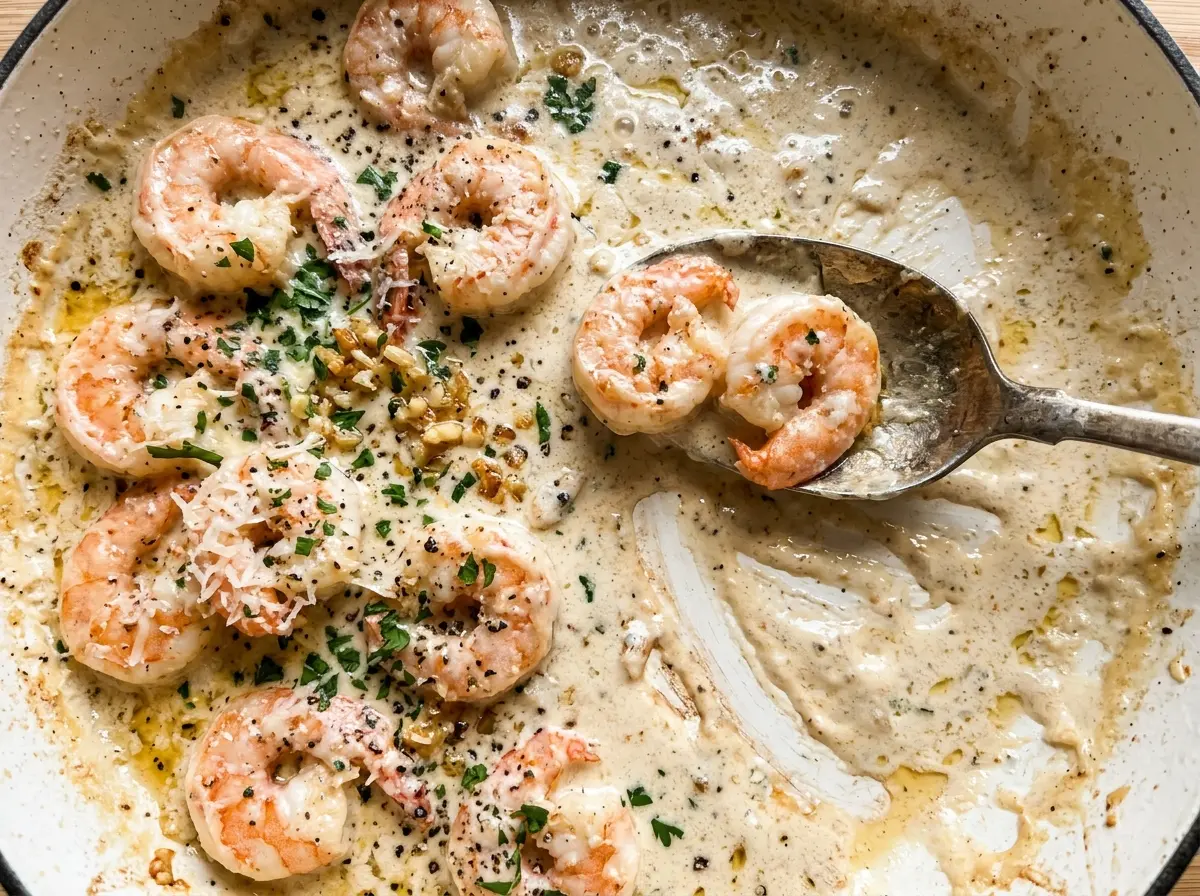
Kitchen Note
I stir the lemon juice in after the Parmesan has melted smooth. Adding it at the end gives the rich sauce a clean, bright finish.
Save Creamy Garlic Parmesan Shrimp for a quick skillet dinner with tender shrimp and a silky, lemon-bright sauce.
Why Cooking the Shrimp in Batches Makes the Sauce Better
A crowded pan works against you twice. The shrimp give off moisture as they cook, and when they’re packed together, that moisture has nowhere to escape. Instead of getting a quick sear, the shrimp steam; their surfaces stay wet, and the skillet cools down just when you need it hot. Cooking half at a time in a single layer leaves enough room for the moisture to evaporate.
That first batch also leaves browned bits in the skillet, which become part of the sauce when the butter melts. Don’t wipe the pan between batches or before adding the garlic. Those browned bits bring a savory, shrimp-rich note to the cream, while the garlic adds its own aroma. Patting the shrimp dry before seasoning helps them meet the pan without a layer of surface moisture, so the sear starts promptly.
Which Ingredients Make This Creamy Shrimp Sauce Work
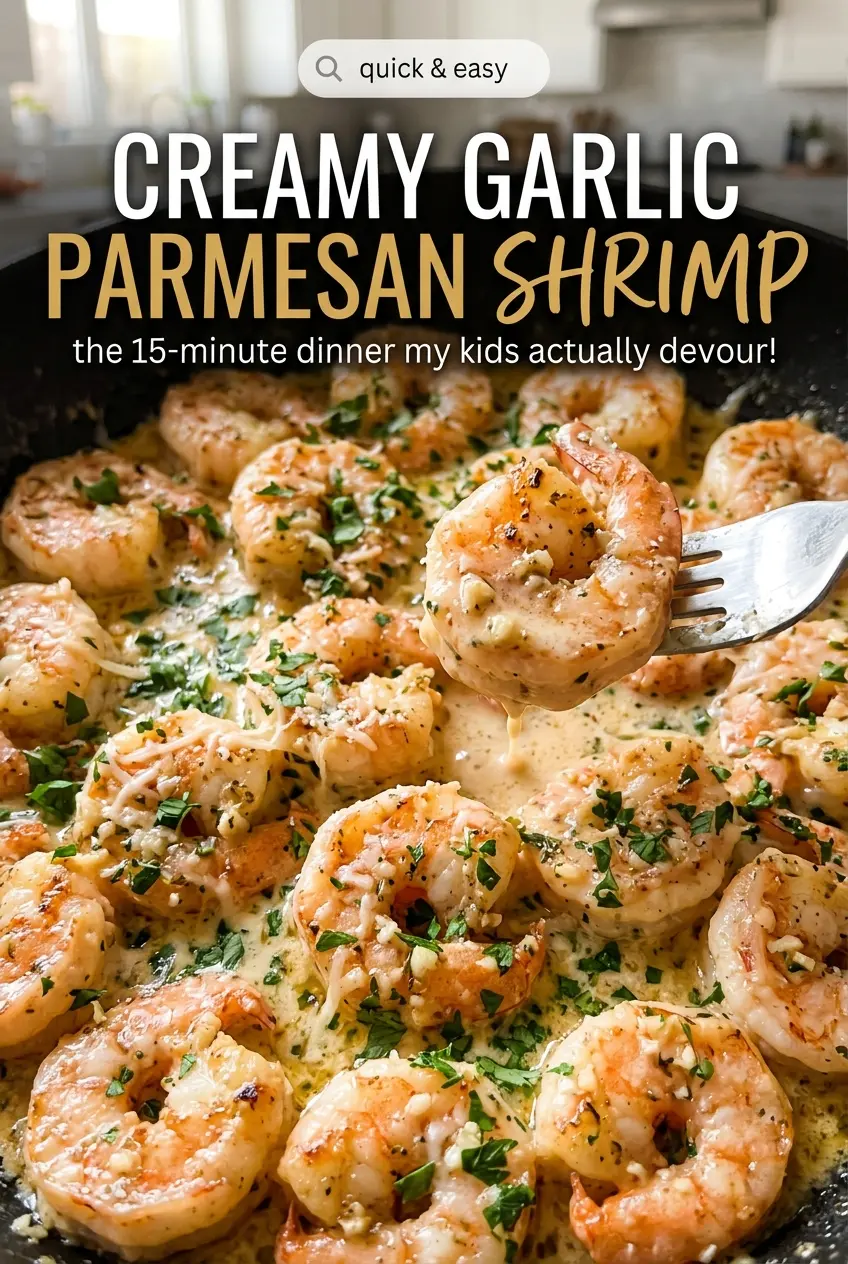
- Large shrimp: The 21-to-25-count size gives you substantial bites that can be seared and briefly warmed in the sauce without disappearing under it. Fresh or frozen shrimp work; if using frozen, thaw them fully and pat them dry before seasoning.
- Heavy cream: Its fat gives the sauce body and helps it simmer without turning watery. Lower-fat milk isn’t a reliable one-for-one swap here; it won’t thicken the sauce in the same way and is more likely to turn thin.
- Finely grated Parmesan: Fine shreds melt into the cream more evenly than thick shreds. A block of Parmesan is a good buy if you cook with it often, but a finely grated packaged option is convenient; avoid coarse pieces that take longer to melt.
- Garlic: Freshly minced cloves give the butter a fragrant, savory base. Mince them finely so they cook quickly and distribute throughout the sauce; browned garlic can taste bitter, so keep it moving in the skillet.
- Olive oil and unsalted butter: The oil helps the shrimp cook in a hot skillet, while butter brings richness to the garlic sauce. A neutral cooking oil can stand in for the olive oil, though you’ll lose its light fruity note.
- Lemon juice and fresh parsley: Lemon cuts through the cream’s richness, and parsley gives the finished dish a fresh herbal edge. Fresh lemon juice has the cleanest flavor; fresh parsley matters most as a finishing touch, so dried herbs won’t give quite the same lift.
From a Quick Shrimp Sear to a Smooth Parmesan Sauce
Dry and Season the Shrimp
Blot the peeled and deveined shrimp with paper towels until their surfaces feel dry, then season them with kosher salt and black pepper. Dry shrimp sear more readily than damp ones. Keep them ready in two portions so you can add each batch to the skillet in a single layer.
Sear in Two Uncrowded Batches
Heat half the olive oil in a 12-inch skillet over medium-high heat. Add half the shrimp in one layer and cook for 1 to 2 minutes per side, until opaque and 145°F in the thickest part. Transfer them to a plate, then repeat with the remaining oil and shrimp. If the shrimp are still translucent in the center, give them a little more time rather than moving on early.
Build the Garlic Cream
Reduce the heat to medium and melt the butter in the same skillet. Add the minced garlic and stir for 30 seconds, just until fragrant. Pour in the heavy cream and simmer gently for 2 to 3 minutes, stirring, until it looks slightly thickened. Keep the simmer calm; a hard boil isn’t needed to reduce the cream.
Melt in the Parmesan
Turn the heat to low before stirring in the finely grated Parmesan. Stir until the cheese melts and the sauce looks smooth, then mix in the lemon juice. If the sauce seems lumpy, keep the heat low and stir patiently rather than turning up the burner; high heat can make a cheese sauce less smooth.
Warm the Shrimp and Finish
Return the shrimp and any juices on the plate to the skillet. Stir for about 1 minute, just until they’re heated through, then sprinkle with chopped fresh parsley and serve. The shrimp don’t need a long simmer at this point. Leaving them in the sauce longer can make their texture firm and bouncy.
Easy Ways to Adapt the Garlic Parmesan Sauce
Make the Sauce Dairy-Free
Use dairy-free butter, an unsweetened dairy-free cooking cream, and a finely grated dairy-free Parmesan-style cheese in place of the butter, heavy cream, and Parmesan. Choose a cooking cream rather than a beverage-style milk; the finished sauce will usually be less rich and may have a different savory note.
Give It a Brighter Lemon Finish
For a more pronounced citrus note, stir a little extra lemon juice into the smooth sauce at the very end, tasting as you go. The added acidity cuts the richness further, so keep the first taste small and stop once the sauce is bright rather than sharply sour.
Storage and Reheating
- Refrigerator: Refrigerate leftovers within 2 hours and use within 3 days. The sauce will thicken as it chills, and the shrimp may become a little firmer.
- Freezer: Freezing isn’t recommended. Cream sauce can separate after thawing, and cooked shrimp often lose their tender texture.
- Reheating: Warm leftovers gently in a skillet over low heat, stirring until hot. Avoid a hard simmer, which can toughen the shrimp and make the sauce separate.
Questions That Come Up When Making Creamy Garlic Parmesan Shrimp
Creamy Garlic Parmesan Shrimp
Ingredients
Equipment
Method
- Pat the shrimp dry and season with the salt and black pepper.
- Heat 1/2 tablespoon of the olive oil in a 12-inch skillet over medium-high heat, then cook half the shrimp in a single layer for 1 to 2 minutes per side, until opaque and 145°F in the thickest part. Transfer to a plate and repeat with the remaining oil and shrimp.
- Reduce the heat to medium and melt the butter in the same skillet, then add the garlic and cook for 30 seconds, stirring until fragrant.
- Pour in the heavy cream and simmer gently for 2 to 3 minutes, stirring, until slightly thickened.
- Reduce the heat to low and stir in the Parmesan until smooth, then stir in the lemon juice.
- Return the shrimp and any accumulated juices to the skillet and stir for about 1 minute, until heated through.
- Sprinkle with the parsley and serve.