
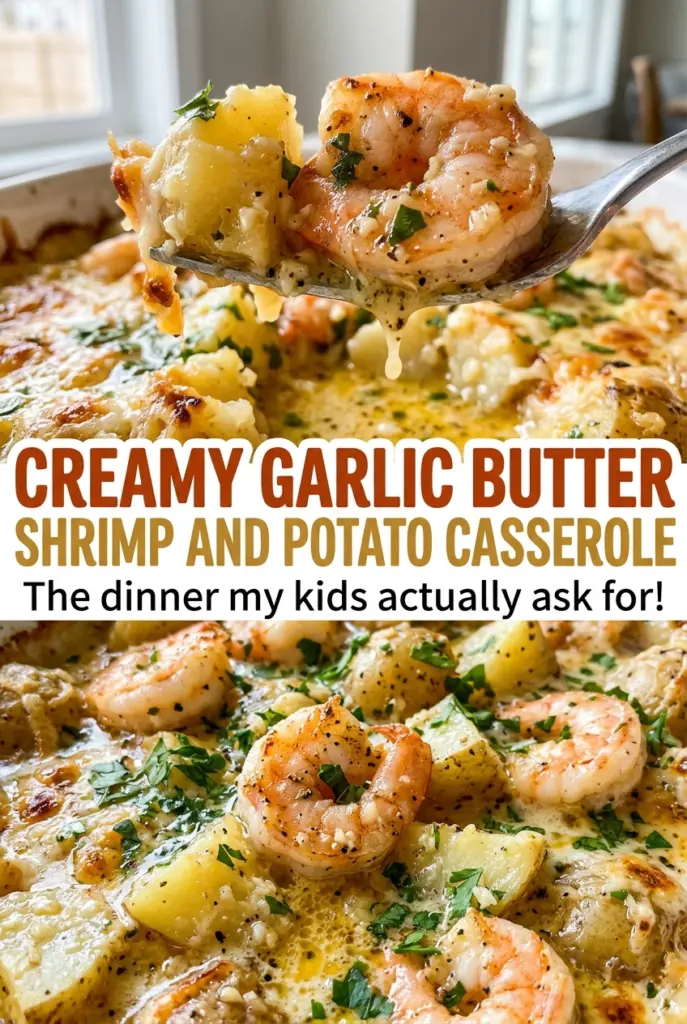
Creamy Garlic Butter Shrimp and Potato Casserole
The sauce should bubble around the edges while the shrimp turn opaque, and the potatoes should still hold their shape when you lift a spoonful. That’s the moment I look…

By Ava
•
•
Reading time: 9 min
Tip: save now, make later.
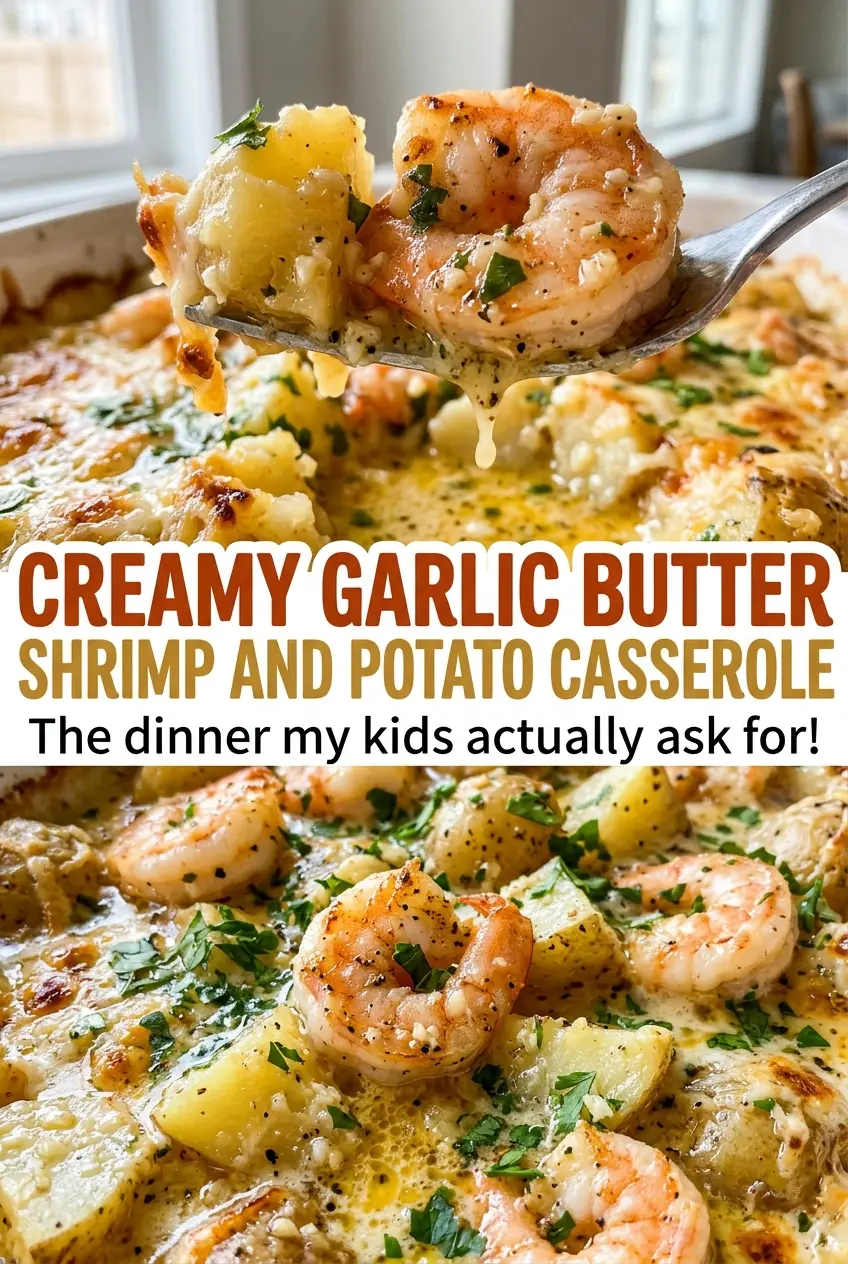
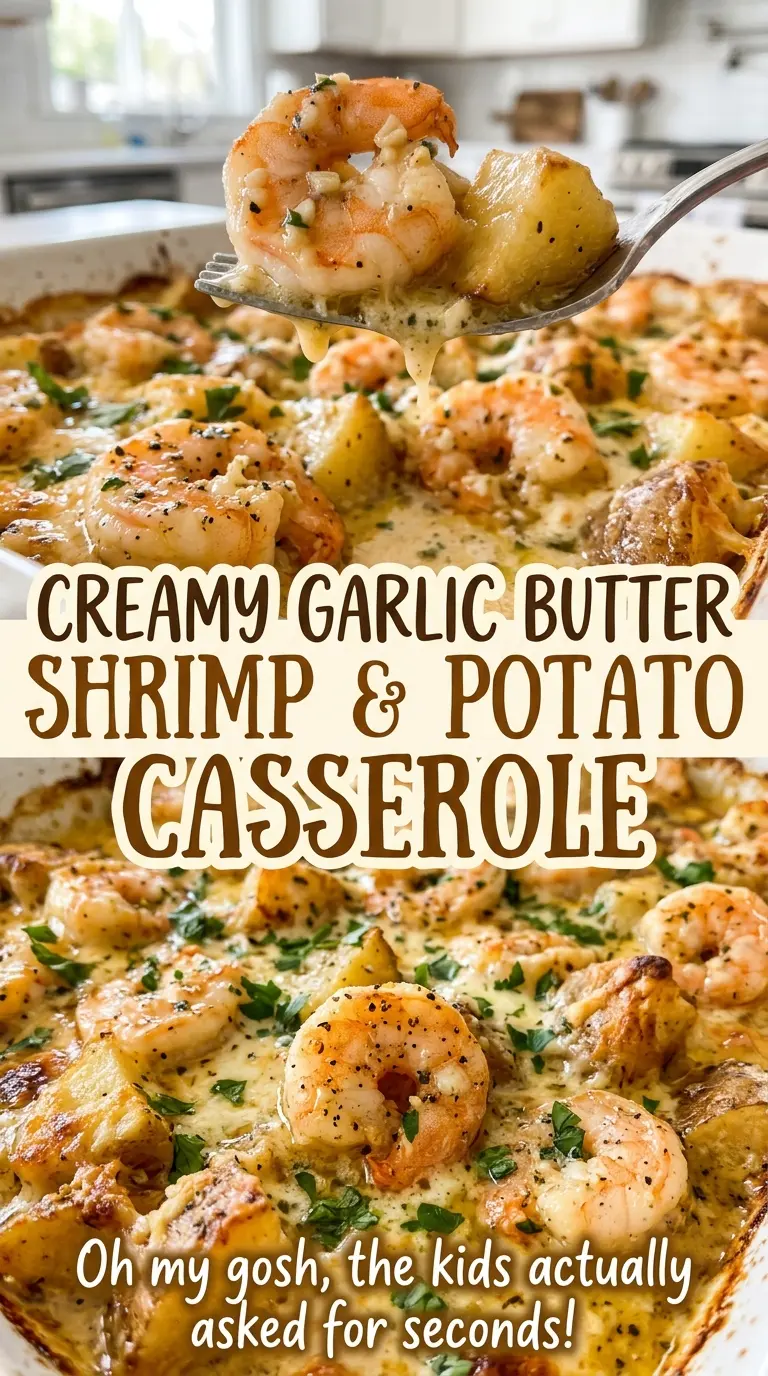
The sauce should bubble around the edges while the shrimp turn opaque, and the potatoes should still hold their shape when you lift a spoonful. That’s the moment I look for with this creamy garlic butter shrimp and potato casserole. The shrimp cooks right in the baking dish, so there’s no separate pan to watch, and the potatoes make it a filling one-dish dinner. Lemon juice cuts through the richness of the cream and Parmesan, while paprika gives the sauce a gentle warmth.
I build the sauce on the stove before it goes over the potatoes and shrimp. Cooking flour briefly in garlic butter gives the sauce body, and adding the broth gradually helps it turn smooth instead of lumpy. Once the cream and finely grated Parmesan go in, the sauce is ready to coat everything in the dish. The finished casserole is creamy without feeling heavy, with tender potatoes and juicy shrimp in every serving.
Kitchen Note
Check the thickest shrimp, not the smallest one tucked near the edge. It should be opaque and firm and register 145°F; pull the casserole as soon as the shrimp reach that point so they stay tender.
Save this creamy garlic butter shrimp and potato casserole for a bubbling, one-dish dinner with tender potatoes and a Parmesan sauce.
Why 1-Inch Yukon Gold Cubes Hold Their Shape in Cream Sauce
Potatoes can turn a creamy casserole from pleasantly hearty to pasty if they break apart while you stir. Yukon Golds are a good fit here because their texture stays fairly firm through cooking, and cutting them into 1-inch cubes gives each piece enough size to keep its shape under the sauce. Keeping the pieces close in size matters, too: small chunks soften sooner, while larger ones can still feel firm when the shrimp are ready.
The brief simmer before baking is part of that balance, not an extra step to skip. It gives the potatoes a head start, so the oven time can finish them alongside the shrimp rather than asking raw potato cubes to soften in a short bake. Stop cooking when a fork meets little resistance; the cubes shouldn’t be falling apart in the pot. Drain them well before they go into the baking dish, so the sauce stays creamy instead of picking up extra water.
This is also why I stick with Yukon Golds rather than a potato that breaks down more easily. A few intact edges help the sauce cling to each cube, and the pieces stay distinct when you gently stir everything together. You get a casserole that scoops neatly instead of a dish where the potatoes disappear into the sauce.
The Ingredients That Keep the Garlic-Parmesan Sauce Silky
- Yukon Gold potatoes — Their creamy texture works well in a sauced bake, and their shape holds up better than a flourier potato. Cut them evenly; there’s no need to peel them for this casserole.
- Large raw shrimp — Peeled and deveined shrimp with the tails removed are easiest to eat in a casserole. Raw shrimp are important here because they cook in the oven; cooked shrimp would spend too long heating and turn tough. If you buy frozen raw shrimp, thaw them fully and drain off excess water before assembling.
- Unsalted butter, garlic, and flour — Butter carries the garlic through the sauce, while flour thickens the broth and cream. Freshly minced garlic gives the cleanest flavor, but jarred minced garlic works when that’s what you have. Cook the flour briefly so the sauce doesn’t taste floury.
- Low-sodium chicken broth and heavy cream — The broth keeps the sauce savory without making it too rich, and heavy cream gives it a smooth, full texture. Low-sodium broth is useful because Parmesan and the seasoned sauce already bring salt; regular broth can make the finished casserole taste saltier.
- Finely grated Parmesan — Fine shreds melt into the sauce more evenly than coarse shreds. Grating a wedge yourself gives the smoothest result, though packaged finely grated Parmesan is convenient and works well.
- Lemon juice, paprika, and parsley — Lemon brightens the creamy sauce, paprika adds mild warmth, and chopped parsley brings a fresh finish. Use fresh lemon juice for the cleanest lift; parsley is best chopped shortly before serving so it keeps its color.
Build the Garlic-Parmesan Sauce Before the Shrimp Goes In
Simmer the Potatoes Until Just Tender
Heat the oven to 400°F and lightly coat a 9×13-inch baking dish with cooking spray. Bring the water and 1 1/2 teaspoons of the kosher salt to a boil in a 6-quart pot, then add the 1-inch potato cubes. Simmer for 8–10 minutes, checking with a fork near the end; it should slide in with slight resistance rather than sending the cube crumbling. Drain the potatoes well.
Cook the Garlic Butter Base
Melt the butter in a 3-quart saucepan over medium heat, then stir in the minced garlic. Cook it for 30 seconds, just until fragrant; garlic that browns can make the sauce taste bitter. Whisk in the flour and cook for 1 minute, whisking so it forms a smooth paste with the butter. Keep the heat at medium rather than rushing this step over high heat.
Whisk the Sauce Until It Thickens Lightly
Pour in the broth gradually while whisking, working out any small lumps before adding more. Let it simmer for 2–3 minutes, until it has thickened lightly but still flows easily from the whisk. Whisk in the cream, Parmesan, lemon juice, paprika, black pepper, and the remaining salt. Keep stirring until the cheese melts into the sauce; it should look smooth, not grainy.
Coat, Bake, and Let the Casserole Set
Put the drained potatoes and peeled shrimp in the prepared dish, pour the sauce over them, and gently stir until everything is coated. Spread the shrimp and potatoes into an even layer so the shrimp cook at a similar pace. Bake uncovered for 12–16 minutes, until the sauce bubbles and the shrimp are opaque and firm. Rest the casserole for 5 minutes, then scatter the chopped parsley over the top.
Two Useful Swaps Without Losing the Casserole’s Balance
Make the Sauce Gluten-Free
Replace the all-purpose flour with the same amount of a cup-for-cup gluten-free flour blend designed for baking. Whisk it into the butter as you would the regular flour, then add the broth gradually. The sauce thickens in the same way, though the exact finish can vary a little by blend.
Use Smoked Paprika for a Toastier Note
Swap the paprika for smoked paprika if you want a deeper, woodsy taste against the garlic butter and Parmesan. It changes the aroma more than the heat, so the casserole stays creamy and savory but takes on a gentle smoky edge.
Storage and Reheating
- Refrigerator: Refrigerate leftovers within 2 hours and eat them within 3–4 days. The potatoes will soften a little, and the sauce will thicken as it chills.
- Freezer: Freeze portions in airtight containers for up to 2 months. The cream sauce may separate slightly and the potatoes may soften after thawing, so the texture won’t be quite as smooth as freshly baked.
- Reheating: Reheat a portion covered in the oven or gently in the microwave until steaming throughout. Stir carefully if using the microwave; high heat can make the shrimp rubbery and cause the sauce to separate.
Questions That Come Up Before This Casserole Goes in the Oven
Creamy Garlic Butter Shrimp and Potato Casserole
Ingredients
Equipment
Method
- Preheat the oven to 400°F and lightly coat a 9x13-inch baking dish with cooking spray.
- Bring the water and 1 1/2 teaspoons of the salt to a boil.
- Add the potatoes and simmer for 8–10 minutes until just fork-tender, then drain.
- Melt the butter over medium heat, add the garlic, and cook for 30 seconds.
- Whisk in the flour and cook for 1 minute.
- Gradually whisk in the broth and simmer for 2–3 minutes until lightly thickened.
- Whisk in the cream, Parmesan, lemon juice, paprika, pepper, and remaining 1/2 teaspoon salt until the cheese melts.
- Put the potatoes and shrimp in the prepared baking dish, pour the sauce over them, and gently stir to coat.
- Bake uncovered for 12–16 minutes, until the sauce is bubbling and the shrimp are opaque, firm, and 145°F in the thickest part.
- Rest the casserole for 5 minutes, then sprinkle with the parsley.