
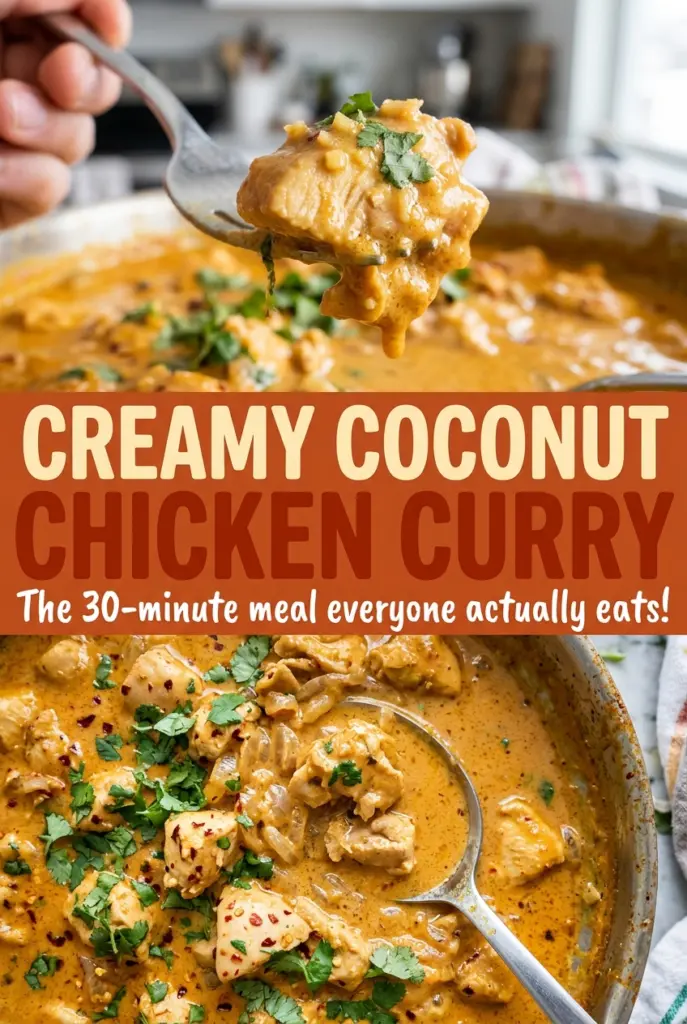
Creamy Coconut Chicken Curry
When the chicken comes out of the skillet, it’s still raw in the middle, but the bottom of the pan is streaked with browned bits. That’s exactly where I want…

By Ava
•
•
Reading time: 9 min
Tip: save now, make later.
When the chicken comes out of the skillet, it’s still raw in the middle, but the bottom of the pan is streaked with browned bits. That’s exactly where I want it: the thighs finish gently in the sauce, and those browned bits give Creamy Coconut Chicken Curry a savory base that coconut milk alone can’t provide.
I keep the heat steady as the onion softens, then give the curry powder and cumin a brief moment in the hot oil before adding anything wet. Thirty seconds is enough for their aroma to bloom without letting the garlic scorch. Once the coconut milk and broth go in, scraping the skillet as you stir brings all that flavor into the sauce.
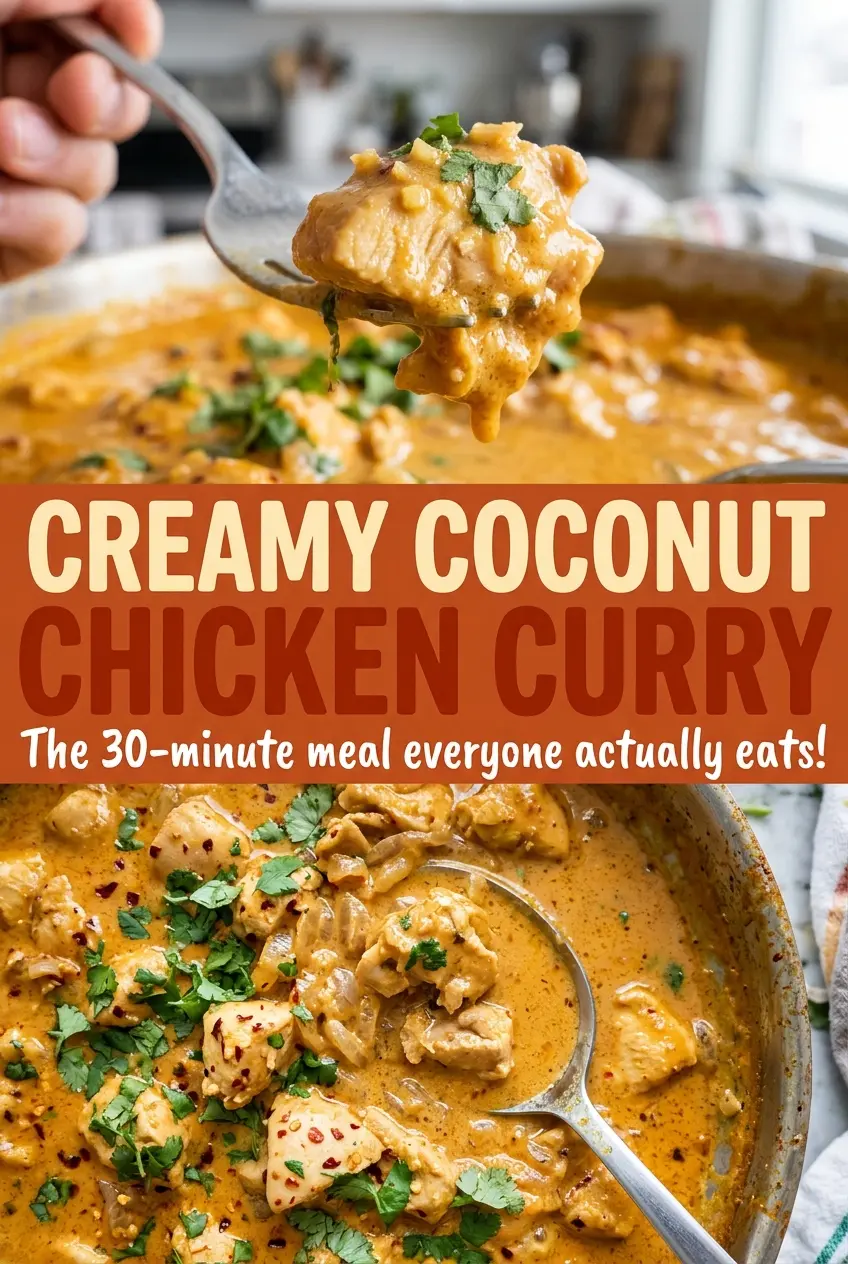
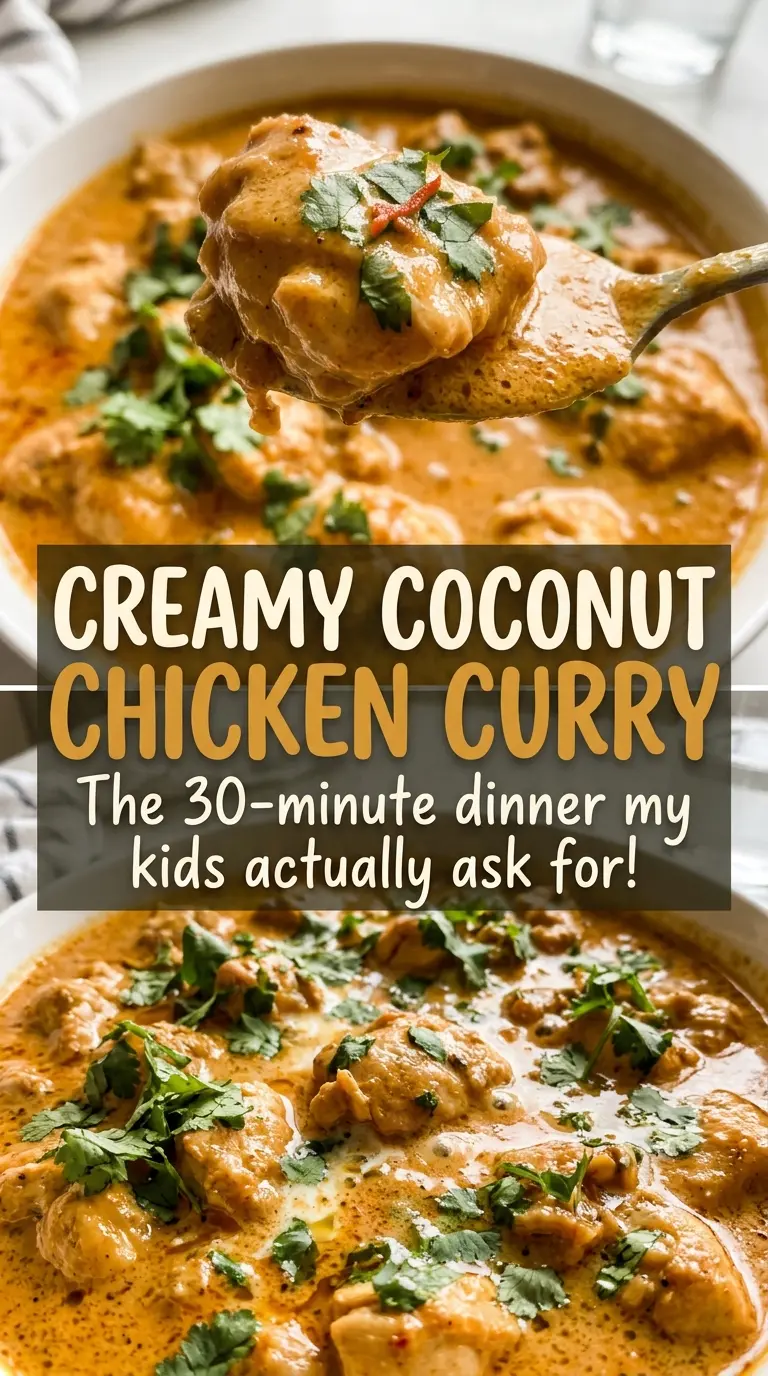
Full-fat coconut milk makes the curry creamy without dairy, while a squeeze of lime at the end keeps each bite from feeling heavy. The sauce thickens lightly as the chicken simmers, so it stays silky rather than turning into a paste. Spoon it over rice or serve it as it is, with tender chicken and a bright, fragrant sauce.
Kitchen Note
Keep the juices that collect on the chicken plate. Pour them back into the skillet when the thighs return; they carry savory flavor into the coconut sauce, and there’s no reason to leave that behind.
Save Creamy Coconut Chicken Curry for a cozy dinner with tender thighs and a silky coconut sauce finished with lime.
Why This Curry Sauce Should Stay Silky, Not Thick Like Gravy
This curry is meant to have a spoonable sauce that clings to the chicken, not a dense coating that hides it. The coconut milk brings richness, the broth keeps the sauce loose enough to simmer around the thighs, and the tomato paste gives it a deeper savory note. As the skillet simmers uncovered, some liquid evaporates and the sauce lightly thickens. There’s no need to add flour or another thickener.
A rolling boil can make a coconut-based sauce look separated or greasy, so keep the pan at a gentle simmer once the chicken goes back in. A few small bubbles around the edge are what you’re after. If the sauce still looks loose near the end, give it time to reduce gently rather than turning the burner up; high heat can overcook the chicken before the sauce reaches the texture you want. The finished curry should look glossy, with enough sauce left to spoon over each piece.
Full-Fat Coconut Milk and Mild Curry Powder Set the Character
- Chicken thighs — Boneless, skinless thighs stay moist through the simmer and have enough richness to stand up to the curry sauce. Patting them dry helps them brown instead of steaming. Chicken breasts work as a leaner swap, but they’re less forgiving; check them earlier and take them off the heat as soon as the thickest part reaches 165°F.
- Unsweetened full-fat coconut milk — This is what gives the sauce its creamy body without dairy. A can of full-fat coconut milk is the right choice; light coconut milk makes a thinner, less rich sauce. Shake the can well before opening if the cream has separated from the liquid.
- Mild curry powder — A mild blend gives the sauce warm curry flavor without making heat the main event. Freshness matters more than an expensive brand: if the powder smells dusty or faint, its aroma won’t come through as clearly. Hot curry powder is an easy swap if you prefer more heat, though it will make the finished dish spicier.
- Fresh ginger and garlic — Mince both finely so they soften quickly and disperse through the sauce. Fresh ginger has a brighter, cleaner edge than dried ginger, and fresh garlic gives the skillet a more rounded aroma than garlic powder.
- Tomato paste, lime, and cilantro — Tomato paste adds concentrated savory depth, while lime juice cuts through the coconut’s richness when stirred in off the heat. Fresh cilantro brings a herbal finish. Bottled lime juice can work in a pinch, but fresh juice tastes brighter here.
Build the Curry in the Same Skillet as the Chicken
Brown the Thighs Without Cooking Them Through
Pat the chicken dry, then season it all over with kosher salt and black pepper. Heat the vegetable oil in a 12-inch deep skillet over medium-high heat. Brown the thighs for 3 to 4 minutes per side, then move them to a plate; they’ll still be uncooked in the center. If the chicken is wet when it hits the pan, it will steam instead of developing a browned surface.
Soften the Onion and Wake Up the Spices
Add the diced onion to the same skillet and cook for 4 to 5 minutes, stirring occasionally, until it has softened. Stir in the minced garlic and ginger along with the curry powder and cumin. Cook for 30 seconds, stirring, just until the spices smell fragrant. Keep them moving so the garlic doesn’t scorch while the dry spices bloom in the hot oil.
Turn the Browned Bits Into Coconut Sauce
Stir in the tomato paste and cook it for 1 minute. Pour in the coconut milk and chicken broth, scraping the bottom of the skillet to loosen the browned bits. Bring the sauce to a gentle simmer, not a hard boil. Take time to scrape the whole base of the pan so the flavorful browned patches don’t stay stuck underneath.
Simmer Until the Thighs Are Tender and Cooked Through
Return the chicken and its plate juices to the skillet, then reduce the heat to medium-low. Simmer uncovered for 15 to 20 minutes, turning the chicken once, until the thickest part reaches 165°F and the sauce is lightly thickened. If you’re checking with an instant-read thermometer, place it in the thickest part of a thigh rather than touching the skillet. Remove the pan from the heat, stir in the lime juice, and sprinkle the cilantro over the curry.
Three Smart Ways to Adapt This Coconut Chicken Curry
Make It Vegetarian With Chickpeas
Replace the chicken with two 15-ounce cans of drained, rinsed chickpeas. Skip browning the chicken; add the chickpeas with the coconut milk and broth, then simmer the sauce until it lightly thickens. You’ll get a hearty, meat-free curry with a softer bite and less of the savory depth that browned chicken brings.
Use Chicken Breasts for a Leaner Curry
Swap in boneless, skinless chicken breasts if you’d rather have a leaner cut. They brown in the same skillet, but their thickness affects how quickly they finish, so use a thermometer and start checking before the full thigh simmer time has passed. The sauce stays creamy; the chicken itself won’t be quite as rich or forgiving.
Turn Up the Curry Heat
Use hot curry powder in place of mild curry powder for a spicier finish. The swap keeps the same basic method, but the heat level depends on the blend, so the curry will taste noticeably bolder than the mild version. If you’re cooking for people with different heat preferences, keep the mild powder and let each person add heat at the table.
Storage and Reheating
- Refrigerator: Store leftovers in a covered container for 3 to 4 days. The sauce may thicken as it chills.
- Freezer: Freeze in an airtight container for up to 2 to 3 months. Thaw overnight in the refrigerator; the sauce may look slightly separated after freezing, but gentle stirring as it warms helps bring it back together.
- Reheating: Warm leftovers slowly in a covered skillet over low heat, stirring occasionally. Add a small splash of chicken broth if the sauce has become too thick, and avoid high heat, which can make the coconut sauce look oily.
Questions That Come Up While Making Coconut Chicken Curry
Creamy Coconut Chicken Curry
Ingredients
Equipment
Method
- Pat the chicken dry and season all over with the salt and black pepper.
- Heat the oil in a 12-inch deep skillet over medium-high heat. Brown the chicken for 3 to 4 minutes per side, then transfer it to a plate; it will not be cooked through.
- Add the onion to the skillet and cook for 4 to 5 minutes, stirring occasionally, until softened.
- Add the garlic, ginger, curry powder, and cumin; cook for 30 seconds, stirring, until fragrant.
- Stir in the tomato paste and cook for 1 minute.
- Add the coconut milk and chicken broth, scraping up browned bits from the skillet, and bring to a gentle simmer.
- Return the chicken and any plate juices to the skillet.
- Reduce the heat to medium-low and simmer uncovered for 15 to 20 minutes, turning the chicken once, until it reaches 165°F in the thickest part and the sauce is lightly thickened.
- Remove the skillet from the heat and stir in the lime juice.
- Sprinkle with the cilantro before serving.