
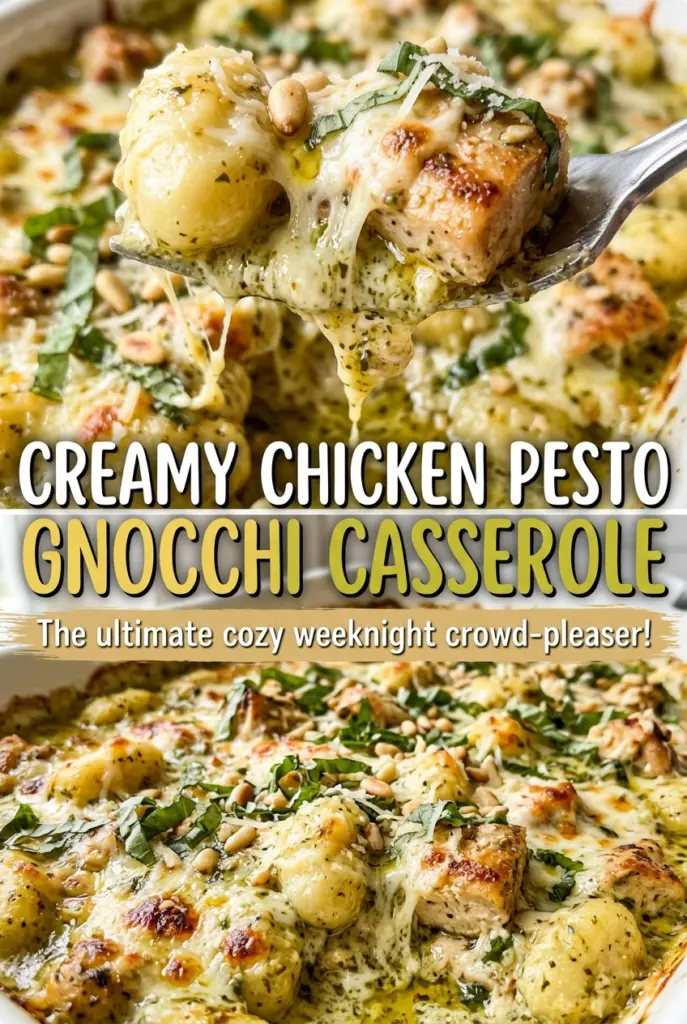
Creamy Chicken Pesto Gnocchi Casserole
The mozzarella turns glossy before the casserole starts bubbling at the edges, and that’s my cue to watch the center. This Creamy Chicken Pesto Gnocchi Casserole gets its cozy, saucy…

By Ava
•
•
Reading time: 9 min
Tip: save now, make later.
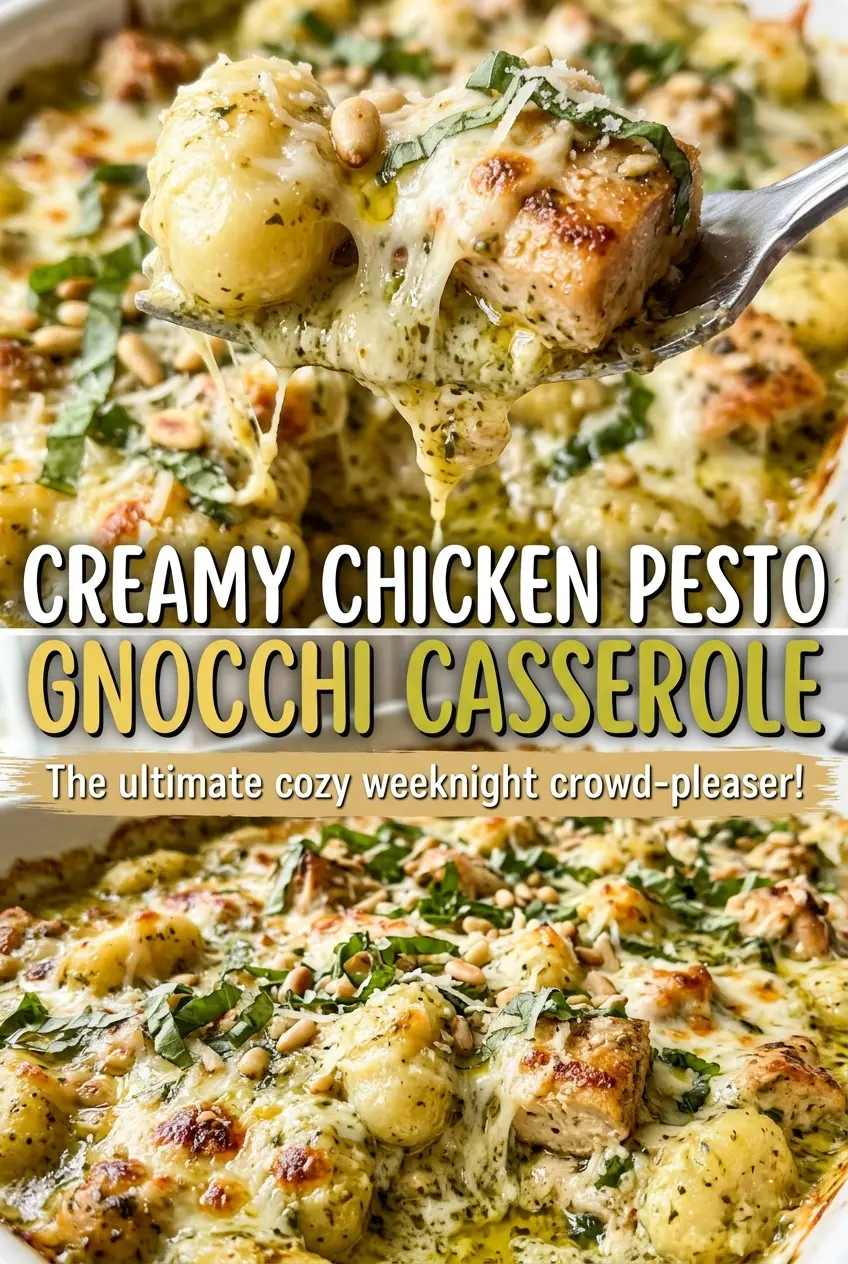
The mozzarella turns glossy before the casserole starts bubbling at the edges, and that’s my cue to watch the center. This Creamy Chicken Pesto Gnocchi Casserole gets its cozy, saucy texture from cooking the gnocchi first, then letting it finish in the oven with chicken, spinach, and a creamy pesto sauce. The short bake gives the cheese time to melt without asking the gnocchi to soak up sauce for too long.
I like that the chicken is already cooked before it goes into the pan, so this is a good place to use shredded or diced leftovers. The sauce comes together on the stovetop, then everything moves into one baking dish. You get a bubbling, cheesy top and a creamy center without juggling separate pans at the table.
Prepared basil pesto brings plenty of herby flavor, while heavy cream and chicken broth make a sauce that coats the gnocchi instead of disappearing underneath it. Stirring in the pesto after the saucepan leaves the heat keeps the basil bright. The finished casserole is rich, savory, and full of soft gnocchi and wilted spinach.
Kitchen Note
Have the cooked chicken ready before you start the sauce. Once the pesto, spinach, and gnocchi go into the saucepan, the mixture comes together quickly and is ready to transfer to the baking dish.
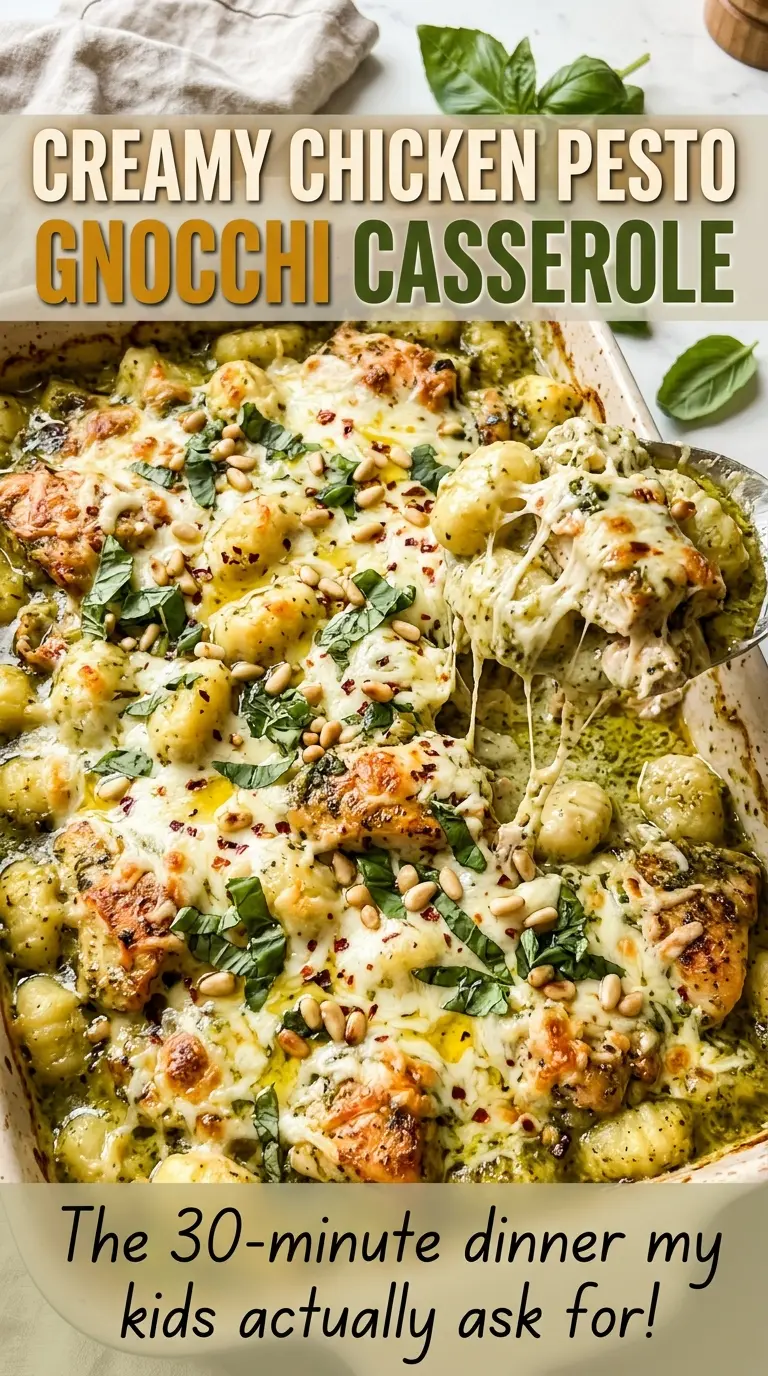
Save this Creamy Chicken Pesto Gnocchi Casserole for a cozy dinner with tender gnocchi, wilted spinach, and a bubbling mozzarella top.
Why the Pesto Goes In After the Sauce Leaves the Heat
Basil pesto brings both herb flavor and a fragrant, fresh aroma. If it simmers along with the cream sauce, that bright basil character can fade. Taking the saucepan off the burner before stirring in the pesto lets it blend into the warm sauce without cooking it further.
That order also makes the sauce easier to control. First, the broth and cream thicken with the butter-and-flour base; then the pesto, chicken, spinach, and cooked gnocchi go in together. The sauce should already be thick enough to cling before those ingredients are added. Once everything is coated, transfer it to the dish and let the oven finish the job. The pesto’s herby flavor comes through in the creamy sauce rather than getting lost beneath the cheese.
This small timing choice matters even more because the casserole only bakes until the edges bubble and the mozzarella melts. There’s no long oven simmer to bring the flavors back after the herbs have been cooked down.
The Gnocchi and Sauce Choices That Make This Casserole Work
- Shelf-stable potato gnocchi — Its package directions give you the right cooking time for that particular brand, so use them rather than guessing. Drain the gnocchi well before it goes into the sauce; extra cooking water can thin the creamy coating. The shelf-stable package is convenient, while a more expensive brand isn’t necessary for this baked dish.
- Prepared basil pesto — Pesto supplies the concentrated basil, garlic, and savory notes that would take several ingredients to build from scratch. A prepared jar works well here, since the cream rounds out its intensity. A fresh-tasting pesto matters more than choosing a premium brand.
- Heavy cream and chicken broth — The cream gives the sauce richness, while broth keeps it savory instead of tasting like plain cream. Use a broth you like to sip; a strongly salty one can make the finished casserole taste saltier than expected. The flour-and-butter base is what gives this liquid enough body to coat the gnocchi.
- Cooked chicken — Shredded chicken disperses through the sauce, while diced chicken gives you more distinct pieces. Either works, so use cooked chicken that’s moist and mild enough to sit comfortably alongside the pesto. This is a practical spot for leftover roast chicken.
- Baby spinach — Tender leaves wilt quickly in the warm mixture and add a fresh, earthy contrast to the creamy sauce. If you wash the spinach, dry it well before adding it so water doesn’t loosen the sauce.
- Shredded mozzarella — Low-moisture mozzarella melts into an even, stretchy top. Fresh mozzarella holds more water and can leave the surface wetter, so the ordinary shredded kind is the dependable choice for this casserole.
From Package-Cooked Gnocchi to a Bubbling Casserole
Cook and Drain the Gnocchi
Heat the oven to 375°F and grease a 9×13-inch baking dish. Cook the shelf-stable gnocchi according to the package directions, then drain it thoroughly. The pieces should be tender, not left to cook in the casserole from raw. Set them aside while you make the sauce.
Build the Cream Sauce
Melt the butter in a large saucepan over medium heat, then add the minced garlic and cook for 30 seconds. Stir in the flour and cook for 1 minute so it combines with the butter. Gradually whisk in the chicken broth and heavy cream, then add the salt and pepper. Keep whisking for 3 to 5 minutes, until the sauce thickens; if it still looks thin and watery, give it more time within that range.
Coat the Chicken, Spinach, and Gnocchi
Take the saucepan off the heat before stirring in the pesto. Add the cooked chicken, baby spinach, and drained gnocchi, and fold until the sauce coats everything and the spinach just begins to wilt. The spinach doesn’t need to disappear into the sauce; its leaves will soften more in the oven. Mix gently so the cooked gnocchi stays intact.
Top, Bake, and Rest
Transfer the mixture to the prepared dish and spread it evenly, then scatter the mozzarella over the top. Bake uncovered for 15 to 20 minutes, until the casserole bubbles around the edges and the center reaches 165°F. If the center isn’t there yet, return the dish to the oven and check again rather than relying only on the cheese’s color. Let the casserole rest for 5 minutes before serving so the sauce settles around the gnocchi.
Three Swaps for a Different Take on the Casserole
Use Fontina for a Softer, Buttery Cheese Top
Replace the mozzarella with shredded fontina. It melts smoothly and gives the top a richer, buttery taste, with less of mozzarella’s stretchy pull.
Make It Gluten-Free
Use gluten-free potato gnocchi and replace the all-purpose flour with a gluten-free 1:1 flour blend. Cook the gnocchi according to its package directions; the sauce will still thicken, though the dumplings’ texture can vary by brand.
Trade Basil Pesto for Sun-Dried Tomato Pesto
Stir prepared sun-dried tomato pesto into the sauce instead of basil pesto. The casserole keeps its creamy texture but takes on a deeper, tangier, tomato-forward flavor.
Storage and Reheating
- Refrigerator: Store leftovers in an airtight container for 3 to 4 days. The gnocchi will soften as it sits in the sauce.
- Freezer: Freeze cooled portions in airtight containers for up to 2 months. Thaw them in the refrigerator; the gnocchi may be a little softer after freezing.
- Reheating: Warm individual portions in the microwave, stirring partway through if you can, or cover the baking dish and heat it in a 350°F oven until hot throughout. Avoid blasting it with high microwave power, which can make the sauce separate around the edges.
Questions That Come Up When Making This Gnocchi Casserole
Creamy Chicken Pesto Gnocchi Casserole
Ingredients
Equipment
Method
- Heat the oven to 375°F.
- Grease a 9x13-inch baking dish.
- Cook the potato gnocchi according to the package directions, then drain.
- Melt the unsalted butter in a large saucepan over medium heat.
- Add the garlic and cook for 30 seconds.
- Stir in the all-purpose flour and cook for 1 minute.
- Gradually whisk in the chicken broth and heavy cream.
- Add the kosher salt and black pepper.
- Cook, whisking, for 3 to 5 minutes, until the sauce thickens.
- Remove the saucepan from the heat.
- Stir in the basil pesto, chicken, baby spinach, and drained potato gnocchi until the spinach begins to wilt and everything is coated in sauce.
- Transfer the mixture to the prepared baking dish and spread it evenly.
- Sprinkle the mozzarella cheese over the top.
- Bake uncovered for 15 to 20 minutes, until the casserole is bubbling around the edges and the center reaches 165°F.
- Let the casserole rest for 5 minutes before serving.