
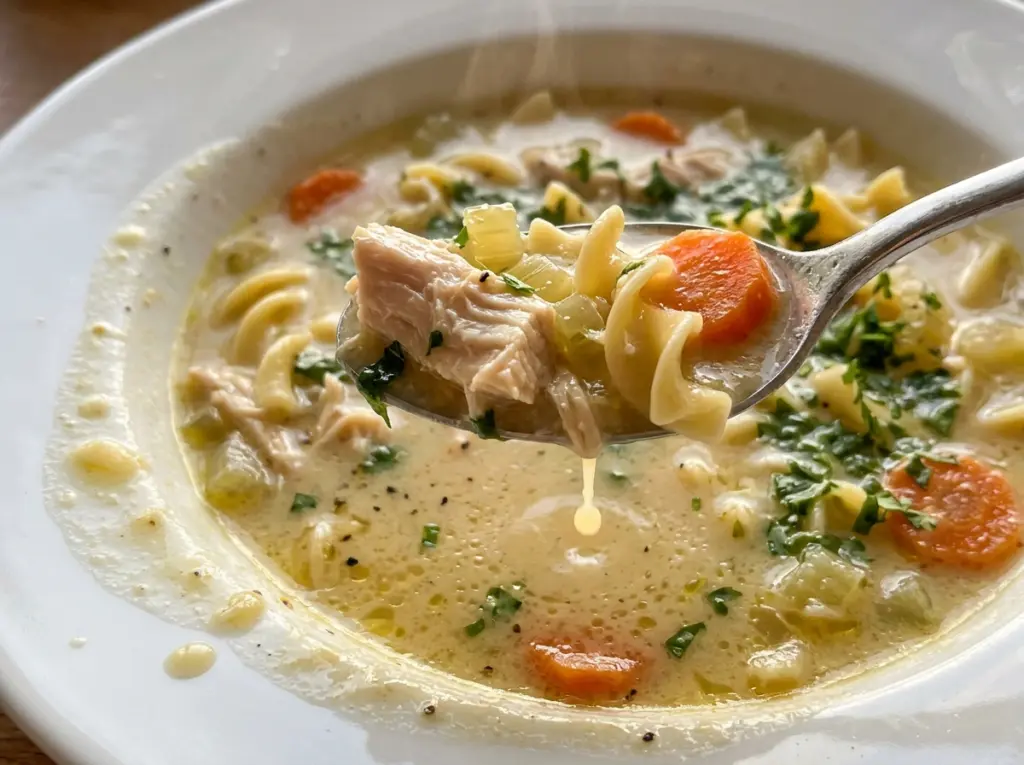
Creamy Chicken Noodle Soup – Cozy Dinner Recipe
When the diced onion hits the melted butter, the celery and carrots soon follow, and the pot starts smelling like the beginning of a proper dinner. Creamy chicken noodle soup…

By Ava
•
•
Reading time: 9 min
Tip: save now, make later.
When the diced onion hits the melted butter, the celery and carrots soon follow, and the pot starts smelling like the beginning of a proper dinner. Creamy chicken noodle soup can go from comforting to gluey if the noodles overcook or the broth never gets enough body. This version keeps those jobs in the right order: the chicken simmers in the broth first, then the wide egg noodles cook while the chicken is shredded.
I build the creamy base before adding the cream. A little flour coats the softened vegetables, and whisking in the broth gradually gives it a smooth start. Heavy cream goes in at the end, so the soup finishes silky instead of tasting like a bowl of cream. The result is a full pot of tender chicken, soft vegetables, and noodles in a savory broth that still pours easily into the bowl.
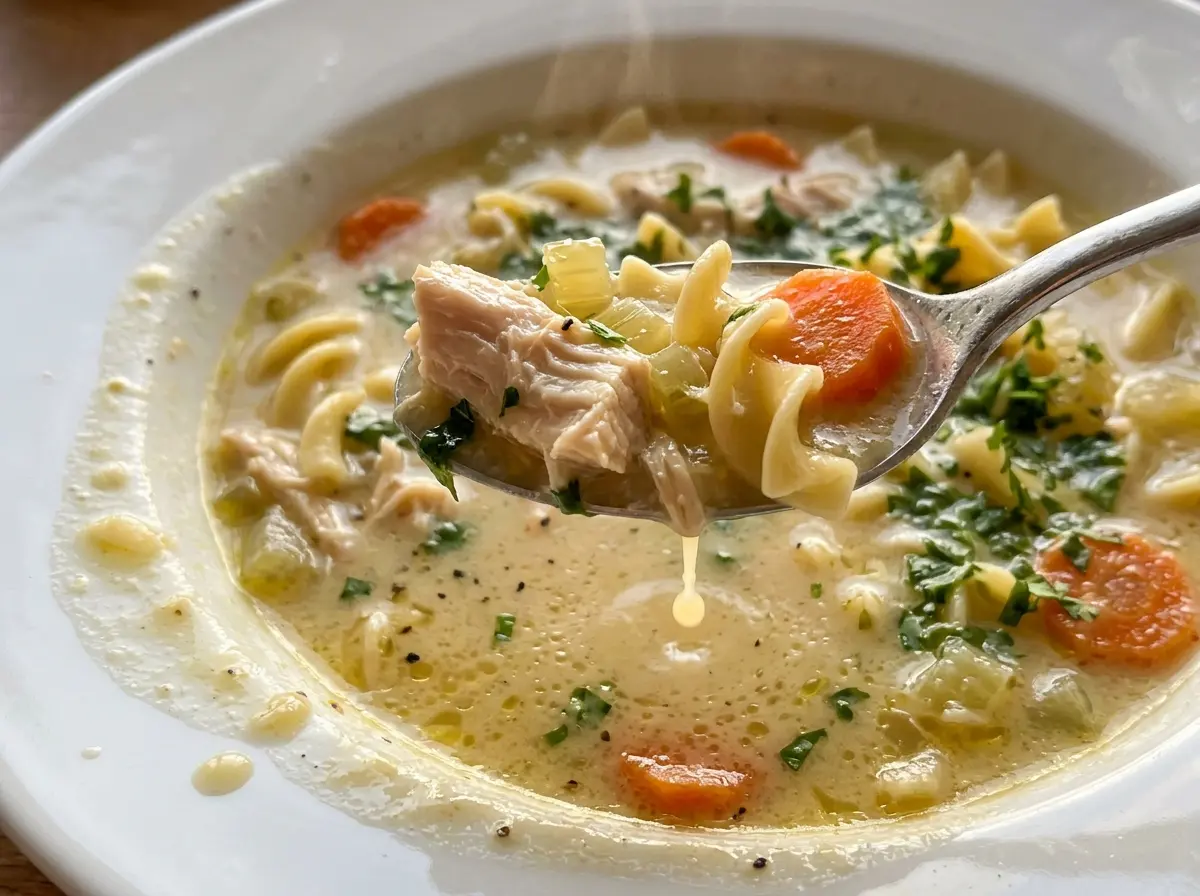
Kitchen Note
Have a cutting board ready before you lift out the chicken. The noodles cook while you shred it, so the chicken doesn’t sit around cooling while you get organized.
Save this creamy chicken noodle soup for a cozy dinner with tender chicken and a smooth, flour-thickened broth.
Why the Cream Goes In After the Broth Has Body
Heavy cream adds richness, but it isn’t doing all the thickening here. The flour gets stirred into the butter-softened vegetables first, then the broth is whisked in gradually. That gives the flour a chance to disperse throughout the liquid instead of clumping in one spot. It also means the soup has a smooth base before the cream ever touches the pot.
That order matters when the soup is already hot. Adding flour straight to a pot of broth is more likely to leave little lumps that are hard to whisk out. Adding the cream near the finish keeps the broth rounded and silky without needing to boil it for a long time. The noodles contribute a little body as they cook, too, so the finished soup stays creamy but still ladles easily.
What Builds the Soup’s Creamy, Savory Base

- Unsalted butter and the vegetables — Butter gives the onion, carrots, and celery a gentle start and carries the thyme through the base. Standard grocery-store vegetables work well; slice the carrots evenly so they soften alongside the other vegetables.
- All-purpose flour — This is the soup’s built-in thickener. Stir it until no dry flour remains before adding liquid. Leaving it out makes a thinner, brothier soup, and none of the other listed ingredients does the same thickening job.
- Low-sodium chicken broth — A low-sodium broth gives you room to season the soup without the saltiness getting ahead of the vegetables and chicken. A basic boxed broth is fine; the gradual whisking matters more than choosing a premium brand.
- Boneless, skinless chicken breasts — They cook directly in the broth, then shred easily for a tender spoonful in every serving. Breasts vary in thickness, so use the thickest part of each breast as your doneness check rather than judging by color alone.
- Wide egg noodles — Their broad shape gives the soup its familiar noodle-rich texture. Different brands can take different amounts of time, so use the package timing as your guide and check for tenderness before draining the cooking time out.
- Heavy cream — It brings the smooth, rich finish that broth alone can’t match. Leaving it out makes the soup lighter and more broth-forward, but there isn’t a like-for-like dairy-free replacement among the ingredients in this pot.
- Dried thyme, bay leaf, and fresh parsley — Thyme seasons the base, while the bay leaf quietly infuses the broth as the chicken cooks. Parsley goes in at the end for a fresh note; ordinary fresh parsley is all you need.
The Stages That Keep the Chicken Tender and the Noodles Just Right
Soften the Vegetables Before Thickening
Melt the butter in a 7-quart Dutch oven over medium heat, then add the onion, carrots, celery, salt, pepper, and thyme. Cook for 6 to 8 minutes, stirring occasionally, until the vegetables begin to soften. They shouldn’t be browned or falling apart; they need just enough time to lose their raw edge. If the pot looks dry, keep stirring so the vegetables cook evenly in the butter.
Coat the Vegetables, Then Whisk in Broth
Sprinkle the flour over the softened vegetables and stir for 1 minute, until no dry flour remains. Pour in the broth gradually while whisking, and scrape the bottom of the pot as you go. Adding the liquid in stages helps the flour blend in smoothly. Keep whisking until the broth looks even, with no pale flour pockets clinging to the vegetables.
Simmer the Chicken Gently
Add the chicken breasts and bay leaf, then bring the pot to a gentle simmer. Lower the heat to maintain that simmer and cook uncovered for 18 to 25 minutes, until the thickest part of each breast reaches 165°F. Keep the bubbles gentle rather than letting the broth boil hard; a rolling boil can make the chicken tougher. Lift the chicken to a cutting board and discard the bay leaf.
Cook the Noodles and Finish the Soup
Bring the soup to a boil, add the wide egg noodles, and cook according to the package directions, usually 6 to 8 minutes, until tender. Shred the chicken while the noodles cook, then return it to the pot with the heavy cream and parsley. Simmer gently for 2 to 3 minutes, just until everything is heated through. Don’t leave the noodles bubbling away after they’re tender or they’ll keep softening in the hot broth.
Two Simple Changes for a Different Bowl
For a lower-carb bowl, leave out the noodles
Skip the egg noodles and serve the chicken and vegetables in the creamy broth. The soup will be less starchy and more broth-forward, with no noodle texture; the rest of the pot keeps its usual savory, creamy character.
A lighter finish without the cream
Leave out the heavy cream for a less rich, broth-forward soup. The flour still gives the broth some body, but it won’t have the same silky finish. The butter remains in the base, so this change doesn’t make the soup dairy-free.
Storage and Reheating
- Refrigerator: Refrigerate within 2 hours and keep for 3 to 4 days. The noodles will continue to absorb broth and soften as the soup sits.
- Freezer: Freeze in airtight containers for up to 2 to 3 months. The noodles may soften and the cream may separate slightly after thawing, so the texture is best fresh.
- Reheating: Warm gently on the stovetop, stirring as it heats. Avoid a hard boil, which can make the cream less smooth and the noodles too soft.
Questions That Come Up When Making Chicken Noodle Soup
Creamy Chicken Noodle Soup – Cozy Dinner Recipe
Ingredients
Equipment
Method
- Melt the butter in a 7-quart Dutch oven over medium heat.
- Add the onion, carrots, celery, salt, pepper, and thyme; cook for 6–8 minutes, stirring occasionally, until the vegetables begin to soften.
- Sprinkle the flour over the vegetables and stir for 1 minute, until no dry flour remains.
- Gradually whisk in the broth, scraping the bottom of the pot.
- Add the chicken breasts and bay leaf, bring to a gentle simmer, and reduce the heat to maintain it.
- Cook uncovered for 18–25 minutes, until the thickest part of each breast reaches 165°F.
- Transfer the chicken to a cutting board and discard the bay leaf.
- Bring the soup to a boil, add the egg noodles, and cook according to the package directions, usually 6–8 minutes, until tender.
- Meanwhile, shred the chicken.
- Stir the shredded chicken, heavy cream, and parsley into the soup and simmer gently for 2–3 minutes, until heated through.