
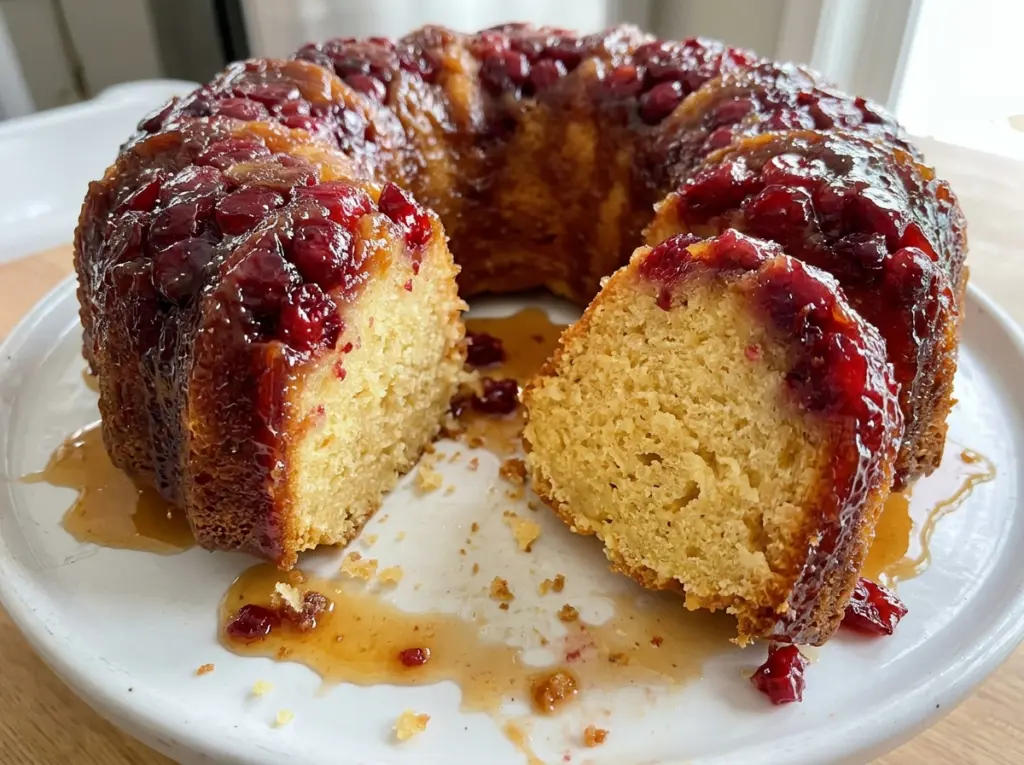
Cranberry Upside Down Bundt Cake
The first thing you notice when this cake comes out of the oven is the cranberry layer bubbling around the center tube. It looks loose, but that buttery brown-sugar syrup…

By Ava
•
•
Reading time: 9 min
Tip: save now, make later.
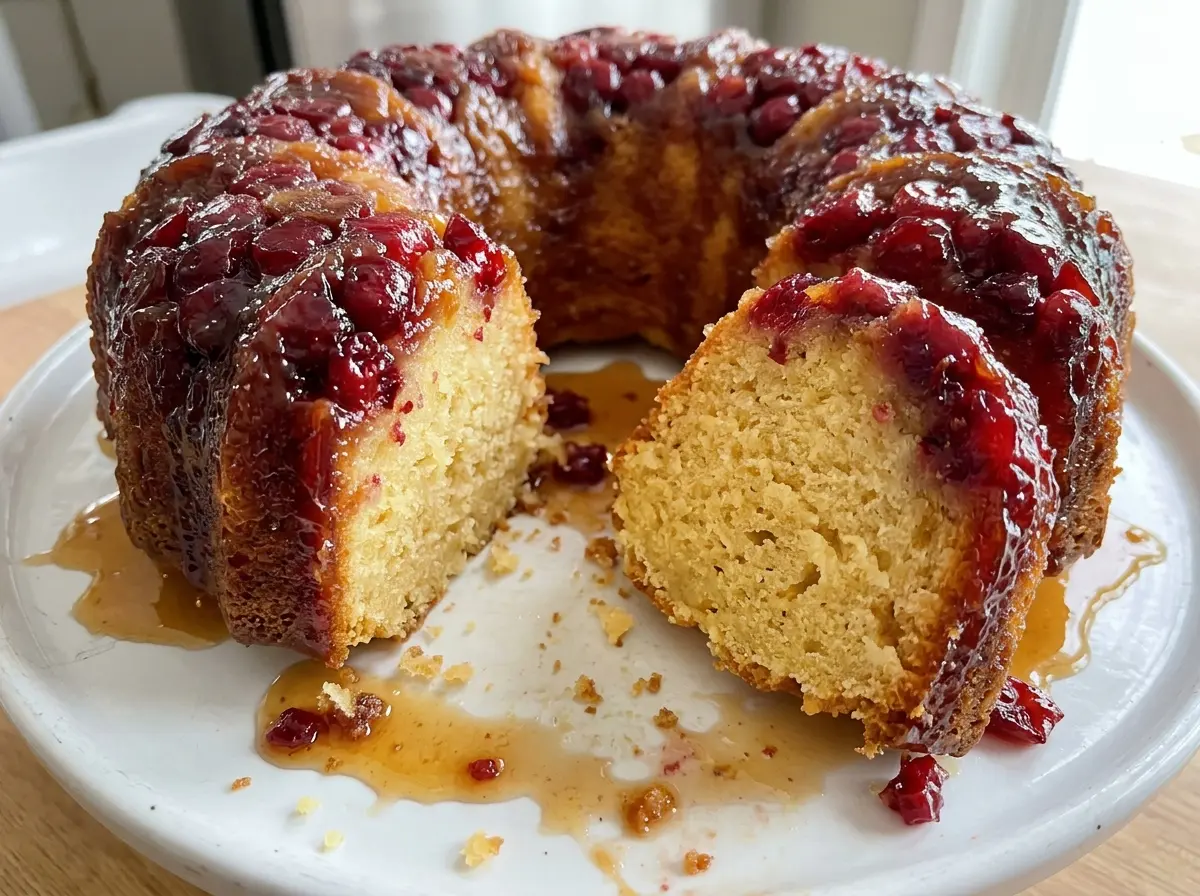
The first thing you notice when this cake comes out of the oven is the cranberry layer bubbling around the center tube. It looks loose, but that buttery brown-sugar syrup settles as the cake cools, turning into a glossy crown when you invert the pan. Cranberry Upside Down Bundt Cake has a tender, lightly citrusy crumb underneath fruit that stays pleasantly tart.
I build the topping right in a small saucepan, then spread it across the bottom of a well-coated Bundt pan before arranging the berries. The batter goes over the cranberries in one layer, so there’s no need to stir fruit through it or worry about berries streaking the crumb. Sour cream and oil keep the cake moist, while orange zest gives the cranberries a bright note. Let the cake cool fully before slicing, and you’ll see neat wedges with fruit all the way around.
Kitchen Note
Spoon the flour into your measuring cup and level it off instead of dipping the cup into the bag. That small difference keeps the crumb from turning heavy.
Save this Cranberry Upside Down Bundt Cake for its tart berry crown, buttery brown-sugar topping, and soft orange-scented crumb.
Why the Cranberries Go Under the Batter
Upside-down cake depends on the order of the layers. The cranberries sit directly on the butter, brown sugar, and water mixture, where the berries soften and share their tart juices with the syrup as the cake bakes. Once the cake is turned out, that layer becomes the top; the fruit is visible instead of hidden in the crumb.
Putting the berries into the batter would give you a different cake. They could settle unevenly, and the syrup would no longer coat the fruit in the same way. Spreading the cranberries evenly over the sugar mixture gives each slice a generous share of berries. The batter is thick enough to spoon gently over them, so pour it in carefully and smooth the surface without dragging the fruit out of place. The center tube matters, too: coat its surface along with the grooves so the cake can release cleanly after its short rest.
What Gives the Berry Layer Its Shine and the Cake Its Soft Crumb

- Fresh cranberries — Choose firm berries without shriveled spots. Their tartness balances the brown-sugar topping, and their skins hold the fruit together as it bakes. Fresh berries give the clearest layer and the most reliable result here.
- Butter and light brown sugar — Together with water, these cook into the syrup that coats the fruit. The brown sugar brings a gentle molasses note; a familiar store brand works well, but use light brown sugar for the intended balance.
- All-purpose flour and leaveners — Baking powder and baking soda lift the sour-cream batter. Whisk them thoroughly with the flour before adding it to the wet ingredients so the rise is even, rather than concentrated in a few spots.
- Neutral oil, sour cream, and eggs — Oil helps the crumb stay moist after cooling, while sour cream adds tenderness and a little acidity. Canola or vegetable oil, both neutral choices, work here. Room-temperature eggs and dairy blend more smoothly into the sugar-and-oil mixture.
- Orange zest and vanilla — Finely grated orange zest brings a fresh citrus aroma that sits naturally beside tart cranberries. The vanilla rounds out the batter; standard extract is fine, while fresh zest makes the bigger difference to the cake’s aroma.
Building the Topping, Batter, and Clean Bundt Release
Make a gently bubbling cranberry base
Heat the oven to 350°F and generously coat a 10-inch, 12-cup Bundt pan with baking spray that includes flour, covering the center tube and grooves. In a 1-quart saucepan, stir the butter, brown sugar, and water over medium heat until the butter melts and the mixture bubbles gently, about 2 minutes. Pour it into the pan, then arrange the fresh cranberries evenly over the syrup. Avoid cooking the mixture hard; you want a gentle bubble, not a thick, rapidly boiling caramel.
Whisk the wet ingredients before folding
Whisk the flour, baking powder, baking soda, and salt in a medium bowl. In a separate large bowl, whisk the granulated sugar and oil, then whisk in the eggs one at a time. Add the sour cream, milk, vanilla, and orange zest and whisk until the mixture looks combined. Fold in the flour mixture just until no dry flour remains; stop there rather than beating the batter smooth.
Cover the fruit and bake until the center tests clean
Spoon the batter evenly over the cranberries and gently smooth the top. Bake for 50 to 60 minutes, until the cake is deep golden. Insert a tester into the cake itself, avoiding the cranberries; it should come out clean or with a few moist crumbs. The syrup and berries can make a tester look wet, so choose a spot of cake rather than a cranberry.
Give the cake time to release and set
Set the pan on a wire rack and let it rest for 10 minutes before inverting it onto a serving plate. Leave the pan in place for 2 minutes after turning it over, then lift it away. If a berry stays behind, place it back on the cake while the topping is still warm. Cool the cake for at least 1 hour before slicing so the crumb and sticky fruit layer have time to settle.
Small Changes That Keep This Bundt Cake in Balance
Arrange the berries in an even pattern
For a more deliberate cranberry crown, place the berries in close, even rows around the pan instead of scattering them casually. Keep the same amount of fruit and cover the syrup evenly; the cake will taste the same, but each slice will have a tidy, patterned top.
Use either neutral oil you have
Canola and vegetable oil both suit this cake. Choose either one in the same amount; both keep the crumb moist without competing with the orange zest or tart cranberries.
Storage and Reheating
- Refrigerator: Cover the cooled cake and refrigerate it for up to 4 days. The cranberry topping will firm up when chilled.
- Freezer: Freeze slices wrapped tightly, then place them in a freezer-safe container for up to 2 months. Thaw in the refrigerator.
- Reheating: Warm an individual slice briefly in the microwave until just comfortable to eat. Long heating can dry the crumb and make the topping overly hot.
Questions That Come Up When Baking This Cranberry Bundt
Cranberry Upside Down Bundt Cake
Ingredients
Equipment
Method
- Heat the oven to 350°F.
- Generously coat a 10-inch, 12-cup Bundt pan, including the center tube and grooves, with the baking spray.
- In a 1-quart saucepan, combine the butter, brown sugar, and water; cook over medium heat, stirring, until the butter melts and the mixture bubbles gently, about 2 minutes.
- Pour the mixture into the prepared pan.
- Arrange the cranberries evenly over the mixture.
- In a medium bowl, whisk together the flour, baking powder, baking soda, and salt.
- In a large bowl, whisk the granulated sugar and oil until combined, then whisk in the eggs one at a time, followed by the sour cream, milk, vanilla, and orange zest.
- Add the flour mixture to the wet ingredients and fold just until no dry flour remains.
- Spoon the batter evenly over the cranberries.
- Smooth the top gently.
- Bake for 50 to 60 minutes, until the cake is deep golden and a tester inserted into the cake, avoiding the cranberries, comes out clean or with a few moist crumbs.
- Set the pan on a wire rack and let the cake rest for 10 minutes.
- Invert it onto a serving plate and leave the pan in place for 2 minutes before lifting it off.
- Cool for at least 1 hour before slicing.