
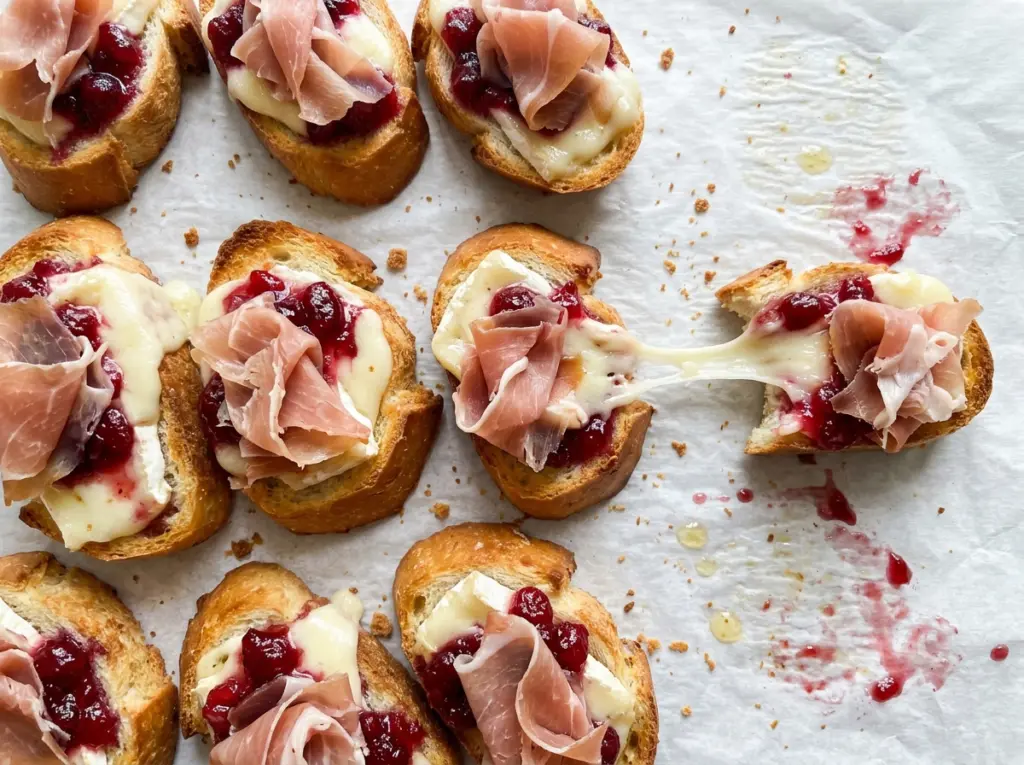
Cranberry Brie and Prosciutto Crostini
The first crostini on the tray usually tells me whether the bread is ready: if it bends under the toppings, it needed a little more time in the oven. That…

By Ava
•
•
Reading time: 9 min
Tip: save now, make later.
The first crostini on the tray usually tells me whether the bread is ready: if it bends under the toppings, it needed a little more time in the oven. That quick first bake gives these cranberry Brie and prosciutto crostini a crisp base that can hold the warm cheese and spoonful of cranberry sauce without turning limp right away.
I cut the baguette into 24 slices, brush the tops with olive oil, and bake them before adding anything else. Then the Brie and whole-berry cranberry sauce get a short turn in the oven together. The prosciutto and fresh thyme go on after baking, so the prosciutto keeps its tender texture and the thyme stays fragrant. Each of the eight servings gets three toasts, with creamy Brie, tart berries, and salty prosciutto on every bite.
These are best assembled close to serving, while the bread still has a crisp edge and the Brie is warm and soft. The contrast is what makes this small appetizer feel complete without needing extra toppings or a complicated finish.
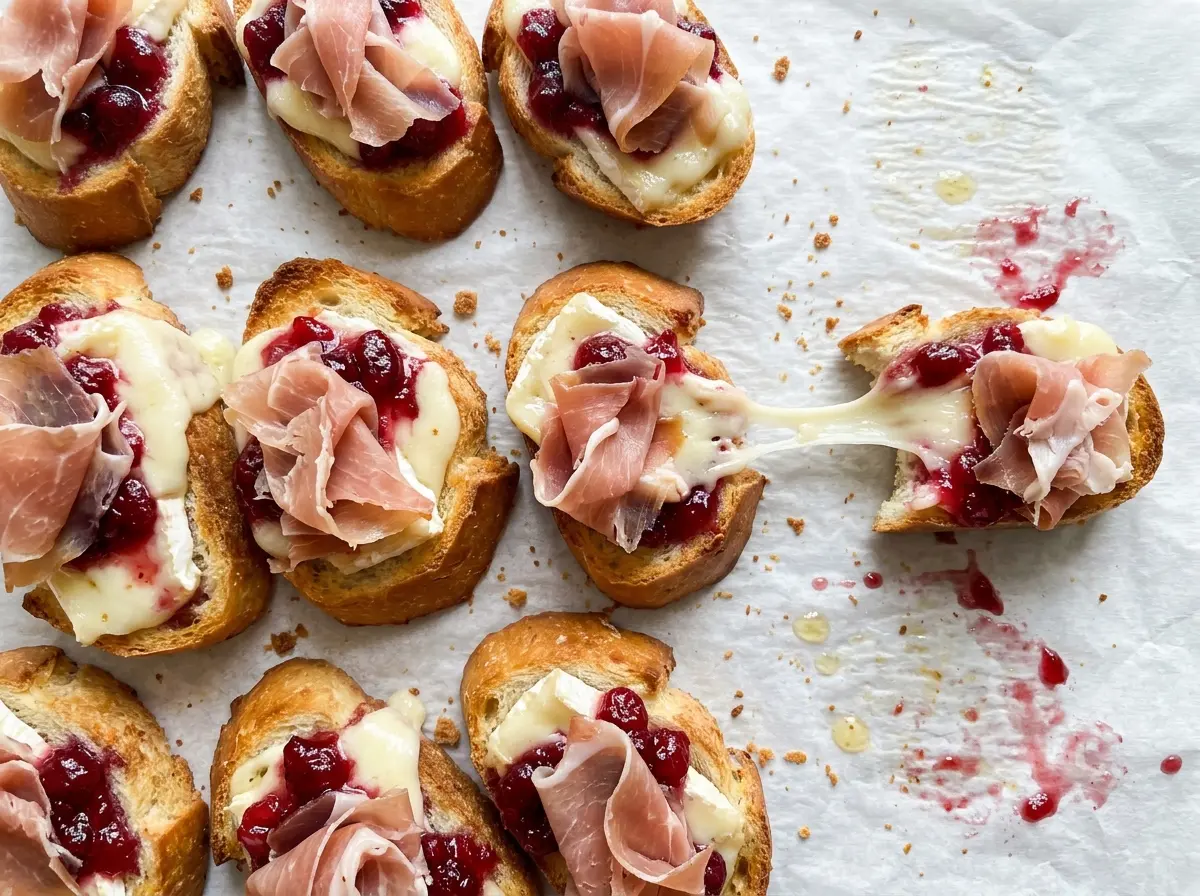
Kitchen Note
Spoon the cranberry sauce over the Brie instead of letting it spill onto the toast. The berries stay in place, and the edges of the bread keep their crisp bite.
Save these cranberry Brie and prosciutto crostini for a party tray with crisp toast, warm cheese, and tart whole-berry cranberry sauce.
Why the Toast Needs Its Own Bake Before the Toppings
Brie softens quickly, and cranberry sauce brings moisture with it. If both go onto raw bread before the first bake, the toppings cover the surface that needs to dry and turn golden. Baking the baguette slices on their own gives them a head start, so they stay sturdy beneath the cheese instead of becoming soft all the way through.
That crisp base also matters because these are served warm, not baked until the topping is dry. The second trip to the oven is brief: it softens the Brie and warms the cranberry sauce, but it won’t turn the toast into a hard cracker. You want a little crunch at the edges and enough structure in the middle to lift each crostini without the toppings sliding off.
The baguette’s size gives you a helpful guide for the tray: a 12- to 16-ounce loaf cut into 24 slices makes three crostini per serving. Keep the slices close to 1/2 inch thick. Much thinner pieces have less room to support the topping, while thicker ones take longer to crisp through. Those proportions keep the bread, Brie, and cranberry in balance in each bite.
What the Brie, Berries, and Prosciutto Each Bring

- Baguette — A baguette gives you a firm, evenly shaped base that’s easy to cut into 24 rounds. Choose a loaf in the listed weight range and slice it evenly; if you need a gluten-free option, a gluten-free baguette can stand in, though its slices may toast to a different texture.
- Olive oil — A light coating helps the tops of the bread turn crisp and golden. Olive oil brings a gentle fruity note; if you’re out, another mild cooking oil can be brushed on in the same amount, though you’ll lose that note.
- Brie — Brie softens into a creamy layer without needing a separate sauce. Camembert is the closest swap and can be used in the same amount, but it has a more earthy taste. Cut the cheese into small slices so each toast gets a manageable piece.
- Whole-berry cranberry sauce — The whole berries bring tartness and a little texture alongside the soft cheese. Smooth cranberry sauce can work, but it won’t have the same berry texture and can spread more easily over the Brie.
- Prosciutto — Thin slices tear easily into small pieces, so you can add a little to each crostini without covering up the cheese and cranberries. If you leave it off, the toasts will be less salty and savory; there isn’t a direct replacement that tastes quite the same.
- Fresh thyme — Fresh leaves add a clean, herbal finish after the crostini come out of the oven. If you only have dried thyme, use a small pinch in place of the fresh leaves; dried herbs taste more concentrated, so a full teaspoon would overwhelm the topping.
Building the Crostini in Two Oven Bakes
Cut and Oil the Baguette
Heat the oven to 400°F, then cut the baguette into 24 slices about 1/2 inch thick. Arrange them on a large rimmed baking sheet, leaving the slices in a single layer, and brush the tops with all the olive oil. Even slices help the tray toast at the same pace. If the rounds vary a little, keep an eye on the thinner ones first.
Toast Until the Edges Turn Golden
Bake the slices for 6 to 8 minutes, until they’re crisp and lightly golden at the edges. Look for a dry, toasted surface rather than a dark brown center. The bread should feel firm when you lift a piece from the sheet. Pulling it before it reaches that crisp stage leaves it more vulnerable to the moisture in the topping.
Add Brie and Cranberry
Set one small slice of Brie on each toast, then spoon cranberry sauce over the cheese. Spread the topping gently rather than pressing down, which can crack a thin toast or push sauce onto the baking sheet. Keep the cheese and sauce on the bread so each piece stays easy to pick up. The Brie doesn’t need to cover every edge; it will soften during the next bake.
Soften the Brie and Finish
Return the topped slices to the oven for 3 to 5 minutes, until the Brie is softened. It should look relaxed and creamy, not browned or bubbling across the whole surface. Take the baking sheet out and add the torn prosciutto and fresh thyme leaves to each crostini. Serve warm while the bread still has a crisp edge.
Easy Changes for Different Tables and Dietary Needs
Make the Crostini Gluten-Free
Use a gluten-free baguette in place of the regular baguette, then cut 24 slices about 1/2 inch thick and follow the same two-bake method. Gluten-free loaves vary in how quickly they brown, so use the crisp, lightly golden edges as your cue. The texture may be more delicate, but the Brie and cranberry topping still works well.
Leave Off the Prosciutto
For a version without cured meat, omit the prosciutto and finish the warm Brie and cranberry with thyme. The topping will taste milder and less savory, with the tart berries and creamy cheese more prominent. This change removes the prosciutto but doesn’t make the crostini vegan or guarantee that the Brie is suitable for a vegetarian diet.
Use Camembert for a Deeper Cheese Flavor
Replace the Brie with the same amount of Camembert, cut into small slices. It softens on the toast in much the same way, but brings a more earthy, assertive flavor that stands up to the cranberry. Keep the prosciutto and thyme as written for a familiar salty-herbal finish.
Storage and Reheating
- Refrigerator: Refrigerate leftover assembled crostini in an airtight container within 2 hours and use within 3 to 4 days. The bread will soften as it sits with the toppings.
- Freezer: I don’t recommend freezing assembled crostini; the bread loses its crisp texture and the Brie can change after thawing.
- Reheating: Warm leftovers on a baking sheet in a 400°F oven until the Brie is soft again. The toast can dry out if it stays in too long, so check it as it warms.
Questions That Come Up While Making These Crostini
Cranberry Brie and Prosciutto Crostini
Ingredients
Equipment
Method
- Heat the oven to 400°F.
- Cut the baguette into 24 slices about 1/2 inch thick.
- Arrange the slices on a large rimmed baking sheet.
- Brush the tops with all the olive oil.
- Bake for 6 to 8 minutes, until the slices are crisp and lightly golden at the edges.
- Place a slice of Brie on each toast.
- Spoon cranberry sauce over the Brie.
- Bake for 3 to 5 minutes, until the Brie is softened.
- Top each crostini with prosciutto and thyme.
- Serve warm.