
Cranberry Bread Recipes – Homemade Recipe
Orange zest perfumes the bowl before the loaf even reaches the oven, while the chopped cranberries add bright, tart flecks to the batter. I like this homemade cranberry bread because…

By Ava
•
•
Reading time: 8 min
Tip: save now, make later.
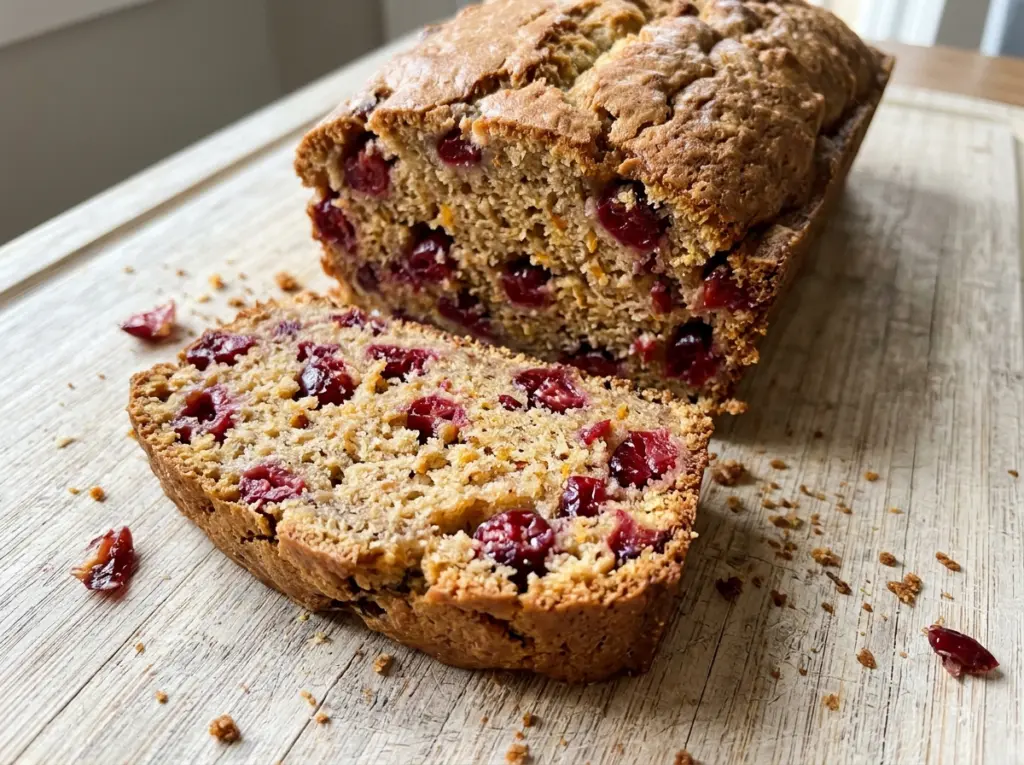
Orange zest perfumes the bowl before the loaf even reaches the oven, while the chopped cranberries add bright, tart flecks to the batter. I like this homemade cranberry bread because the fruit stays noticeable in every slice instead of fading into a sweet, plain crumb. It’s a simple quick bread: whisk the ingredients by hand, fill a loaf pan, and let the oven do the work.
The orange juice brings more than citrus flavor; its acidity also has a job in the batter. I keep the mixing gentle once the wet and dry ingredients meet, then fold in the berries so they keep their shape. The loaf comes out with a tender crumb, a lively cranberry bite, and orange in the background from the first slice to the last.
Kitchen Note
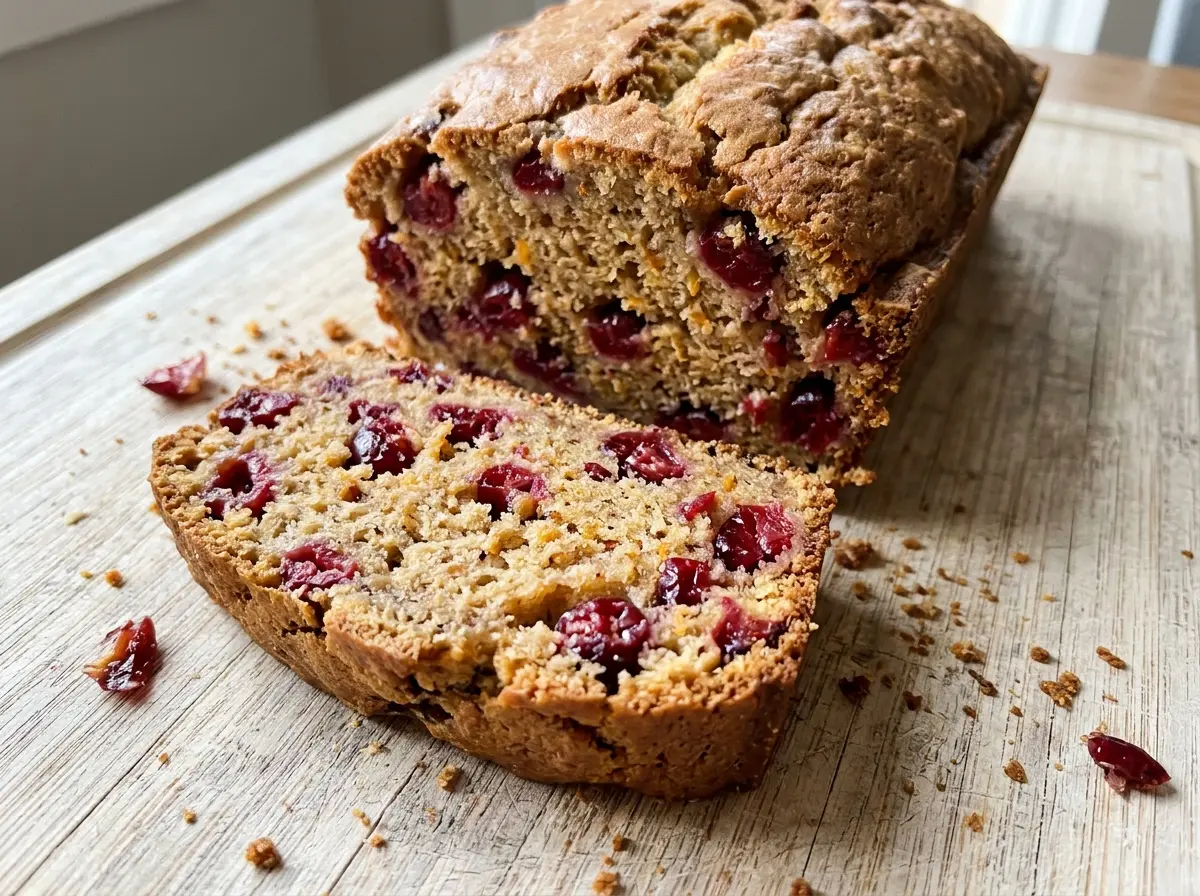
Chop the cranberries with a knife rather than pulsing them into tiny bits. Coarse pieces stay tart and distinct, while overly small pieces can streak the batter pink.
Save this homemade cranberry bread for a bake with bright orange flavor and tart, berry-filled slices.
Why the Orange Juice Is Part of the Rise, Not Just the Flavor
Orange juice gives this loaf its citrus character, but its acidity also works with the baking soda. That small amount of soda needs an acidic ingredient to react with; the juice supplies it while adding liquid to the batter. Baking powder provides another source of lift, so the loaf doesn’t depend on the juice alone to rise.
That balance is why replacing the orange juice with plain water isn’t a neutral change. You’d lose the citrus and the acidity that helps the baking soda do its job. The zest adds a more concentrated orange aroma without changing the batter’s liquid balance. Together, juice and zest make the loaf taste distinctly orange while the cranberries keep each bite pleasantly sharp.
The Ingredients That Shape This Loaf’s Citrus and Cranberry Crumb

- All-purpose flour — It gives the loaf enough structure to hold the fruit without turning the crumb bready or chewy. A basic store-brand all-purpose flour works well; there’s no need to buy specialty flour. For a gluten-free version, use a cup-for-cup baking blend formulated to replace all-purpose flour, as described below.
- Granulated sugar — Sugar softens the berries’ sharpness and helps keep the crumb tender. Ordinary white granulated sugar is the right choice here. A different sweetener can change both moisture and texture, so I wouldn’t make a straight swap without adjusting the formula.
- Baking powder and baking soda — The two leaveners work alongside the acidic juice to give the loaf lift. Check that they’re fresh if they’ve been open in the pantry for a long time. Self-rising flour isn’t a direct replacement for the all-purpose flour because it would change the leavening and salt balance.
- Orange juice and zest — The juice contributes acidity and moisture, while the finely grated zest carries a more concentrated orange aroma. Bottled orange juice is fine; fresh zest is where careful prep pays off. Grate only the orange-colored peel, since the white pith underneath can taste bitter.
- Egg and vegetable oil — The egg helps hold the loaf together, and the oil keeps the crumb moist without adding a strong flavor. A standard, mild vegetable oil is all you need. For an egg-free version, use a commercial egg replacer in the amount that replaces one large egg.
- Fresh cranberries — Firm berries give the loaf its tart contrast and bright color. Choose fresh fruit without soft or shriveled spots, then chop it coarsely so the pieces remain distinct after baking.
From Two Bowls to a Clean Toothpick
Prepare the pan and whisk the dry ingredients
Heat the oven to 350°F and grease a 9×5-inch loaf pan. In a large bowl, whisk together the flour, sugar, baking powder, baking soda, and salt until the leaveners are spread through the flour. In a separate medium bowl, whisk the egg, orange juice, vegetable oil, and finely grated zest. Keeping the mixtures separate until this point makes it easier to combine the batter without overworking it.
Combine the batter with a light hand
Stir the wet mixture into the dry ingredients just until no dry flour remains. The batter will look thick, and that’s expected; don’t keep mixing to make it smooth. Fold in the chopped cranberries with a few broad strokes, stopping once they’re distributed. Scrape the batter into the prepared pan and spread it into the corners.
Bake until the center is set
Bake the loaf at 350°F for 55 to 65 minutes. The top should look set, and a toothpick inserted into the center should come out clean or with a few moist crumbs. If you see wet batter on the toothpick, the middle needs more time in the oven. Check the center rather than relying on the color of the top alone.
Let the loaf cool before slicing
Leave the bread in the pan for 10 minutes after baking, then turn it out onto a wire rack. It needs to cool completely before you slice it; the crumb is still settling while the loaf is hot. Cutting too early can compress the center and leave you with ragged slices. Once cool, use a serrated knife and a gentle sawing motion.
Three Useful Ways to Shift the Citrus or Crumb
Make it gluten-free
Replace the all-purpose flour with a 1:1 gluten-free baking blend made for quick breads. The crumb may be a little more delicate and less even than the wheat version, but the cranberry and orange flavors stay front and center.
Make an egg-free loaf
Use a commercial egg replacer mixed according to its package directions to replace the large egg. This keeps the loaf egg-free, though the crumb may be a little less rich and cohesive than the original.
Trade the orange for lemon
Use lemon juice in place of the orange juice and finely grated lemon zest in place of the orange zest, keeping each quantity the same. The loaf will taste sharper and more tart, which makes a lively match for the cranberries.
Storage and Reheating
- Refrigerator: Store the completely cooled bread in an airtight container for up to 5 days. Chilling firms the crumb, so let a slice sit at room temperature briefly before eating.
- Freezer: Wrap the loaf or individual slices tightly and freeze for up to 2 months. Thaw while wrapped at room temperature to keep the surface from drying out.
- Reheating: Microwave an individual slice for about 10 seconds, just until warm. Longer bursts can dry the edges before the middle warms through.
Questions That Come Up When Baking This Cranberry-Orange Loaf
Cranberry Bread Recipes – Homemade Recipe
Ingredients
Equipment
Method
- Heat the oven to 350°F.
- Grease a 9x5-inch loaf pan.
- Whisk the flour, sugar, baking powder, baking soda, and salt in a large bowl.
- Whisk the egg, orange juice, vegetable oil, and orange zest in a medium bowl.
- Stir the wet mixture into the dry ingredients just until no dry flour remains.
- Fold in the cranberries.
- Scrape the batter into the prepared pan.
- Bake for 55 to 65 minutes, until a toothpick inserted in the center comes out clean or with a few moist crumbs.
- Cool the bread in the pan for 10 minutes.
- Turn it out onto a wire rack.
- Cool completely before slicing.