
Cranberry Apple Stuffing With Sausage And Sage – Holiday Side Dish Recipe
The bread cubes should feel dry and crisp before they meet the broth, not just stale around the edges. I learned that the difference matters: bread that’s still soft soaks…

By Ava
•
•
Reading time: 9 min
Tip: save now, make later.
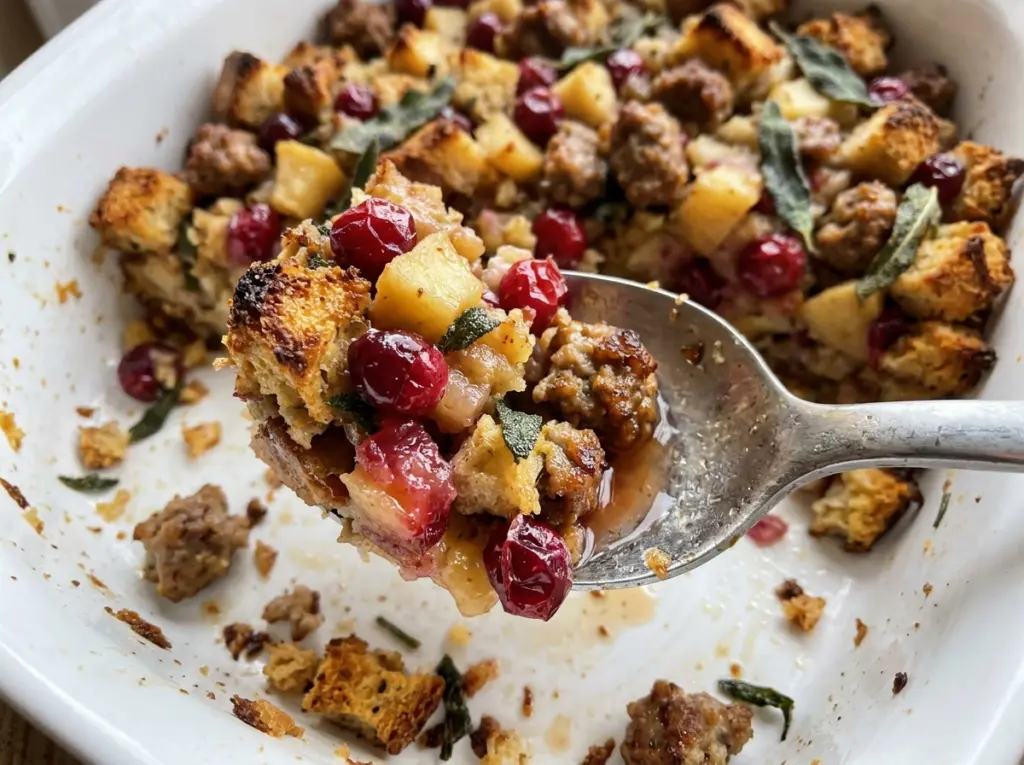
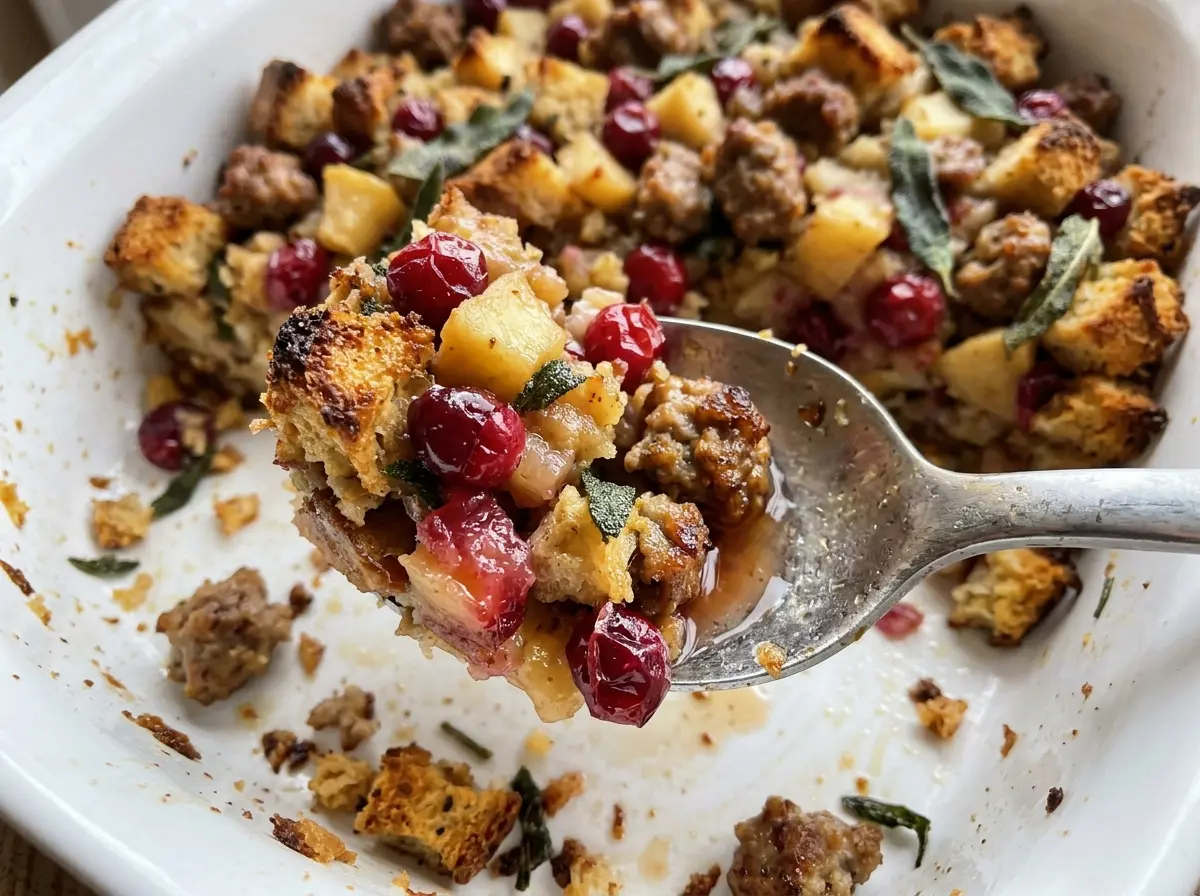
The bread cubes should feel dry and crisp before they meet the broth, not just stale around the edges. I learned that the difference matters: bread that’s still soft soaks up the liquid unevenly, and the center can turn heavy while the top browns. These cranberry apple stuffing with sausage and sage has a tender middle, golden top, and little bursts of tart-sweet cranberry in every scoop.
I brown the sausage first, then cook the onion, celery, and apples in the same skillet so they pick up some of that savory flavor. The broth and eggs get whisked separately before they go over the bread. That makes it easier to coat the cubes evenly without crushing them.
It’s a generous pan for a holiday table, but the steps are straightforward: dry the bread, build the savory base, and let the oven do the finishing work. The sage smells warm and woodsy as it hits the skillet, and the finished stuffing comes out fragrant, savory, and dotted with soft apples and cranberries.
Kitchen Note
Give the baked stuffing its full 10-minute rest before serving. The center settles during that pause, so it scoops neatly instead of falling apart when you lift it from the pan.
Save this cranberry apple stuffing with sausage and sage for a holiday table that needs a golden top and a savory-sweet center.
Why the Bread Needs to Be Crisp Before the Broth Goes In
Stuffing has to absorb plenty of liquid without losing its shape. Fresh or only slightly dried bread starts out soft, so the broth has fewer dry places to soak into. The result can be dense in the middle, even when the edges look browned. Drying the cubes first gives them room to take on the broth and egg mixture while still holding their shape.
Spread the cubes across two baking sheets rather than piling them deep. Stirring and rotating the sheets halfway through helps them dry evenly, so you don’t end up with crisp pieces on one tray and soft ones on the other. Let them cool before tossing them with the sausage and vegetables; warm cubes can feel softer than they are and are harder to handle without breaking. You’re looking for crisp, dry cubes, not browned toast.
Choose Bread and Sausage That Give This Stuffing Its Structure
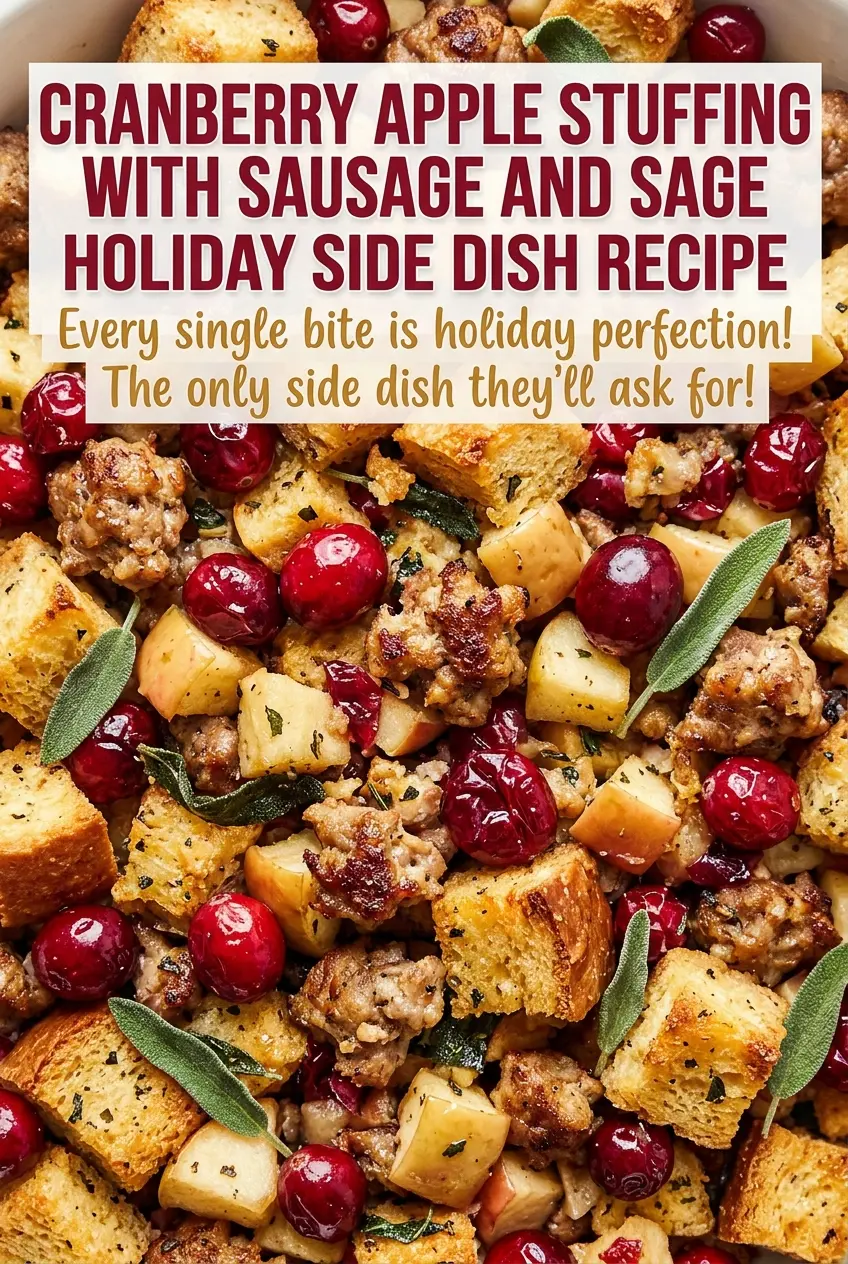
- Sturdy white or sourdough bread — A firm crumb stands up to the broth better than a soft, airy loaf. Ordinary grocery-store bread works well; choose sourdough for a tangier note, or white bread for a milder base. Cut the cubes evenly so they dry at about the same pace.
- Bulk pork sausage — Its browned meat brings savory depth and a little richness to the stuffing. Bulk sausage is convenient because you can break it into small pieces as it cooks; there’s no need for a premium brand here. If it comes seasoned, taste the finished mixture before adding extra salt beyond the listed amount.
- Apples and dried cranberries — The apples soften into the bread while keeping a little shape, and the cranberries add a chewy, tart-sweet contrast. Use apples that feel firm rather than mealy. Sweetened dried cranberries are specified here; an unsweetened version would make the finished stuffing noticeably sharper.
- Fresh sage — Chopped fresh sage gives the vegetables a fragrant, savory note. Add it near the end of their skillet time so it has a chance to warm in the butter without cooking for the full 8–10 minutes.
- Low-sodium chicken broth and eggs — The broth brings moisture, while the eggs help the baked stuffing hold together. Low-sodium broth leaves more control over the seasoning. Whisk the eggs fully into the broth before pouring so the liquid is distributed evenly.
Build the Stuffing in Stages So Every Cube Gets Coated
Dry the Bread Without Toasting It Brown
Heat the oven to 300°F and divide the bread cubes between two rimmed baking sheets. Bake for 25–35 minutes, stirring and rotating the sheets halfway through. They should feel dry and crisp, but they don’t need to take on much color. Let the cubes cool before adding them to the bowl.
Brown the Sausage, Then Soften the Vegetables
Cook the sausage in a 12-inch skillet over medium heat, breaking it into small pieces as it browns. It takes 8–10 minutes and should reach 160°F before you transfer it to an 8-quart bowl. Melt the butter in that skillet, then cook the onion, celery, and apples for 8–10 minutes, stirring often, until tender. Stir in the sage for the last minute; adding it then keeps its aroma fresh.
Coat the Cubes Evenly
Raise the oven temperature to 350°F and coat a 9×13-inch baking dish with nonstick cooking spray. Add the cooled bread, apple mixture, and dried cranberries to the sausage, then toss them together. Whisk the broth with the eggs, salt, and pepper in a separate medium bowl before pouring it over the bread. Toss until the cubes are evenly moistened, then let the mixture stand for 5 minutes.
Bake Covered, Then Brown the Top
Transfer the mixture to the prepared baking dish and cover it tightly with foil. Bake for 30 minutes, then remove the foil and continue baking for 15–20 minutes, until the top is golden and the center reaches 160°F. If the top is golden before the center reaches temperature, loosely cover it again while it finishes. Rest the stuffing for 10 minutes before serving.
Two Simple Ways to Adapt the Bread and Sausage
Use All Sourdough for a Tangier Base
Choose sturdy sourdough for all the bread cubes instead of white bread. Its gentle tang plays well with the sweetened cranberries and apples, while the firm crumb still holds up to the broth. Keep the same drying and baking method.
Make a Meatless Pan
Leave out the pork sausage for a vegetarian version. The apples, celery, sage, and cranberries still make a flavorful stuffing, but the result will be less savory and rich than the sausage version. Keep the rest of the ingredients and baking method the same.
Storage and Reheating
- Refrigerator: Store leftovers covered for 3–4 days. The bread softens as it sits, so the top won’t stay as crisp.
- Freezer: Freeze cooled portions in an airtight container for up to 1 month for best texture. Thaw in the refrigerator before reheating.
- Reheating: Cover and warm in a 350°F oven until steaming hot throughout. Uncover near the end if you’d like to refresh the top; leaving it uncovered the whole time can dry out the edges.
Questions That Come Up When Making Sausage and Apple Stuffing
Cranberry Apple Stuffing With Sausage And Sage – Holiday Side Dish Recipe
Ingredients
Equipment
Method
- Heat the oven to 300°F.
- Divide the bread cubes between 2 rimmed baking sheets and bake for 25–35 minutes, stirring and rotating the sheets halfway through, until dry and crisp.
- Let the bread cubes cool.
- Cook the sausage in a 12-inch skillet over medium heat for 8–10 minutes, breaking it into small pieces, until browned and it reaches 160°F.
- Transfer the sausage to an 8-quart bowl.
- Melt the butter in the skillet.
- Add the onion, celery, and apples, and cook for 8–10 minutes, stirring often, until tender.
- Stir in the sage for the last minute.
- Increase the oven temperature to 350°F.
- Coat a 9x13-inch baking dish with nonstick cooking spray.
- Add the bread cubes, apple mixture, and dried cranberries to the bowl with the sausage and toss to combine.
- Whisk the broth, eggs, salt, and pepper in a medium bowl.
- Pour the broth mixture over the bread mixture and toss until evenly moistened.
- Let stand for 5 minutes.
- Transfer the stuffing to the prepared baking dish.
- Cover tightly with foil and bake for 30 minutes.
- Uncover and bake for 15–20 minutes, until the top is golden and the center reaches 160°F.
- Let the stuffing rest for 10 minutes before serving.