
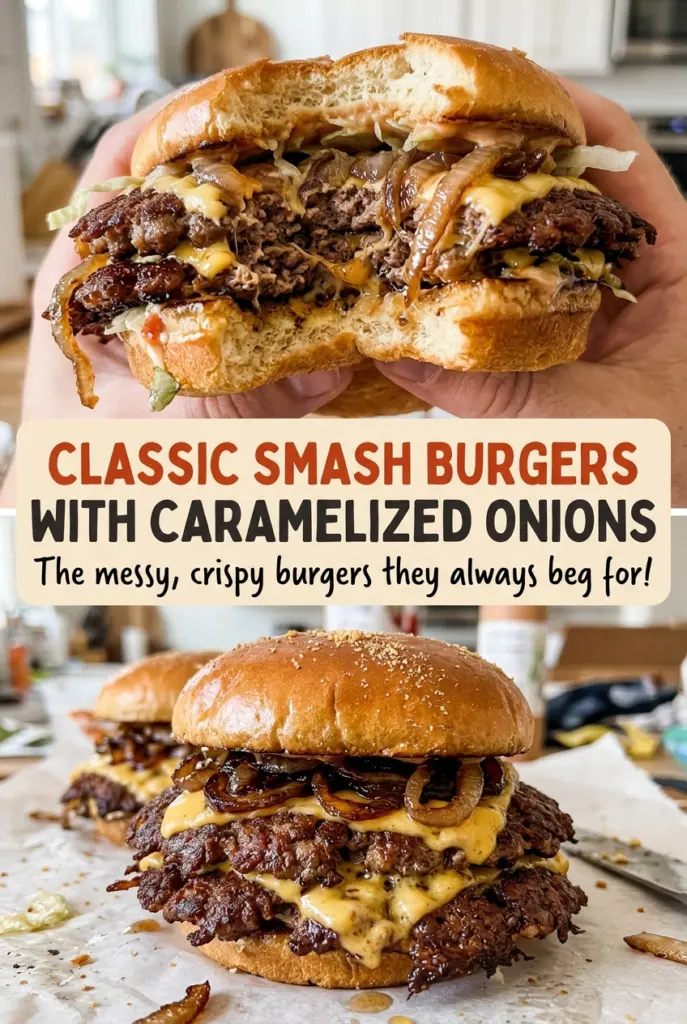
Classic Smash Burgers with Caramelized Onions
When the onion edges start turning gold, the skillet can look like it’s almost done—but a few pale, firm slices are enough to make a burger taste rushed. I let…

By Ava
•
•
Reading time: 10 min
Tip: save now, make later.
When the onion edges start turning gold, the skillet can look like it’s almost done—but a few pale, firm slices are enough to make a burger taste rushed. I let them cook until they’re soft and deeply golden, then use the same cast-iron skillet for the buns and patties after wiping it clean. That slow start gives these classic smash burgers a sweet onion layer without needing a sauce or extra toppings.
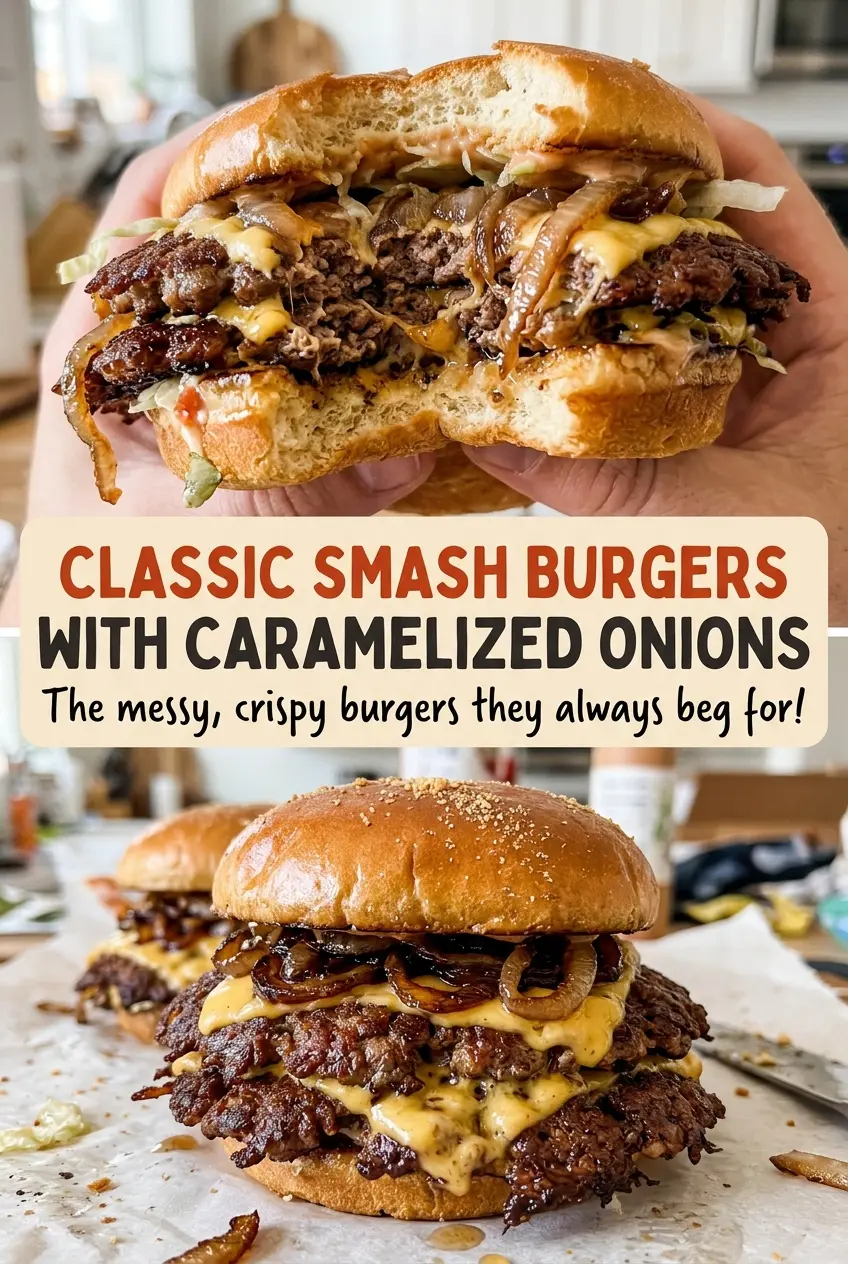
The burgers are built from eight small portions of 80% lean ground beef, stacked two to a bun with American cheese. That gives you the crisp browned edges of a smash burger in a satisfying double stack, with a slice of cheese melting over each patty. The buns get a quick butter toast in the skillet, so the finished burger has a golden, sturdy base under all those layers.
Kitchen Note
Roll each portion just until it holds together; don’t pack it into a tight meatball. The press does the shaping, and starting with a loose ball keeps the thin patties from turning dense.
Save these classic smash burgers with caramelized onions for the next time you want crisp-edged patties, melted American cheese, and a sweet onion stack.
Why a Double Smash Stack Beats One Thick Patty Here
A thick burger and a smash burger solve different problems. A thicker patty gives you a taller, meatier center, while thin smash patties put more of the beef against the hot skillet. That extra browned surface is what gives each bite its crisp edges, and stacking two patties creates height without losing the defining smash-burger texture.
There’s a useful balance in this particular stack: the beef brings savory, browned edges, the American cheese melts between the layers, and the slowly cooked onion adds sweetness. Two thin patties let those parts stay distinct instead of burying the onion and cheese inside one thick center. You still get a substantial burger, but the bite stays layered rather than tasting like a single dense piece of beef.
The 80% lean ground beef also suits this style. Its fat helps the patties brown while they cook quickly, and the thin shape means there’s no need to wait for a thick center to finish. That’s why I portion the beef for a double stack rather than shaping four larger patties.
What the Beef, Cheese, and Onion Each Bring to the Stack
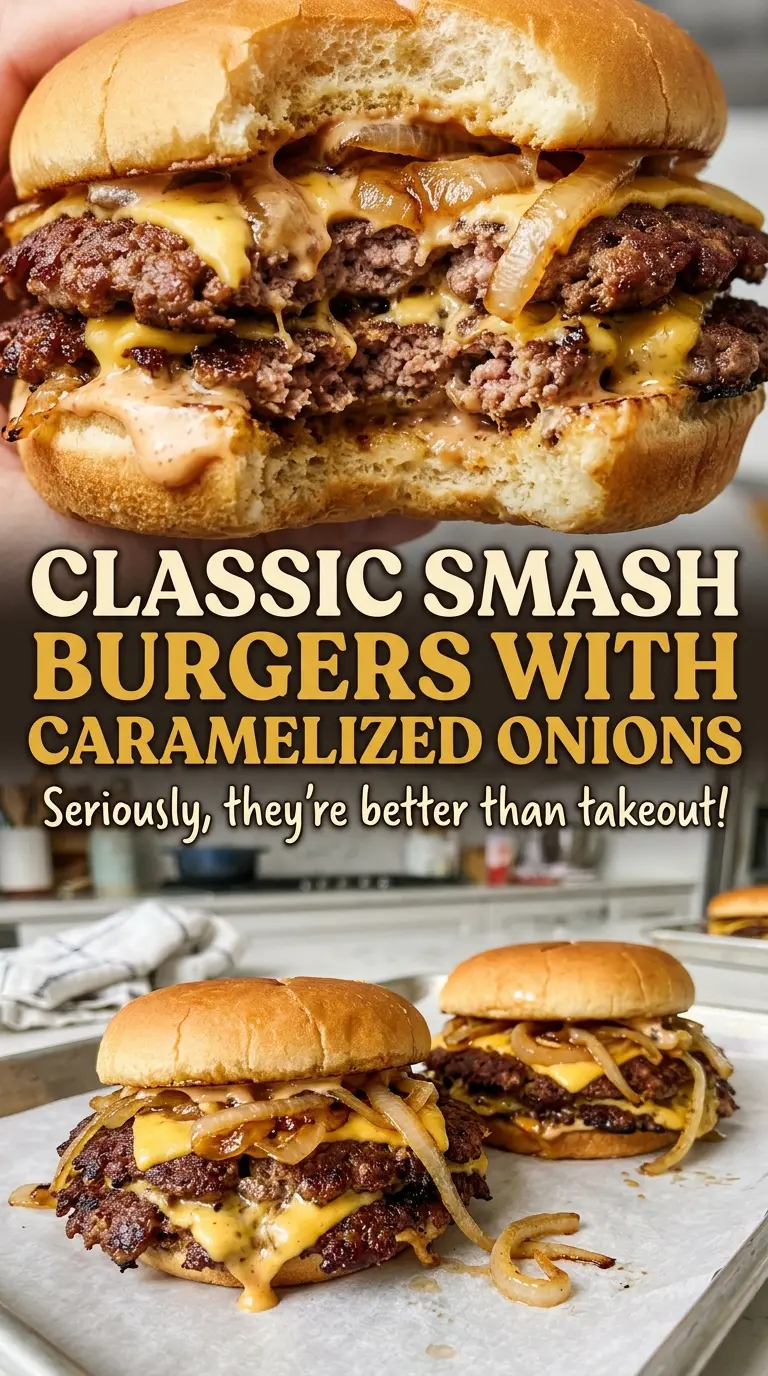
- 80% lean ground beef — The fat keeps the thin patties juicy and helps them brown. Use fresh beef and handle it gently; leaner ground beef can work, but the patties will be less rich and more prone to drying out. If 80% lean isn’t available, 85% lean is a workable swap with a less fatty result.
- American cheese — It melts smoothly over a thin patty in a short cook, making it a natural fit here. Cheddar can stand in, but it has a sharper taste and won’t melt as fluidly. The quality difference between standard and pricier American cheese is less important than using slices that fit the patties.
- Yellow onion — Yellow onion turns soft and sweet over the long, gentle cook. Slice it thinly and evenly so the pieces soften at roughly the same pace. White onion can replace it, though the finished onions will taste a little sharper.
- Unsalted butter and neutral oil — Butter gives the onions and toasted buns a rounded flavor, while the neutral oil helps the onion mixture cook without relying on butter alone. If you’re out of neutral oil, another neutral cooking oil is the closest swap. The exact type matters less than avoiding an oil with a strong flavor.
- Hamburger buns — A basic, sturdy bun is enough; the skillet toast gives the cut sides their golden finish. There’s no need to spend extra on an elaborate bakery bun, which can compete with the thin patties and onions.
The Skillet Sequence That Gets Every Layer Ready
Let the onions turn deeply golden
Melt the butter with the neutral oil in a 12-inch cast-iron skillet over medium-low heat. Add the thinly sliced onion and kosher salt, then cook for 35 to 45 minutes, stirring often, until the onion is soft and deeply golden. If it starts browning too quickly, lower the heat so it has time to soften instead of scorching. Transfer the finished onions to a bowl before moving on.
Toast the buns while the skillet is clean
Heat the oven to 200°F and set a rimmed baking sheet inside to warm. Wipe the skillet clean, then spread the cut sides of the buns with softened butter. Toast them cut-side down over medium heat in batches for 1 to 2 minutes, until golden, and set them aside. Working in batches keeps the buns in contact with the skillet instead of crowding them.
Portion the beef and heat the pan
Divide the beef into eight equal portions and gently roll each one into a loose ball. Heat the skillet over medium-high for 2 to 3 minutes, until it’s very hot. Place two beef balls in the skillet with plenty of space between them; the room lets you press each one flat without pushing it into the other.
Smash, season, and melt the cheese
Use a stiff spatula to firmly smash each ball into a thin patty, then season each with 1/8 teaspoon kosher salt and a pinch of black pepper. Cook for 1 to 2 minutes, until the edges are browned and crisp. Scrape under each patty to flip it, add a slice of American cheese, and cook for 30 to 60 seconds, until the cheese melts and the beef reaches 160°F when checked with an instant-read thermometer inserted from the edge. Transfer the patties to the warm baking sheet, repeat with the remaining beef and cheese, then stack two patties on each bun and top with the onions.
Three Simple Ways to Change the Burger Stack
Make it gluten-free with a bun swap
Replace the hamburger buns with sturdy gluten-free hamburger buns and toast their buttered cut sides in the skillet the same way. Gluten-free buns can brown quickly, so keep an eye on the cut surface. The result keeps the familiar double-stack format without changing the beef, cheese, or onions.
Put the onions between the patties
Instead of piling all the onions on top, divide them between the two cheesy patties as you build each burger. That spreads the sweet onion through the stack and makes each bite more even, though the top of the burger won’t have the same onion-heavy finish.
Skip the cheese for a beef-and-onion version
Leave off the American cheese and stack the browned patties with the caramelized onions. You lose the creamy layer between the patties, so the beef and onion come through more directly. Keep the rest of the assembly the same.
Storage and Reheating
- Refrigerator: Store cooked patties and onions in separate airtight containers for 3 to 4 days. Keep the buns separate so they don’t soften.
- Freezer: Freeze cooked patties in a single layer, then transfer them to a freezer-safe container with parchment between layers. They keep well for about 2 to 3 months; freeze the onions separately and assemble with fresh buns for the best texture.
- Reheating: Warm patties gently in a covered skillet over low heat until they reach 165°F, adding the cheese near the end if you want it melted again. High heat can dry out the thin beef before the center warms through.
Questions That Come Up While Making Smash Burgers
Classic Smash Burgers with Caramelized Onions
Ingredients
Equipment
Method
- Melt the butter with the oil in a 12-inch cast-iron skillet over medium-low heat.
- Add the onion and 1/4 teaspoon salt and cook for 35-45 minutes, stirring often, until soft and deeply golden.
- Lower the heat if the onion starts browning too quickly, then transfer the onions to a bowl.
- Heat the oven to 200°F and set a rimmed baking sheet inside to warm.
- Wipe the skillet clean.
- Spread the cut sides of the buns with the softened butter.
- Toast the buns cut-side down over medium heat in batches for 1-2 minutes, until golden.
- Set the toasted buns aside.
- Divide the beef into 8 equal portions and gently roll each into a loose ball.
- Heat the skillet over medium-high heat for 2-3 minutes, until very hot.
- Place 2 beef balls in the skillet with plenty of space between them.
- Smash each ball firmly with a stiff spatula into a thin patty.
- Season each patty with 1/8 teaspoon salt and a pinch of pepper.
- Cook the patties for 1-2 minutes, until the edges are browned and crisp.
- Scrape under each patty to flip it.
- Top each patty with a slice of cheese.
- Cook for 30-60 seconds, until the cheese melts and the beef reaches 160°F when checked with an instant-read thermometer inserted from the edge.
- Transfer the patties to the warm baking sheet and repeat with the remaining beef and cheese.
- Stack 2 patties on each bun.
- Top the burgers with the caramelized onions.