

Classic Falafel with Tahini Sauce
When the first handful of chickpeas hits the food processor, you don’t want a smooth paste. You want coarse, pebbly crumbs that hold together when squeezed. That texture is what…

By Ava
•
•
Reading time: 9 min
Tip: save now, make later.
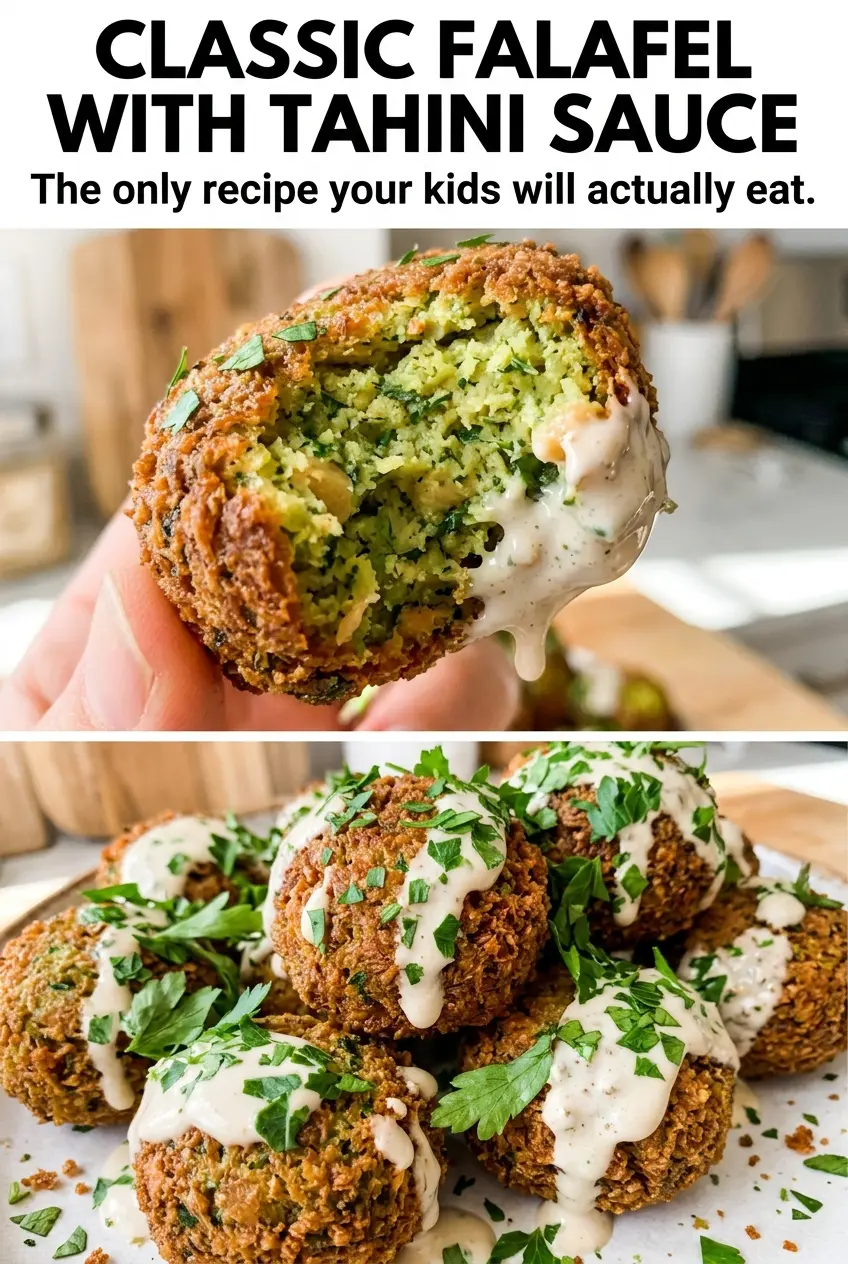
When the first handful of chickpeas hits the food processor, you don’t want a smooth paste. You want coarse, pebbly crumbs that hold together when squeezed. That texture is what gives classic falafel with tahini sauce its tender center and crisp, deeply golden outside.
I build the mixture from dried chickpeas that have soaked until plump, then pulse them with fresh herbs, onion, garlic, and warm spices. The chickpeas stay uncooked before frying, so the finished falafel has a firm bite instead of the soft, dense texture you can get from cooked beans.
The tahini sauce comes together with lemon, grated garlic, and cold water whisked in gradually. It’s smooth and pourable, with enough tang to cut through the hot, crisp falafel.
Kitchen Note
Let the oil return to 350°F between batches. I wait for the thermometer to come back to temperature before adding more falafel, which helps each batch fry crisp instead of soaking up oil.
Save this classic falafel with tahini sauce for a batch of crisp, herb-filled bites with a bright, pourable dip.
Why Falafel Starts With Soaked Chickpeas, Not the Can
Falafel depends on chickpeas that have absorbed water but haven’t been cooked. After their long soak, they’re tender enough to split when pressed, yet they still have the structure to grind into coarse crumbs. Those crumbs bind into balls and cook through in the hot oil without turning into a smooth, heavy mash.
Canned chickpeas have already been cooked, so they’re softer and wetter than this mixture needs. Even after draining, they tend to puree quickly and can leave you with a loose mixture that’s difficult to shape. Starting with dried chickpeas takes planning, but most of that time is hands-off in the refrigerator. Give them their full soak, then drain and pat them dry; a rushed soak or water clinging to the chickpeas changes the texture before you even reach for the processor.
The squeeze test is a useful check once the herbs and seasonings are pulsed in. A small handful should hold together without looking like a paste. That middle ground is what makes a falafel ball sturdy enough to fry while keeping its crumb tender inside.
The Chickpeas, Herbs, and Tahini That Shape the Texture

- Dried chickpeas — Pick through them before soaking to catch any small stones or shriveled beans. The dried kind matters here because its texture after soaking is different from cooked chickpeas; use beans that plump and split easily when pressed.
- Fresh parsley and cilantro — Their leafy freshness keeps the chickpea mixture tasting bright and gives it its characteristic green flecks. Choose crisp leaves rather than wilted bunches, and pack the leaves into the measuring cup so the herb balance stays consistent.
- Cumin, coriander, and cayenne — Ground spices spread their flavor through the mixture without adding extra moisture. If your spices have been open for a long time, smell them before using; faint, dusty aromas usually mean the finished falafel will taste flatter.
- Baking powder and all-purpose flour — The flour helps the shaped mixture hold together, while baking powder gives the interior a lighter texture. Fresh baking powder is worth using; old leavener may not give the same lift.
- Tahini and fresh lemon — A smooth, pourable tahini is easiest to whisk into sauce, and fresh lemon juice gives the sauce a cleaner, brighter acidity than bottled juice. Finely grate the garlic so it disperses evenly rather than leaving sharp chunks in a spoonful.
From Overnight Soak to a Crisp 350°F Fry
Soak, rinse, and dry the chickpeas
Cover the picked-over chickpeas with cold water and refrigerate them for 18 to 24 hours. They’re ready when they look plump and split easily under pressure. Drain and rinse them, then spread them on a clean kitchen towel and pat them dry; discard the soaking water. Don’t skip the towel, since excess water makes the mixture harder to shape.
Pulse the mixture to coarse crumbs
Work in batches in an 11-cup food processor with the chickpeas, onion, parsley, cilantro, garlic, cumin, coriander, salt, black pepper, and cayenne. Pulse rather than running the machine continuously, stopping when the mixture looks like coarse crumbs. If the bottom turns smooth while larger pieces remain near the top, scrape down the bowl and pulse again briefly. When squeezed in your hand, the mixture should hold together without feeling pasty.
Chill, bind, and shape
Transfer the mixture to a bowl, cover it, and refrigerate for 30 minutes. Stir in the baking powder and flour until they’re evenly distributed. Shape the mixture into compact balls about 1 1/2 inches wide, pressing gently enough that they hold their shape without packing them into hard little lumps. Keep the balls similar in size so they fry at a similar pace.
Whisk the tahini until pourable
Whisk the tahini, lemon juice, finely grated garlic, and salt together in a small bowl. Add the cold water gradually while whisking, rather than pouring it in all at once. The mixture should become smooth and pourable, with no streaks of thick tahini left at the bottom. Set the sauce aside while you fry the falafel.
Fry until deeply golden
Pour the canola oil into a 3-quart heavy saucepan and heat it over medium heat to 350°F, checking with a deep-fry thermometer. Fry the falafel in batches for 4 to 5 minutes, turning them as needed so they color evenly. Look for a deeply golden, crisp exterior rather than a pale shell. Drain each batch on a wire rack, and let the oil return to temperature before frying the next.
Small Changes That Keep the Falafel Classic
Make the mixture gluten-free
Replace the all-purpose flour with the same amount of chickpea flour. It keeps the mixture gluten-free and supports the chickpea flavor, though the texture may be a touch denser than when you use all-purpose flour.
Lean into parsley instead of cilantro
If cilantro isn’t your favorite, replace it with an equal amount of packed parsley leaves. The falafel will taste more grassy and less citrusy, while keeping the same fresh-herb character.
Leave out the cayenne for a milder bite
Omit the cayenne and keep the cumin and coriander in place. You’ll still get the warm, earthy spice from those two seasonings, but the finished falafel won’t have the same peppery heat.
Storage and Reheating
- Refrigerator: Keep cooled falafel in an airtight container for up to 3 days. The crisp crust softens as it sits.
- Freezer: Freeze cooled falafel in a single layer until firm, then transfer it to an airtight freezer container for up to 2 months.
- Reheating: Thaw frozen falafel in the refrigerator, then reheat in a 375°F oven until the center reaches 165°F and the outside is crisp. The microwave is quicker, but it leaves the crust soft.
Questions That Come Up While Making Falafel
Classic Falafel with Tahini Sauce
Ingredients
Equipment
Method
- Put the chickpeas in a large bowl, cover with the cold water, and refrigerate for 18 to 24 hours, until plump and easy to split when pressed.
- Drain and rinse the chickpeas, then spread them on a clean kitchen towel and pat dry; discard the soaking water.
- In an 11-cup food processor, pulse the chickpeas, onion, parsley, cilantro, garlic, cumin, coriander, salt, black pepper, and cayenne in batches until the mixture resembles coarse crumbs and holds together when squeezed.
- Transfer the mixture to a bowl, cover, and refrigerate for 30 minutes.
- Stir in the baking powder and flour until evenly combined, then shape the mixture into compact balls about 1 1/2 inches wide.
- Whisk the tahini, lemon juice, grated garlic, and salt in a small bowl; gradually whisk in the cold water until smooth and pourable.
- Pour the canola oil into a 3-quart heavy saucepan and heat over medium heat to 350°F, checking with a deep-fry thermometer.
- Fry the falafel in batches for 4 to 5 minutes, turning as needed, until deeply golden and crisp; let the oil return to 350°F between batches and drain the falafel on a wire rack.