
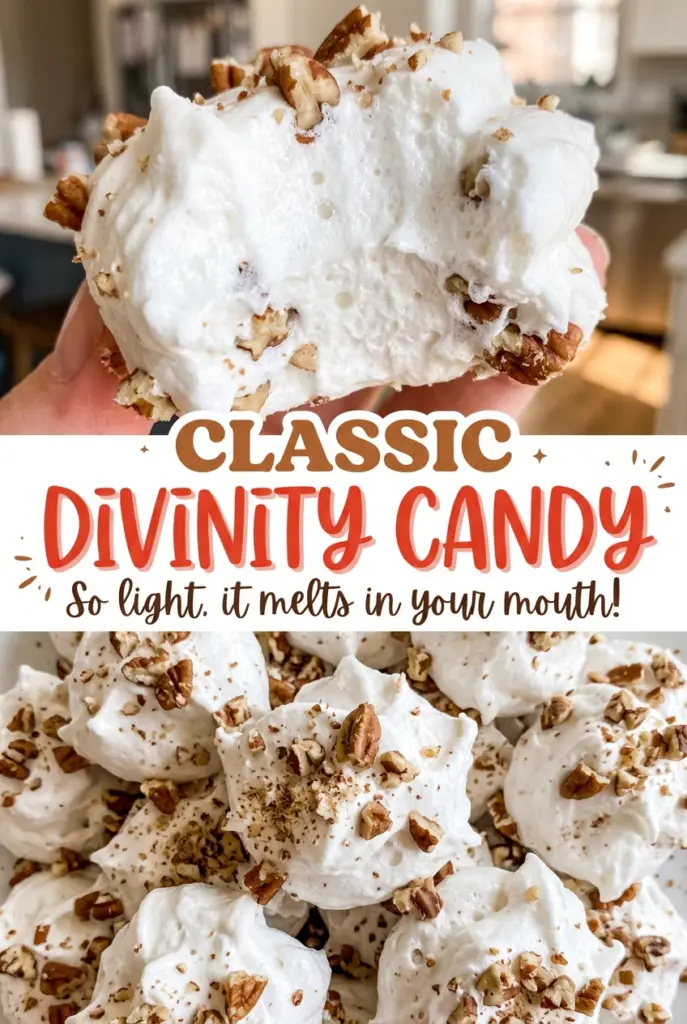
Classic Divinity Candy
The sugar syrup gives off a steady stream of tiny bubbles as it climbs toward the hard-ball stage; a minute later, the whole batch depends on getting that syrup into…

By Ava
•
•
Reading time: 9 min
Tip: save now, make later.
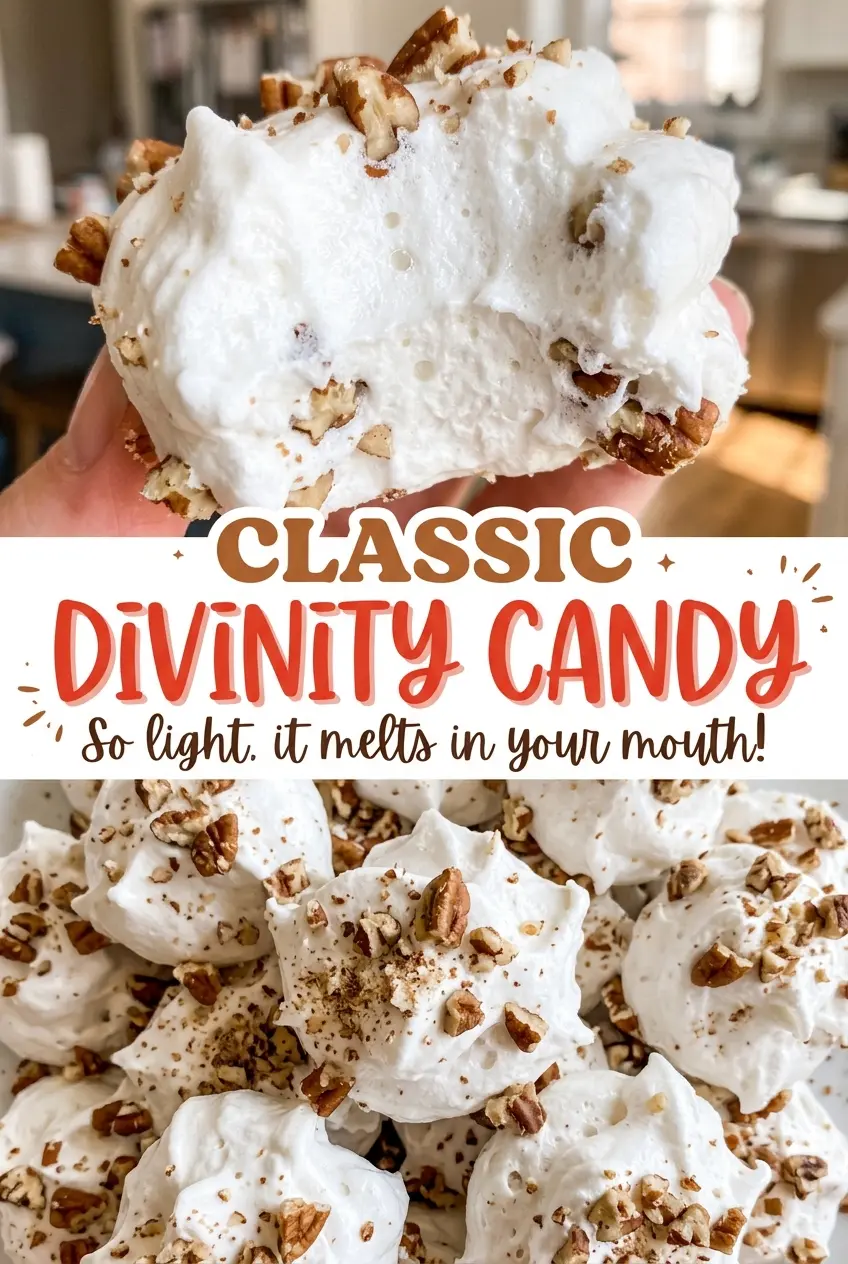
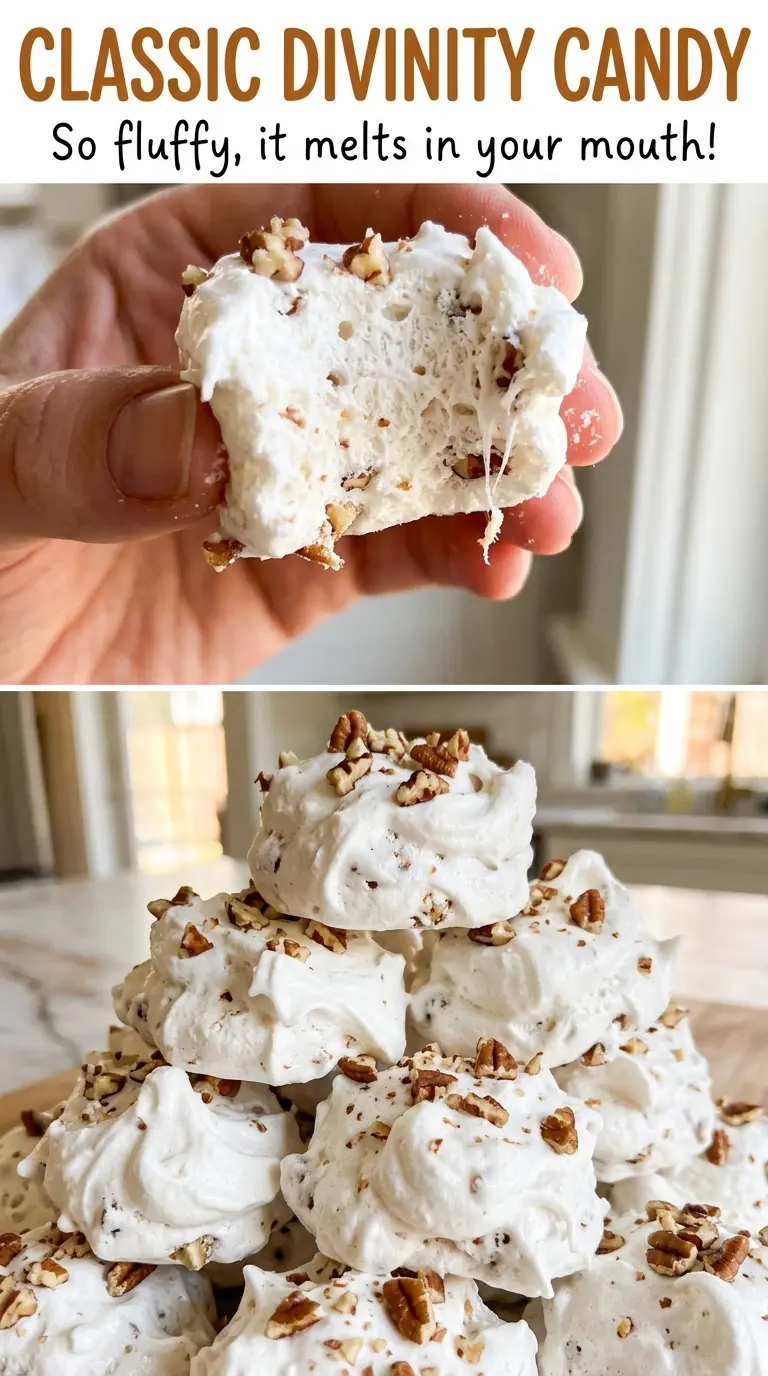
The sugar syrup gives off a steady stream of tiny bubbles as it climbs toward the hard-ball stage; a minute later, the whole batch depends on getting that syrup into the egg whites without knocking out their lift. Divinity can seem fussy, but the cues are clear once you know what to watch. These classic divinity candies turn into light, tender mounds with a little crunch from chopped pecans, and they’re worth taking the time to get right.
I start with room-temperature pasteurized egg whites and beat them to stiff peaks before the syrup is ready. Then I pour the hot syrup in a thin stream down the inside of the mixer bowl, keeping it away from the whisk. That steady pour helps the whites and syrup come together without splashing or forming hard threads. After the vanilla goes in, the mixture thickens and loses its shine, becoming easy to portion into soft, cloudlike pieces.
Kitchen Note
Have the pecans measured and both lined baking sheets within reach before you start cooking the syrup. The candy thickens quickly at the end, and there’s no comfortable pause to hunt for a pan or chop nuts once it’s ready to portion.
Save this classic divinity candy for a batch of soft, pecan-studded pieces with that old-fashioned cloudlike texture.
Why Divinity Uses Corn Syrup Alongside Granulated Sugar
Granulated sugar gives divinity its structure, but sugar crystals can also cause trouble if they form again after dissolving. Light corn syrup helps keep the cooked mixture smooth by limiting that tendency to crystallize. It isn’t there just to make the candy sweeter; it helps the syrup become a cohesive base that can be beaten into the egg whites.
That’s also why I stir only while the sugar dissolves, then leave the mixture alone once it boils. Continued stirring can encourage crystals to form along the sides of the pan and fall back into the syrup. The candy thermometer gives you a reliable endpoint: 260°F, the hard-ball stage. Keep the bulb in the syrup without letting it touch the bottom of the heavy saucepan, where the metal can give you a misleading reading. A smooth syrup at the right stage sets up the candy’s structure; beating and cooling turn that structure into the familiar light texture.
What the Egg Whites and Pecans Bring to Divinity
- Pasteurized shell eggs — The whites provide the airy structure, so they need to whip to stiff peaks before the syrup is added. Room-temperature whites whip more readily than cold ones. Use pasteurized shell eggs for this candy rather than swapping in unpasteurized eggs.
- Light corn syrup — Its role is to keep the sugar syrup from crystallizing too easily, which matters more here than choosing a premium brand. Light corn syrup keeps the candy’s sweetness clean; dark corn syrup would bring a stronger molasses note and change the flavor.
- Vanilla extract — Vanilla rounds out the sweetness without competing with the pecans. A good pure extract gives a fuller aroma, but an everyday vanilla works well because it’s mixed into a bold sugar base.
- Chopped pecans — Pecans add the buttery crunch that makes each piece more interesting than plain divinity. Fresh pecans taste sweeter and less stale; chop them into small, fairly even pieces so they fold through the thick candy instead of weighing down one spoonful.
The Syrup-to-Cloud Sequence: Four Stages to Watch
Whip the Whites Before the Syrup Is Ready
Line two 13×18-inch rimmed baking sheets with parchment paper, then beat the room-temperature egg whites and salt in a stand mixer fitted with the whisk attachment. Use high speed and wait for stiff peaks that stand upright when the whisk is lifted. Soft peaks won’t give the syrup enough structure to build on. Set the prepared sheets close to the mixer so they’re ready when the candy is finished.
Cook the Syrup to 260°F
Stir the sugar, light corn syrup, and water together in a 3-quart heavy saucepan over medium heat until the sugar dissolves and the mixture boils. Once it’s boiling, stop stirring and cook until the candy thermometer reads 260°F, the hard-ball stage. Keep your attention on the thermometer as the syrup approaches that point; a few degrees can change how firmly the candy sets. Remove the pan from the heat as soon as it reaches the target.
Stream the Syrup Into the Whipped Whites
With the mixer running on medium-high, pour the hot syrup in a thin, steady stream down the inside of the bowl. Aim away from the whisk so the syrup doesn’t splatter onto it and spin into hard threads around the bowl. Pour steadily rather than dumping it in all at once. Beat just until the syrup and whites are combined before adding the vanilla.
Beat, Fold, and Portion Before It Firms
Add the vanilla and beat on high for 4–8 minutes, watching for the mixture to thicken, lose its gloss, and hold its shape when lifted with a spoon. If it still looks shiny and flows back into the bowl, it needs more beating; stop when it holds a soft mound rather than waiting for it to become stiff and difficult to handle. Fold in the pecans quickly, then drop rounded spoonfuls onto the parchment. Let the pieces stand at room temperature for 1–2 hours, until they’re set and easy to lift from the paper.
Two Pecan Swaps That Change the Crunch
Walnut Divinity
Replace the pecans with the same amount of chopped walnuts and fold them in at the same point. Walnuts make the candy a little earthier and less buttery, while keeping the crisp bite that balances the soft center.
Pecan-Free Sunflower Divinity
For a tree-nut-free version, use the same amount of roasted sunflower kernels in place of the pecans. They bring a more savory crunch, so the candy tastes less buttery. If you’re making this for someone with a tree-nut allergy, choose kernels packaged to avoid tree-nut cross-contact.
Storage and Reheating
- Room temperature: Keep the candies in an airtight container in a cool, dry place for up to 1 week. Damp air can make their surfaces tacky.
- Refrigerator: Skip it; the extra moisture can soften the outside and make the pieces sticky.
- Freezer: Freeze in an airtight container with parchment between layers for up to 2 months. Thaw the closed container at room temperature to keep condensation off the candy.
- Reheating: These candies don’t need reheating. Serve them at room temperature; warming them can make the texture sticky and soft.
Questions That Come Up While Divinity Sets
Classic Divinity Candy
Ingredients
Equipment
Method
- Line two 13x18-inch rimmed baking sheets with parchment paper.
- In the bowl of a stand mixer fitted with the whisk attachment, beat the egg whites and salt on high until stiff peaks form.
- In a 3-quart heavy saucepan, stir together the sugar, corn syrup, and water over medium heat until the sugar dissolves and the mixture boils.
- Stop stirring and cook until a candy thermometer reads 260°F, the hard-ball stage.
- Remove the syrup from the heat and, with the mixer running on medium-high, pour it in a thin, steady stream down the inside of the bowl, avoiding the whisk; beat until combined.
- Add the vanilla and beat on high for 4–8 minutes, until the mixture thickens, loses its gloss, and holds its shape when lifted with a spoon.
- Quickly fold in the pecans.
- Drop rounded spoonfuls onto the prepared baking sheets.
- Let the candies stand at room temperature for 1–2 hours, until set and easy to lift from the parchment.