

Classic Cubano Sandwich
The first time I pressed a Cubano, the bread turned golden before the cheese had a chance to melt. Lowering the heat and letting a second heavy skillet do the…

By Ava
•
•
Reading time: 8 min
Tip: save now, make later.
The first time I pressed a Cubano, the bread turned golden before the cheese had a chance to melt. Lowering the heat and letting a second heavy skillet do the pressing fixed it: the crust crisped without scorching, and the warm filling stayed tucked between the bread. That’s the balance I want in a classic Cubano sandwich.
Cuban bread gives the sandwich its crisp outside and soft center, while the layers of Swiss, deli ham, roast pork, and dill pickles bring the salty, savory, tangy contrast. I spread mustard on the cut sides and butter on the outside, so each part does a different job. The finished halves are crisp at the edges, with melted cheese holding the filling together.

Kitchen Note
Drain the pickle chips well, then pat them dry before layering. Wet pickles can leave moisture against the bread, and a dry layer helps the sandwich stay crisp as it presses.
Save this Classic Cubano Sandwich for a crisp, golden press with melted Swiss, roast pork, ham, and tangy dill pickles.
Why a Cubano Needs Pressure, Not a Hard Sear
A Cubano has several layers to warm through, so turning up the burner to rush the cheese usually works against you. The bread is in direct contact with the skillet; the ham, roast pork, and cheese are protected inside. Medium-low heat gives the center time to warm while the outside turns crisp and golden. A second heavy skillet presses the layers together and keeps the bread in steady contact with the hot pan.
That pressure matters, but it doesn’t mean flattening the sandwich until the filling squeezes out. Set the heavy skillet on top and let the sandwiches cook undisturbed for 3 to 4 minutes per side. If you lift the weight repeatedly, the bread loses that consistent contact and the cheese takes longer to melt. The finished sandwich should feel compact, with a crisp crust and cheese melted between the layers—not a hard, crushed stack.
Cooking two at a time in a 12-inch skillet leaves enough room to handle the sandwiches without crowding them. Keep the heat steady between batches, and give each side the full cooking time rather than reaching for a hotter setting.
Why Cuban Bread, Swiss, and Pickles Each Matter
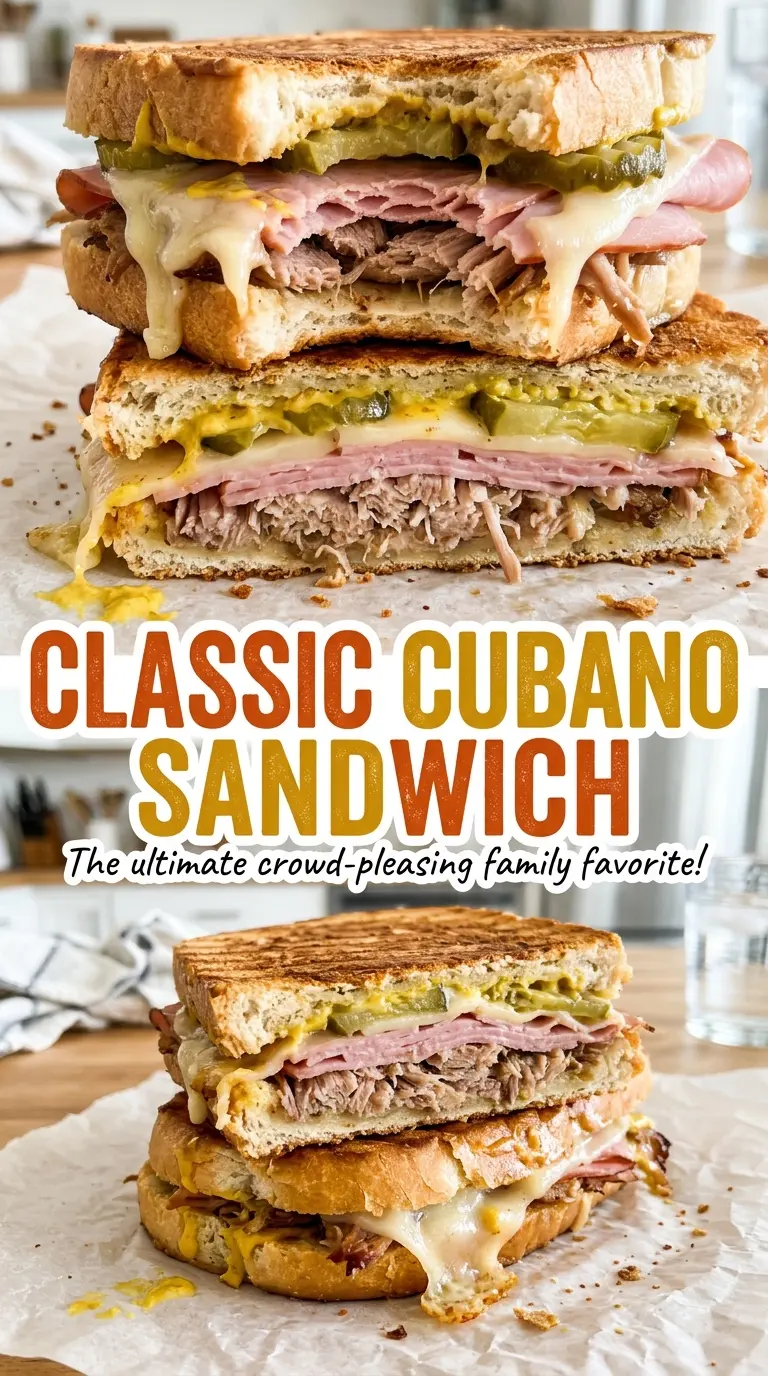
- Cuban bread — Its shape gives you a sturdy loaf to cut into four sandwich-sized pieces, and its crust crisps under the skillet while the inside stays tender. For this version, use Cuban bread rather than counting on a different bread to press and brown the same way.
- Yellow mustard — Spread on the cut sides, it brings a sharp, tangy note through the rich meat and cheese. Keeping it inside the sandwich gives the exterior butter a chance to brown the bread cleanly.
- Swiss cheese — The two slices in each sandwich melt around the filling and help hold the layers together. Use slices that cover the bread without hanging far over the edges, where cheese can melt directly onto the skillet.
- Deli ham and Cuban-style roast pork — Thin deli ham brings a mild, salty layer; the cooked roast pork adds the deeper, savory center. The pork should already be cooked and thinly sliced, because this short skillet cook is for heating the sandwich and crisping the bread, not cooking raw meat.
- Dill pickle chips — Their tart crunch cuts through the meat and cheese. Drain and pat them dry before building the sandwiches so they don’t carry extra moisture into the bread.
- Softened butter — Spread over the outsides, it helps the bread turn evenly golden in the skillet. Softened butter is easier to spread without tearing the cut loaf.
How to Press the Sandwiches Until the Cheese Melts
Layer the fillings inside the bread
Slice each 6-inch piece of Cuban bread horizontally, keeping the halves paired so the top fits back on its matching bottom. Spread mustard over the cut sides, then layer on Swiss, a portion of ham, roast pork, and pickle chips, finishing with a second slice of Swiss. Keep the fillings within the edges of the bread; overhanging slices are more likely to slip out when you press. Close each sandwich before buttering the outside.
Butter the outside and heat the skillet
Spread softened butter over the outsides of all four sandwiches, covering the bread from edge to edge. Heat a 12-inch skillet over medium-low heat before adding the first two sandwiches. The pan should be warm enough to brown the bread gradually, not hot enough to darken the crust before the cheese has time to melt. Set a second heavy skillet on top of the sandwiches to weight them.
Press, turn, and let the sandwiches rest
Cook two sandwiches at a time for 3 to 4 minutes per side, keeping the weight on as they cook. Look for crisp, golden bread and melted Swiss; if the bread is still pale, give it the full time rather than raising the heat. Transfer the cooked sandwiches off the skillet and let them rest for 2 minutes. Cut each in half after resting, when the layers have had a moment to settle.
Small Changes That Shift the Cubano’s Balance
Spread the pickle chips across the filling
Keep the same pickle chips, but distribute them across the ham and pork instead of leaving them in one concentrated patch. That gives more bites a sharp, crunchy note without changing the sandwich’s ingredient balance.
Make the filling stack flatter
Arrange the ham and thinly sliced pork in an even layer rather than building a tall mound in the center. The sandwich presses more evenly, and each cut half shows a balanced cross-section of meat, pickle, and melted cheese.
Cut slimmer pieces for a shared platter
After the 2-minute rest, cut each sandwich half into narrower portions instead of serving the halves whole. The smaller pieces are easier to pick up and show off the pressed layers, though they cool faster than full halves.
Storage and Reheating
- Refrigerator: Refrigerate leftovers within 2 hours and keep them for 3 to 4 days. The bread will soften in storage, so it won’t have the same fresh-from-the-skillet crunch.
- Freezer: I don’t recommend freezing assembled Cubanos; the pickles can release moisture as they thaw, leaving the bread soft.
- Reheating: Reheat in a skillet over medium-low heat, weighted with a heavy skillet, until the center reaches 165°F. High heat can burn the bread before the filling is hot through.
Questions That Come Up When Making a Cubano
Classic Cubano Sandwich
Ingredients
Equipment
Method
- Slice each piece of Cuban bread horizontally, keeping the halves paired.
- Spread the cut sides of each piece with the yellow mustard, then layer on 1 slice of Swiss cheese, one-quarter of the deli ham, one-quarter of the roast pork, one-quarter of the pickle chips, and a second slice of Swiss cheese; close the sandwiches.
- Spread the softened butter over the outsides of the sandwiches.
- Heat a 12-inch skillet over medium-low heat and cook 2 sandwiches at a time, weighted with a second heavy skillet, for 3 to 4 minutes per side, until the bread is crisp and golden and the cheese has melted.
- Rest the sandwiches for 2 minutes, then cut in half and serve.