
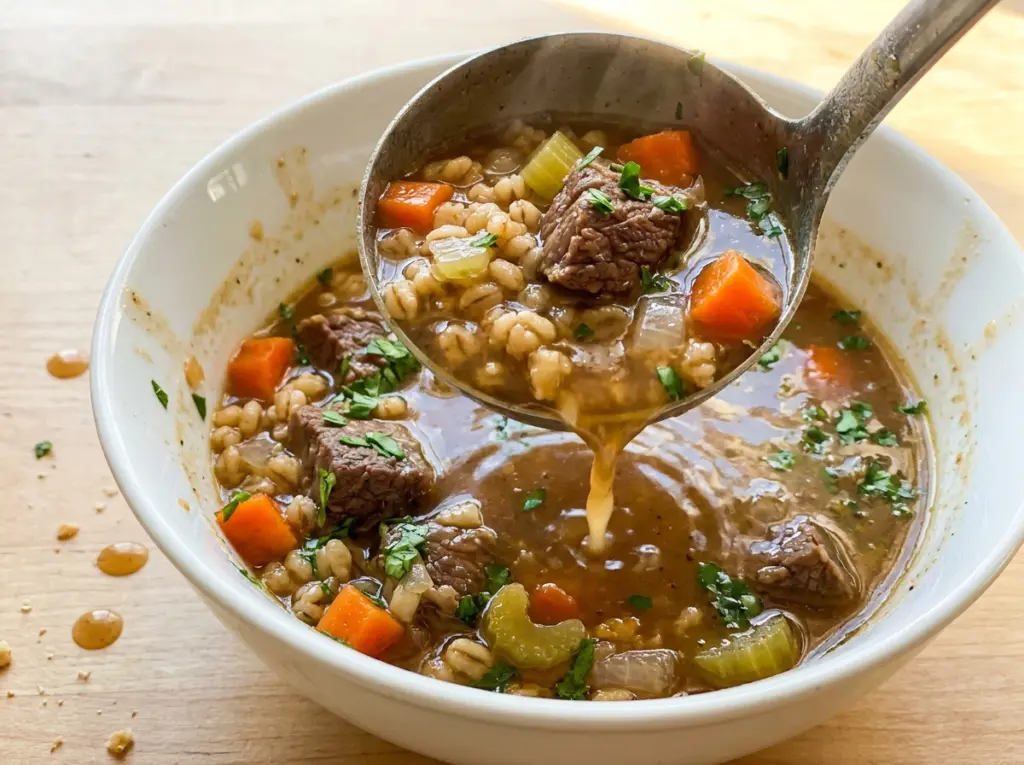
Classic Beef and Barley Soup
When the beef cubes hit the hot oil, give them room to brown instead of piling them all into the Dutch oven at once. That first bit of color gives…

By Ava
•
•
Reading time: 9 min
Tip: save now, make later.
When the beef cubes hit the hot oil, give them room to brown instead of piling them all into the Dutch oven at once. That first bit of color gives the broth a deeper, savory start, and the browned pieces have time to turn tender during the long simmer. I make this classic beef and barley soup when I want a full pot with a comforting broth and enough substance to stand on its own.
The timing of the barley matters just as much as the browning. Beef chuck needs a slow simmer to soften, while pearl barley needs far less time; adding it after the beef is tender keeps the grains pleasantly chewy instead of swollen and soft. A five-minute rest at the end lets the broth settle around the barley, and each bowl comes out hearty without losing that spoonable, brothy feel.
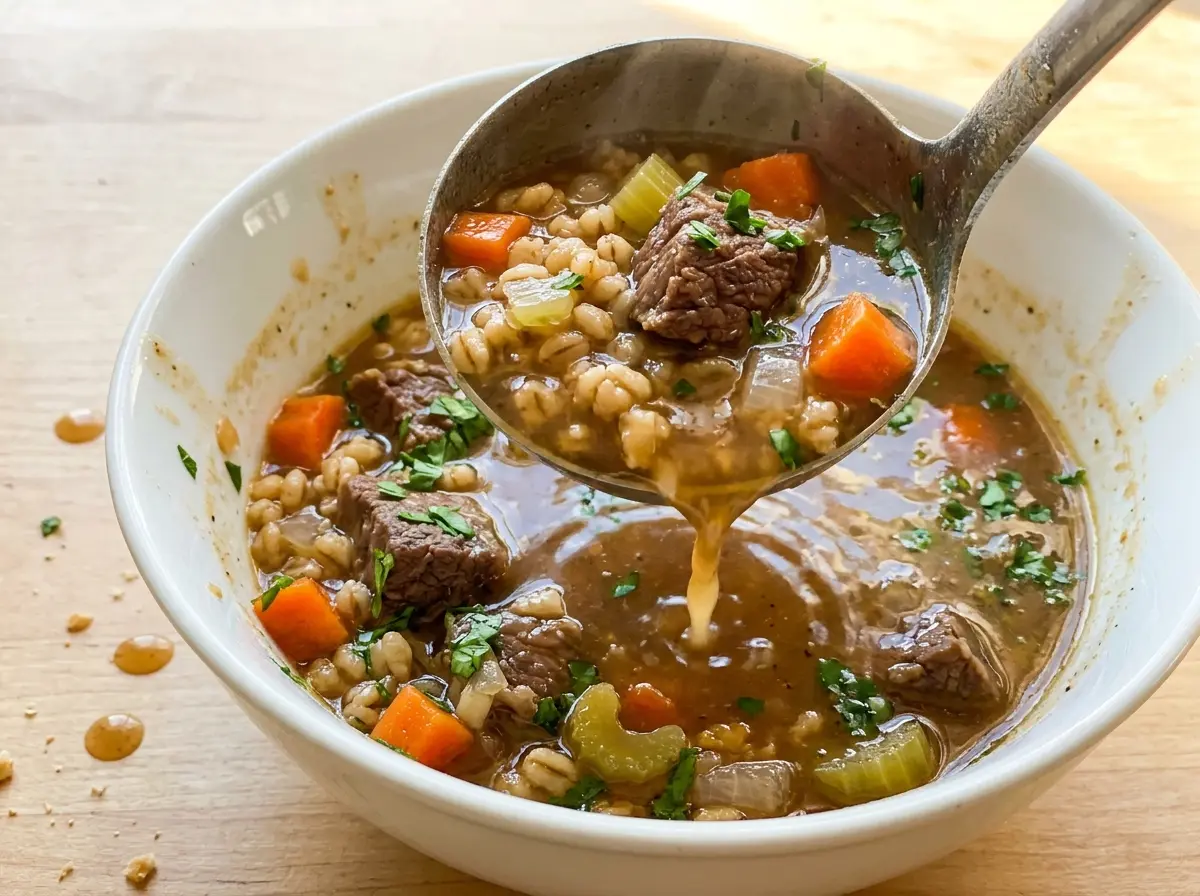
Kitchen Note
Brown the beef in batches and look for browned patches before moving each batch to the plate. If the pieces are crowded together, they steam instead of browning, and you miss the savory bits that start the soup off right.
Save this classic beef and barley soup for a slow-simmer day, when tender chuck and pearl barley turn a pot of broth into a hearty meal.
Why the Barley Goes In Only After the Beef Turns Tender
Beef chuck and pearl barley don’t have the same clock. The beef needs a long, gentle simmer to soften its connective tissue, while the barley turns tender in a shorter stretch. If both go in at the beginning, the barley has to stay in the pot for the whole beef-cooking time. It can swell past pleasantly tender and start to lose its shape before the meat is ready.
Cooking the beef first gives you a useful checkpoint: the cubes should be tender before the barley joins them. Then the grains simmer in the finished beef broth, taking on its savory flavor without sitting through the longer tenderizing stage. Keep the pot at a gentle simmer rather than a hard boil; a rolling boil can agitate the beef and barley and make it harder to judge their texture.
This order also gives you more control over the soup’s body. Pearl barley releases starch as it cooks, gradually thickening the broth. Once the barley is tender, the short rest lets the soup settle without leaving the grains to cook away in residual heat for another long stretch.
Why Pearl Barley, Beef Chuck, and Tomato Paste Carry the Pot

- Beef chuck — Its marbling and connective tissue suit a long simmer, leaving the cubes tender and giving the broth a beefy depth. Keep the pieces evenly cut so they cook at a similar pace; a lean cut won’t give the same soft, rich result.
- Pearl barley — These polished grains bring a gentle chew and thicken the broth as they cook. Use pearl barley for the timing and texture here; quick-cooking or hulled barley won’t behave the same way in this simmer.
- Tomato paste — A brief cook in the pot concentrates its flavor and gives the broth a rounded savory edge. A standard can or tube works well; you don’t need a specialty brand.
- Beef broth — This is the main flavor of the soup, so choose a broth you like the taste of on its own. Broths vary in saltiness, but the measured kosher salt is part of the recipe’s balance.
- Onion, carrots, celery, and garlic — The diced vegetables soften into the base rather than becoming separate, bulky pieces. Even cuts help them cook evenly, and ordinary fresh produce is fine here.
- Dried thyme and bay leaves — They quietly season the long-simmered broth. Dried thyme works well for this cooking time, and the bay leaves are easy to remove before serving.
The Browning-to-Barley Sequence That Builds a Deep Broth
Brown the Chuck Without Crowding the Pot
Season the beef with 1 teaspoon of kosher salt and the black pepper. Heat the vegetable oil in a 7-quart Dutch oven over medium-high heat, then brown the beef in batches for 8 to 10 minutes total and transfer it to a plate. Work in batches so the pieces have contact with the hot pot instead of steaming against one another. Leave the browned bits behind; they’ll lift into the soup when the broth goes in.
Soften the Vegetables and Cook the Tomato Paste
Add the diced onion, carrots, and celery, then cook over medium heat for 5 to 7 minutes, stirring occasionally. The vegetables should begin to soften without collapsing; scrape the bottom as you stir so the browned bits loosen. Stir in the minced garlic and tomato paste and cook for 1 minute. That short cook takes the raw edge off the garlic and lets the paste meld with the vegetables.
Simmer Until the Beef Gives Easily
Add the beef broth, water, dried thyme, bay leaves, remaining kosher salt, and the beef with any juices on the plate. Bring the pot to a boil, then reduce the heat to maintain a gentle simmer and cover it. Cook for 1 to 1 1/2 hours, until the beef is tender. If the surface is bubbling vigorously, lower the heat; the soup should simmer steadily, not churn.
Finish with Barley and Let the Soup Rest
Stir in the pearl barley, cover the pot, and simmer for 35 to 45 minutes, until the barley is tender. Check a few grains near the end of the range; they should be pleasantly chewy, not hard in the center. Remove the bay leaves, then let the soup rest for 5 minutes before serving. The broth will settle around the grains during that pause.
Two Practical Ways to Adapt This Pot
A Smaller Half Batch
For fewer servings, halve each ingredient and follow the same order of cooking. Keep the beef pieces at the same size and brown them in batches; the smaller quantity doesn’t change the reason for giving each piece room in the pot. Use the tenderness of the beef and barley, rather than the clock alone, to judge when each stage is ready.
A Barley-Free Gluten-Free Version
Pearl barley contains gluten, so leave it out for a gluten-free adaptation and choose beef broth labeled gluten-free. Once the beef is tender, remove the bay leaves and let the soup rest for 5 minutes; there’s no need for the barley simmer. The result is a thinner, more broth-forward beef soup without the barley’s chewy texture.
Storage and Reheating
- Refrigerator: Refrigerate leftovers within 2 hours and keep them for 3 to 4 days. The barley will absorb more broth as the soup chills, so expect a thicker texture.
- Freezer: Freeze in airtight containers for up to 3 months. The soup freezes well, though the barley may be softer after thawing.
- Reheating: Warm gently on the stovetop, stirring, until the soup reaches 165°F. If it has thickened, add a little water as it heats; a hard boil can make the barley softer and the beef less pleasant.
The Questions That Come Up While This Soup Simmer
Classic Beef and Barley Soup
Ingredients
Equipment
Method
- Season the beef with 1 teaspoon of the salt and the pepper.
- Heat the oil in a 7-quart Dutch oven over medium-high heat.
- Brown the beef in batches for 8 to 10 minutes total, then transfer it to a plate.
- Add the onion, carrots, and celery to the pot and cook over medium heat for 5 to 7 minutes, stirring occasionally, until the vegetables begin to soften.
- Stir in the garlic and tomato paste and cook for 1 minute.
- Add the broth, water, thyme, bay leaves, remaining 1/2 teaspoon salt, and browned beef with any accumulated juices.
- Bring the soup to a boil.
- Reduce the heat to maintain a gentle simmer, cover, and cook for 1 to 1 1/2 hours, until the beef is tender.
- Stir in the barley, cover, and simmer for 35 to 45 minutes, until the barley is tender.
- Remove the bay leaves.
- Let the soup rest for 5 minutes before serving.