
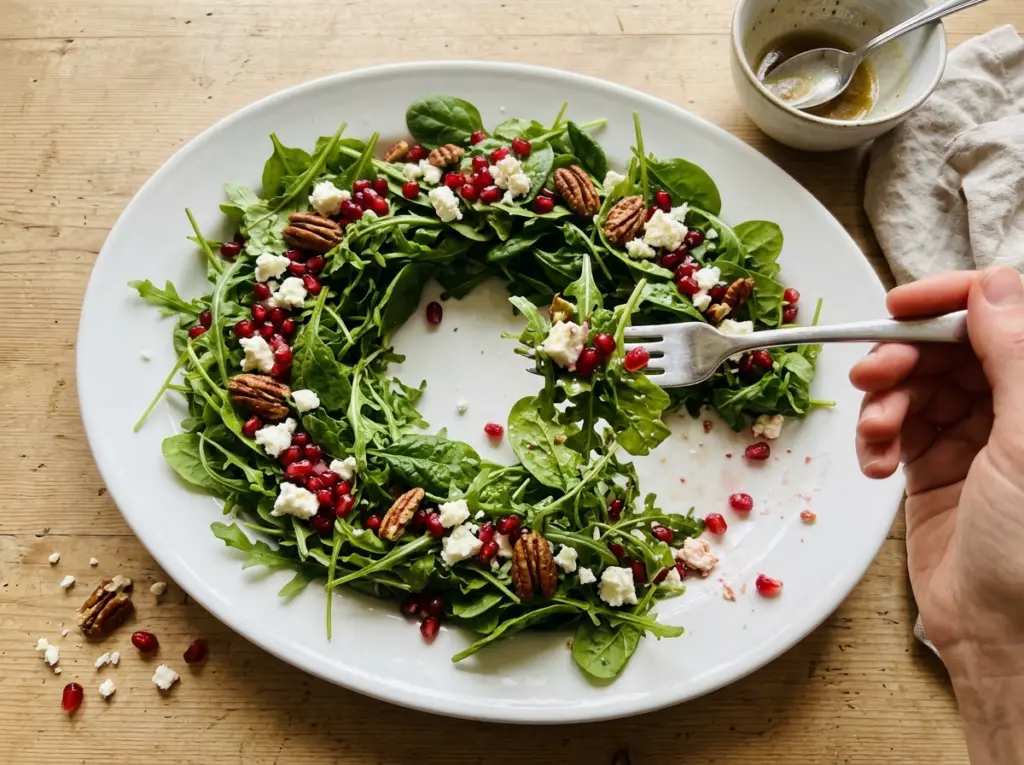
Christmas Wreath Salad with Pomegranate
The greens look lively right up until dressing hits them, and a tossed salad can lose its shape before it reaches the table. For this Christmas wreath salad with pomegranate,…

By Ava
•
•
Reading time: 9 min
Tip: save now, make later.
The greens look lively right up until dressing hits them, and a tossed salad can lose its shape before it reaches the table. For this Christmas wreath salad with pomegranate, I arrange everything on a platter and keep the dressing on the side. The greens stay perky, and the orange slices and jewel-like arils remain visible instead of disappearing into a bowl.
I like the way the ingredients do different jobs without making the salad fussy. Tender baby greens give the wreath its shape, oranges bring juicy sweetness, and pomegranate arils add a little pop in every bite. Goat cheese brings a creamy, tangy finish, while pecans add crunch. It’s a bright centerpiece that still eats like a fresh, simple salad.
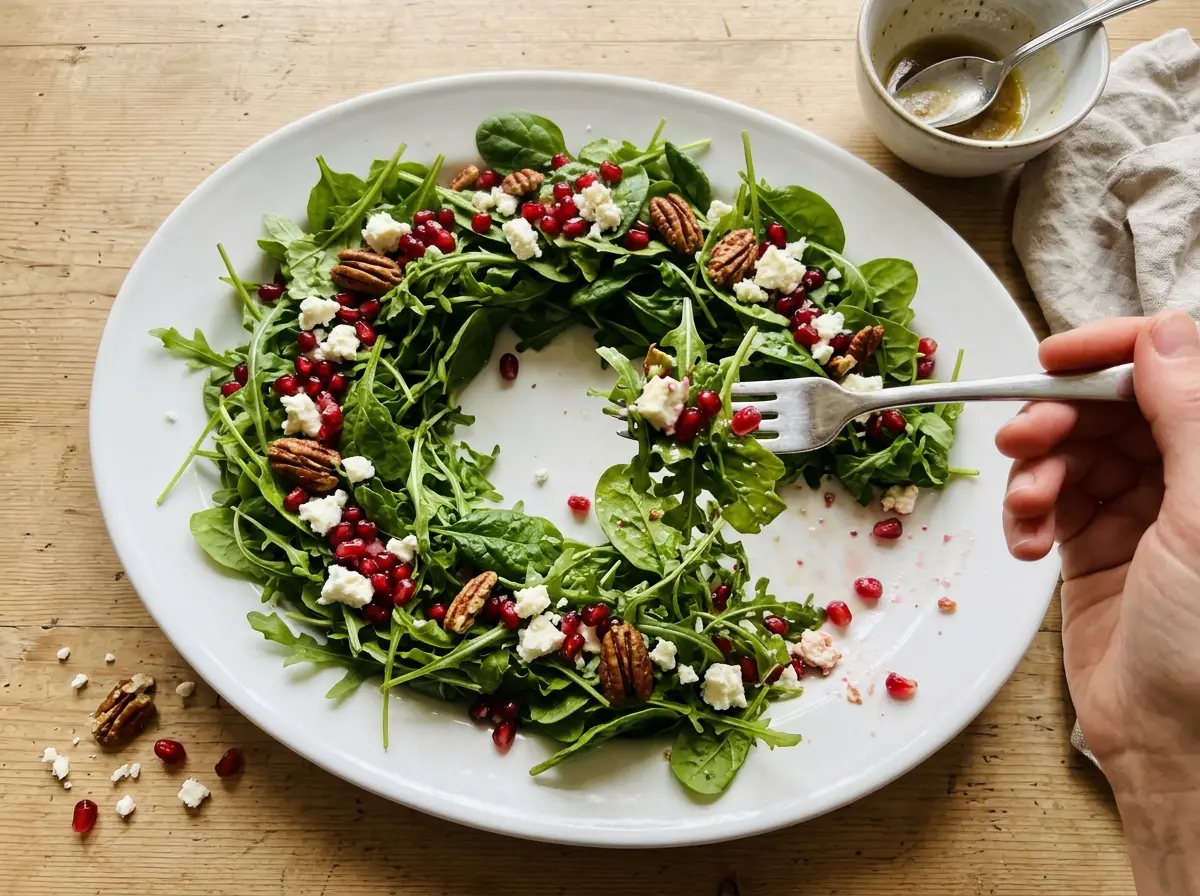
Kitchen Note
Keep the pecans moving in the skillet, especially near the end of their toasting time. The moment they smell fragrant and look lightly browned, get them onto a plate so the hot pan doesn’t keep darkening them.
Save this Christmas wreath salad with pomegranate for a festive table centerpiece with juicy orange, tangy goat cheese, and toasted pecans.
Why This Wreath Is Better Served Undressed
A wreath salad has a job beyond tasting fresh: it needs to keep its shape while people serve themselves. Pouring dressing over the whole platter softens the tender greens and can make the carefully arranged toppings slide around. With the dressing on the side, the greens stay distinct and the orange, pomegranate, cheese, and pecans are easier to see and reach.
That choice also makes the salad more flexible at the table. Some people like just a light coating, while others want enough dressing to gather in the folds of the greens. Let everyone dress their own serving, and the platter keeps its wreath shape for longer. The balsamic dressing is flavorful enough to add a little at a time, rather than needing to soak the greens.
The open center matters, too. It gives the greens room to read as a wreath instead of a mound, and the toppings provide color and texture around the circle. A 16-inch round platter gives the greens enough space to make that shape without crowding everything into the middle.
What Each Ingredient Brings to the Wreath
- Extra-virgin olive oil — It gives the dressing its rounded, fruity base. Use an olive oil you like the taste of, but there’s no need for a rare bottle; a dependable everyday extra-virgin oil works well. Avocado oil can replace it for a milder dressing, though you’ll lose the olive’s grassy note.
- Balsamic vinegar, honey, and Dijon — Balsamic contributes sweet-tart depth, honey softens its sharp edge, and Dijon helps the oil and vinegar come together when whisked. A decent grocery-store balsamic is fine here. Red wine vinegar can stand in for balsamic, but the dressing will taste brighter and less sweet; maple syrup can replace the honey in the same amount. Whole-grain mustard works in place of Dijon, with a more textured finish.
- Mixed baby greens — Their tender leaves make a soft, easy-to-arrange base. Choose a fresh package with crisp leaves and no damp, bruised patches; a bagged mix is perfectly convenient. Baby spinach can replace the greens for a milder, softer wreath.
- Navel oranges — Thin half-moons give the salad juicy sweetness and a clean citrus contrast to the dressing. Choose fruit that feels heavy for its size, which usually means it’s juicy. Blood oranges can replace navel oranges for a deeper color and a slightly more tart note.
- Pomegranate arils — These add a bright, tart-sweet pop and a little crunch. Buy them already removed from the fruit if convenience matters; just check that the arils look plump rather than dried out. Dried cranberries can replace them, but they’ll be chewy and sweeter instead of juicy and crisp.
- Goat cheese — Its creamy tang cuts through the sweet fruit and balsamic. A log you crumble yourself tends to give softer, creamier pieces; pre-crumbled cheese is fine when ease matters. Feta is a useful swap, though it’s saltier and firmer.
- Pecan halves — Their buttery crunch gives the greens a more substantial bite, and the halves look handsome scattered across the wreath. Fresh pecans matter more than a premium brand; stale nuts taste flat. Toasted pumpkin seeds can replace them for a nut-free crunch.
Three Stages for a Wreath That Holds Its Shape
Whisk the Balsamic Dressing Until Combined
In a small bowl, whisk together the olive oil, balsamic vinegar, honey, Dijon mustard, kosher salt, and ground black pepper. Keep whisking until the mixture looks combined, with no streaks of honey or mustard sitting at the bottom. The dressing doesn’t need to become thick; it just needs to be evenly mixed. Set it aside to serve alongside the salad.
Toast the Pecans Without Burning Them
Set a dry 10-inch skillet over medium heat and add the pecan halves. Toast for 3 to 5 minutes, stirring often, until they smell fragrant and look lightly browned. Don’t walk away during this short stage: nuts can go from toasted to bitter quickly. Transfer them to a plate to cool so they don’t keep cooking in the skillet.
Arrange the Greens and Layer the Toppings
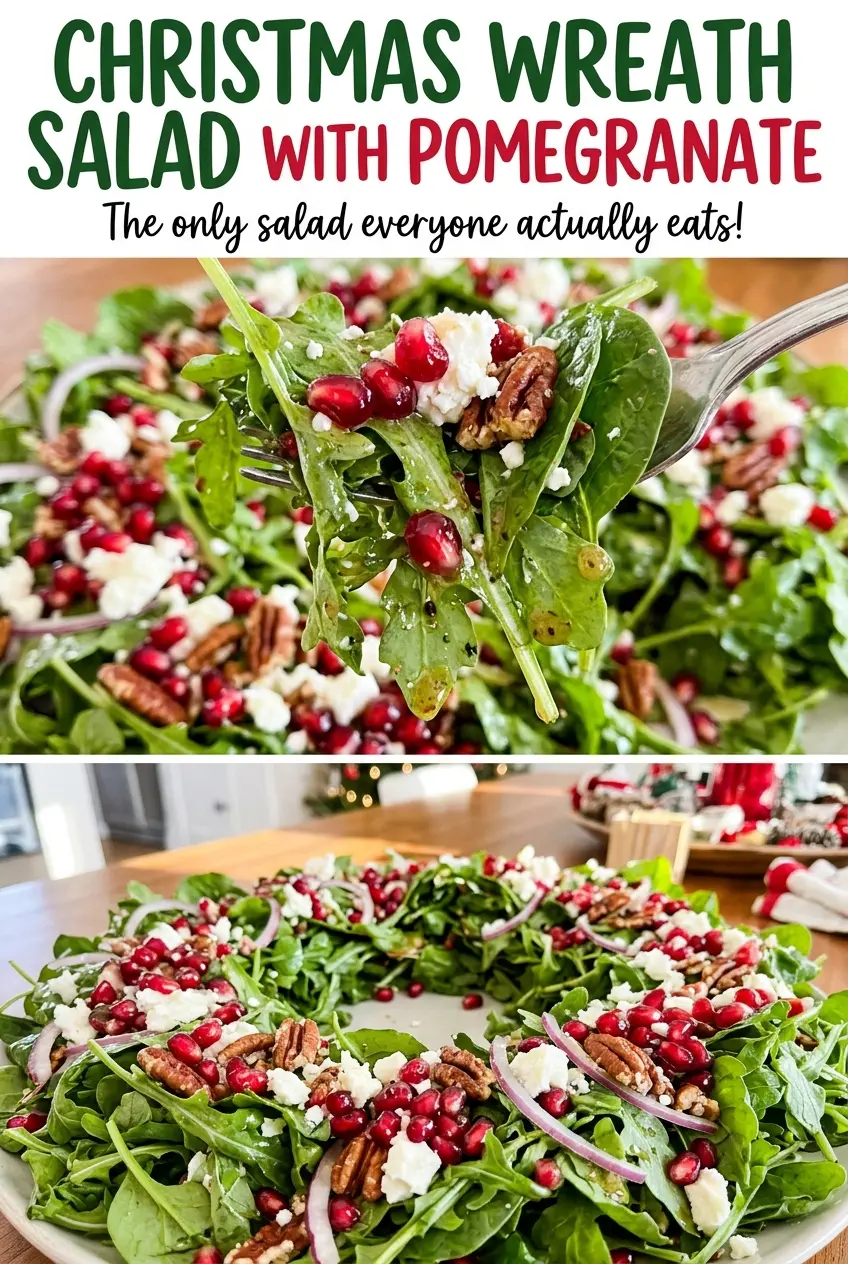
Spread the baby greens in a wreath shape on a 16-inch round serving platter, leaving an opening in the center. Lay the orange half-moons over the greens, then scatter the pomegranate arils, crumbled goat cheese, and cooled pecans across the top. Aim for toppings around the wreath rather than all in one spot, so each portion gets a mix. Bring the dressing to the table on the side.
Easy Ways to Adapt the Wreath
Make It Dairy-Free
Leave off the goat cheese or use dairy-free feta-style crumbles, and replace the honey in the dressing with the same amount of maple syrup. The salad keeps its sweet-tart balance, though it won’t have the same creamy tang as the goat cheese version.
Trade the Pecans for Pumpkin Seeds
Use an equal volume of toasted pumpkin seeds instead of pecan halves. They make the wreath nut-free while keeping a crisp finish; the bite is lighter and less buttery than with pecans.
Give It a Blood Orange Centerpiece
Replace the navel oranges with blood oranges and cut them into thin half-moons as you would the original fruit. Their red-orange color makes the wreath more dramatic, and their flavor is a little sharper against the honeyed dressing.
Make-Ahead and Leftover Notes
- Make ahead: Whisk the dressing and refrigerate it separately. Keep the greens and toppings separate, then arrange the wreath close to serving so the leaves stay crisp.
- Leftovers: Refrigerate leftover salad in a covered container and eat it within a day for the best texture. The greens soften as they sit with the oranges and cheese.
- Freezer: Freezing isn’t useful for the assembled salad; the greens and oranges lose their texture when thawed.
Questions About Making This Christmas Wreath Salad
Christmas Wreath Salad with Pomegranate
Ingredients
Equipment
Method
- Whisk the olive oil, balsamic vinegar, honey, Dijon mustard, salt, and pepper in a small bowl until combined.
- Toast the pecans in a dry 10-inch skillet over medium heat for 3 to 5 minutes, stirring often, until fragrant and lightly browned.
- Transfer the pecans to a plate to cool.
- Arrange the greens in a wreath on a 16-inch round serving platter, leaving an opening in the center.
- Arrange the orange slices over the greens, then scatter the pomegranate arils, goat cheese, and cooled pecans on top; serve with the dressing on the side.